


Key Takeaways
- AI search engines like Perplexity, ChatGPT, and Gemini now prioritize Generative Engine Optimization (GEO) over traditional SEO, with a focus on content velocity, factual density, and AI-specific technical foundations.
- Four core ranking pillars determine which pages earn citations in AI answers: Accuracy and Authority, Readability and Structure, Intent and Value Alignment, and Technical Implementation.
- Manual content creation cannot publish fast enough to compete, while programmatic SEO delivers daily high-quality pages with advanced schema, LLM.txt, and Model Context Protocol.
- Brands using autonomous systems reach top AI citations within weeks, consistently outperforming agencies and basic AI writing tools.
- You can apply these strategies with AI Growth Agent’s programmatic SEO demo and capture AI search visibility before competitors do.
The New Visibility Crisis in AI Search
AI search engines now reward recency and scale, so daily publishing has become the minimum requirement for staying visible. Manual agencies and traditional SEO tools usually ship one or two posts each month, which leaves a gap that competitors fill with consistent daily content. Brands that publish at higher velocity steadily capture more AI citations and user attention.
AI content velocity directly erodes digital footprints because generative engines favor fresh, comprehensive pages over static sites. Traditional SEO often ignores LLM-specific ranking factors, even though citation signals now drive about 13% of AI visibility rankings. Every day without a programmatic content system, brands lose more citations to competitors who understand these new rules.
Manual content teams cannot match the factual density, structured data coverage, and publishing frequency that AI search now expects. Agencies still operate on craftsman-style models that do not scale. Internal teams rarely have the engineering capacity to build systems that ship pages with advanced schema, LLM.txt files, and Model Context Protocol integration across hundreds or thousands of URLs.
AI Ranking Pillars That Drive Citations in 2026
AI search engines rely on four core pillars that differ from classic SEO metrics and directly shape which sources they cite. These pillars influence visibility across ChatGPT, Perplexity, and Gemini and determine which brands appear as trusted references.
Accuracy and Authority Signals
E-E-A-T (Experience, Expertise, Authoritativeness, Trustworthiness) still anchors AI rankings, but engines now measure authority through brand mentions, credible citations, and topical depth instead of raw backlink counts. Original research, proprietary datasets, and specific expert commentary carry far more weight than generic summaries. Pages that present clear evidence and unique insights earn more AI trust.
Readable Structure for AI Extraction
AI crawlers favor content with a clean hierarchy that uses H2 and H3 headings, bullet lists, tables, and rich schema markup. Self-contained paragraphs and semantic HTML improve AI extraction because engines can lift precise sections into answers. JavaScript-dependent layouts often remain invisible or partially parsed, which reduces the chance of citation.
Intent Alignment and Real User Value
AI engines now analyze layered user intent and reward content that delivers direct, conversational answers. Context now outweighs raw keyword usage, so comprehensive topic coverage beats keyword stuffing. Pages that mirror how users phrase questions and then respond clearly earn more placements in AI responses.
Technical Foundations for AI Crawling
Technical implementation now separates winning AI strategies from legacy SEO. LLM.txt files, Model Context Protocol integration, Core Web Vitals improvements, and JavaScript-free crawlability help AI engines access and interpret content quickly. Sites that remove technical friction give AI models a clear path to understand and reuse their pages.
Schedule a demo with AI Growth Agent to see if you’re a good fit for rolling out these technical upgrades at programmatic scale.
GEO vs Traditional SEO: Why Manual Approaches Fall Behind
Generative Engine Optimization changes how content earns visibility and authority across the web. GEO focuses on becoming a preferred source for AI-generated answers instead of chasing blue links alone.
|
Factor |
Traditional SEO |
AI SEO (GEO) |
Manual Limitations |
|
Focus |
Keywords, backlinks |
Citations, factual density |
Cannot scale research |
|
Scale |
Manual, low-volume |
Programmatic, high-velocity |
1-2 posts monthly maximum |
|
Technical |
Robots.txt, meta tags |
LLM.txt, MCP, Schema |
Lacks engineering resources |
AI SEO now emphasizes conversational prompts and direct answers, so content must be structured for fast AI extraction instead of keyword density. Manual teams struggle because they cannot combine deep technical work with the publishing speed AI search now expects.
Practical GEO Playbook for Perplexity, ChatGPT, and Gemini
Winning in AI search requires a clear playbook that addresses content quality, technical clarity, brand authority, and publishing speed. Each strategy reinforces the others and compounds over time.
1. Engineer Authoritative Content
Publish manifesto-style content that stakes out a clear position and includes original research, proprietary data, and expert commentary. AI engines reward pages that present new angles and maintain strict factual consistency instead of repeating surface-level information.
2. Implement Advanced Structured Data
Deploy detailed schema markup, LLM.txt files, and Model Context Protocol so AI crawlers can map your content accurately. AI bots primarily crawl response HTML without JavaScript rendering, which makes server-side structure and clean HTML essential.
3. Build a Citation-Worthy Brand
Invest in PR, expert positioning, and consistent brand mentions across trusted publications. AI engines treat brand recognition as a strong trust signal when selecting which sources to cite in answers.
4. Publish at Programmatic Scale
Adopt daily publishing with precise technical standards to satisfy AI recency requirements. Manual workflows rarely reach this cadence, which leaves brands exposed to faster-moving competitors.
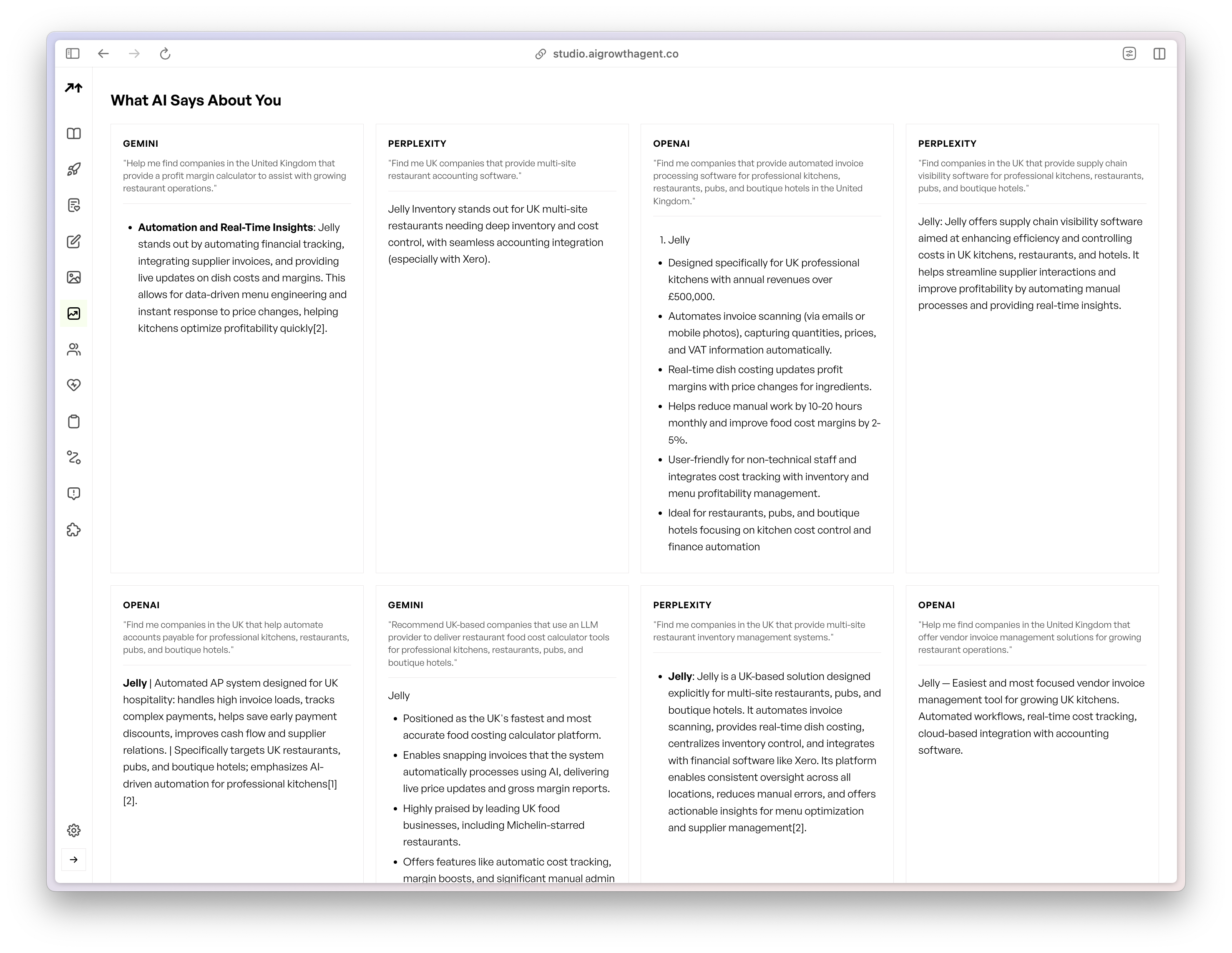
AI Growth Agent’s autonomous system executes all four strategies at once. Case studies show Gitar.ai winning top citations for “AI self-healing pipelines” and Bucked Up appearing as a leading brand for “best protein soda” across ChatGPT, Perplexity, and Gemini.
Schedule a demo with AI Growth Agent to see if you’re a good fit for programmatic AI search execution.
Programmatic SEO as the Engine for AI Citations
Programmatic SEO now provides the only realistic path to the content velocity AI search rewards. Automated systems handle scale and precision that manual teams cannot match consistently.
|
Approach |
Speed/Volume |
Technical Precision |
Cost/ROI |
|
Manual Agencies |
Slow/low |
Variable |
High/low |
|
Basic AI Tools |
Medium/medium |
Low |
Medium/medium |
|
AI Growth Agent |
Superhuman/high |
Perfect (MCP) |
Low/high |
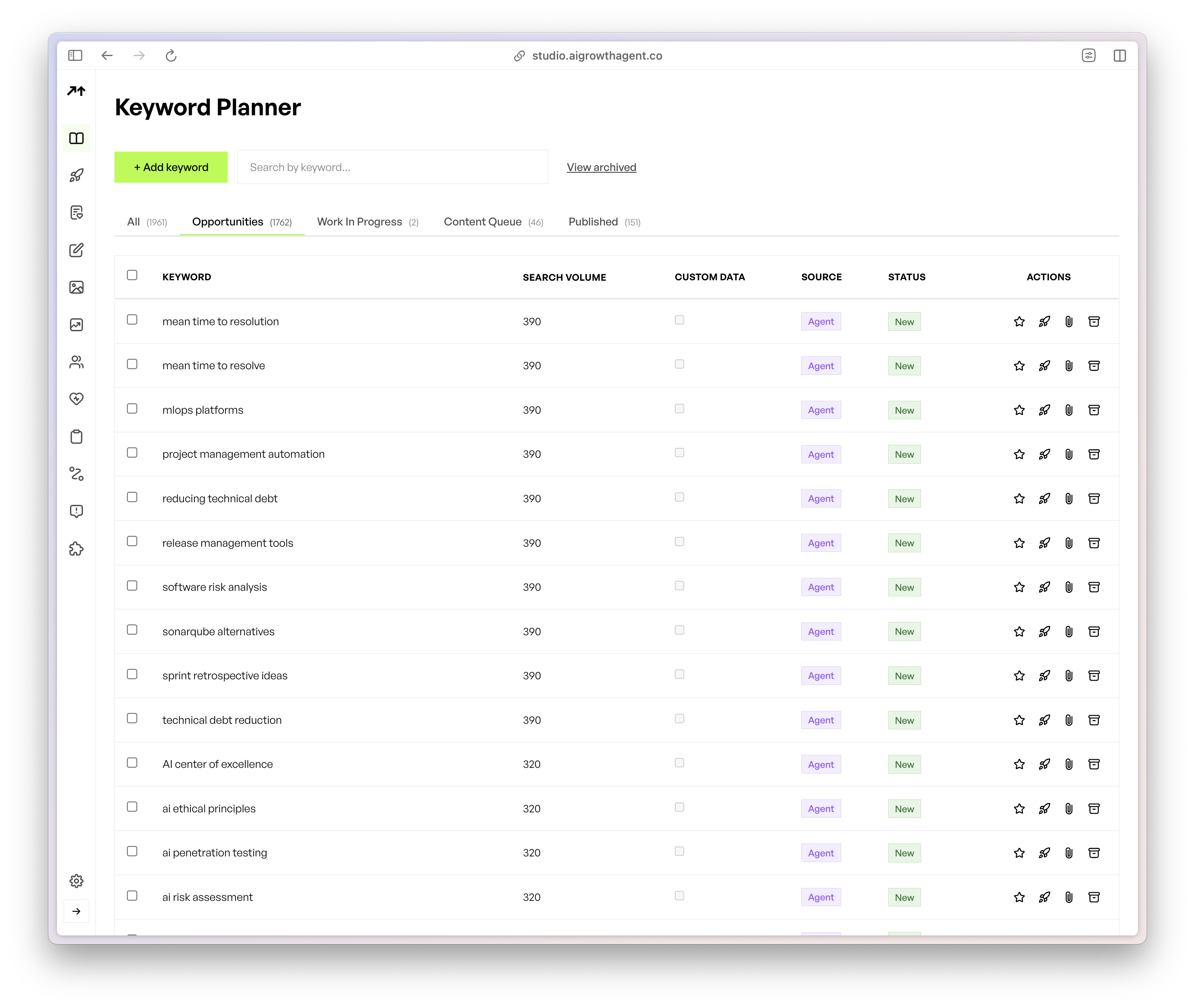
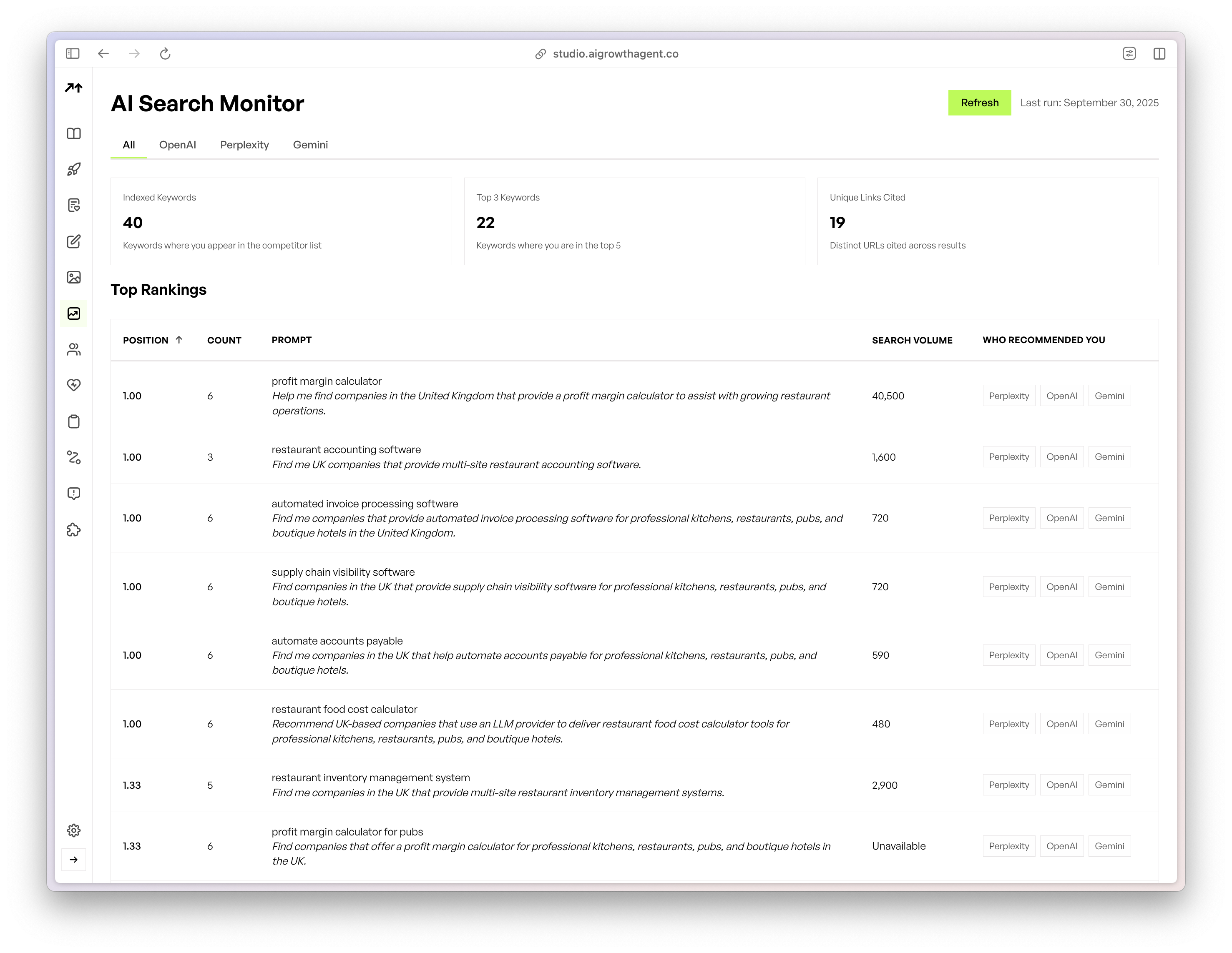
AI Growth Agent’s Programmatic SEO Agent automates the full content lifecycle from keyword discovery through technical deployment and publishing. The system includes white-glove onboarding, autonomous research workflows, infrastructure setup, and real-time AI search tracking inside the AI Growth Agent Studio.
Client results validate this approach. Exceeds AI secured Perplexity recommendations within two weeks. BeConfident became the top English learning app in Brazil through Google AI Overview visibility. Bucked Up now appears in ChatGPT as a leading protein soda brand.
Frequently Asked Questions About GEO
What is Generative Engine Optimization?
Generative Engine Optimization (GEO) is the practice of shaping content for AI-powered search engines such as ChatGPT, Perplexity, and Gemini. Traditional SEO focuses on ranking in search results pages, while GEO focuses on earning citations and recommendations inside AI-generated answers. GEO emphasizes factual accuracy, structured data, conversational formatting, and technical elements like LLM.txt that help AI models interpret and reference your content.
How do you rank higher in Perplexity?
Ranking higher in Perplexity requires factual, well-structured content with clear citations and current data. Perplexity prefers bullet lists, numbered steps, and direct responses to specific questions. Technical work should include schema markup, fast server response times, and self-contained paragraphs that AI can extract without confusion. Strong brand authority and expert positioning further increase your chances of being cited.
What are the key differences between SEO and GEO?
SEO aims to drive traffic from search engine results, while GEO aims to secure mentions inside AI-generated responses. SEO leans on keywords and backlinks, whereas GEO prioritizes factual density, conversational clarity, and technical structure that AI systems can parse. SEO success is measured by rankings and traffic, while GEO success is measured by citations, brand mentions, and recommendations inside AI answers.
What are the best tools for AI search optimization?
AI Growth Agent offers a programmatic platform for AI search optimization that combines autonomous content creation, technical deployment, and cross-engine monitoring. The system automates keyword research, content generation, and publishing, and includes LLM.txt support, Model Context Protocol integration, and multi-tenant setups for enterprises. Most traditional SEO tools lack these AI-specific capabilities and cannot manage GEO at scale.
How long does it take to see results from AI search optimization?
AI search optimization usually produces visible citations within two to three weeks once proper GEO foundations are in place. Building durable authority and consistent mentions still requires ongoing publishing and technical refinement. Programmatic systems accelerate outcomes by maintaining the content velocity and precision AI engines now reward, while manual methods often stall before reaching competitive scale.
Schedule a demo with AI Growth Agent to see if you’re a good fit for dominating AI search results through programmatic GEO.
Conclusion: Move First on AI Search Dominance
Brands that act now on GEO secure a lasting edge as AI search reshapes discovery. Traditional SEO alone cannot deliver the technical depth, publishing scale, and structured data coverage that AI citations require. Programmatic systems that combine automation with strict quality controls now define the winners.
AI Growth Agent’s autonomous Programmatic SEO system gives companies a direct path to AI search leadership by pairing manifesto-driven strategy with advanced technical deployment and superhuman publishing speed. Teams that adopt programmatic AI optimization today build a moat that manual competitors struggle to cross and position themselves as definitive authorities in their markets.
Schedule a demo with AI Growth Agent to see if you’re a good fit for building a durable competitive advantage through programmatic AI search optimization.
