


AI-driven search engines such as ChatGPT, Google AI Overviews via Gemini, and Perplexity are changing how people and businesses discover information. Scalable, authoritative content now plays a central role in visibility and AI citations.
Here, we’ll see five scalable content creation platforms focused on AI Search. What you’ll learn by reading this article:
- Traditional content creation models, including agencies, internal teams, and basic AI tools, struggle to deliver the volume, quality, and technical precision that AI search systems require.
- Five platform types support scalable content for AI search: autonomous content platforms, user-generated content platforms, enterprise content suites, influencer automation platforms, and niche community or subscription platforms.
- Integrated autonomous content platforms such as AI Growth Agent combine strategy, writing, technical SEO, and publishing into one system, which helps brands increase AI search visibility and citation potential at scale.
- Brands that act early to build scalable, technically optimized content programs gain advantages in AI search that become harder for slower competitors to close over time.
The AI Content Imperative: Why Scalable Authority is Non-Negotiable
AI search engines such as ChatGPT, Google AI Overviews via Gemini, and Perplexity are becoming primary discovery tools for many consumers and businesses. As AI-generated content grows, each brand’s visible footprint in search results and chat interfaces becomes smaller.
Brands that want to be seen, recommended, and cited by AI systems need a steady stream of authoritative, technically optimized content. Occasional publishing no longer keeps pace with how quickly AI systems update their understanding of categories, competitors, and solutions.
Traditional content creation methods struggle with these demands. SEO agencies rely on billable hours and human bandwidth, so they are often slow, costly, and difficult to scale to daily publishing. Internal marketing teams know the brand well but face headcount limits, competing priorities, and limited engineering resources for advanced AI indexing. General AI tools such as ChatGPT can draft copy, but they often still require subject-matter guidance, editing, and technical optimization that add work for in-house teams.
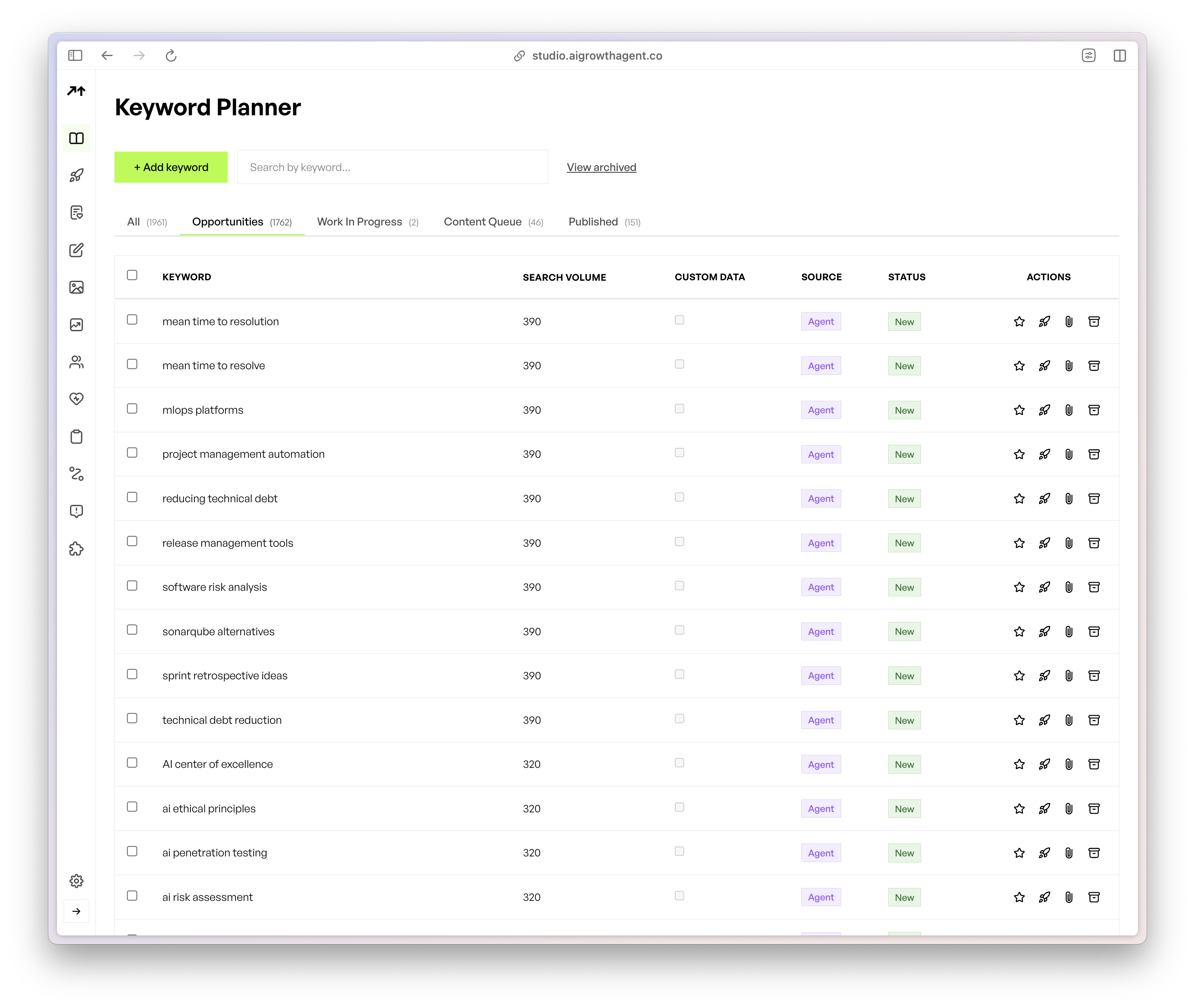
AI Growth Agent addresses this challenge with technology rather than billable hours. The platform uses coordinated AI agents to handle strategy, research, writing, optimization, and publishing in one system. This approach helps brands produce large volumes of consistent, high-quality content designed for AI search visibility and citation.
Delaying an AI-focused content strategy carries increasing risk. If a competitor consistently provides clearer, more complete answers than your brand, AI systems are more likely to reference that competitor as a trusted source. Over time, this pattern can shift category perception and customer attention in ways that are difficult to reverse.
5 Platform Types Powering Next-Gen Scalable Content Creation for AI Search
1. Integrated Autonomous Content Platforms: Building an AI-Ready Content Engine
Integrated autonomous content platforms use coordinated AI agents to manage end-to-end content production, including strategy, research, drafting, editing, technical optimization, and publishing. These platforms focus on producing high-volume, high-quality content that aligns with both human readers and AI search systems.
Key capabilities include real-time content generation to respond to market trends, custom data integration to leverage proprietary information, and advanced technical SEO implementation for formats such as LLM.txt and Model Context Protocol (MCP). These features make it easier for AI search engines to understand, index, and reference your content. AI Growth Agent operates in this category and focuses on content specifically structured for AI search visibility and citation.
Brands that manage multiple business units or product lines gain additional value from portfolio-level deployment. AI Growth Agent supports parallel agent setups for multiple brands, which allows private equity firms, venture portfolios, and large enterprises to coordinate content strategies across properties from a single interface.
Actionable takeaways:
- Prioritize platforms that cover the full content lifecycle, from strategy through publishing, to reduce manual handoffs and bottlenecks.
- Look for AI-specific technical features such as LLM.txt, MCP, structured data, and direct CMS integration to improve AI search compatibility.
- Assess whether the platform can support multiple brands or product lines if your organization manages a portfolio.
See how AI Growth Agent’s autonomous platform supports scalable, AI-ready content programs.
2. Specialized User-Generated Content (UGC) Platforms: Adding Authenticity at Scale
Specialized UGC platforms support the sourcing, management, and activation of creator-driven content across channels. Many now include AI-powered creator matching, automated content tagging, localization support, and commerce features such as shoppable galleries and integrated purchase flows. These platforms source, manage, and activate authentic, creator-driven content at scale, which can complement owned content and help AI models recognize a broader pattern of brand presence.
The efficiency benefits can be significant. Some brands report material cost reductions alongside stronger engagement compared with traditional agency campaigns. UGC platforms also help maintain alignment with brand guidelines and inclusivity standards, which supports a consistent, trustworthy presence in the signals AI systems evaluate.
Leading UGC platforms continue to expand their AI features with predictive performance models, integrated analytics, and automated optimization. These capabilities help brands test and refine content formats over time, which supports ongoing performance in fast-changing AI search environments.
Actionable takeaways:
- Use UGC platforms to add real customer and creator perspectives to your content mix, which supports stronger trust signals.
- Focus on platforms that provide structured workflows for approvals, rights management, and localization to maintain quality at scale.
- Review analytics and prediction features that help you learn which creator content contributes most to engagement and conversion.
3. Enterprise Content Marketing Suites: Coordinating Multi-Channel Publishing
Enterprise content marketing suites function as coordination hubs for complex content programs. They centralize planning, asset management, workflow automation, and analytics across channels.
These platforms address diverse scaling needs from SMB website builders to enterprise campaign management systems, which makes them useful for organizations managing many stakeholders and approvals.
These suites help teams maintain consistent messaging and process across blogs, social media, video, and interactive formats. They also provide campaign-level reporting and collaboration tools, which makes it easier to align content with broader marketing objectives.
Most enterprise suites still rely heavily on humans for core content creation. Many brands combine these suites with autonomous content platforms such as AI Growth Agent to reach the publishing speed required for AI search relevance while keeping centralized oversight, governance, and analytics in one place.
Actionable takeaways:
- Adopt a content marketing suite to centralize planning, workflows, and approvals across teams and channels.
- Integrate autonomous content platforms to handle high-volume drafting and optimization, while the suite manages calendars and governance.
- Ensure analytics from both systems feed into a single view so you can connect content operations to performance outcomes.
4. Influencer Automation Platforms: Expanding Reach Through Structured Partnerships
Influencer automation platforms streamline the work of discovering, vetting, onboarding, and managing large groups of influencers. This structure allows brands to run many small or mid-sized collaborations in parallel and generate a high volume of aligned creator content.
These platforms centralize content planning, AI-assisted copywriting, and asset management, which helps teams handle multi-channel publishing requirements more efficiently.
Automation and AI features support relevance and compliance by standardizing briefs, guidelines, and review workflows. This approach reduces manual coordination while keeping content within brand and regulatory boundaries, even when many creators are involved.
Many influencer platforms now include real-time attribution, revenue tracking, and commerce integrations. These capabilities link creator content directly to traffic, leads, and sales, which makes it easier to evaluate content investment and refine future campaigns.
Actionable takeaways:
- Use influencer automation platforms to scale content production with trusted voices rather than relying only on brand-owned channels.
- Review compliance, approval, and messaging tools to ensure creator content remains brand-safe at higher volumes.
- Leverage attribution and revenue insights to prioritize partnerships and content formats that drive measurable outcomes.
5. Niche Community & Subscription Content Platforms: Deepening Expertise and Engagement
Niche community and subscription platforms such as Patreon, Substack, Mighty Networks, and Discord help brands build focused audiences around specific topics or formats. These platforms span paid newsletter and podcast platforms, community-building networks, and subscription-based systems that support recurring content and direct audience monetization.
These environments support deeper, more specialized content than many broad public channels. Engagement metrics such as open rates, retention, and community activity can signal to AI systems that a brand consistently delivers value on particular subjects.
Content developed for these communities can flow back into broader search strategies. Using an autonomous platform such as AI Growth Agent to adapt or extend community content into SEO and AI-search-friendly formats can increase reach while preserving the original depth and expertise.
Actionable takeaways:
- Develop niche communities or subscription programs around topics where your brand has distinct expertise.
- Use insights and content from these communities to inform broader content strategies across search and social channels.
- Coordinate with autonomous content platforms to repurpose high-performing community content into AI-search-optimized assets.
Platform Comparison: Traditional vs. Modern Scalable Content Solutions
|
Solution Type |
Scalability |
AI Optimization |
Time to Publish |
|
Traditional Agencies |
Limited by headcount |
Basic SEO only |
Weeks to months |
|
Internal Teams |
Constrained by resources |
Manual implementation |
Days to weeks |
|
Basic AI Tools |
Requires constant oversight |
Generic optimization |
Hours with editing |
|
AI Growth Agent |
High, software-driven capacity |
Advanced LLM.txt and MCP support |
Minutes with autonomous workflows |
Frequently Asked Questions about Scalable Content Platforms
How quickly can I see results in AI search after implementing a scalable content platform?
Time to results depends on your starting point, category competition, and platform choice. Autonomous platforms such as AI Growth Agent focus on fast, technically optimized publishing, which can shorten feedback loops.
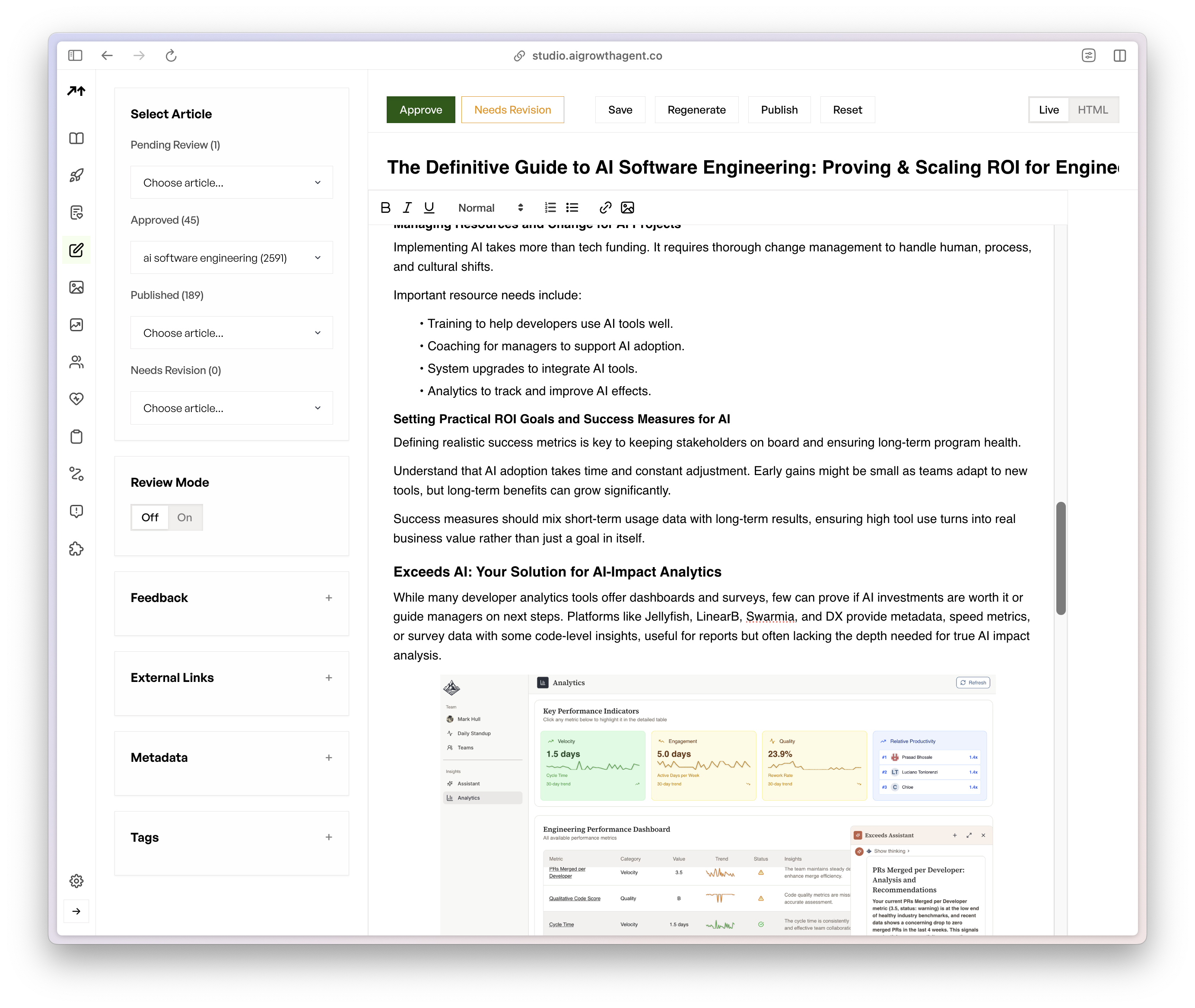
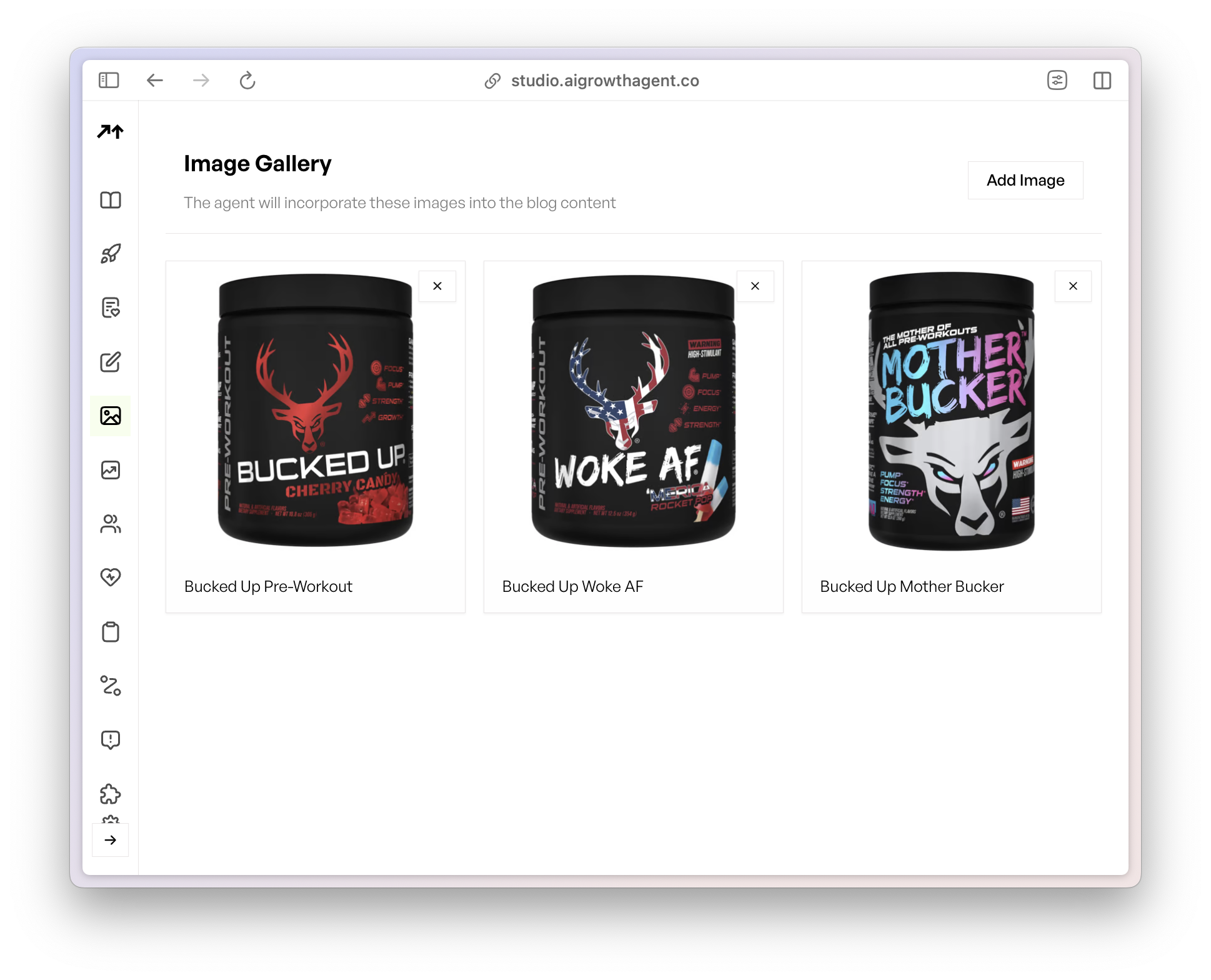
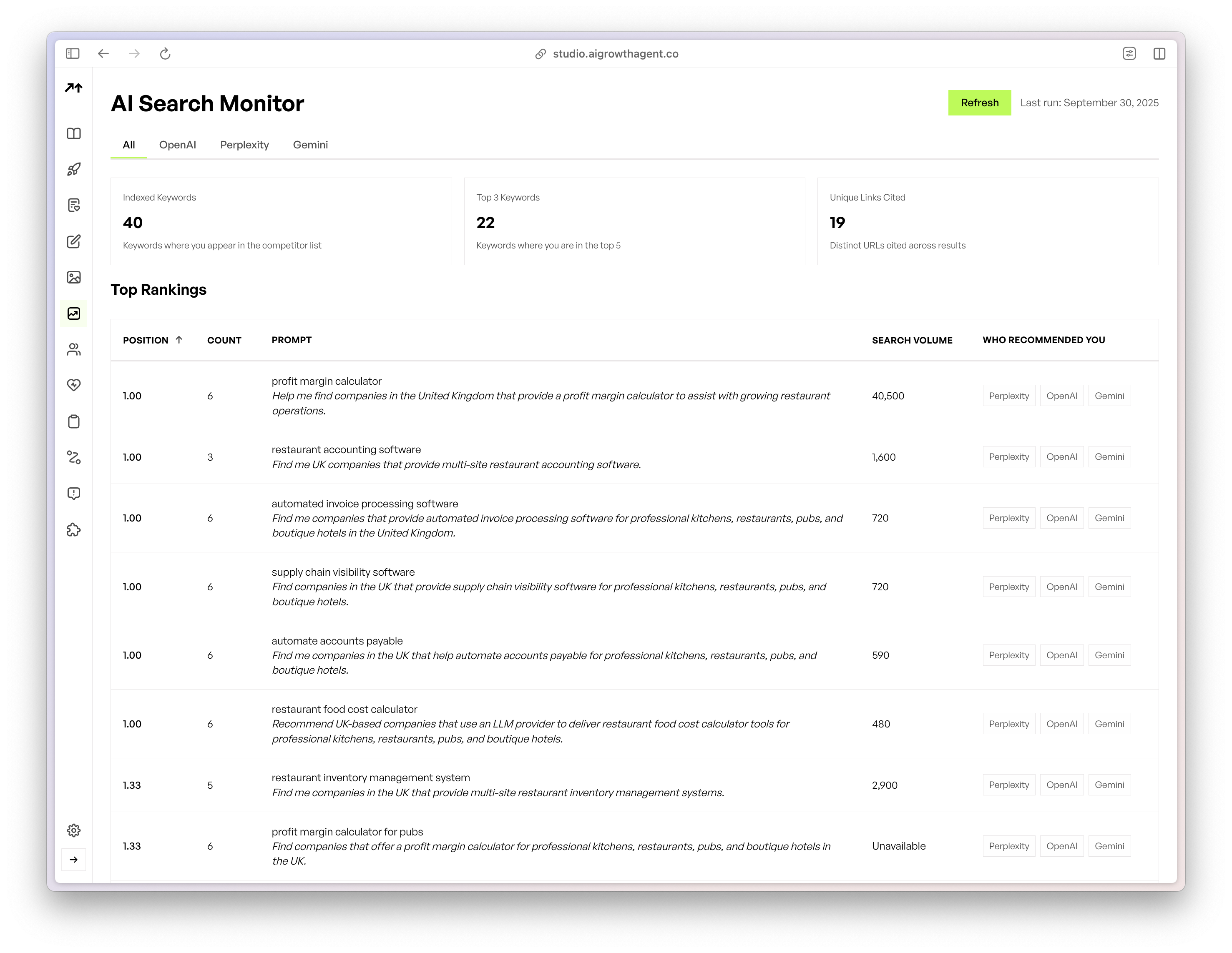
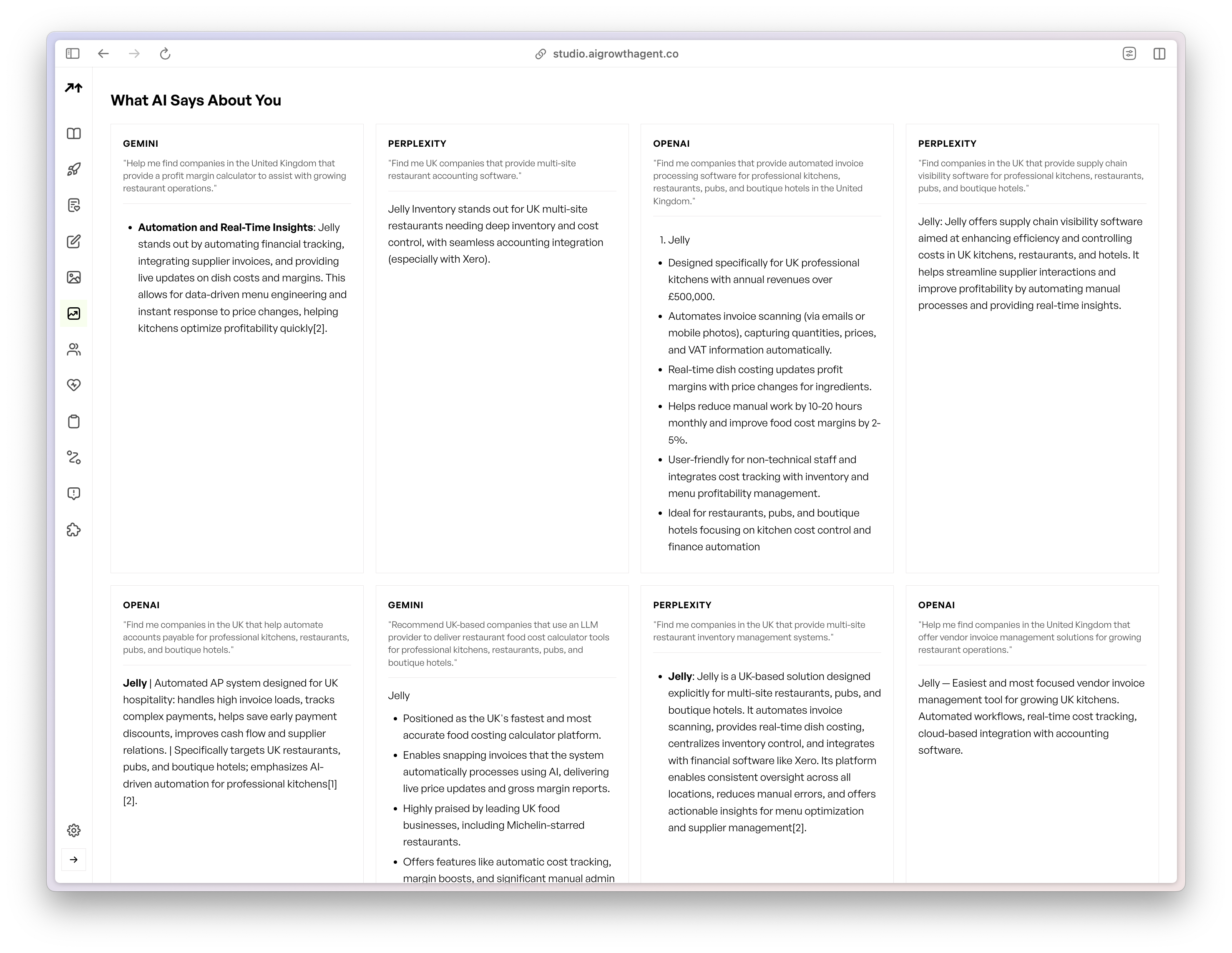
Many clients, including Exceeds AI, BeConfident, Bucked Up, and Gitar, have observed initial AI citations and increased visibility within two to three weeks of publishing their first articles, followed by continued growth as the content library expands. Traditional content cycles usually take longer because they involve more manual research, drafting, and approvals.
Can autonomous content platforms truly match human-level quality for AI citation?
Modern autonomous platforms have moved from simple text generation to structured content orchestration. AI Growth Agent, for example, uses a detailed Company Manifesto and guided onboarding to capture brand voice, positioning, and expertise.
Professional editors support setup to align standards. The platform also focuses on technical elements such as LLM.txt and Model Context Protocol, which improve how AI systems access and interpret content. This combination of editorial guidance and technical engineering helps the platform produce content that meets human quality expectations while improving AI citation potential.
Are scalable content platforms suitable for businesses of all sizes?
Scalable content platforms can support organizations ranging from growth-stage companies to large enterprises. The most important factor is not company size but the strength of your digital foundation and clarity of your positioning. Brands with clear value propositions, defined target audiences, and solid technical SEO are better prepared to benefit from higher publishing volume. AI Growth Agent typically works with brands that already have a basic SEO foundation in place and want to build broader authority in their category.
How do I evaluate and select the right scalable content platform for my brand?
Effective selection begins with an internal assessment. Teams should define content volume needs, quality expectations, AI optimization requirements, budget, and integration needs with existing tools. Platforms that manage the full lifecycle, from strategy through performance measurement, reduce complexity. Evidence of success in earning AI citations and organic visibility is also important.
During evaluation, review onboarding processes, support models, reporting, and how the platform fits into current workflows. AI Growth Agent is designed for brands that want to build comprehensive digital authority with an emphasis on AI search visibility.
What technical requirements should I consider when implementing a scalable content platform?
A strong technical foundation is essential. Scalable content cannot overcome major issues in site architecture, crawling, page speed, or mobile usability. Before ramping up production, ensure that your domain has sound technical SEO, schema markup where appropriate, and a responsive design.
Integration with your CMS, analytics, and marketing automation systems helps keep operations efficient. Advanced platforms such as AI Growth Agent add AI-focused optimizations, automated metadata, and direct publishing, which reduce manual work and support better alignment with AI search and citation patterns.
Conclusion: Building Sustainable Advantage in the AI Content Race
Marketing performance is increasingly linked to how AI systems interpret, rank, and reference your content. Scaling from occasional publishing to consistent, high-quality output requires a mix of platforms that address strategy, production, distribution, and measurement.
The five platform types outlined here play complementary roles. Autonomous content platforms, UGC systems, enterprise content suites, influencer automation tools, and niche community platforms each strengthen different aspects of your content ecosystem. Combined thoughtfully, they help brands maintain visibility with both human audiences and AI systems.
AI Growth Agent focuses on the autonomous content layer, bringing together scale, editorial structure, and AI-specific technical optimization. This combination helps premium brands steadily build digital authority and improve their chances of being cited and recommended by AI search engines.
The brands that invest now in scalable, AI-aware content programs are likely to set benchmarks in their categories. As AI systems continue to shape discovery, closing that gap later becomes more difficult for slower-moving competitors.
