Written by: Mariana Fonseca, Editorial Team, AI Growth Agent
Key Takeaways
- AI-referred search traffic grew 527% in 2025, so brands now need programmatic SEO to match content velocity while preserving E-E-A-T signals.
- The 8-step playbook uses manifesto guardrails, AI keyword clustering, and technical infrastructure to scale authoritative content output by up to 10x.
- 2026 innovations like LLM.txt files and Model Context Protocol prepare content for direct AI citations in ChatGPT, Perplexity, and Google AI Overviews.
- AI Growth Agent Studio supports human-in-the-loop feedback, real-time publishing, and detailed citation tracking with minimal team oversight.
- Review a live AI Growth Agent deployment to see autonomous programmatic SEO in action.
Prerequisites and Starting Conditions for AI Programmatic SEO
Teams need a few essentials in place before they scale programmatic SEO with AI. You should have basic SEO knowledge, access to a content management system such as WordPress or Webflow, Google Search Console integration, and a clear brand positioning framework. The most critical prerequisite is a comprehensive Company Manifesto created through a one-hour journalist-led session that captures your brand voice, positioning, and expertise as guardrails for AI content generation.
To understand the operational advantage of AI-driven programmatic SEO, compare how key metrics differ between traditional manual agencies and AI Growth Agent.
| Metric | Manual Agencies | AI Growth Agent | Source |
|---|---|---|---|
| Content Volume | 2-4 articles/month | Daily publication | 3-5x more content with AI-assisted workflows |
| Cost Reduction | Baseline | 30-40% lower | AI tools reduce production costs |
| AI Citations | Limited scale | Optimized for LLM indexing | 65% of businesses have noticed better SEO results with the help of AI |
| Time to Market | 3-6 weeks | 1 week setup | 3-6 months initial traction vs 6-12 traditional |
Check your readiness for autonomous content scaling with a short consultation session.
8-Step Programmatic Playbook Overview: From Manifesto to AI Citations
The complete programmatic SEO workflow follows a deliberate sequence that builds authority before scaling output. The process starts with your brand’s unique voice and expertise in Phase 1, captured in a manifesto that guides every AI decision. Phase 2 uses that manifesto to drive intelligent keyword clustering and topic selection, which shapes your content roadmap. Phase 3 then creates the technical blog infrastructure, and Phase 4 introduces autonomous drafting systems that can publish consistently at scale.
Once content production runs reliably, the focus shifts to visibility and refinement. Phase 5 adds advanced technical protocols such as schema markup, LLM.txt files, and Model Context Protocol so AI search engines can access and understand your content. Phase 6 introduces Studio feedback loops that improve quality over time. Phase 7 enables rapid content injection and publishing for emerging opportunities. Phase 8 measures AI citations and performance across ChatGPT, Perplexity, and Google AI Overviews, which closes the loop on the entire system.
This structured approach builds strong E-E-A-T signals while reaching the scale required for AI search dominance in the 2026 landscape.
Step-by-Step Guide to Scale Authoritative SEO Content with AI
1. Program Your AI Agent with a Company Manifesto
Authoritative AI content scaling starts with a detailed Company Manifesto created in a structured one-hour kickoff session with professional journalists. This manifesto records your brand’s voice, positioning, expertise areas, and editorial standards as permanent guardrails for AI-generated content. It includes specific language patterns, industry terminology, competitive differentiators, and content quality benchmarks so every programmatically generated piece maintains brand consistency and shows real expertise. By ingesting this manifesto as the primary context for all content decisions, AI Growth Agent’s system can reference these guardrails with every article it generates, which prevents generic outputs and scales authentic brand voice across thousands of articles.
2. Programmatic Research and Keyword Clusters
Advanced AI research protocols scan tens of thousands of relevant search queries and identify high-opportunity keyword clusters that manual research rarely uncovers. The system evaluates search intent patterns, competitive gaps, and topical relationships to build complete content architectures around your expertise. This programmatic approach surfaces long-tail opportunities such as “authoritative SEO content with AI Reddit” discussions and then groups them into thematic clusters around core topics.
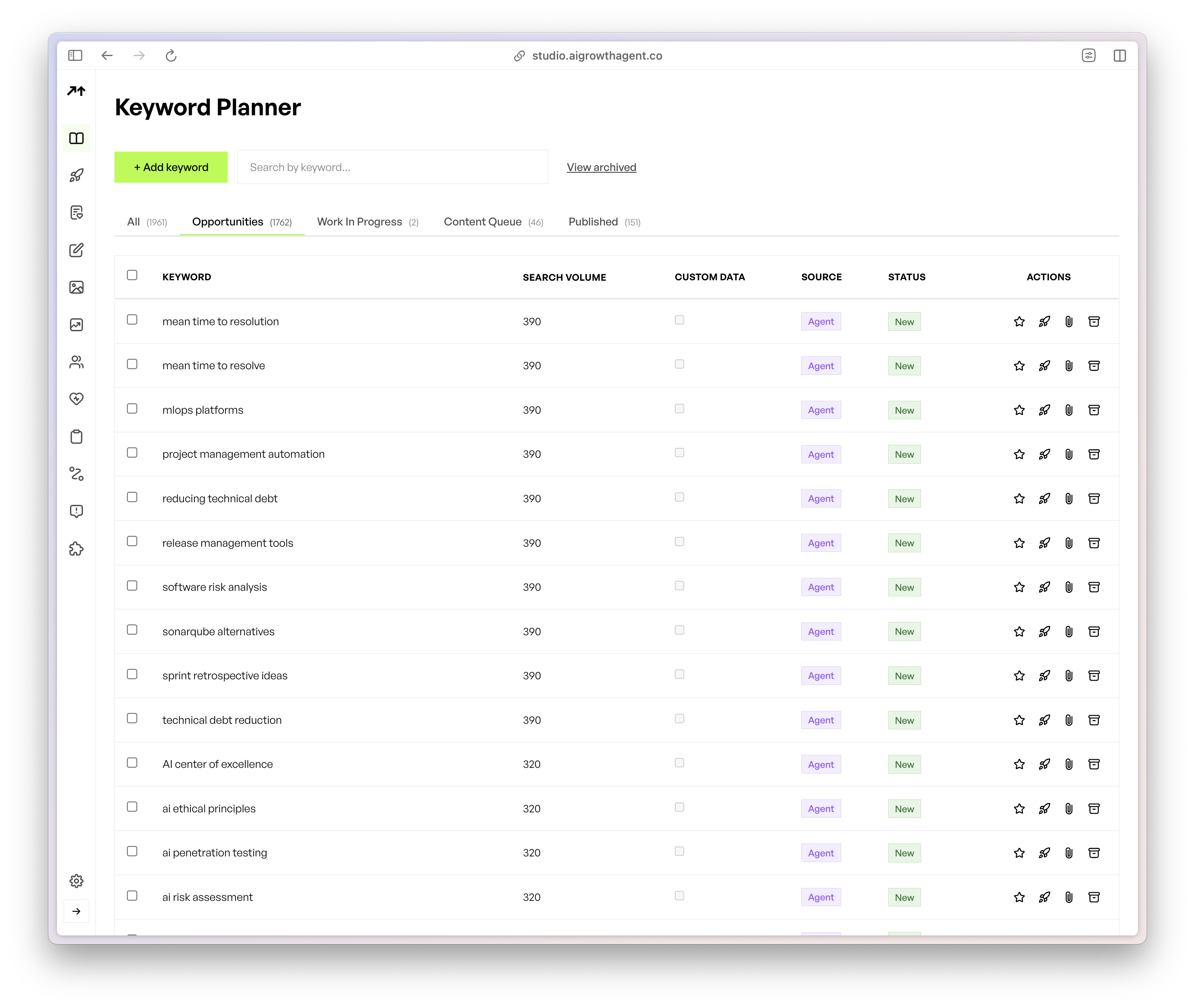
The system organizes these opportunities into three primary cluster types, each with different authority-building potential.
| Cluster Type | Example Keywords | Authority Potential |
|---|---|---|
| How-to Guides | “how to scale authoritative SEO content with AI” | High, educational intent |
| Tool Comparisons | “programmatic SEO with AI vs manual” | Medium, commercial intent |
| Community Discussions | “authoritative SEO content with AI Reddit” | High, social proof |
3. Deploy Technical Infrastructure for Programmatic Publishing
A dedicated blog architecture on a subdomain such as blog.yourcompany.com creates the technical base for programmatic content deployment. This infrastructure includes advanced schema markup, fast site speed, mobile responsiveness, and clean URL structures that support both traditional search engines and AI crawlers. The system also configures XML sitemaps, robots.txt files, and structured data markup, which work together to improve discoverability and increase citation potential in AI-generated responses.
See how our technical infrastructure deploys in under a week.
4. Autonomous Content Engineering Workflows
The programmatic content agent runs complete content workflows that include strategic briefing, multi-source research, fact-checking, and technical SEO preparation. Each article passes through automated research validation, competitive analysis, and quality checks before it goes live. The system produces a mix of tactical 800-word guides and in-depth 2000-word pillar pieces while keeping quality consistent at scale. Robust fact-checking protocols protect accuracy and credibility, which are essential for AI citation eligibility.
5. Inject 2026 AI Indexing Technology
Modern technical protocols prepare your content for direct AI ingestion and citation. Anthropic’s Model Context Protocol adoption reached over 7,600 servers by January 2026, giving AI agents real-time access to website data. AI Growth Agent implements LLM.txt files, advanced schema markup, and Model Context Protocol integration so AI search engines can interface directly with your content database. These protocols significantly increase citation probability in responses from ChatGPT, Perplexity, and Google AI Overviews.
6. Studio Feedback Loop for Human Oversight
AI Growth Agent Studio gives teams clear control and visibility over human-in-the-loop AI SEO workflows. Content managers can review, edit, and approve articles while leaving feedback that trains the AI agent over time. The system learns from these editorial preferences and gradually reduces the need for manual changes as it aligns with brand standards. This feedback loop protects content quality while preserving the scale advantages of programmatic generation.
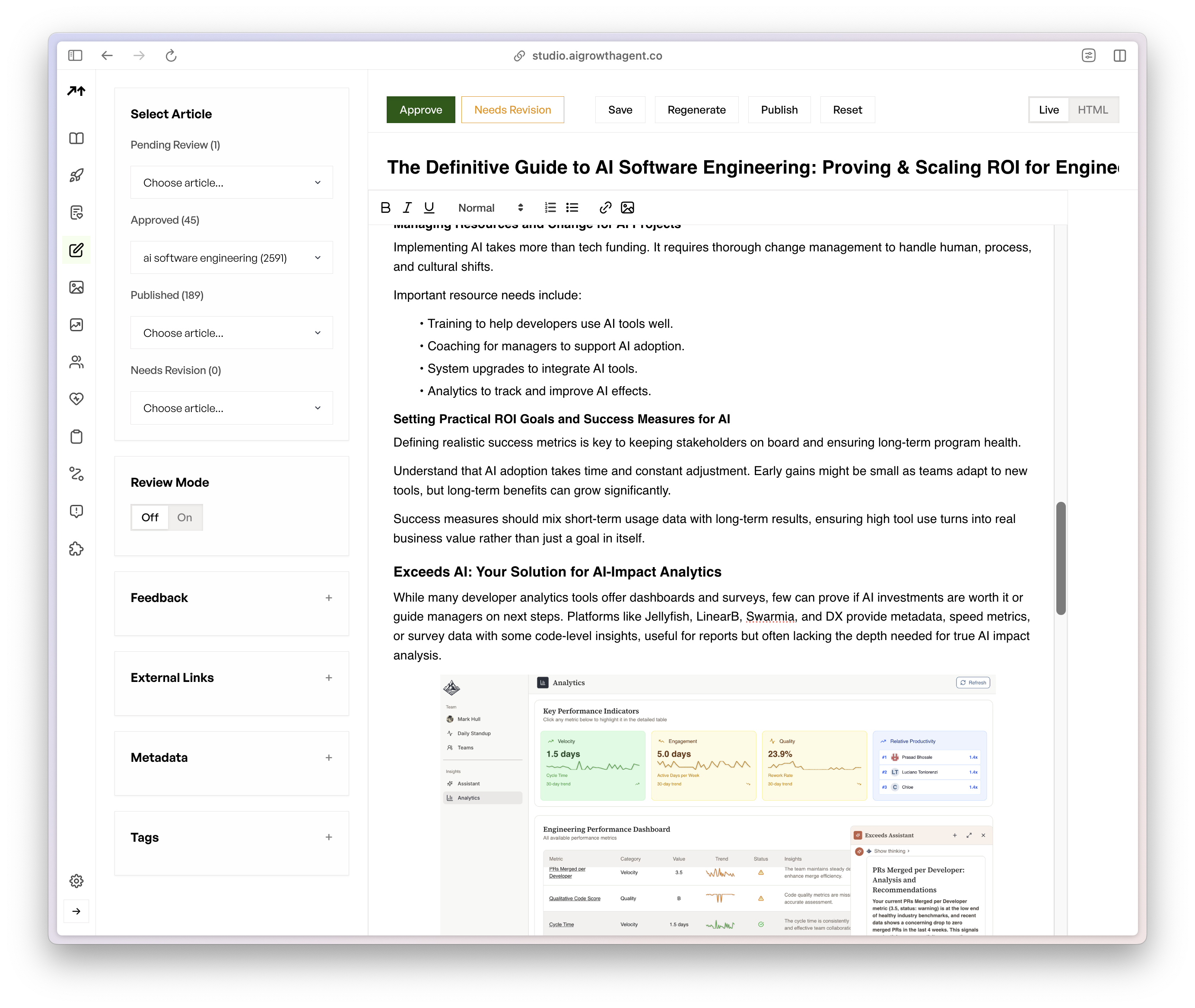
Explore Studio feedback and approval workflows tailored to your team.
7. Real-Time Topic Injection and Publishing
AI-driven content updates allow your brand to react quickly to trending topics and breaking news in your industry. The system can turn a trending news link into an optimized article within minutes, which captures search demand from emerging topics while keeping brand voice and technical SEO intact. Multi-tenant capabilities support multiple brands or product lines from a single interface, and each entity keeps its own manifesto guidelines and content strategy.
8. Track AI Citations and Performance
Comprehensive monitoring tracks content performance across traditional search engines and AI platforms such as ChatGPT, Perplexity, and Google AI Overviews. The system surfaces heatmaps for keyword indexing, URL-level citation rates, and direct quotes from AI responses that reference your content. Integration with Google Search Console adds clear data on organic traffic growth and ranking improvements driven by programmatic content.
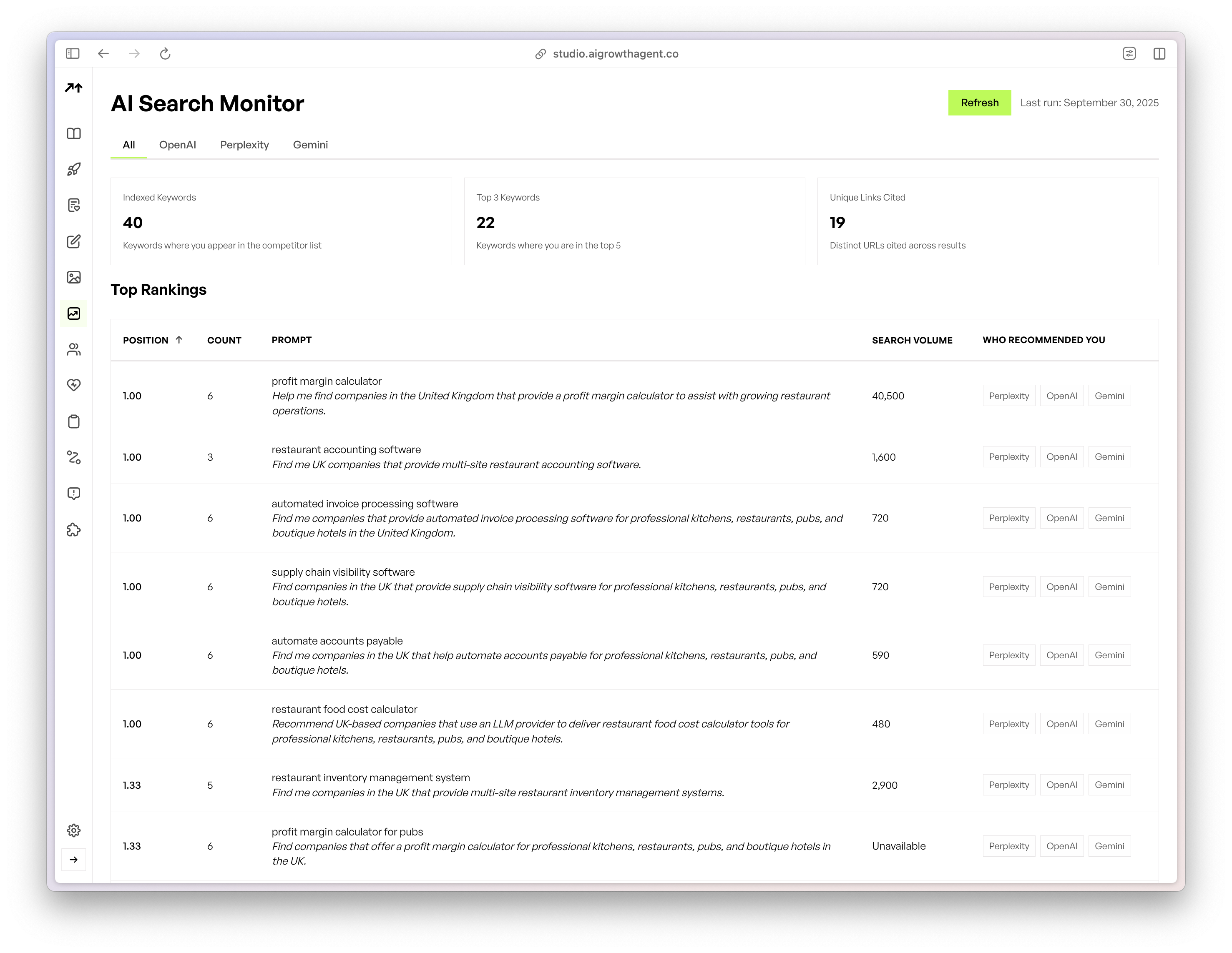
These tracking capabilities have helped clients in different industries achieve measurable AI citation wins within weeks.
| Client | Timeline | Outcome |
|---|---|---|
| Gitar.ai | 2 months | Top citations for “AI CI/CD automation” |
| Bucked Up | 3 weeks | #1 citation for “best protein soda” |
| Exceeds AI | 2 weeks | Perplexity top alternative recommendation |
Explore citation tracking dashboards and real-time performance metrics in the Studio.
Common Mistakes and Troubleshooting in Programmatic SEO with AI
Most programmatic SEO failures start with generic prompting that ignores brand-specific manifesto guidelines, which produces content that lacks expertise signals and rarely earns AI citations. Many teams also skip advanced schema markup and modern technical protocols that AI indexing now expects, so their content stays invisible to large language models even when it ranks well in traditional search.
| Common Pitfall | Solution | Impact |
|---|---|---|
| Generic AI prompts | Manifesto-driven guardrails | Maintains brand expertise |
| Missing schema markup | Automated technical optimization | Improves AI citation rates |
| No human oversight | Studio feedback loops | Prevents quality degradation |
| Single-brand focus | Multi-tenant architecture | Scales across portfolios |
53% of content leaders express concerns about AI content quality control, so robust human-in-the-loop processes and technical safeguards are essential for sustainable programmatic SEO.
Verifying Outcomes and Measuring Results
Programmatic SEO success now includes AI citation rates, brand mentions in AI responses, and topical authority across multiple search environments, not just organic traffic. AI-assisted content workflows achieve 12% productivity gains while still meeting the quality standards required for long-term performance.
Key performance indicators include weekly citation tracking across major AI search platforms, organic traffic growth from programmatic content, keyword ranking improvements, and brand authority signals. The AI Growth Agent Studio provides real-time dashboards that surface these metrics in a single view, which makes it easier to spot trends and issues without manual reporting.
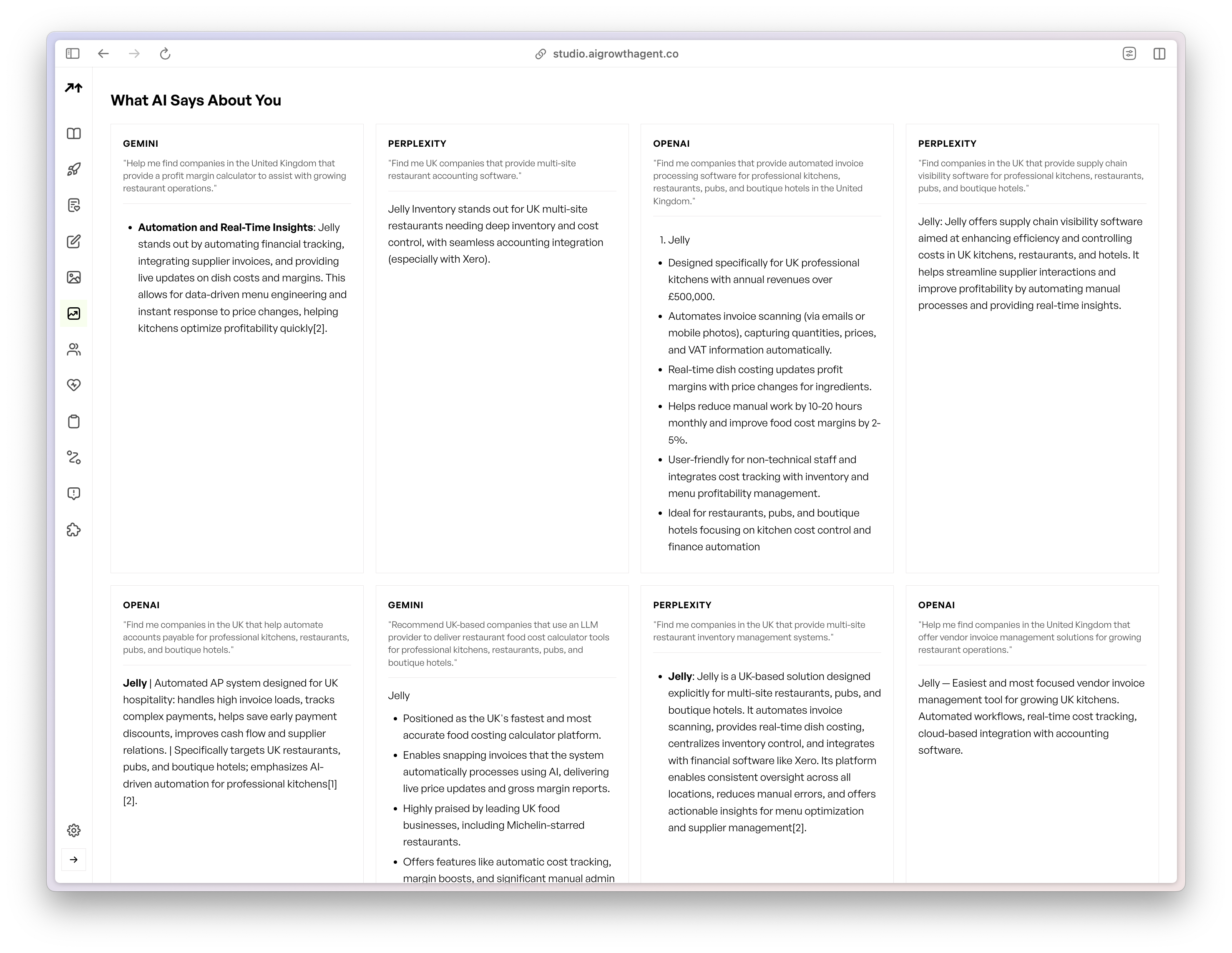
Because dashboards update continuously, teams can run weekly performance reviews during the first phase of deployment and catch problems early. Once the system shows stable autonomous performance, reviews can shift to monthly cycles. Initial AI citations usually appear within 2-3 weeks of consistent publishing, and broad topical authority often develops within 2-3 months.
Set up a measurement framework for your programmatic SEO rollout with the AI Growth Agent team.
Advanced Scenarios and Next Steps for Mature Programs
Mature programmatic SEO setups can expand into multi-tenant deployments for private equity portfolios, database-to-content automation for proprietary data, and real-time content injection for aggressive trend capture. These advanced scenarios require careful technical design and ongoing tuning so quality stays high while scale increases.
Future AI for SEO content updates will likely include stronger multimodal content generation, better fact-checking systems, and deeper connections with new AI search platforms. Organizations that already run programmatic SEO should plan quarterly strategy reviews so they can adjust to changing AI search algorithms and technical standards.
Frequently Asked Questions
How quickly can I publish my first programmatically generated article?
AI Growth Agent’s streamlined onboarding process supports first article publication within one week of initial setup. The process starts with a one-hour manifesto creation session, then moves into technical infrastructure deployment and content strategy planning. Most clients see their first optimized article live within 5-7 business days, and full programmatic workflows follow soon after.
Can I scale authoritative SEO content with AI for free?
AI Growth Agent offers free demo sessions to help you evaluate fit, but full programmatic SEO requires robust technical infrastructure, advanced AI models, and continuous optimization that sit at premium service levels. Free AI tools usually lack the technical depth, brand-specific training, and automated publishing systems needed for authoritative content scaling at enterprise scale.
How does this approach address authoritative SEO content with AI Reddit discussions?
Reddit communities often debate programmatic SEO challenges and request proven workflows for scaling authoritative content. AI Growth Agent’s manifesto-driven approach directly answers common Reddit concerns about quality at scale by combining technical sophistication with human oversight that community members frequently recommend.
What team size is required to manage programmatic SEO operations?
AI Growth Agent’s autonomous system needs minimal ongoing management, usually one content approver or marketing manager for oversight and strategy. The Studio interface lets a single person run comprehensive programmatic operations, while optional collaboration features support larger organizations with multi-step approval workflows.
How does Model Context Protocol compare to traditional schema markup?
Model Context Protocol offers stronger AI indexing capabilities than traditional schema markup because it enables real-time data access and richer content understanding. Schema markup still matters for classic search engines, but MCP lets AI agents connect directly to your content database, which can significantly improve citation rates and discoverability in AI-generated answers.
Can the system handle multiple brands simultaneously?
AI Growth Agent’s multi-tenant architecture supports parallel programmatic SEO operations for multiple brands, each with its own manifesto, content strategy, and publishing schedule. This structure works especially well for private equity portfolios, venture capital firms, and enterprises that manage several product lines or subsidiary brands.
What timeline should I expect for measurable results?
Most brands see initial AI citations within 2-3 weeks of steady publishing, and broad topical authority within 2-3 months. 65% of businesses notice better SEO results with AI assistance, and many clients experience meaningful organic traffic growth and stronger search visibility within the first quarter of implementation.
Is this solution appropriate for my premium brand?
AI Growth Agent focuses on premium brands that already have solid SEO foundations and clear market positioning. The system suits companies that want to become definitive authorities in their category through sophisticated content architectures and strong technical execution. Brands with weak SEO baselines or unclear positioning should address those gaps before they invest in programmatic scaling.
Conclusion: Launch Programmatic SEO with AI Growth Agent
The 8-step programmatic playbook gives premium brands a clear framework to scale authoritative SEO content with AI while preserving the expertise signals required for AI search dominance. From manifesto-driven content creation to advanced protocols like Model Context Protocol, the system helps teams reach new content velocity without sacrificing authority.
Competing in the 2026 AI-driven search environment requires more than basic content generation. Brands need strong technical architecture, continuous optimization, and sharp positioning that only autonomous programmatic systems can deliver at scale. The advantage goes to teams that implement these systems early and operate them consistently.
Evaluate whether autonomous programmatic SEO fits your brand’s authority goals and see how AI Growth Agent can help you earn citations in ChatGPT, Perplexity, and Google’s AI-powered search.