


Key Takeaways
- AI search systems such as ChatGPT, Gemini, and Perplexity now answer many queries directly inside their interfaces, so marketing leaders must optimize for both discovery and AI citation, not traffic alone.
- Search Experience Optimization (SXO) extends traditional SEO by connecting search visibility with on-page experience, engagement, conversions, and brand mentions inside AI-generated answers.
- Generative Engine Optimization (GEO) focuses on clarity, structure, and factual precision so large language models can extract, summarize, and attribute information reliably.
- Authoritative, structured, and programmatic content is now essential at enterprise scale to maintain visibility as AI-generated material increases across every topic.
- AI Growth Agent provides a programmatic SXO and GEO solution for enterprises, combining automated content strategy, structured publishing, and AI search monitoring; book a demo to see how it works.
The AI Search Revolution: Why Traditional SEO Is Not Enough Anymore
The Shifting Search Landscape
Modern AI-powered search engines now serve direct answers instead of only sending users to websites. Traditional SEO is primarily about getting users to the site through keywords, backlinks, and technical optimizations, whereas SXO is about what happens after the click, ensuring an engaging, conversion-focused experience. Marketing leaders now need visibility inside AI responses and a strong on-site experience when users do click through.
Defining the Problem: Shrinking Digital Footprints
AI increases content volume faster than most brands can publish. This volume dilutes individual voices as users receive concise answers inside AI interfaces instead of visiting many separate sites. Brands that do not supply clearly structured, authoritative information risk shrinking visibility in both search results and AI-generated answers.
Introducing Search Experience Optimization (SXO)
Search Experience Optimization shifts the focus from traffic alone to the full search journey. SEO is primarily about pleasing algorithms, whereas SXO is fundamentally about pleasing human users and optimizing the full search journey from query to task completion. SXO connects content quality, UX, and technical structure with outcomes such as leads, sales, and AI citations.
Schedule a consultation session to review how SXO can protect your brand visibility inside AI search.
Understanding Search Experience Optimization (SXO): Beyond Clicks to Citations
What Is SXO?
SXO is defined as optimizing content, data, and search technology to improve on-site and in-app search experiences, contrasting it with SEO’s focus on external search engine rankings. SXO joins UX design, relevance, and intent satisfaction. SXO emphasizes user experience signals such as page speed, mobile performance, content readability, visual design, and intuitive navigation as core levers for search performance, which also help AI systems trust and reuse your content.
SXO vs Traditional SEO
SXO is an evolution where SEO still brings traffic, but SXO keeps visitors on-site and moves them toward conversion, linking search visibility directly to business metrics like leads and sales. Traditional SEO is Google-centric and website-centric, aiming to rank web pages in Google SERPs using on-page, off-page, and technical tactics, while SXO considers discovery across search, AI assistants, and voice interfaces.
The Rise of Generative Engine Optimization (GEO)
Generative Engine Optimization (GEO) is an approach specifically aimed at AI-powered search engines like ChatGPT, Google’s generative results, and Perplexity, contrasting it with traditional SEO aimed at SERPs. SEO’s goal is to rank web pages and drive clicks, whereas GEO’s goal is to be featured as a cited source inside AI-generated answers, shifting focus from click-through to in-interface answer visibility. GEO focuses on content that is scannable, precise, and highly structured for machine parsing, emphasizing structured data, clear citations, and integration of factual/statistical evidence.
Comparison Table: Traditional SEO vs SXO vs GEO
|
Feature |
Traditional SEO |
Search Experience Optimization (SXO) |
Generative Engine Optimization (GEO) |
|
Primary goal |
Drive organic clicks to a website |
Connect discovery with engagement, conversions, and AI citations |
Appear as a cited source inside AI-generated answers |
|
Focus |
Keywords, backlinks, and technical health for SERPs |
User experience, content authority, structured data, engagement metrics |
Content precision, structure for AI interpretation, and factual clarity |
|
Key metrics |
Traffic, rankings, impressions |
Dwell time, bounce rate, conversions, AI citations, brand mentions |
Citation frequency and visibility inside AI responses |
|
Content style |
Comprehensive, keyword-rich pages |
Scannable, modular, question-focused content |
Clear headings, bullet lists, explicit facts, Q&A blocks |
The Pillars of SXO Success: Authority and Structure
Building Authority in the AI Age
AI search optimization requires content that is context-rich, trustworthy, and modular, so AI systems can easily interpret, slice, and recombine it into helpful answers while still attributing sources. Deep topical authority comes from covering core themes in depth, with consistent expertise across many related queries. Building topical authority through depth and breadth on focused themes increases the probability of being chosen as a source in generative answers.
The Role of Structured Data
GEO-optimized content is characterized by clear structures, concise sections, and explicit facts, so models can extract and reuse information without misinterpretation. Schema markup, clear headings, bullet lists, and explicit factual statements help both search engines and LLMs parse and attribute information. GEO encourages explicitly attributed facts, clean headings, lists, and schema-like structuring, all of which make it easier for LLMs to extract and attribute information correctly.
Optimizing for Conversational and Voice Search
SXO responds to newer behaviors such as voice search and conversational queries by optimizing for natural language questions, FAQ-style content, and featured snippets rather than only exact-match keywords. This format also aligns with how AI models receive prompts and deliver structured, conversational answers.
Schedule a demo to discuss how structured, conversational content can increase your AI visibility.
Implementing SXO at Enterprise Scale: The AI Growth Agent Approach
The Enterprise Challenge
Large organizations need both high content volume and consistent quality across many products, regions, and channels. Manual workflows and traditional SEO agencies often cannot match the speed and structure requirements of AI search, especially when each page must include advanced schema, clear information hierarchy, and ongoing optimization.
AI Growth Agent as a Programmatic SEO Platform
AI Growth Agent is a Programmatic SEO Agent platform that designs and maintains large-scale content architectures for search, SXO, and GEO. The system focuses on repeatable processes and automation instead of manual copywriting, so teams can increase coverage across topics without losing technical quality or brand standards.
How AI Growth Agent Delivers End-to-End SXO
AI Growth Agent supports the full SXO lifecycle with three core capabilities:
- Autonomous content engineering that handles keyword clustering, content briefs, on-page optimization, and technical elements such as schema markup, LLM.txt files, and Model Context Protocol configurations.
- Multi-tenant deployment for enterprises that manage multiple brands or product lines, with separate agents for each domain or subdomain and tailored keyword strategies and tones.
- AI search monitoring that tracks citation frequency, brand mentions, and URLs referenced in ChatGPT, Gemini, and Perplexity responses, creating a closed feedback loop.
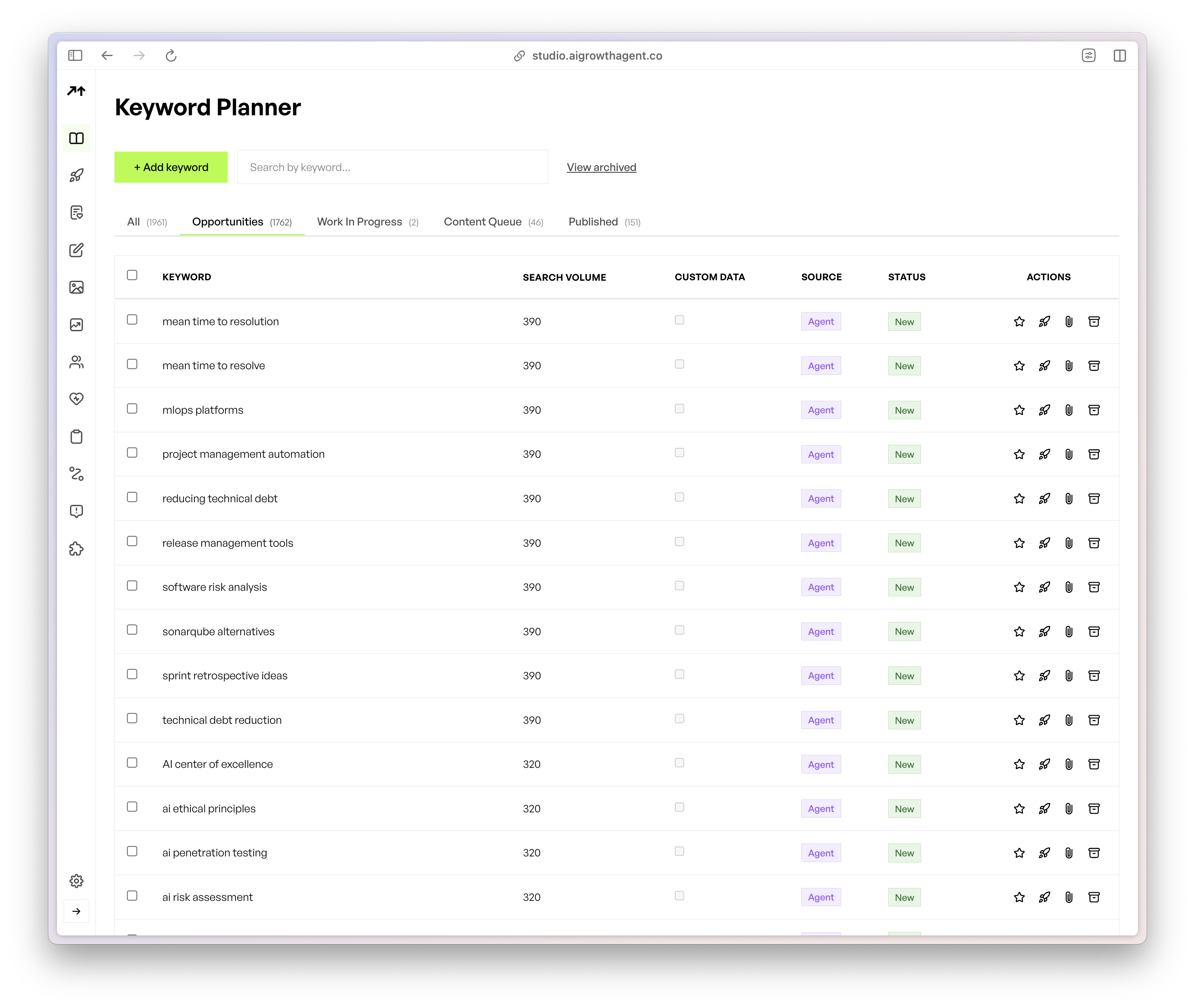
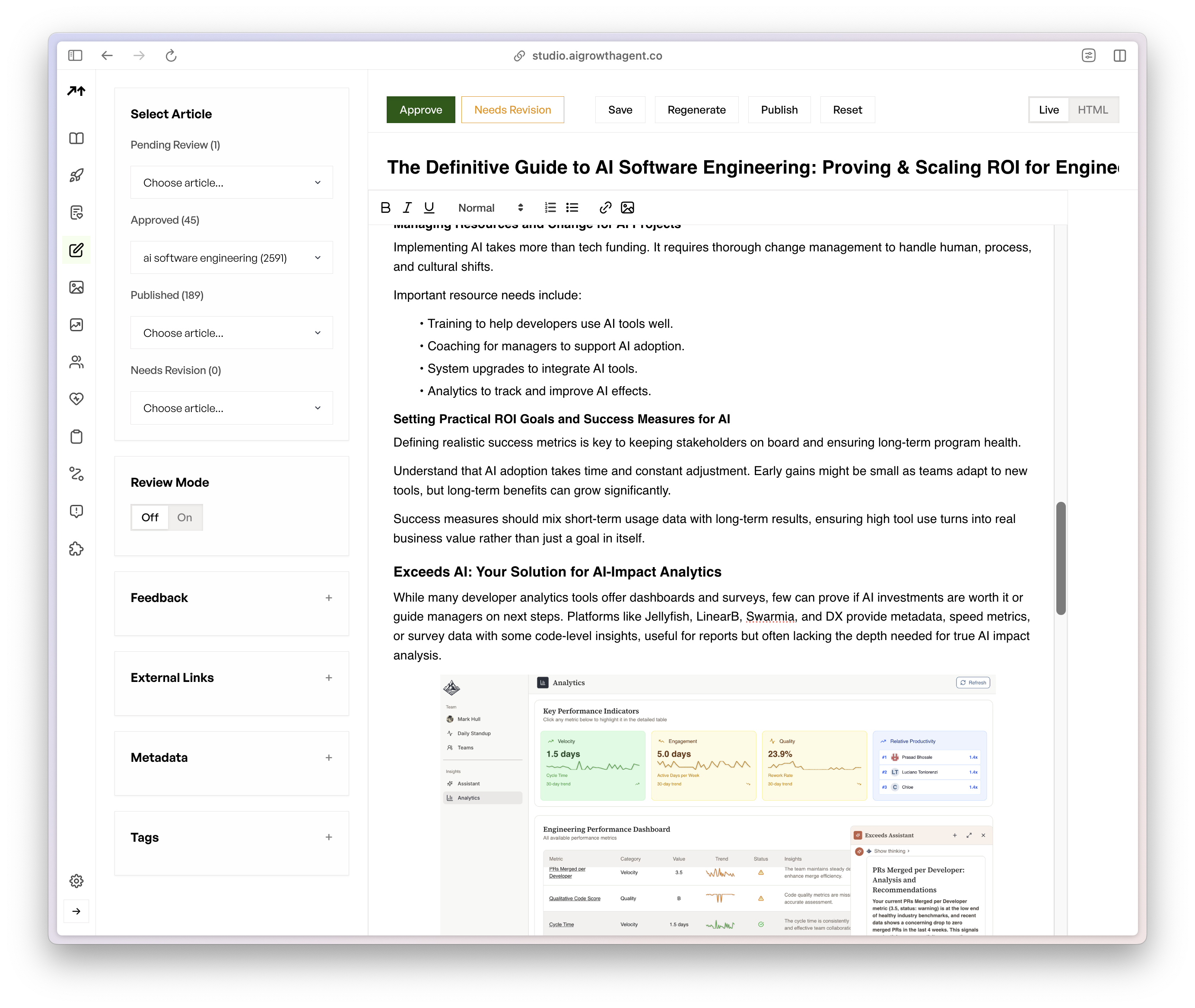
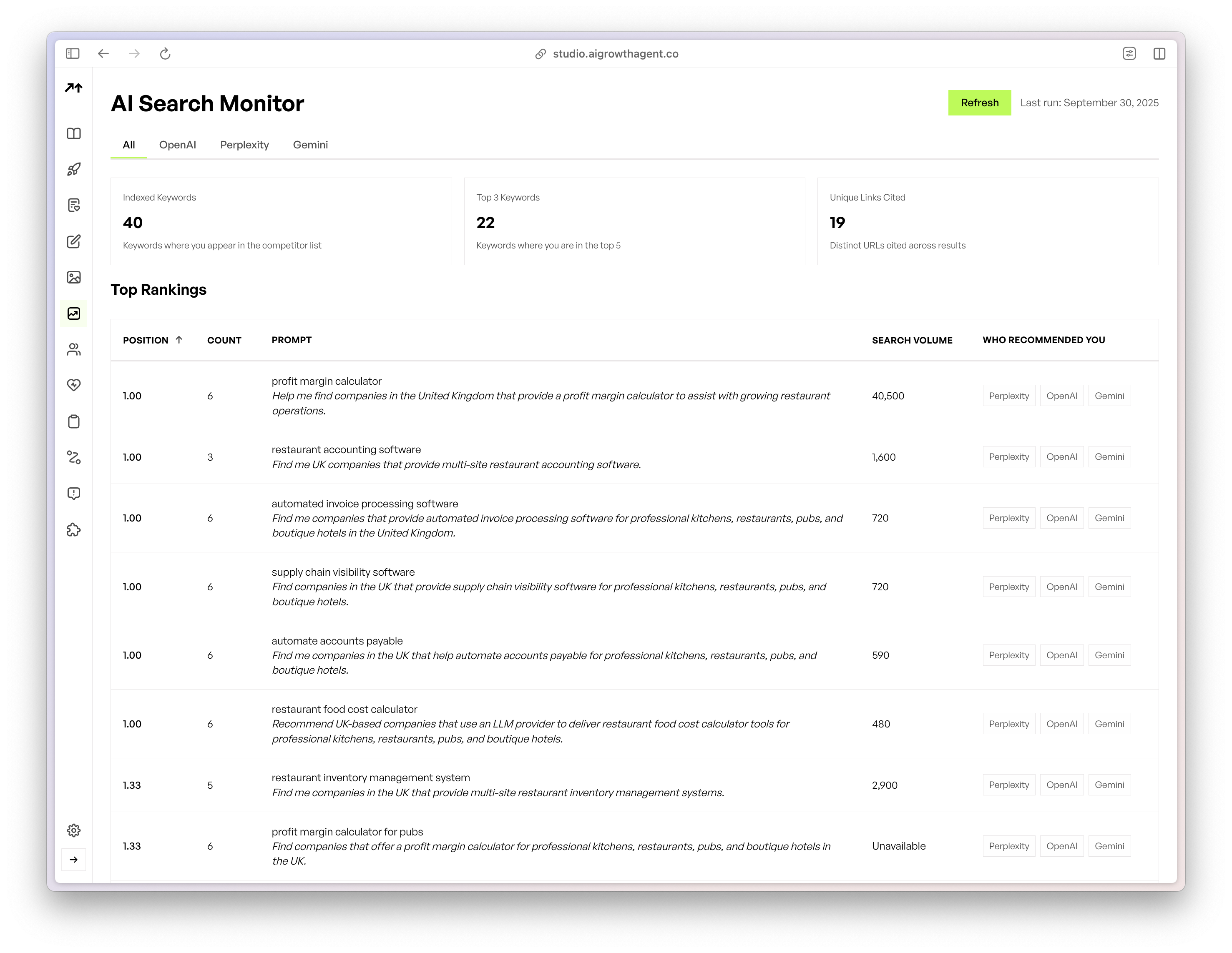
Connect with us for a demo to review how these capabilities fit your current stack and goals.
Overcoming Common SXO Challenges
Strategic Obstacles for Marketing Leaders
SXO is a cross-disciplinary practice involving UX design, content strategy, analytics, and development, highlighting organizational implications compared with siloed SEO teams. Many teams still measure success only by rankings and traffic, which makes it harder to prioritize UX improvements, structured data, and AI-focused content formats. Transitioning from SEO to SXO requires a mindset shift from traffic acquisition to experience optimization.
Why Traditional Solutions Struggle
Agency and manual models rely on people to create, format, and publish every asset, which limits scale and slows iteration. Basic AI writing tools generate draft text but usually leave strategy, information architecture, schema, and publishing workflows to internal teams.
How AI Growth Agent Helps Remove Friction
AI Growth Agent provides a single platform that combines strategy, content production, and technical implementation. Marketing leaders can define objectives and guardrails, while the system manages topic expansion, structured content creation, and measurement across AI search channels.
Frequently Asked Questions about Search Experience Optimization (SXO)
How does SXO differ fundamentally from traditional SEO?
SXO expands traditional SEO by focusing on what users experience after they discover your content and how AI systems cite it. Traffic, rankings, and clicks remain important, but SXO adds engagement, task completion, and AI attribution as core success measures.
Why is programmatic content essential for successful SXO?
AI-driven search surfaces a wide range of long-tail and conversational queries. Programmatic content helps brands cover more of these queries with consistent structure, quality, and technical optimization than manual workflows can support.
What kind of metrics should marketing leaders track for SXO success?
Useful SXO metrics include AI citation frequency, brand mentions inside AI answers, dwell time, bounce rate, conversion rate, and task completion. Tracking schema coverage and content performance across different AI platforms also clarifies where to improve.
Can I implement SXO without a dedicated technical team?
Many SXO fundamentals, such as better content structure and clearer calls to action, do not require great technical skills. Advanced SXO and GEO at enterprise scale benefit from automation platforms like AI Growth Agent that handle schema, AI-oriented formatting, and monitoring.
What role does AI attribution and citation play in SXO?
AI attribution and citation show that models treat your content as a trusted source. Consistent citation increases brand exposure even when users do not click through, which makes it a central outcome for SXO and GEO strategies.
Advance Your SXO Strategy with AI Growth Agent
Position Your Brand for AI-First Search
Search Experience Optimization, supported by GEO, reflects how discovery now spans classic search results, AI assistants, and voice interfaces. Traditional SEO and AI search optimization are complementary, not mutually exclusive: SEO provides the backbone for indexation and discovery, while AI optimization ensures inclusion in AI-generated conversations. Authoritative, structured, and scalable content now underpins all three.
Next Steps
Brands with strong products and clear positioning can use SXO and GEO to extend that strength into AI search experiences. Book a strategy session with AI Growth Agent to explore how programmatic content engineering and AI search monitoring can support your 2026 growth targets.
