


Key Takeaways
- AI search in 2026 requires enterprise SEO tools that focus on structured, programmatic content rather than only keywords and backlinks.
- Effective SEMrush alternatives for enterprises must support large-scale content engineering, AI search optimization, and reliable integration with existing stacks.
- Most traditional SEO platforms provide data and recommendations but depend on manual teams, which limits programmatic SEO speed at enterprise scale.
- Autonomous SEO platforms like AI Growth Agent handle strategy, content creation, technical optimization, and AI search monitoring in a unified workflow.
- Enterprise teams can evaluate AI Growth Agent as a SEMrush alternative by booking a live demo: Schedule an AI Growth Agent demo.
The Evolving Search Landscape: Why Traditional SEO Tools Fall Short for Enterprises
Enterprise marketers face a different search environment in 2026. AI-generated content expands faster than human teams can respond, so maintaining brand authority now depends on consistent, technically sound content output at scale.
The modern SEO landscape favors programmatic speed, which is the ability to publish optimized, structured content daily, not monthly. Modern SEO stacks now combine several specialized tools, and AI tools increasingly automate high-volume marketing tasks. Traditional platforms that center on keywords and backlinks often do not address the technical structure, semantic clarity, and consistency that AI search engines like ChatGPT, Gemini, and Perplexity favor for citation.
Enterprise teams that want a programmatic edge in AI search can evaluate autonomous approaches to content engineering. Book an AI Growth Agent demo to explore this model.
Evaluation Criteria: Selecting an Enterprise SEO Solution in an AI-First World
Enterprise buyers looking at SEMrush alternatives benefit from criteria that go beyond keyword tracking and link audits.
Scalability for AI Content Engineering
Scalability now means consistent production of high-quality, schema-rich content without bottlenecks. Enterprise teams need systems that handle strategy, technical optimization, metadata, and publishing within one workflow, instead of tools that stop at ideation or copy assistance.
AI Search Optimization and Citation
AI search optimization focuses on how language models interpret, trust, and cite content. Enterprise-ready tools need features that expose clean structures, machine-readable context, and AI-specific signals, not only traditional SERP rankings.
Integration Capabilities
Enterprise workflows depend on smooth connections with CMS platforms, analytics, and CRM systems. The right SEMrush alternative should reduce operational friction while supporting revenue-focused use cases, similar to how many buyers now favor platforms that support campaign orchestration and revenue impact.
Automation and Autonomy
Automation handles repetitive tasks, while autonomy coordinates strategic execution. Many SEO tools still require humans to translate insights into briefs, drafts, and optimized pages, even as AI tools can now automate programmatic-scale work. Enterprise teams gain more value from platforms that plan, write, optimize, and publish with minimal handoffs.
Data Depth and Actionability for AI Search
Standard rank tracking does not capture AI answer visibility. Enterprises increasingly need analytics that cover AI Overviews, LLM answers, and citations across ChatGPT, Gemini, and Perplexity. AI overview and LLM visibility tracking now appear in competitive tools, which signals growing demand for AI-native SEO metrics.
Top SEMrush Alternatives: A Strategic Comparison for Enterprise Needs
The SEMrush alternatives market splits between tools built for traditional SEO workflows and platforms that support AI-era, programmatic SEO.
Ahrefs
Ahrefs provides strong backlink data and content research features. The platform equips teams with insights but still relies on manual content strategy, drafting, and publishing rather than autonomous content engineering.
BrightEdge
BrightEdge targets larger businesses and offers AI-driven search insights, forecasting, and recommendations. Its strengths include AI-powered recommendations and enterprise-grade reporting, while content execution still leans on internal teams.
Moz Pro
Moz Pro focuses on keyword research, audits, and on-page recommendations. The platform is useful for diagnostics and planning but does not automate full content lifecycles.
Similarweb
Similarweb specializes in market and traffic intelligence. The platform excels at competitive and audience insights but does not function as a programmatic SEO execution tool.
Botify
Botify supports large and complex sites with deep technical SEO diagnostics. It identifies crawl and indexing issues at scale but does not generate or deploy content autonomously.
Table: SEMrush Alternatives: Enterprise Feature Comparison
|
Feature/Tool |
AI Growth Agent |
Ahrefs |
BrightEdge |
|
Autonomous Content Engineering |
Yes |
Limited |
Limited |
|
AI Citation Optimization |
Yes (LLM.txt, MCP, AI monitoring) |
Limited |
Moderate |
|
Enterprise Scalability |
High (multi-tenant deployment) |
High |
High |
|
Real-Time AI SERP Tracking |
Yes (ChatGPT, Gemini, Perplexity) |
No |
No |
Enterprise marketers who need autonomous content execution and AI search visibility can assess how AI Growth Agent compares in practice. Book a demo today.
AI Growth Agent: The Autonomous Programmatic SEO Solution for Enterprises
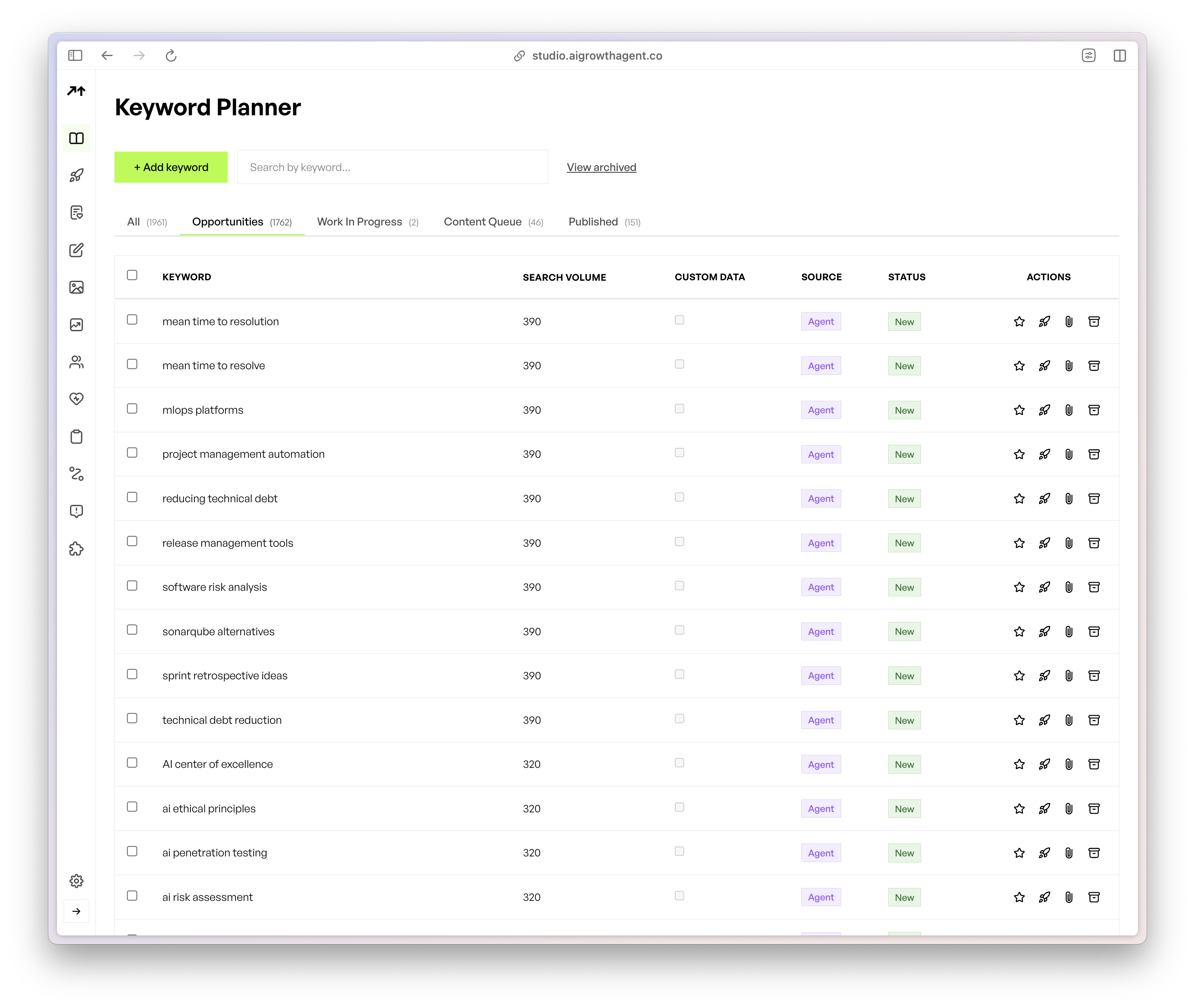
AI Growth Agent focuses on autonomous programmatic SEO for enterprise brands. The platform executes the full SEO lifecycle, from strategy and planning to content creation, optimization, and publishing, with AI search monitoring built in.
White-Glove Onboarding and Company Manifesto
AI Growth Agent onboarding starts with a focused kickoff session that programs the core guidelines of the SEO agent. This process produces a Company Manifesto that defines positioning, voice, and boundaries, so all autonomous content aligns with brand and compliance standards.
Autonomous Technical Infrastructure
The platform sets up an optimized blog architecture, often as a subdomain that mirrors the main site. This technical foundation is designed for programmatic content, with available integrations for WordPress, HubSpot, Webflow, and other CMS platforms.
Programmatic SEO Content Agent
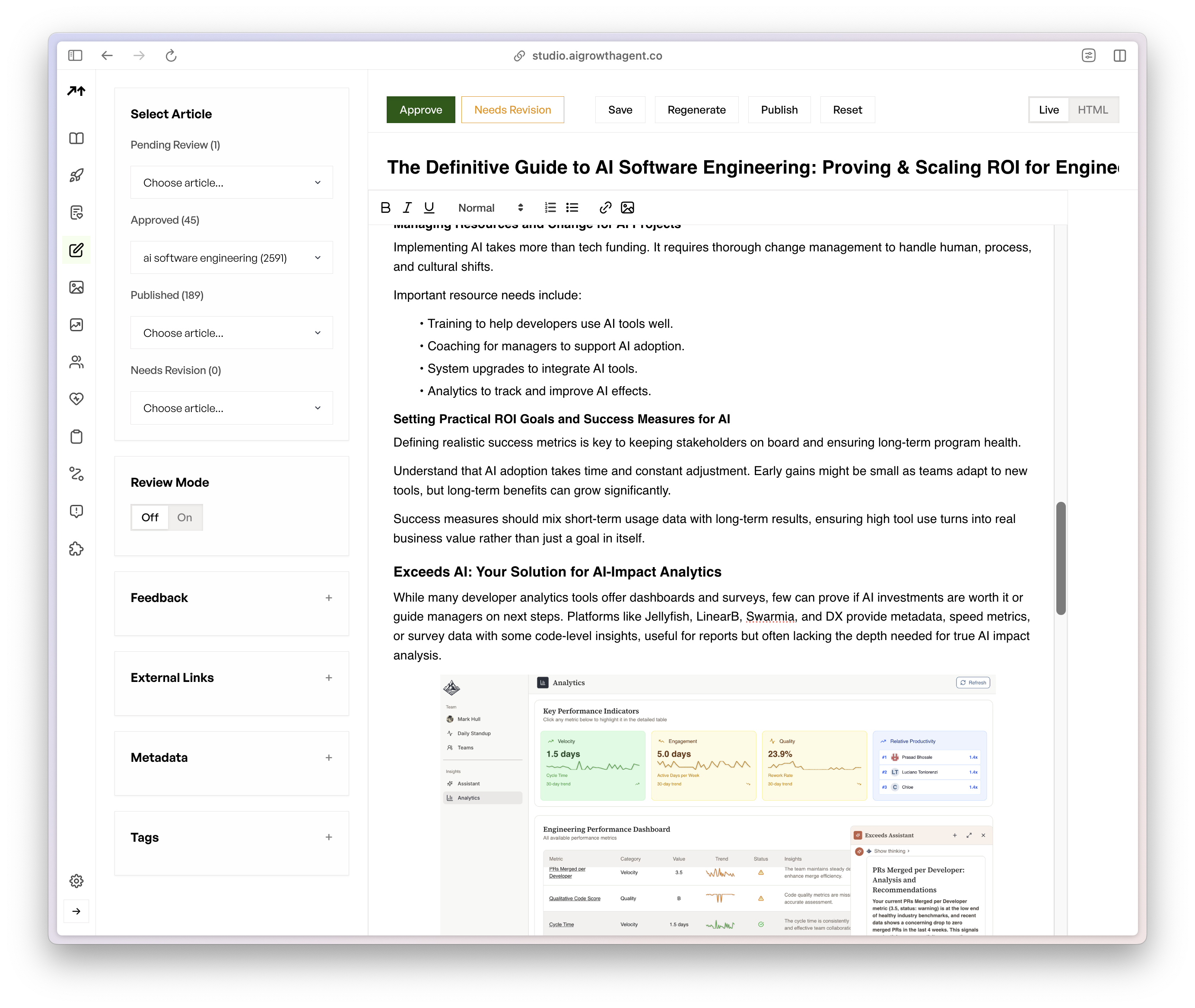
The content agent plans topics, performs research, drafts articles, applies fact-checking workflows, and adds technical SEO elements such as schema and metadata. This end-to-end approach aims to deliver content that AI search engines can understand, rank, and cite reliably.
Multi-Tenant Programmatic Deployment
Enterprise teams can run multiple programmatic SEO agents from one interface. Each agent can follow a distinct brand voice, product focus, or portfolio company strategy, which benefits private equity, venture groups, and multi-brand organizations.
Real-Time Programmatic SEO Content Injection
AI Growth Agent can publish SEO-optimized articles in response to emerging topics and news, so enterprises capture search and AI attention early on high-intent themes.
Database-to-Content Automation
The platform converts proprietary datasets, internal reports, or product catalogs into structured SEO assets. This approach turns underused data into content clusters that reinforce authority in AI and traditional search.
AI Search Monitor and Feedback Loop
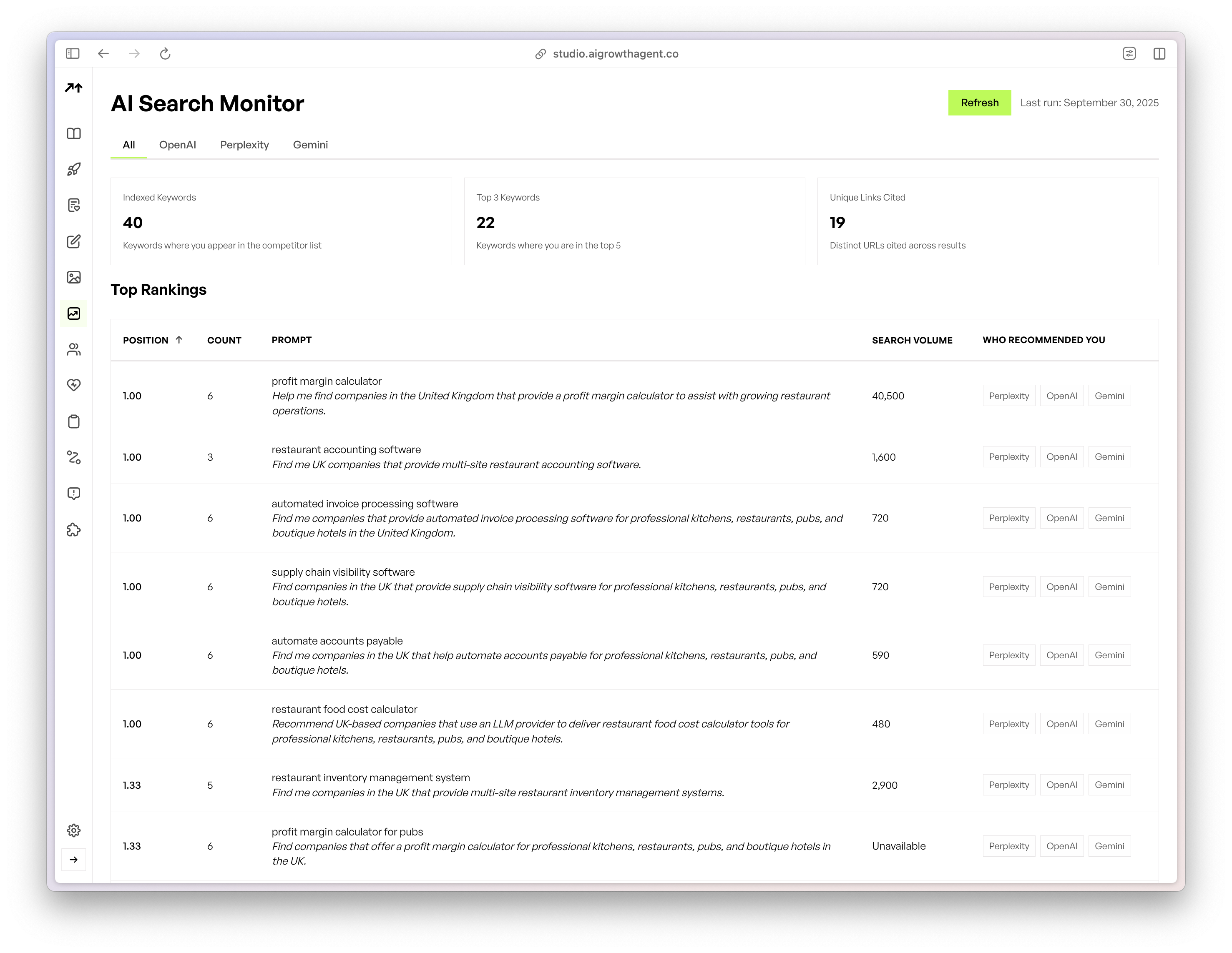
The AI Search Monitor tracks how often content surfaces in answers from ChatGPT, Gemini, and Perplexity, and provides visibility into where and how brands are mentioned. It connects with Google Search Console to align AI visibility with traffic, clicks, and conversions.
Enterprise marketers who want to reduce manual SEO workloads and improve AI search visibility can evaluate this autonomous model in a live environment. Discover autonomous programmatic SEO with AI Growth Agent.
Frequently Asked Questions (FAQ) about AI Growth Agent and Enterprise SEO
Why does AI-driven search require a different SEO approach than SEMrush?
AI-driven search engines prioritize authority, context, and structured information instead of simple keyword density or link volume. SEMrush supports research and competitive analysis, while AI Growth Agent centers on programmatic content engineering and AI citation, which addresses the technical needs of AI models.
Can existing enterprise SEO tools integrate with AI Growth Agent?
AI Growth Agent works alongside existing CMS platforms and analytics tools while supplying its own optimized content infrastructure. Many teams keep SEMrush or similar tools for research but depend on AI Growth Agent for strategy execution, content creation, and technical optimization at scale.
How does AI Growth Agent maintain content quality and brand voice at scale?
The Company Manifesto created during onboarding encodes brand voice, positioning, and rules. The agent then produces content within those guardrails and improves output over time through feedback provided in the AI Growth Agent Studio.
Conclusion: Enhance AI Search Visibility with Autonomous Programmatic SEO
Enterprise marketers who want reliable visibility in AI search need systems that engineer high-authority content at scale, not just tools that report rankings. Marketing stacks continue to move toward AI-driven execution and decision-making, which increases the importance of autonomous SEO platforms.
AI Growth Agent focuses on programmatic content engineering and AI search monitoring so enterprise brands can become trusted sources for both traditional search engines and AI assistants. Schedule a demo of AI Growth Agent to evaluate it as a SEMrush alternative for 2026 and beyond.
