


AI-powered search tools such as ChatGPT, Google AI Overviews, and Perplexity are changing how brands build visibility and authority.
Traditional SEO agency onboarding often takes 6–12 months before producing meaningful results, which creates risk in fast-moving markets. What you’ll learn in this article instead:
- Manual workflows limit content volume, slow technical implementation, and delay the citations and recommendations that matter in AI search.
- Programmatic SEO compresses onboarding into days, increases consistent content output, and aligns better with how AI systems evaluate authority.
- AI Growth Agent automates technical setup, content planning, content creation, and AI search monitoring to support faster authority building.
- Marketing leaders can use accelerated onboarding to reduce the risk of competitors shaping AI narratives about their category and brand.
Why Rapid SEO Onboarding is Now a Critical Imperative for AI Search
The relationship between businesses and search engines has changed in the AI era. Traditional SEO focused on manual keyword targeting and gradual ranking gains.
Modern AI search favors programmatic content that demonstrates authority and earns citations within large language models (LLMs). The shift to AI-powered search engines has created a new set of requirements for establishing digital authority.
Google’s integration of AI Overviews into search results shows how discovery and consumption now flow through AI-generated summaries. These AI features appear for billions of searches each month and change how users interact with results. As AI systems like ChatGPT, Gemini, and Perplexity become primary discovery tools, the volume of AI-generated content grows. Your company’s digital presence, your “pixel” on the internet, shrinks in relative size.
The pace of information creation outstrips what traditional SEO methods can support. LLMs tend to reward recency, depth, and consistent structure. Publishing one or two manually crafted posts per month rarely maintains technical relevance in this environment. Marketing leaders report that traditional SEO strategies are becoming less effective as AI search engines prioritize content that shows comprehensive authority at scale.
Brands that do not define themselves in AI search give competitors room to do it for them. In AI ecosystems, a lack of content volume becomes a strategic liability. When a brand does not provide enough relevant data points, AI systems turn to the next best source, often a direct competitor. That competitor earns citations, recommendations, and narrative control over how the AI describes your category.
Traditional SEO Agency Onboarding Timelines: Slow, Costly, and Outdated for AI Search
Traditional SEO agencies usually operate on a manual “craftsman” model built for an earlier phase of search. These firms rely on people-heavy workflows that are slow, costly, and difficult to scale to programmatic SEO levels. Marketing leaders evaluating options need a clear view of how this model limits AI search performance.
Typical Phases of Traditional SEO Agency Onboarding
Initial Discovery & Audit (Weeks 1–4): Traditional agencies begin with extensive manual audits of your existing SEO foundation. Teams analyze current content, technical infrastructure, keyword rankings, and your competitive set. This work can be thorough, yet it often consumes several weeks without producing new content or measurable value. Manual audits can also overlook opportunities for programmatic optimization that AI search engines now prioritize.
Strategy Development (Weeks 4–8): After the audit, agencies spend additional weeks creating an SEO strategy. This phase usually covers keyword research, content planning, and a technical roadmap. Strategy is important, but it often represents another month of billable hours with no new content published. In a fast-moving AI search environment, this delay can cause missed opportunities to establish early authority.
Content Planning & Creation (Weeks 8–16+): Content creation often exposes the main limitation of traditional agencies. Manual production is constrained by writer capacity and editorial bandwidth. Many agencies can produce only 2–4 in-depth articles each month. That pace rarely matches the content volume needed for AI search authority. Industry data shows that high-quality blog posts often take 3–4 hours to research and write, and this does not include technical optimization or publishing.
Technical SEO Implementation (Ongoing): Traditional agencies usually handle technical SEO implementation manually and coordinate with your development team. This coordination introduces added delays and dependencies. Schema markup, metadata optimization, and other technical elements are implemented piece by piece instead of through a programmatic system.
Time to See Meaningful Results (Months 6–12+): The combined effect of these phases creates long timelines. Many traditional agencies need 6–12 months to show significant results. In the AI search era, this gives competitors time to build authority and capture AI citations while your program is still in planning.
The manual craftsman model that once suited traditional search can become a liability when competing for AI search visibility. SEO professionals note that traditional timelines are lengthening as competition increases and AI systems expect more sophisticated content architecture before granting citations and recommendations.
AI Growth Agent: How Programmatic SEO Accelerates Onboarding for AI Authority
AI Growth Agent is built as an end-to-end programmatic SEO automation platform for the AI search era. Instead of relying on manual processes, the platform uses automation to help companies move from first meeting to first programmatically engineered article in about one week. This speed comes from automated handling of the full technical SEO lifecycle at a level that would be difficult for manual teams to match.
AI Growth Agent’s Accelerated Onboarding Framework
Day 1–7: White-glove onboarding and agent programming: Onboarding starts with a strategic one-hour kickoff session with an experienced journalist on the AI Growth Agent team.
This is a focused data-transfer conversation used to program the “brain” of your Programmatic SEO Agent. The session covers business positioning, narrative, ideal customers, and competitive landscape. The outcome becomes a detailed Company Manifesto, a living source of truth that sets guardrails for the agent.
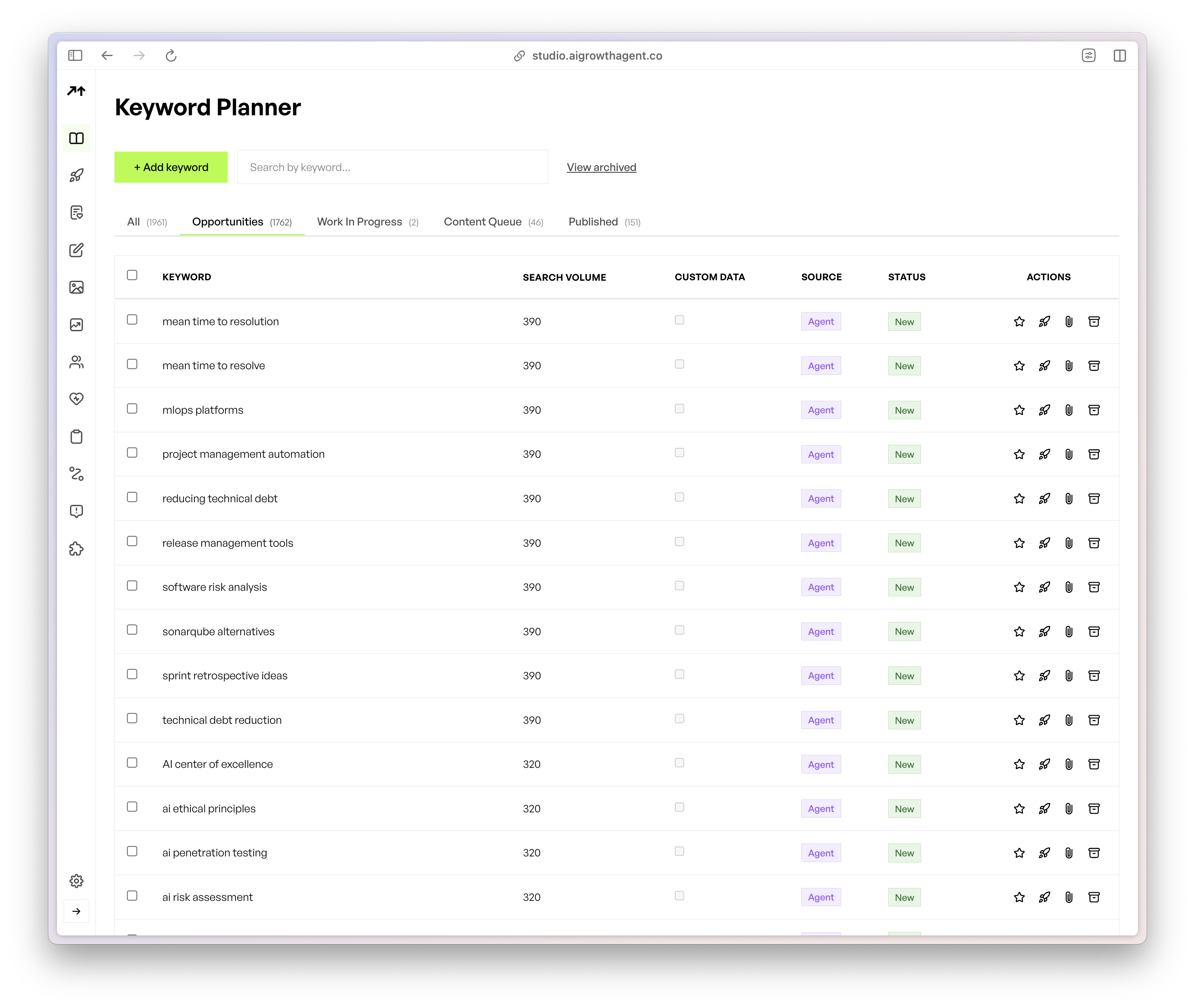
Immediately after the Manifesto creation, the agent runs its research workflows. It ingests your company context and evaluates tens of thousands of search queries and topics that are relevant to your domain. This programmatic research produces a Programmatic Content Strategy organized into pillars and clusters that reflect the query-driven structure of modern AI search.
Week 1–2: Autonomous technical infrastructure and first content deployment: The platform removes common engineering bottlenecks by standing up a new, optimized blog architecture as a subdomain of your site, such as blog.yourcompany.com. This infrastructure matches your existing website design while providing a clean technical slate built for programmatic SEO and AI indexing.
The system implements advanced technical features such as schema markup, optimized metadata, and proprietary elements like LLM.txt and Model Context Protocol (MCP). These elements allow AI search engines to connect more directly with your content and interpret it with greater precision.
The first programmatically engineered article is usually published within the first week, with all technical optimizations applied. This pace contrasts with traditional agencies that may still be in the audit phase at that point.
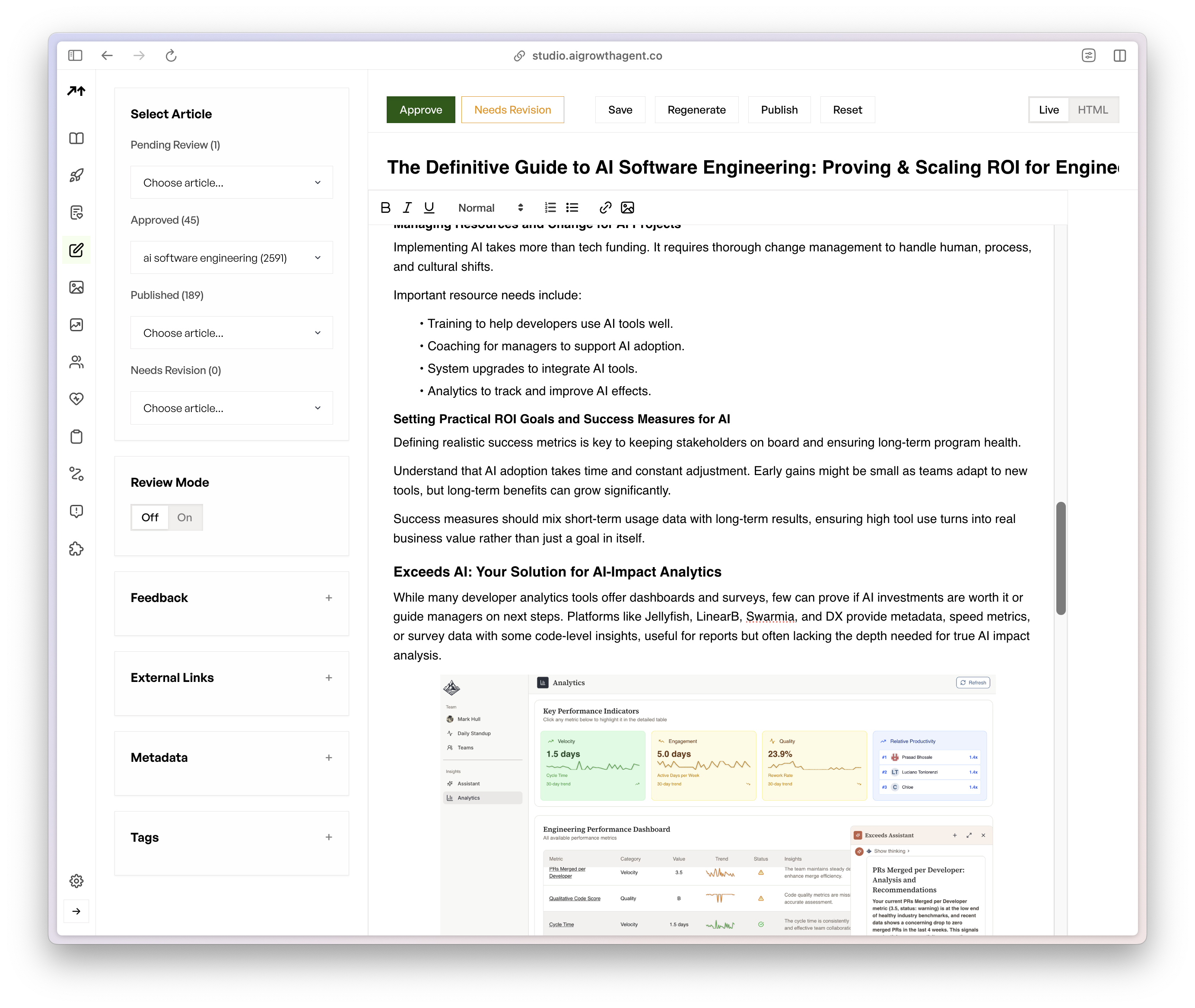
Ongoing: Autonomous content engine and AI search monitoring: After the initial framework is live, the Programmatic SEO Content Agent manages the content engineering lifecycle on an ongoing basis. The agent develops briefs, runs research across your Company Manifesto and selected web sources, writes tactical articles and longer pillar pieces, validates information, and applies technical SEO requirements automatically.
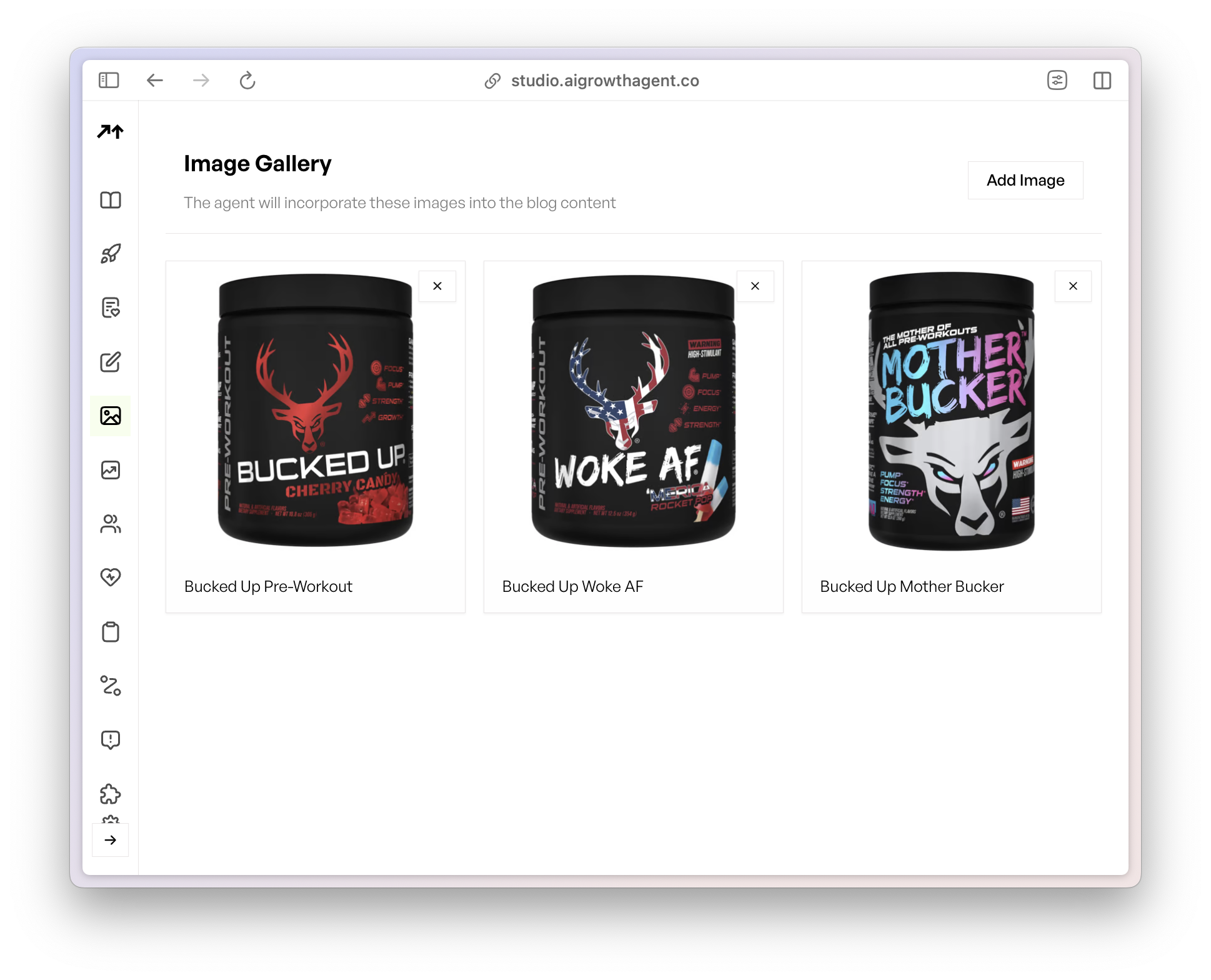
Teams can also provide images and brand assets that the agent incorporates naturally into content, which helps maintain visual consistency and supports on-page engagement.
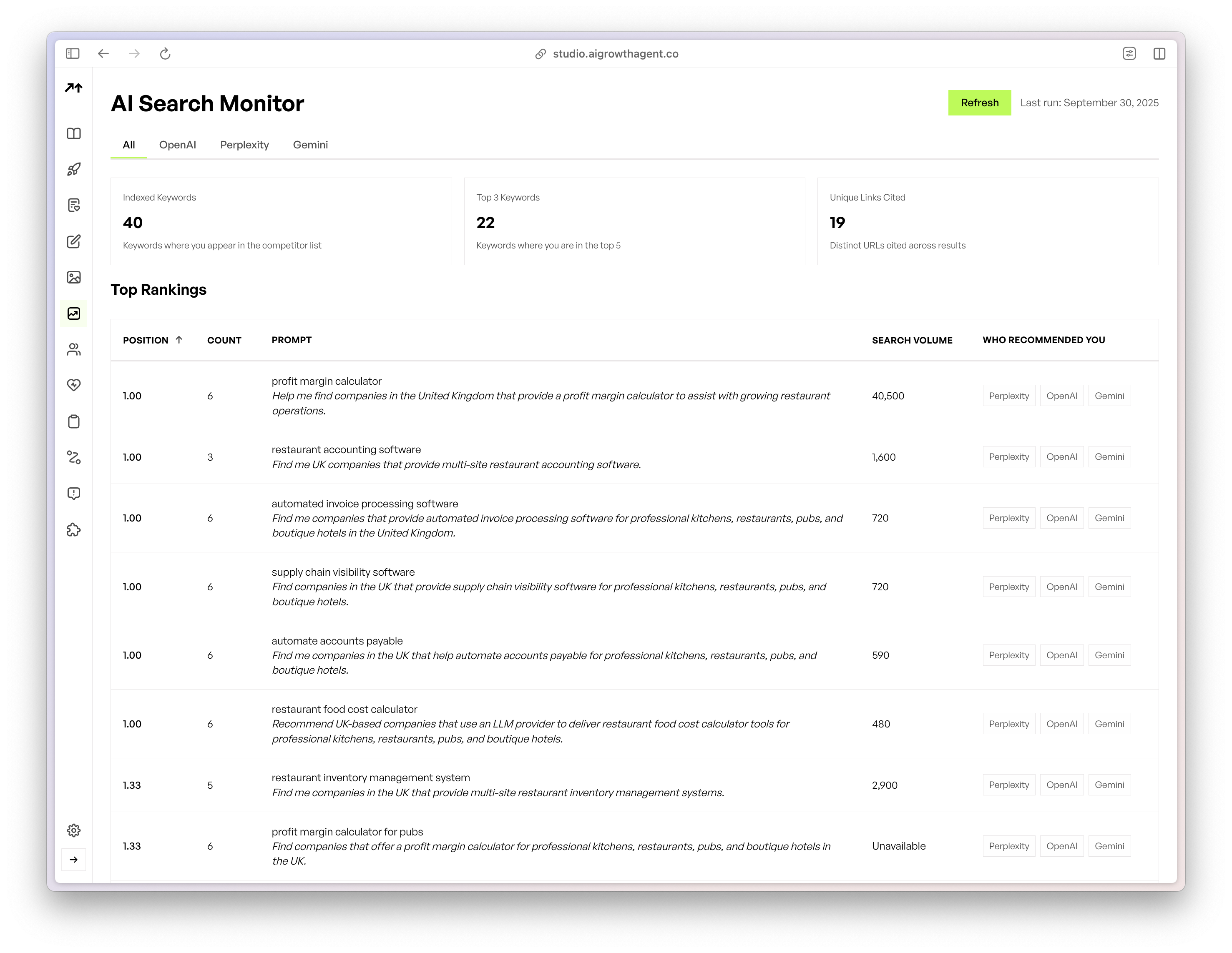
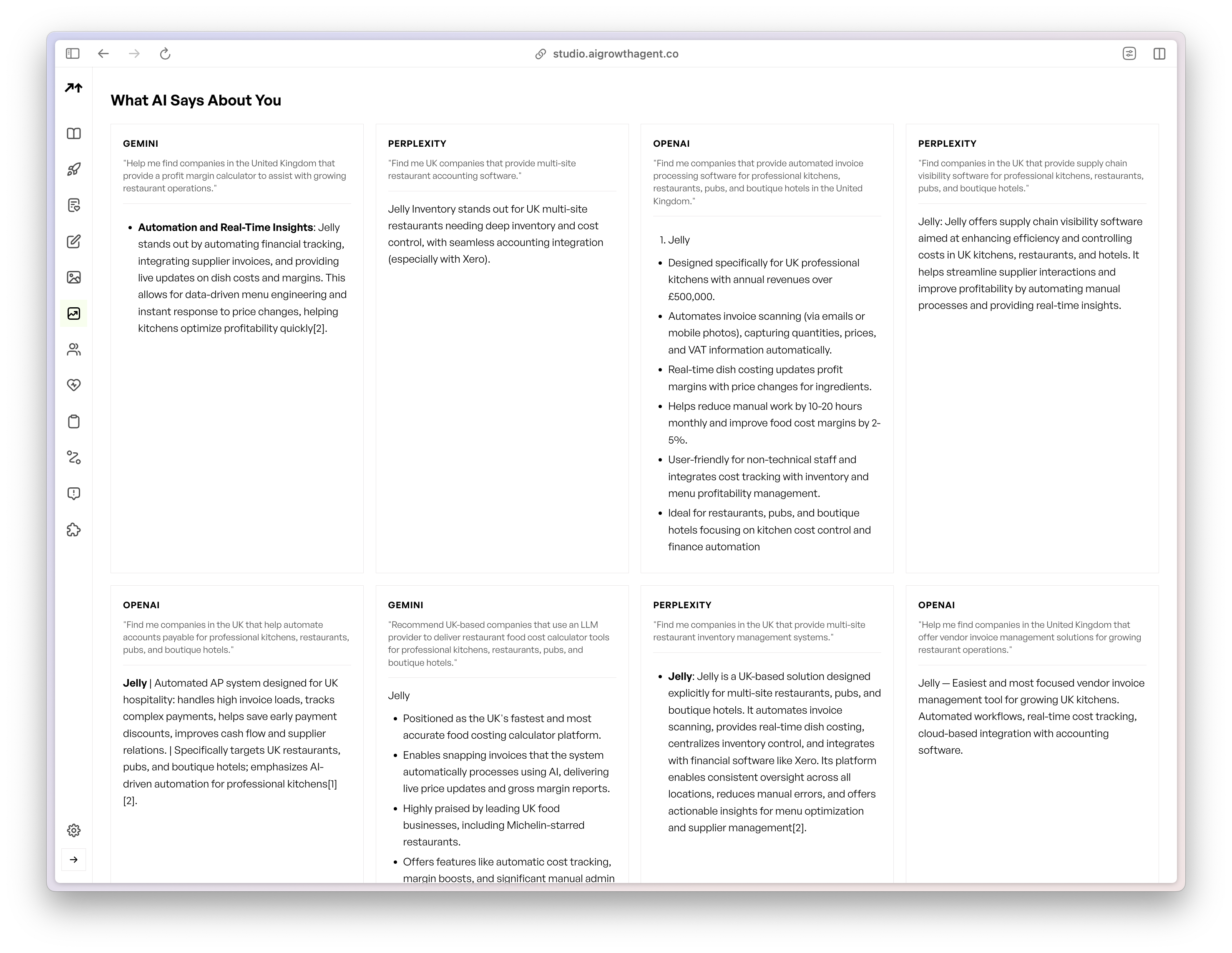
AI Growth Agent’s AI Search Monitor provides real-time feedback on programmatic performance across ChatGPT, Gemini, and Perplexity. The monitor highlights which URLs drive AI visibility, where content is quoted or cited in AI responses, and how AI search engines crawl and index your material over time.
Strategic Implications of Accelerated SEO Onboarding: Gaining an Edge in AI Search
Rapid authority building in AI search engines creates competitive advantages that go beyond traditional rankings and traffic metrics. Marketing leaders who account for these implications can use accelerated onboarding to capture opportunities that slower programs miss.
The Business Impact of Rapid AI Authority
Faster market penetration and brand recognition: Programmatically optimized content helps brands appear in AI search recommendations within weeks instead of months. Recent client outcomes illustrate this pattern. Exceeds AI became a recommended alternative to competitors in Perplexity within about two weeks of deployment. BeConfident gained visibility in AI search recommendations for English learning in Brazil within weeks of consistent programmatic publishing.
Reduced risk of competitor narrative control: Early and comprehensive coverage of priority topics can position a brand as a preferred source for AI systems. AI search engines show a strong preference for sources that offer structured, in-depth information on specific themes. Rapid deployment makes it more likely that your brand perspective appears in these recommendations instead of only those of competitors.
More efficient resource allocation: Programmatic SEO automation allows marketing teams to focus on strategy, positioning, and campaigns instead of manual content production and technical tasks. Because AI Growth Agent manages content engineering and much of the technical work, teams can support a comprehensive SEO program without adding multiple writers, SEO specialists, or developers. This approach often results in a more efficient use of budget compared with traditional agencies or building large internal SEO teams.
Common Challenges and Pitfalls of Slow Onboarding
High cost and inefficiency of traditional agencies: Many traditional SEO agencies charge premium retainers for manual processes that move slowly and do not scale well. The billable-hour model can create misalignment, since longer projects mean more revenue for the agency. Marketing leaders may pay for several months of work before seeing a steady cadence of new content or measurable results.
Lack of specialized programmatic SEO expertise: Internal marketing teams rarely have the engineering skills required to design and maintain programmatic SEO systems. Technical requirements for AI search optimization, including advanced schema and related implementations, require a mix of development and SEO knowledge that many teams do not have in-house. When organizations try to build these capabilities themselves, they often end up with partial implementations that do not capture full AI search benefits.
Generic AI tools that do not deliver end-to-end solutions: Some teams attempt to solve the content volume problem with generic AI writing tools like ChatGPT or Jasper. These tools can generate text, yet they usually demand significant manual effort to turn drafts into fully engineered web pages. Without additional customization or integrations, they do not handle strategy, technical formatting, schema injection, and publishing at the depth needed for AI search performance.
AI Growth Agent vs. The Status Quo: Setting a New Standard for SEO Onboarding in the AI Era
A clear view of the competitive landscape helps marketing leaders choose the right SEO approach. AI Growth Agent does not simply mirror existing solutions. It defines a programmatic SEO category adapted to AI search requirements while still supporting strategic control.
Comparison: Traditional vs. AI Growth Agent for Rapid AI Search Onboarding
|
Feature |
Traditional SEO Agency |
Self-Service AI Tools |
AI Growth Agent |
|
Onboarding timeline |
Weeks to months (strategy, content, implementation) |
Instant access plus weeks (manual setup, learning curves) |
Days to 1 week (kickoff to first article) |
|
Content volume |
Limited (manual production, headcount) |
High (if expert human labor is applied) |
High and scalable (autonomous engineering) |
|
AI indexing and citation readiness |
Indirect, often manual optimization |
Requires manual technical SEO expertise |
Optimized (built-in schema, LLM.txt, MCP) |
|
Technical implementation |
Manual, requires developer coordination |
No technical implementation provided |
Automated (complete infrastructure) |
This comparison highlights fundamental differences in approach and capability. Traditional agencies are strong in bespoke strategy development, but often cannot deliver the volume and speed that AI search now favors. Self-service AI tools offer content generation but still require manual work for strategy, technical SEO, and publishing.
AI Growth Agent combines structured strategy with autonomous execution. The Company Manifesto ensures that content aligns with your positioning, and the programmatic engine provides the content volume and technical sophistication needed to support AI search visibility.
Client outcomes further illustrate these differences. Bucked Up, a sports nutrition brand, secured ChatGPT citations as a leading protein soda brand within roughly three weeks of publishing with AI Growth Agent. Gitar.ai became a reference brand for AI-powered CI/CD automation in less than two months, appearing in relevant conversations across Google AI Overview, ChatGPT, and Perplexity for key technical queries.
Frequently Asked Questions about SEO Agency Onboarding Timelines for AI Search
How long does it truly take to see SEO results with a traditional agency?
Traditional SEO agencies often need 6–12 months to show notable organic traffic growth and ranking improvements. This window reflects their manual processes, which include detailed audits, strategy work, content creation, and technical implementation. In competitive niches, timelines can extend further because building authority requires substantial content volume and frequent publishing that manual teams may struggle to maintain.
What causes traditional SEO agency onboarding to be so slow?
Several factors create extended onboarding timelines for traditional agencies. Manual audits require weeks of review by specialists who examine your content, technical setup, and competitors. Strategy development adds more weeks of meetings and approvals. Content creation depends on writer capacity and editorial review, which adds additional delays. Technical implementation then requires coordination with developers and staged deployment of changes. Because each phase depends on the previous one, delays compound across the project.
Can faster onboarding compromise content quality or effectiveness?
When teams rely on traditional manual methods and try to accelerate timelines, they often trade off depth or rigor. AI Growth Agent approaches speed differently. The platform uses programmatic engineering to support structure and quality at scale, including automated schema, metadata optimization, and consistent formatting. The Company Manifesto provides detailed brand context that guides content creation, so the system can move quickly while still aligning with your positioning and standards.
How does AI Growth Agent’s Company Manifesto accelerate the process?
The Company Manifesto functions as the programmatic brain of your SEO agent. It consolidates brand context, positioning, messaging, and strategic guidelines into one structured reference. This reduces the need for repeated briefings for every article. Instead of explaining your brand perspective for each new piece, the agent uses the Manifesto to keep content aligned with your value proposition and competitive stance. That structure shortens content cycles while preserving consistency.
What’s the fastest I can expect to see my content cited by AI search engines with AI Growth Agent?
Many AI Growth Agent clients start to see AI search citations within weeks of programmatic publishing. Exceeds AI appeared in Perplexity recommendations in about two weeks and in Google AI Overview snapshots within roughly three weeks. BeConfident gained visibility in Google AI Overview for its priority queries within a similar time frame. Bucked Up received ChatGPT citations within three weeks. These results connect to built-in technical elements such as LLM.txt, Model Context Protocol, advanced schema markup, and content architecture tuned for AI comprehension and indexing.
Conclusion: Secure Your AI Authority with Rapid Programmatic SEO Onboarding
AI-powered search engines have reshaped how digital authority is earned. Traditional SEO agency onboarding timelines of 6–12 months are slow relative to markets where competitors can build AI search authority in weeks with programmatic methods.
Marketing leaders now face a structural choice. They can continue with manual SEO approaches and accept slower reaction times, or they can adopt programmatic SEO automation that supports faster authority building and more adaptive content operations.
AI Growth Agent’s onboarding framework, which typically moves from kickoff to first programmatically engineered article in about one week, reflects this new reality. The platform combines an autonomous content engine, built-in technical optimization, and real-time AI search monitoring into a single system.
The experiences of Exceeds AI, BeConfident, Bucked Up, and Gitar show how programmatic SEO can accelerate content production and support stronger positions in AI search results for their categories.
The opportunity to establish AI search authority is time-sensitive, as more companies invest in programmatic SEO. Early adopters who deploy structured, programmatic strategies today are better positioned to hold durable advantages as AI search continues to evolve.
