


Written by: Mariana Fonseca, Editorial Team, AI Growth Agent
Key Takeaways
- AI search now drives 60–65% zero-click results, and B2B SaaS sites have seen organic traffic drop by 34% year over year.
- Programmatic SEO creates thousands of structured, targeted pages that can reach 1M+ monthly visits instead of the 25K visits typical manual programs achieve.
- Most traditional agencies cannot support this scale because they rely on manual production and lack schema, automation, and end-to-end technical pipelines.
- AI Growth Agent delivers a fully autonomous research-to-publish system with MCP integration and has earned AI citations in 2–3 weeks for clients such as Gitar.ai.
- Book a demo with AI Growth Agent to roll out autonomous programmatic SEO and win B2B SaaS visibility in AI search.
Programmatic SEO for B2B SaaS in 2026
Programmatic SEO uses automation, templates, and structured data to publish hundreds or thousands of focused landing pages for specific keywords. Zapier ranks for more than 50,000 keywords across thousands of integration pages and attracts about 5.8 million organic visitors each month. This scale lets B2B SaaS companies capture long-tail demand that manual content teams cannot reach.
Programmatic SEO relies on structured data from product features, integrations, customer segments, and use cases to fill dynamic templates instead of writing every page by hand. A library of 5,000 programmatic landing pages that each earn 200 monthly visits can drive 1 million total visits, while a traditional program with 50 pages at 500 visits each reaches only 25,000. The 2026 environment requires this level of velocity because AI systems increase content volume every day.
Why Traditional SEO Agencies and Basic Tools Fall Behind
The velocity and technical depth required for programmatic SEO expose the limits of traditional SEO agencies and basic AI tools. These providers still operate on manual “craftsman” models that cannot keep up with AI-driven search behavior.
Common constraints include:
- Manual agencies often spend more than $4,000 per post and deliver content on slow timelines.
- Most teams lack engineering skills to implement schema markup, LLM.txt files, and Model Context Protocol correctly.
- Basic AI tools such as Jasper still require manual CMS work, formatting, and technical optimization.
- Few providers can run a complete programmatic pipeline from research through publishing without heavy human effort.
See how AI Growth Agent removes these bottlenecks with an autonomous system built specifically for programmatic SEO.
How We Evaluated Programmatic SEO Solutions
To identify solutions that overcome these traditional limits, we built a ranking framework that favors automation depth, AI readiness, and proven results in B2B SaaS. Our 2026 methodology evaluates agencies and tools using performance data, case studies, and technical capabilities that matter most for programmatic SEO success. The table below shows how each factor contributes to the overall score, with autonomous lifecycle coverage and AI technology receiving the highest weights because they drive scalable outcomes.
|
Criteria |
Description |
Weight |
|
Autonomous Lifecycle |
Research-to-publish automation |
25% |
|
AI Technology |
LLM.txt/MCP implementation |
20% |
|
SaaS Citations |
Proven AI search wins |
20% |
|
Scalability |
Daily content velocity |
20% |
|
ROI Metrics |
Onboarding speed and results |
15% |
Why AI Growth Agent Leads Programmatic SEO for B2B SaaS (Plus 8 Alternatives)
1. AI Growth Agent
AI Growth Agent operates as a dedicated Programmatic SEO Agent that engineers high-authority content architectures and positions companies as category leaders. The platform runs the full technical SEO lifecycle with autonomous systems that work faster and more consistently than manual teams.
Core capabilities work together to create a closed-loop, self-updating content engine:
- Company Manifesto Programming: A one-hour onboarding session produces a living source of truth that guides every piece of generated content.
- Autonomous Technical Infrastructure: The system deploys an optimized blog architecture that matches your existing brand design without manual coding.
- Advanced AI Integration: The first blog-focused Model Context Protocol (MCP) connection lets AI search engines access and understand your content directly.
- Multi-Tenant Deployment: A single interface manages parallel agents across multiple brands or product lines for portfolio-level control.
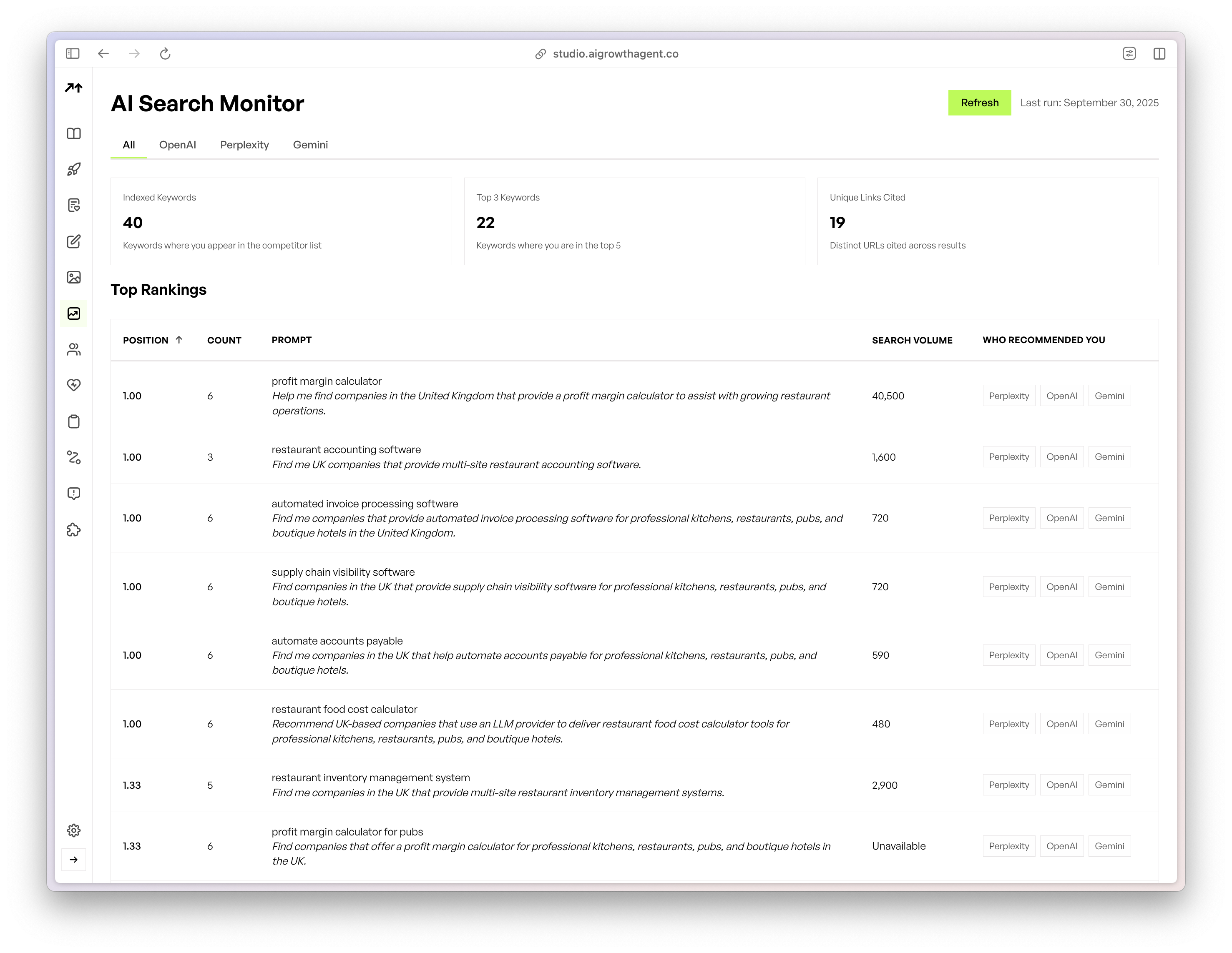
- AI Search Monitor: Real-time tracking of ChatGPT, Gemini, and Perplexity citations with visual heatmaps shows which pages drive AI visibility.
Proven Results: Exceeds AI earned Perplexity recommendations within two weeks, then appeared in Google AI Overview and Gemini within three weeks. Gitar.ai became the reference brand for “AI self-healing pipelines” across Google AI Overview, Gemini, ChatGPT, and Perplexity in less than two months.
Best For: Premium brands with strong technical foundations that want a set-and-forget programmatic SEO system with measurable AI citation wins and authority growth.
Explore AI Growth Agent’s autonomous capabilities and see how they map to your current SEO and content stack.
2. Frase
Frase combines AI-driven content optimization with light programmatic features such as content briefs, SERP analysis, and automated suggestions. The tool excels at research and on-page refinement but still depends on manual publishing and human coordination.
Strengths: Robust content research, integrated SERP analysis, and an intuitive interface.
Limitations: Manual publishing steps, limited schema support, and no true end-to-end automation.
Best For: Teams that want help improving existing content while keeping current manual workflows.
3. SurferSEO
SurferSEO offers content optimization and programmatic page templates with AI suggestions for structure and wording. Surfer SEO refines page templates and content patterns for programmatic SEO, defines ranking structures, and validates AI-generated content at scale.
Strengths: Template optimization, content scoring, and integrations with popular writing tools.
Limitations: Requires technical setup, offers limited autonomous behavior, and still needs manual review.
Best For: Companies with in-house technical resources that want stronger optimization for programmatic templates.
4. Growth Machine
Growth Machine focuses on B2B SaaS SEO with an emphasis on revenue attribution and pipeline creation. The agency blends customer research with scalable content production but still relies on human writers and editors.
Strengths: Deep B2B SaaS experience, revenue-focused reporting, and strong customer research.
Limitations: Manual production model, limited programmatic tooling, and higher costs at scale.
Best For: Enterprise SaaS companies that prioritize revenue attribution more than content velocity.
5. SavvyRevenue
SavvyRevenue delivers B2B SaaS SEO services with a focus on conversion optimization and lead generation. The team offers strategic guidance but does not provide advanced automation for programmatic rollouts.
Strengths: SaaS specialization, conversion-focused thinking, and senior-level consulting.
Limitations: Manual processes, constrained scale, and a traditional agency structure.
Best For: Mid-market SaaS companies that need strategic SEO direction and can accept slower production.
Compare SavvyRevenue’s manual model with AI Growth Agent’s autonomous system to decide which approach fits your growth targets.
6. AirOps
AirOps focuses on programmatic SEO at scale by helping teams generate and deploy thousands of SEO pages using AI and structured datasets while centralizing workflows without manual LLM prompting.
Strengths: Strong programmatic orientation, structured data support, and workflow automation.
Limitations: Requires technical setup, offers limited strategic guidance, and still needs human oversight.
Best For: Technical teams with a clear content strategy that want tools for programmatic execution.
7. FirstPageSage
FirstPageSage operates as an SEO agency for manufacturing and B2B sectors. The firm emphasizes custom strategies and ROI tracking but continues to work through manual content production.
Strengths: Industry-specific expertise, tailored strategies, and ROI measurement.
Limitations: Manual workflows, limited programmatic tooling, and traditional agency constraints.
Best For: Manufacturing and industrial B2B companies that value sector expertise over automation.
8. Jasper
Jasper provides AI-powered content generation with templates and brand voice controls. The platform helps teams write faster but does not include programmatic SEO infrastructure or automated publishing.
Strengths: Fast AI writing, consistent brand voice, and a broad template library.
Limitations: No programmatic framework, manual CMS work, and limited built-in SEO features.
Best For: Content teams that want AI drafting support while keeping existing processes.
9. Ahrefs
Ahrefs supports programmatic SEO by surfacing scalable keyword patterns, analyzing SERP intent, validating competitor page types, and tracking rankings across thousands of URLs.
Strengths: Comprehensive SEO data, deep keyword research, and strong competitive analysis.
Limitations: Functions as a data platform only, with no content generation or publishing features.
Best For: SEO professionals who need data and insights to design programmatic strategies.
The table below summarizes how these nine options compare across the core dimensions that drive programmatic SEO success. Notice that AI Growth Agent is the only solution that combines full lifecycle automation with proven AI citations, while others require varying levels of manual work.
|
Solution |
Automation Level |
AI Technology |
Citations Proven |
SaaS Fit |
|
AI Growth Agent |
Fully Autonomous |
LLM.txt + MCP |
ChatGPT + Perplexity |
Excellent |
|
Frase |
Semi-Automated |
Content AI |
Limited |
Good |
|
SurferSEO |
Template-Based |
Content Optimization |
Limited |
Good |
|
AirOps |
Programmatic |
Workflow AI |
Moderate |
Good |
|
Ahrefs |
Data Only |
Analysis AI |
None |
Fair |
Case Studies: AI Citations for B2B SaaS Brands
Recent client results show how advanced programmatic SEO can secure AI citations and new demand at speed.
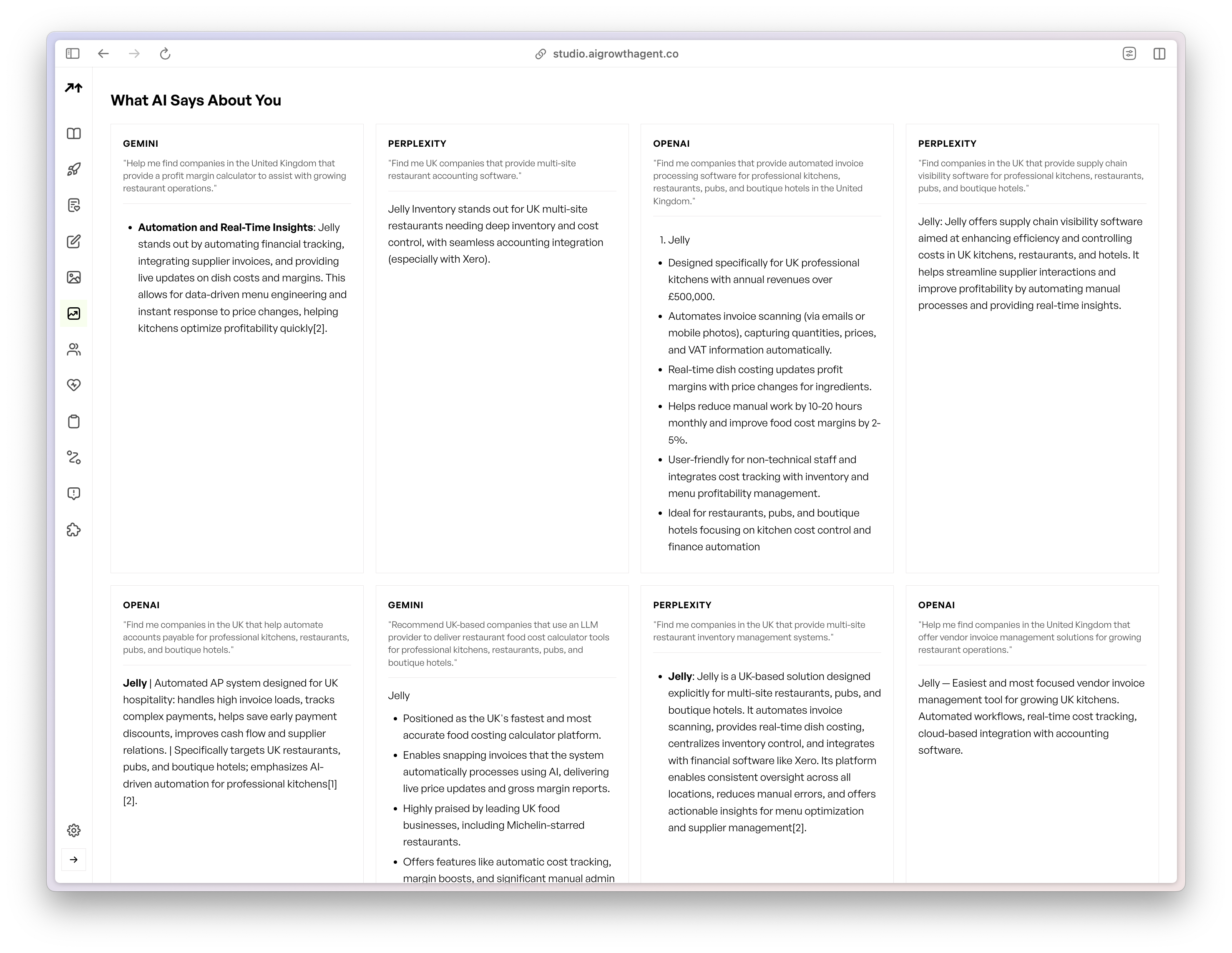
- Gitar.ai: Became the reference brand for “AI self-healing pipelines” across Google AI Overview, Gemini, ChatGPT, and Perplexity in under two months.
- Exceeds AI: Earned Perplexity recommendations within two weeks, then ranked in Google AI Overview and Gemini within three weeks, and appeared across major AI search platforms.
- BeConfident: Gained immediate indexation after programmatic publishing and soon became the top recommended app in Brazil to learn English through Google AI Overview and Gemini.
- Bucked Up: Reached the top citation in ChatGPT for “best protein soda” within three weeks and secured the leading position for that query.
Specialized programmatic SEO strategies deliver an average 340% ROI compared with traditional manual methods, and the Omnius case study reported a 3,035% increase in signups after adopting programmatic SEO.
Implementation Checklist and Success Metrics
A structured rollout plan keeps your programmatic SEO initiative focused and measurable.
- Foundation Assessment: Evaluate your current technical SEO stack and content strategy to uncover gaps that programmatic SEO must solve.
- Solution Selection: Use those findings to choose a platform and schedule an AI Growth Agent demo if you need autonomous execution that fills those gaps.
- Strategy Development: After selecting a solution, create a Company Manifesto and programmatic content roadmap that align with your infrastructure and target segments.
- Pilot Implementation: Launch an initial cluster of programmatic pages and track early performance to validate templates and targeting.
- Auto-Pilot Activation: Once the pilot performs, enable ongoing autonomous content generation and publishing at the desired cadence.
- Performance Tracking: Monitor Google Search Console data and AI citation heatmaps to understand which pages and topics drive the strongest results.
As you track performance through step six, focus on four core metrics that signal programmatic SEO effectiveness: organic traffic growth, AI citation frequency, keyword ranking improvements, and conversion rate gains from programmatic pages.
FAQ
What differentiates programmatic SEO agents from traditional agencies and basic AI tools?
Programmatic SEO agents automate the full journey from keyword research through publishing, while traditional agencies still depend on manual work and basic AI tools need constant human supervision. Advanced agents such as AI Growth Agent also handle technical optimization, schema, and direct publishing, which removes the bottlenecks that slow manual approaches.
How quickly can B2B SaaS companies achieve AI citations through programmatic SEO?
Advanced programmatic SEO implementations can earn AI citations within two to three weeks of publishing new content, as shown in the case studies above. Actual timelines vary based on content quality, technical execution, and the sophistication of the system that runs the program.
What are the typical costs and data security considerations for programmatic SEO?
Programmatic SEO pricing depends on automation depth and technical complexity. Basic no-code stacks usually cost between $200 and $500 per month, while enterprise-grade agents require larger investments and deliver stronger, more scalable results. Leading providers apply enterprise security practices and strict data privacy controls across content generation and publishing.
What are realistic pilot timelines and success indicators for B2B SaaS programmatic SEO?
AI Growth Agent clients often move from first meeting to the first programmatically engineered article within one week. Effective implementations then begin to show AI citations within weeks, as demonstrated in the case studies. Teams should watch for early gains in impressions, AI mentions, and qualified conversions as primary pilot indicators.
How do you determine if a B2B SaaS company is a good fit for programmatic SEO?
Strong candidates have reliable technical foundations, structured data sources such as product features or integrations, and enough search demand to support scalable keyword patterns. Companies with broad product catalogs, many use cases, or diverse customer segments benefit most, and premium brands with existing authority usually see the highest ROI.
Conclusion
The 2026 SEO environment favors autonomous systems that can deliver both scale and quality across thousands of pages. Traditional agencies and basic AI tools struggle with manual bottlenecks and technical gaps, while AI Growth Agent provides an integrated programmatic engine with proven AI citation wins and meaningful scale for premium B2B SaaS brands.
Request an AI Growth Agent demo to see how an autonomous programmatic SEO system can help your company dominate its category and build durable content authority.


