


Key Takeaways
- AI search engines like ChatGPT, Gemini, and Perplexity now shape how thought leadership content is discovered and cited.
- Brands that rely on slow, manual publishing risk losing visibility to competitors that use programmatic SEO for scale.
- Effective thought leadership platforms in 2026 combine technical SEO, structured content, and real-time AI citation monitoring.
- Human oversight still matters, but autonomous agents increasingly handle planning, production, and optimization across AI models.
- AI Growth Agent provides an autonomous programmatic SEO platform that helps brands earn AI citations at scale, with demos available at AI Growth Agent.
The AI-Driven Evolution of Thought Leadership: From Volume to Authority
The relationship between brands and search has shifted from basic keyword ranking to structured authority within large language models. AI systems now assess publishers on freshness, depth, and consistency, not just isolated keywords or occasional opinion pieces.
Why Your Digital Footprint Is Shrinking in the AI Era
AI has increased the volume of content faster than human teams can publish. As a result, brand visibility now depends on programmatic strategies that produce structured, high-quality pages at scale. Each LLM creates new citation surfaces, but only for brands that provide rich, machine-readable content.
AI search engines favor content that stays current, covers topics in depth, and follows predictable structures. Manual workflows rarely meet this standard at the needed pace, which causes AI indexers to favor publishers with programmatic content operations.
The Imperative for Programmatic Velocity in 2026
Occasional blog posts no longer sustain topical authority. LLMs evaluate publishing history, internal linking, and structured data to determine which brands appear as sources in generated answers. Brands that leave gaps in their content graph see authority shift to competitors that publish frequently and systematically.
Schedule a programmatic SEO strategy session to see how AI Growth Agent builds consistent content velocity for AI citation in 2026.
Redefining “Thought Leadership Content Platform” for the AI Era
Modern thought leadership platforms now function as AI-optimized publishing systems. They combine programmatic content generation, structured technical SEO, and feedback from AI search engines into a single operating layer.
Programmatic Content Architecture and Technical SEO for AI
Current platforms must manage schema markup, metadata, internal linking, and AI-specific files such as LLM.txt. These elements help AI crawlers interpret entities, claims, and relationships across a site. The most effective systems handle this automatically, without requiring engineering tickets or one-off configurations.
Dynamic Topic Modeling for AI Citation
Effective AI citation begins with topic selection. Platforms need to cluster keywords, identify gaps in competitor coverage, and generate structured briefs that map to user intent across AI tools. The goal is a library of pages that collectively signal depth and reliability rather than disconnected single posts.
AI Citation Monitoring and Feedback Loops
Thought leadership platforms now benefit from monitoring how content appears inside AI responses. Teams track which pages receive citations in ChatGPT, Gemini, and Perplexity, then adjust topics, internal links, and on-page structure as algorithms evolve.
Schedule a consultation to see how AI Growth Agent’s programmatic architecture supports this kind of automated feedback loop.
Top Thought Leadership Content Platforms for AI Citation in 2026: An Analysis
AI Growth Agent: Programmatic SEO Built for AI Search Authority
AI Growth Agent provides a programmatic SEO platform built to help brands earn AI citations. Autonomous content agents manage the full lifecycle from keyword discovery to technical publishing, which reduces dependence on manual production.
Key capabilities include multi-tenant deployment for multiple brands, real-time content injection for fast-moving topics, and database-to-content automation that converts proprietary data into search-optimized assets.
Client outcomes illustrate practical impact: Exceeds AI gained Perplexity recommendations within two weeks, BeConfident became a leading English learning reference in Brazil through Google AI Overview, Bucked Up entered ChatGPT citations as a notable protein soda brand in under a month, and Gitar appeared as a reference for AI-powered CI/CD automation in less than two months.
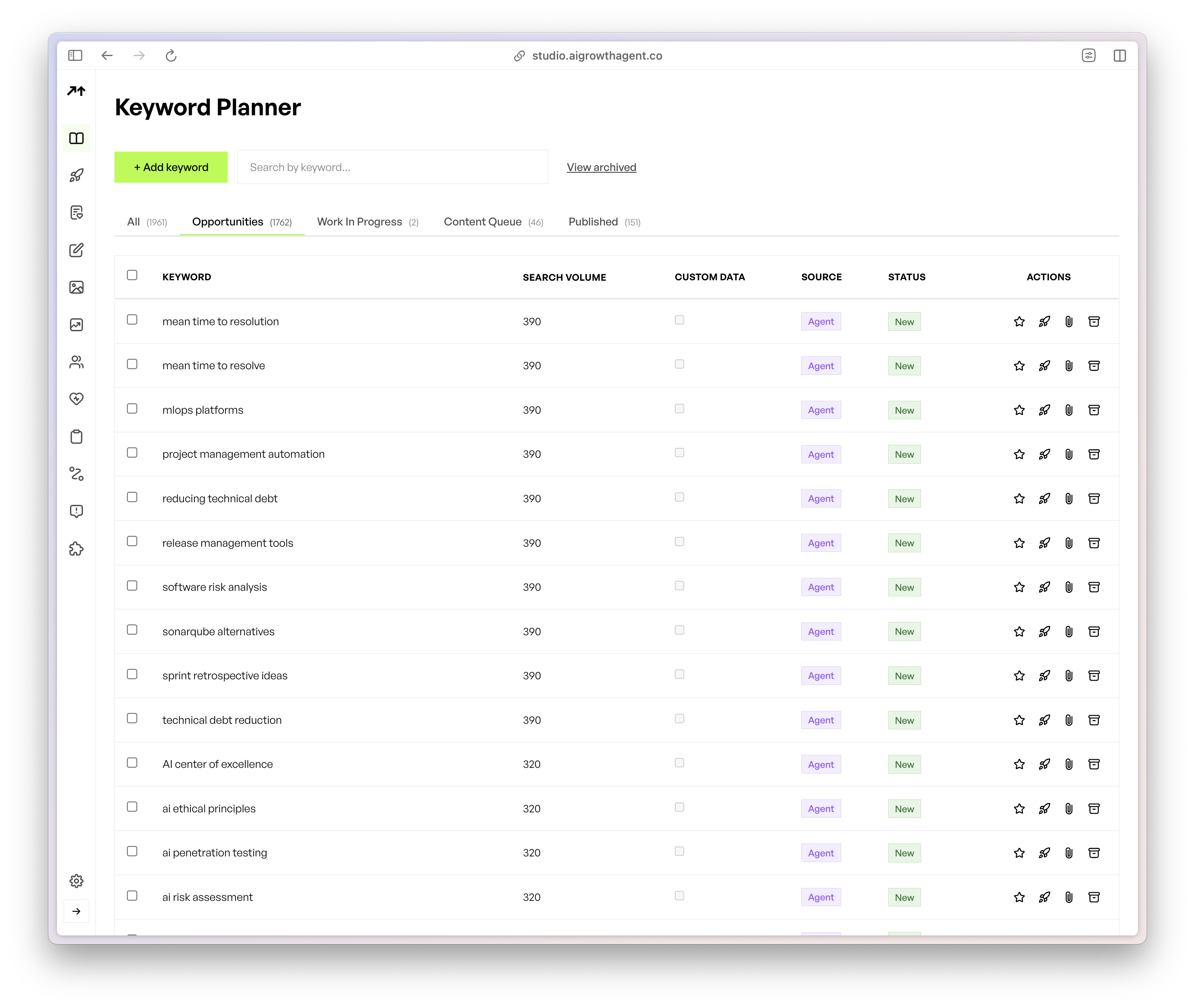
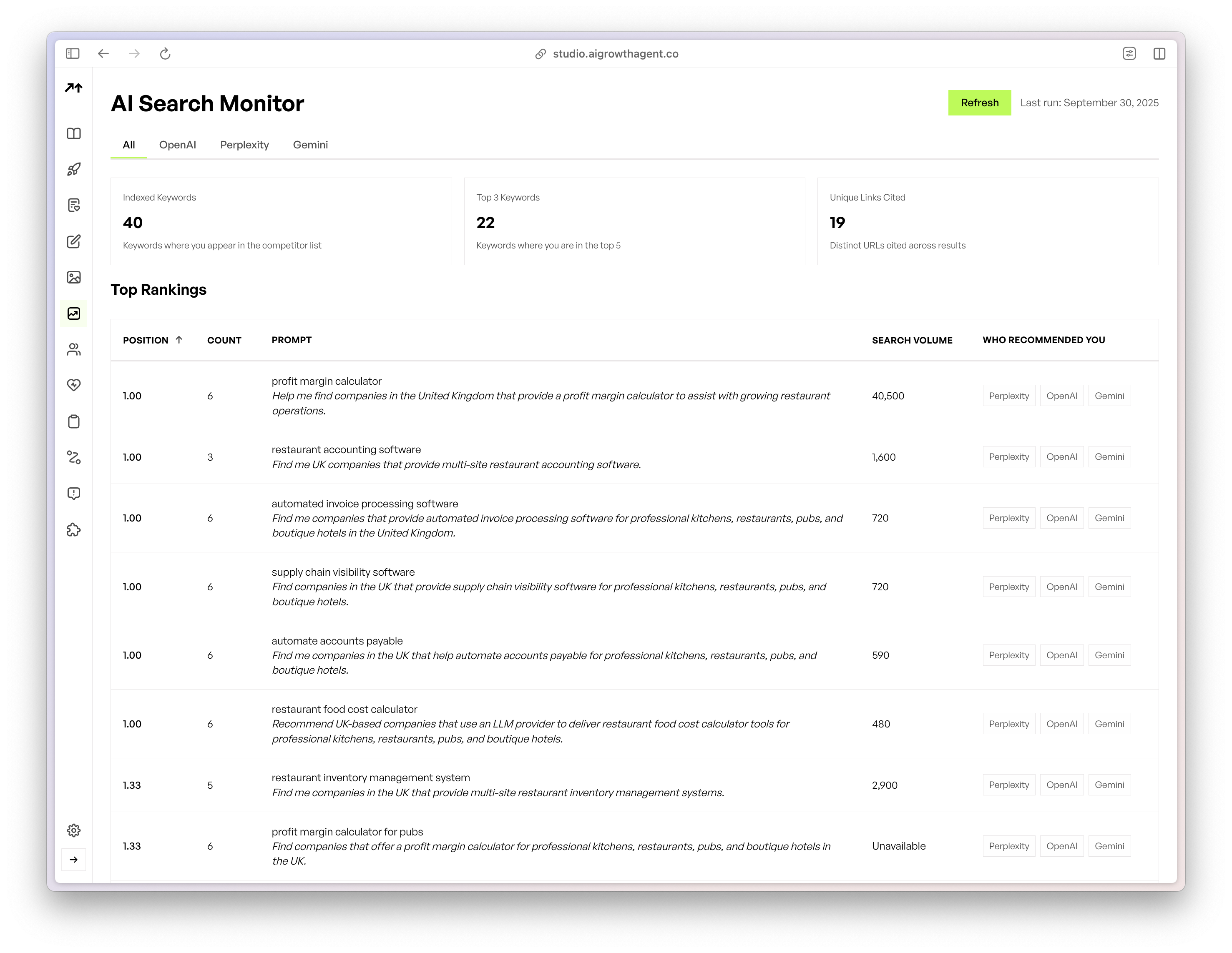
The AI Growth Agent Studio gives marketing teams direct control over topics, guardrails, and approvals while agents handle execution. The AI Search Monitor tracks where and how content appears in major AI models, so teams can iterate based on real citation data.
Niche Agencies Adapting to AI Demands in Thought Leadership
Specialized agencies remain valuable for narrative development, executive ghostwriting, and high-stakes assets. Many now layer AI tools into their workflows, yet they still depend on human bandwidth, which limits publishing scale and consistency.
As AI search places more weight on volume, structure, and recency, the agency model can struggle to supply enough technically optimized content. This constraint makes agencies better suited to selective initiatives rather than full-funnel programmatic coverage.
|
Feature |
AI Growth Agent |
Traditional Agencies |
AI Content Tools |
|
Content Scale |
Programmatic and continuous |
Limited by headcount |
One-off generation |
|
Technical SEO |
Automated schema and LLM.txt |
Manual, project-based |
User-dependent setup |
|
Speed to Citation |
Weeks with feedback loops |
Months with variable results |
Unclear without monitoring |
|
Cost Structure |
Platform subscription |
Billable hours |
Tool fee plus internal labor |
Limitations of Generic AI Content Tools for AI Citation
Generic AI writing tools focus on first drafts, not on end-to-end authority. They rarely manage schema, internal linking, LLM.txt, or CMS publishing. Teams that rely only on these tools must add their own strategy, workflows, and technical layer.
This fragmentation often results in unstructured pages that are harder for AI crawlers to interpret. Brands then face a tradeoff between speed and the structured consistency required for sustainable AI citation.
The Future Landscape of Thought Leadership Platforms and AI Search: 2026 Predictions
Agentic AI Moves From Concept to Daily Workflow
In 2026, agentic AI patterns move from research into production with support from initiatives like the Linux Foundation’s Agentic AI Foundation. Thought leadership platforms will increasingly rely on agents that plan content, run competitive analysis, draft pages, and refine them based on performance data.
These systems will support complex editorial rules, brand guidelines, and multi-channel deployment while still surfacing clear controls for human reviewers.
Diversified AI Models Shape Content Strategies
Brands now face a landscape of multiple AI engines, each with slightly different evaluation criteria and strengths. Open-source trends point to greater model diversity, stronger interoperability, and more formal governance. Platforms must therefore optimize content for a wider set of retrieval and ranking behaviors.
Systems that unify schema, entity management, and monitoring across these models will help brands understand where they stand and where to invest next.
Human Judgment Remains Central to Thought Leadership
Recent AI leadership discussions highlight the need for human judgment to balance innovation with values like fairness and transparency. Autonomous systems can handle scale and structure, but humans still define positioning, voice, risk tolerance, and approval standards.
The most effective setups in 2026 pair automated execution with clear, human-owned strategy. Teams keep control over what the brand says while agents manage how, where, and how often it appears.
Schedule a demo to see how AI Growth Agent combines automation with human oversight controls for thought leadership programs.
Conclusion: Securing Your Brand’s Authority in AI-Driven Search with AI Growth Agent
Winning AI citations in 2026 depends on structured scale, not isolated opinion pieces. Manual workflows, traditional agencies, and generic AI tools alone rarely deliver the volume, consistency, and technical depth that AI search engines now expect.
AI Growth Agent addresses this gap with programmatic SEO that builds topic-wide content architectures, enforces technical best practices, and monitors AI citations in real time. Brands with strong foundations can use the platform to expand their presence across AI search surfaces and strengthen category authority.
AI generates many answers every day. AI Growth Agent helps your organization become a trusted source in those answers. For brands ready to use programmatic SEO to support thought leadership and AI citation, schedule a strategy session with AI Growth Agent.
Frequently Asked Questions (FAQ) about AI Citation & Programmatic SEO
What is the main challenge for thought leadership content in an AI-driven search landscape?
The main challenge is producing enough technically optimized content to earn and maintain AI citations. Most teams cannot manually deliver the frequency, structure, and metadata that AI search engines prefer, which leads to declining visibility as competitors adopt programmatic approaches.
How do programmatic SEO platforms differ from traditional content agencies?
Programmatic SEO platforms rely on software agents, not billable hours. Platforms like AI Growth Agent handle research, drafting, optimization, and publishing inside one system, then update content based on performance. Traditional agencies still provide value for strategy and premium assets but usually cannot match this level of scale or consistency.
Why is AI citation increasingly important for brand authority?
AI citation shapes which brands users see as experts when they ask questions in tools like ChatGPT, Perplexity, and Google AI Overview. Frequent, accurate citations compound over time, reinforcing a brand’s perceived reliability and driving more discovery, links, and demand.
Can generic AI writing tools replace thought leadership content platforms?
Generic writing tools can speed up drafting but do not function as full platforms. They typically lack topic modeling, schema control, CMS integration, and AI citation monitoring, so teams must add their own infrastructure and processes to reach enterprise-level thought leadership goals.
What technical capabilities matter most in thought leadership platforms for 2026?
Key capabilities include automated schema markup, LLM.txt management, metadata optimization, AI citation monitoring across major models, and programmatic content generation that respects brand voice. The ability to connect directly to internal data sources and convert them into structured content also creates a durable advantage.
