


Executive Summary
Marketing leaders now edit for AI search as much as for human readers. This article explains how to redirect limited editing time toward programmatic SEO and AI authority:
- AI-generated content volume makes traditional, manual editing workflows too slow and expensive to sustain.
- Programmatic SEO and system-level editing help brands earn consistent visibility in AI search and answer experiences.
- AI Growth Agent automates content engineering while preserving brand standards and technical SEO quality.
- Marketing teams can shift effort from line-by-line review to strategy, governance, and performance analysis.
- Brands that adopt this model earlier are better positioned to be cited and recommended by AI systems across their category.
The Problem: Why Traditional Content Editing Fails in the AI Era
Problem 1: The Overwhelming Deluge of AI-Generated Content
AI tools now generate large volumes of articles, blog posts, and web pages that compete directly with your brand’s visibility. As the total volume of online content grows, your company’s digital footprint, its “pixel” on the internet, effectively shrinks. Teams that keep relying on traditional editing models struggle to review enough content and lose ground to competitors using programmatic approaches.
Traditional editing teams also face new complexities that their workflows were not built to manage. They must fact-check machine-generated content, maintain a consistent brand voice across large content libraries, and support technical authority signals for AI search engines. These needs require specialized skills and structured processes that exceed what conventional editorial models typically provide.
The challenge goes beyond volume. AI search experiences in tools such as ChatGPT, Google AI Overviews, and Perplexity evaluate authority with complex algorithms that look at technical implementation, source credibility, and content structure. Traditional editing often focuses on grammar and style rather than schema markup, metadata architecture, and other technical elements that influence how AI systems evaluate and cite content.
Problem 2: The Inefficiency and Cost of Manual Editing Processes
The economics of traditional editing now limit growth for brands competing in AI-influenced search. SEO agencies and internal teams that depend on manual review move slowly and incur higher costs. These bottlenecks prevent organizations from reaching the level of content velocity needed for programmatic SEO.
Internal marketing teams feel this pressure most. Many lack engineering resources to build and maintain programmatic SEO systems while still handling daily content and editing work. Fragmented tools and disconnected workflows increase the burden. Time that could go to system design, process improvement, and strategic oversight instead goes to repetitive, low-impact edits.
Problem 3: The Critical Risk of Lost Authority and AI Citation
Brands with outdated editing strategies risk losing authority in AI-driven search results. Limited editorial scrutiny and a lack of programmatic structure can reduce both visibility and citation in AI-powered experiences. These systems evaluate trustworthiness, technical setup, and consistent authority signals that many manual editing processes are not designed to optimize.
The competitive impact compounds over time. If your brand does not publish enough high-quality, technically optimized content for AI systems to reference, those systems will source answers from better-prepared competitors. These competitors then gain more citations and recommendations, which reinforces their position as reliable providers of information in the category.
The Solution: Strategic Editing Time Allocation for AI Search Visibility
Solution 1: Shift From Granular to Systemic Editing to Scale Quality
Modern editing strategies focus on systems rather than only on individual pieces. Systemic editing sets up frameworks, guidelines, and automation that protect quality at scale. Instead of reviewing every article line by line, teams define brand manifestos, build quality assurance protocols, and design feedback loops that improve performance over time.
This approach makes scale achievable. Traditional editors can review only a limited number of articles each week. Programmatic systems can produce many more pieces each day while still following consistent brand and quality standards defined at the system level. This helps brands keep pace in high-volume environments while signaling the authority that supports AI citation. Schedule a consultation session to assess whether your current editing model can support system-level quality at the scale you need.
Solution 2: Use AI-Powered Tools for Faster First-Pass Edits
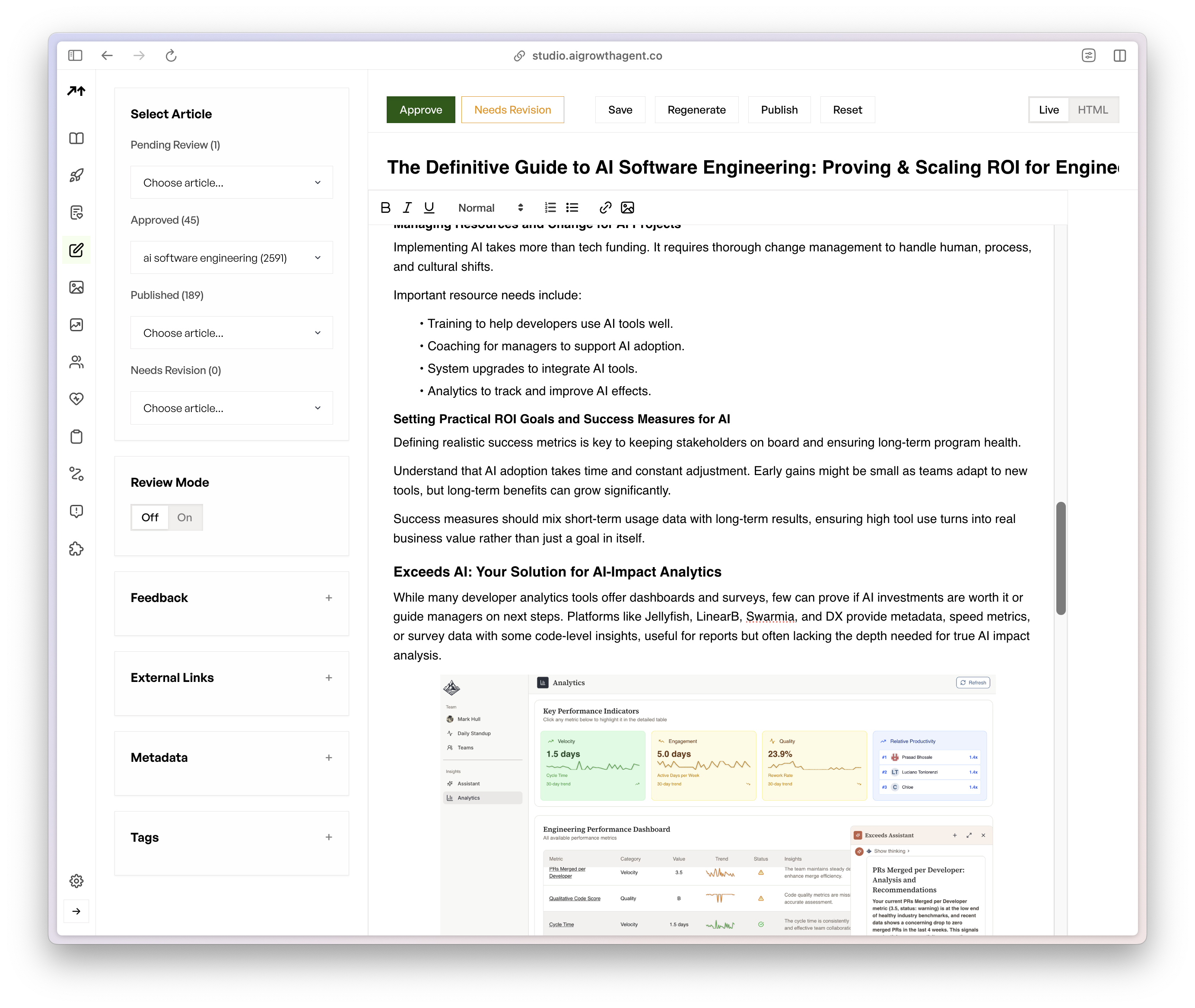
AI-powered editing and optimization tools now handle many low-level tasks that once consumed human attention. These tools support grammar correction, surface-level fact-checking, readability improvements, and basic SEO structure. When teams automate this initial layer of work, editors can focus on areas where human judgment adds more value, such as brand voice, narrative, positioning, and topic selection.
The strongest results come from a hybrid model. AI tools perform fast first-pass edits and technical checks. Human editors then review for nuance, strategy, and risk. This balance helps maintain the technical precision AI search engines expect while preserving the distinct brand perspective that differentiates your content in the market.
Solution 3: Adopt Programmatic SEO to Build Scalable Authority
Programmatic SEO gives brands a way to reach both the content volume and technical depth required for AI search success. Traditional SEO methods rely on manual briefs, writing, and optimization. Programmatic SEO instead uses structured systems to design, generate, and publish content at scale with consistent quality and metadata.
The advantage lies in how programmatic SEO builds authority. Instead of tackling individual keywords one at a time, programmatic systems engineer full content architectures that cover related keyword clusters and topics. This structured coverage helps brands develop both depth and breadth on key subjects, which signals to AI systems that they can rely on the brand as a comprehensive source.
AI Growth Agent supports this programmatic model by automating the full content engineering lifecycle, from keyword research and strategy to technical optimization and publishing. Its Programmatic SEO Agent also includes a keyword planner that helps teams organize topics into effective clusters and templates. The platform reduces technical friction that usually slows content production while maintaining the authority signals that support AI citation. Schedule a demo to see how a programmatic SEO workflow could fit your brand’s growth and resource constraints.
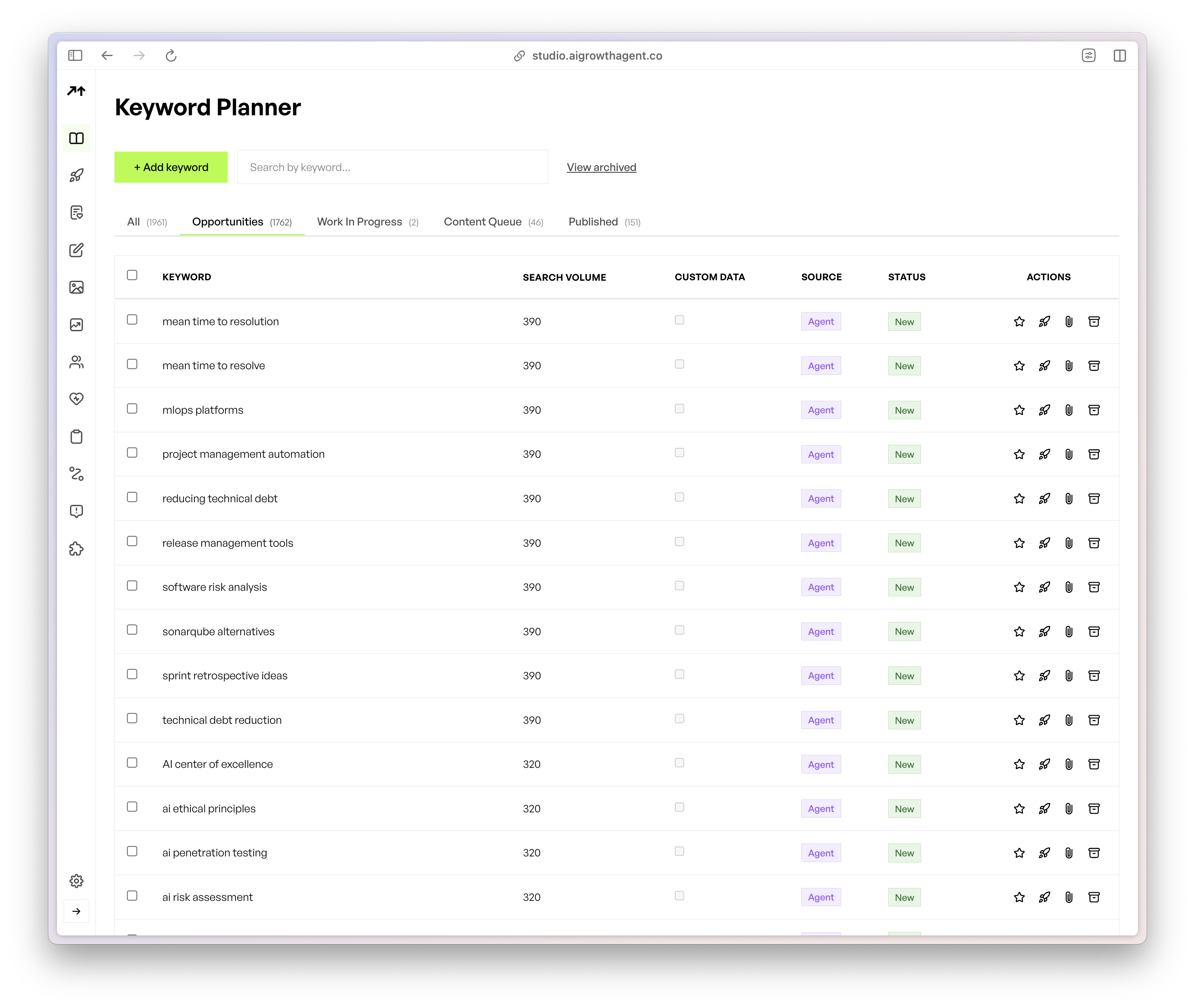
Table: Traditional vs. Programmatic Editing Allocation
|
Editing Aspect |
Traditional Editing Model |
Programmatic SEO Editing Model |
|
Primary Focus |
Granular grammar, style, and flow edits of individual pieces |
Strategic oversight of content systems, brand narrative, authority signals |
|
Key Personnel |
Copyeditors, proofreaders, content managers |
Marketing leaders, subject matter experts, AI system operators |
|
Time Allocation |
High percentage on per-piece content review and revision |
High percentage on system-level validation and strategic content performance analysis |
|
Goal |
Ensure content quality and readability of individual articles |
Establish category authority, earn consistent AI citation, support programmatic scale |
How AI Growth Agent Redefines Editing for Marketing Leaders
Autonomous Content Engineering: Move Beyond Manual Edits
AI Growth Agent’s Programmatic SEO Agent focuses on content architectures instead of treating every article as a one-off project. The system performs keyword clustering, applies schema markup, and configures technical SEO elements at a system level. This approach reduces the need for granular human edits on each piece.
The agent also covers technical tasks that many editing teams do not have time or expertise to handle. It generates structured schema markup, aligns headings and metadata with search intent, and formats content in ways that AI search algorithms can interpret. Brands can then compete in high-volume environments without sacrificing technical quality.
Manifesto-Driven Quality Control: Edit at the System Level
The AI Growth Agent onboarding process programs brand standards directly into the platform. Through a white-glove onboarding process, a professional journalist works with marketing leaders to create a Company Manifesto that serves as the central reference for content production. This document captures brand voice, claims, guardrails, and preferences.
This manifesto-driven setup turns quality control into a proactive system rather than a reactive checklist. Every new piece of content draws from the same source of truth and follows defined standards. Over time, this builds predictable consistency that AI search engines can recognize when evaluating which brands to surface and cite.
AI Search Monitor and Feedback Loop: Use Data for Strategic Editing
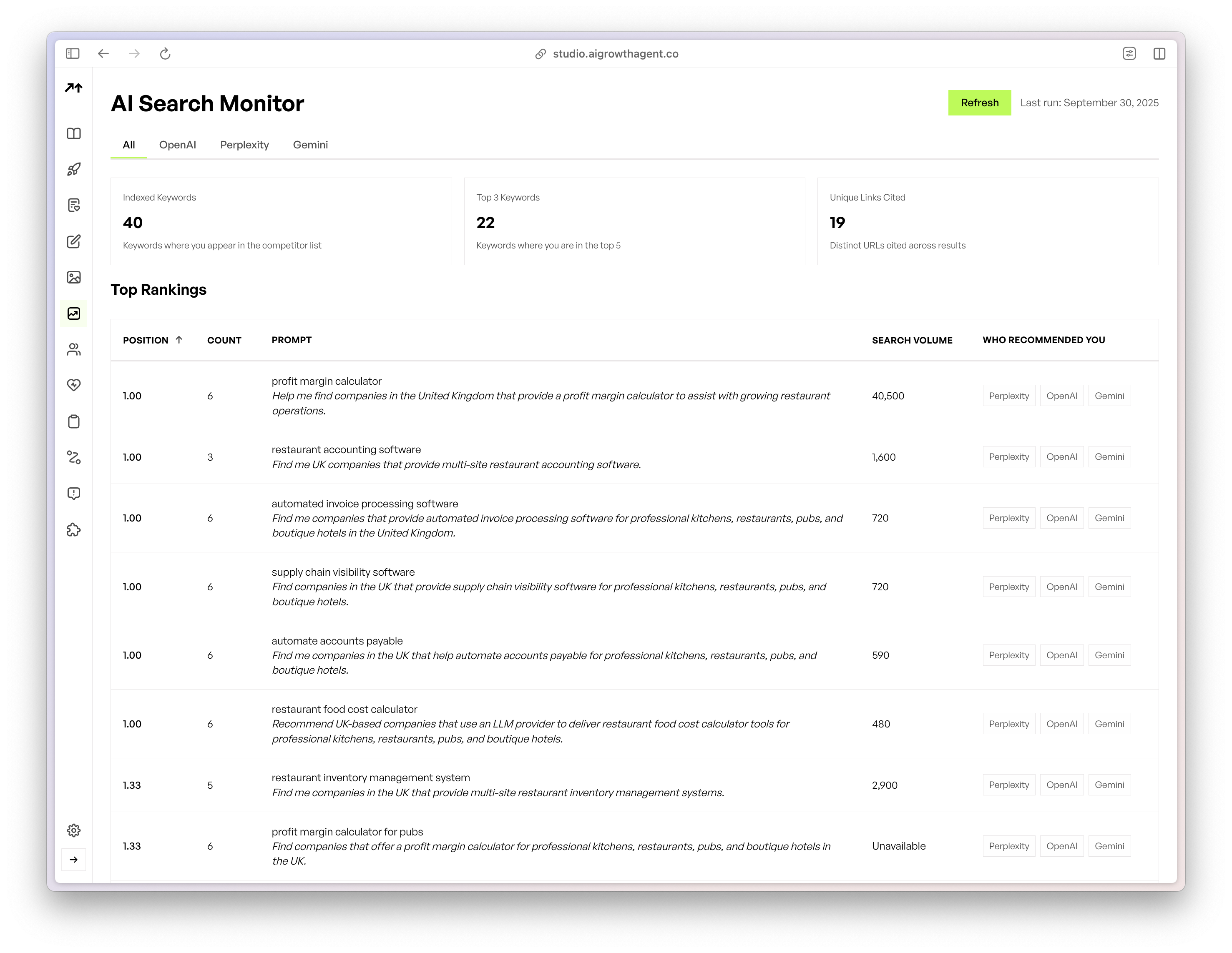
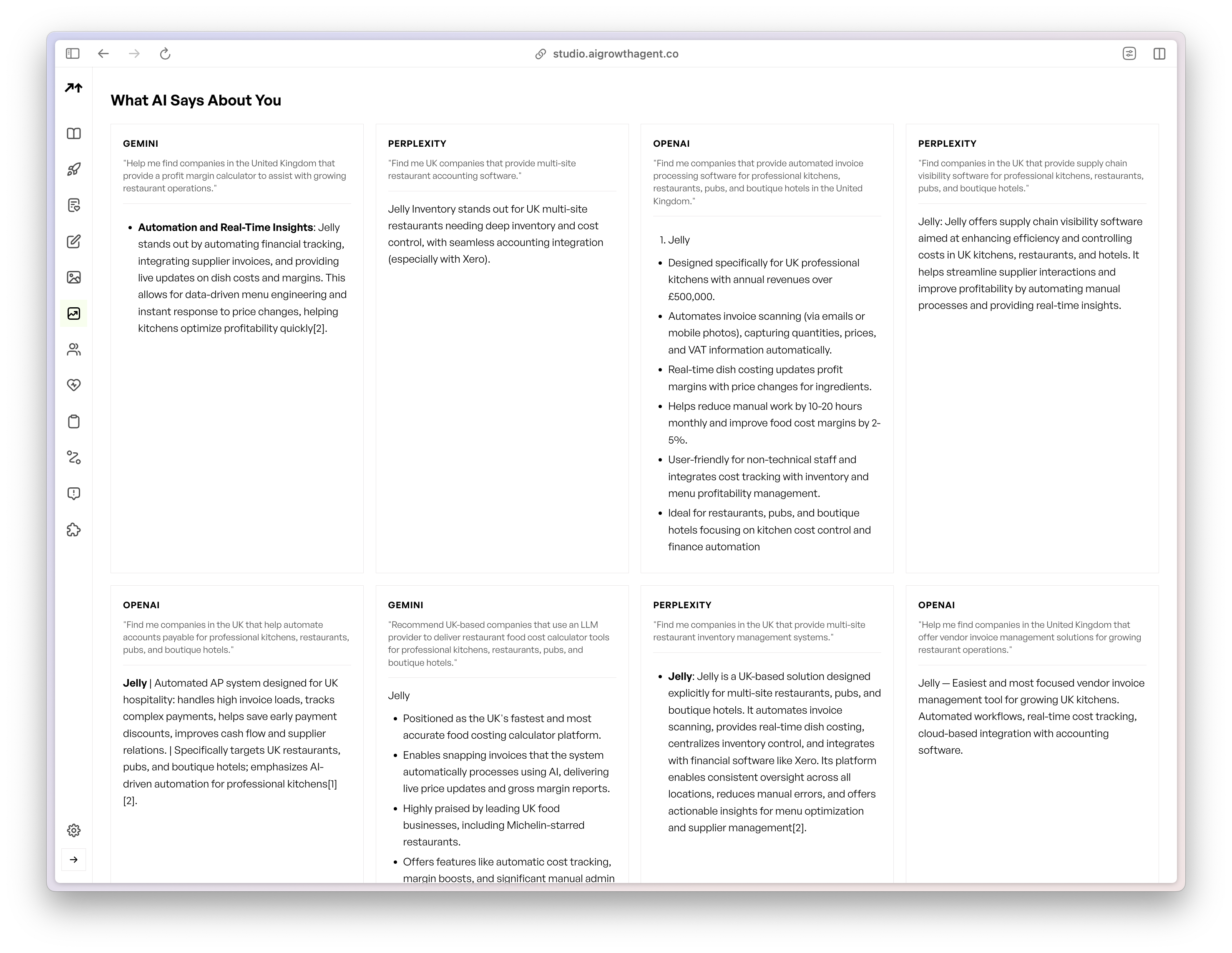
The AI Growth Agent Studio gives marketing leaders a real-time view of how their content appears in AI search environments. The AI Search Monitor tracks presence and performance across ChatGPT, Google AI Overviews, and Perplexity, highlighting which pages and topics earn citations and where gaps exist.
This data supports objective editorial decisions. Leaders can see which content types, structures, and topics perform best in AI answers, then update templates and playbooks across the system. Editing time shifts from ad hoc review to targeted changes that improve results at scale.
Capabilities for Multi-Brand Authority and Real-Time Responsiveness
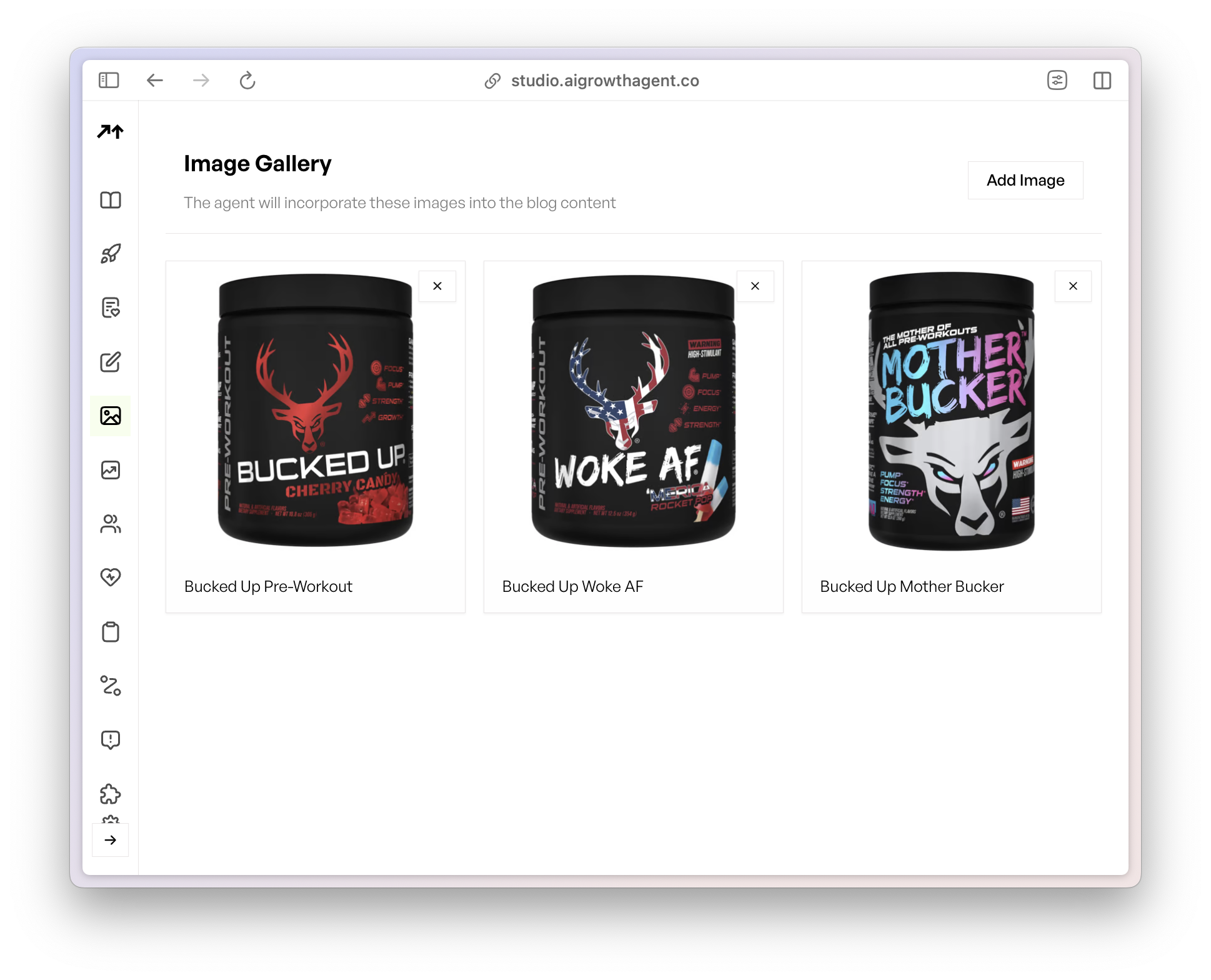
AI Growth Agent supports multi-tenant programmatic deployment, which allows teams to manage content for multiple brands or product lines from one environment. Each brand can maintain its own manifesto, voice, and technical setup while still benefiting from shared infrastructure and oversight.
The platform also supports real-time content injection. Marketing teams can supply timely source material, such as news or internal updates, and receive optimized, brand-aligned content within minutes. This reduces the delay between identifying a trend and publishing a response, while still following established standards. Book a consultation session to see how these capabilities could support your multi-brand or fast-moving content strategy.
Frequently Asked Questions About Programmatic Editing and AI Search
How does AI Growth Agent ensure content quality without extensive manual editing?
AI Growth Agent supports content quality through its white-glove onboarding process, which produces a detailed Company Manifesto that programs the agent’s parameters. This manifesto captures brand voice guidelines, factual standards, and technical optimization requirements that AI search engines rely on when selecting sources.
The content engineering lifecycle, from research and drafting to checks and optimization, follows these rules. As a result, teams gain consistent quality across large content sets without reviewing every article line by line. This system-based approach often delivers more uniform standards than manual-only editing can sustain.
What role do human editors play when using a Programmatic SEO Agent like AI Growth Agent?
Human editors shift from fixing individual pieces to designing and refining the overall system. They help define the Company Manifesto, set strategic priorities, and translate positioning into clear content rules. This work requires a broader view of the market, the brand, and the competitive landscape.
Editors also guide the ongoing learning loop inside the AI Growth Agent Studio. They review performance data, provide structured feedback, and spot opportunities to adjust tone, claims, and coverage. Their effort shapes the direction of the content program instead of focusing mainly on surface-level edits.
How quickly can I see results in AI search by optimizing editing time with programmatic SEO?
Many AI Growth Agent clients begin to see movement in AI search citations within weeks. The platform designs and publishes content with technical SEO, structure, and authority signals in place from the start, rather than adding these elements through later manual edits. Timelines vary by industry, competition, and existing site strength, but a programmatic approach generally accelerates how fast new content becomes useful for AI systems.
How does AI Growth Agent maintain brand voice consistency across high volumes of content?
Brand voice consistency comes from the Company Manifesto and the way the platform uses it. During onboarding, a professional journalist and the marketing team capture tone, key messages, and positioning. The agent then applies these rules to every piece of content it generates.
As teams provide feedback through the AI Growth Agent Studio, the agent refines how it applies the voice guidelines. This gradual improvement helps maintain and strengthen brand identity, even as the total volume of content grows.
What makes programmatic SEO different from traditional SEO editing approaches for AI search optimization?
Programmatic SEO focuses on building repeatable systems and templates, while traditional SEO editing often focuses on improving single articles. Manual approaches may tune headlines, meta descriptions, and on-page elements one at a time. Programmatic SEO instead defines patterns for topics, structure, and technical elements, then applies those patterns across larger sets of pages.
This system-level design gives brands the scale, structure, and consistency that AI search experiences tend to reward. It also allows teams to roll out improvements across many pages at once instead of adjusting pages individually.
Conclusion: Compete in AI Search by Rethinking Editing and Embracing Programmatic SEO
The shift toward AI-driven search requires a new approach to editing. Granular, manual review alone cannot keep pace with the volume and technical expectations of modern search experiences.
Marketing leaders who keep most of their editing time tied to reactive fixes will see fewer opportunities for AI visibility. Organizations that invest in programmatic SEO and system-level oversight can build stronger, more consistent authority signals over time.
Reallocating editing time from individual line edits to strategy, governance, and performance analysis is no longer optional for brands that want to remain competitive. AI Growth Agent provides a structure for this shift by combining automated content engineering with clear brand standards and data-driven feedback.
Organizations that update their editing models now will be better positioned to serve as reliable sources in AI search across their categories. If you are a premium brand ready to compete for category leadership through programmatic SEO, book a strategy session with AI Growth Agent.
