


Key Takeaways
- Programmatic summarization now plays a central role in how brands appear inside AI search results across tools like ChatGPT, Gemini, and Perplexity.
- Summarizers that preserve accuracy, context, and E-E-A-T signals give AI systems content they can reliably cite as definitive answers.
- Technical precision, including structured formats and metadata, increases the chances that AI search engines surface and quote your content.
- Support for brand voice, multiple formats, and end-to-end workflows turns summarization into a repeatable content engine rather than a one-off tool.
- AI Growth Agent provides a programmatic SEO and summarization platform built for AI search visibility, and you can book a live demo here.
Why Programmatic Summarization Defines AI Search Authority
Programmatic summarization now shapes how brands gain visibility in AI-powered search. A capable summarizer does more than compress text. It creates structured, clear content that AI systems can understand, reuse, and cite.
Digital noise keeps growing while user attention stays limited. AI systems favor concise, declarative content that directly answers what, how, and why questions, so brands that summarize programmatically at scale earn more AI citations.
Manual-only SEO and generic AI copy tools struggle to keep pace. Manual workflows move slowly and rarely include engineering support for Programmatic SEO, while generic AI tools stop at raw text and leave strategy, formatting, and publishing work to internal teams.
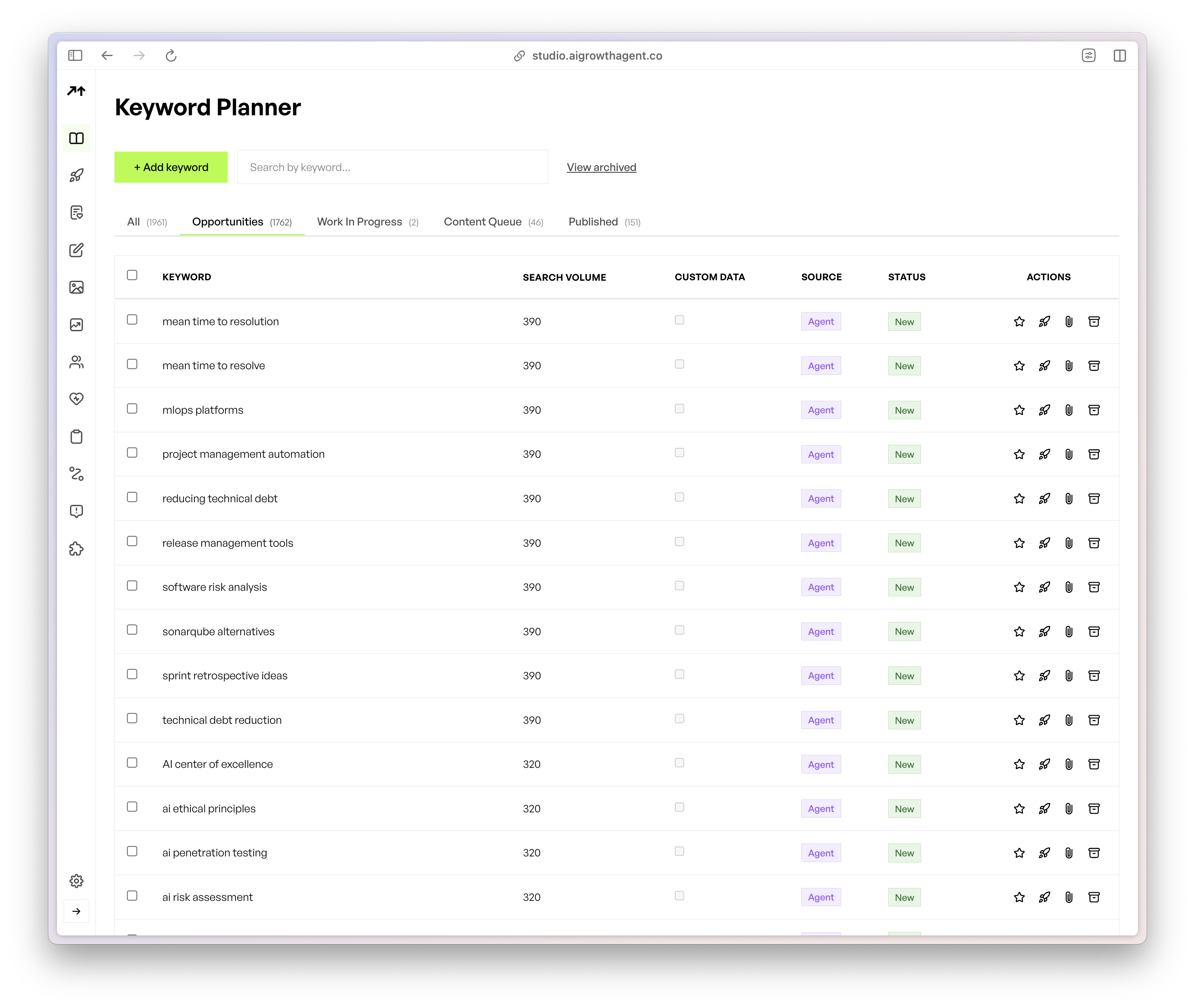
Brands that want stronger AI search authority now treat summarization as a core capability, not a nice-to-have utility.
1. Unwavering Accuracy and Context Preservation for Definitive Answers
Accurate, context-aware summaries give AI search engines content they can trust. A strong summarizer condenses content without changing meaning, and it keeps technical nuance intact.
Reducing Hallucination Risk with Extractive Summarization
Extractive-focused summarizers preserve original wording and nuance more reliably than purely generative paraphrasers, which lowers factual drift and hallucination risk. This method lifts key sentences from the source, so the summary remains aligned with the original evidence.
Reliable extractive behavior supports LLM citation. When AI systems see that your summaries closely match source material, they can quote and reference your pages with more confidence.
Preserving E-E-A-T in Condensed Content
High-performing AI-assisted content still reflects experience, expertise, authoritativeness, and trustworthiness. Summarizers must keep these signals visible, even in shorter formats.
Marketing leaders can evaluate tools based on how well summaries retain specific claims, proof points, and expert commentary. Summaries that reduce content to vague generalities weaken E-E-A-T and lower AI citation potential.
2. Technical Precision for Optimal AI Indexing and Citation Potential
Technical precision turns summaries into content that AI systems can parse, rank, and reuse. Structure, metadata, and schema make the difference between text that exists online and text that receives citations.
Engineering Signal-Rich Content for AI Readability
Programmatic summarization can create signal-rich content that fits how LLMs extract answers. Content that includes clear definitions, lists, and step-by-step frameworks is more likely to be quoted by AI systems, so summarizers should support these structures by design.
Effective tools place topic keywords in headings and body copy, keep semantic coverage strong, and produce short, self-contained passages that AI models can lift as direct answers.
Automated Metadata and LLM Context Protocol Integration
Advanced summarizers attach schema markup, metadata, and optimized image tags automatically. This automation removes the engineering bottleneck that often slows Programmatic SEO.
Some systems now generate LLM.txt files and blog-level Model Context Protocol integrations, which let AI models read site content in a structured way and understand relationships between posts.
Teams that combine summarization with this kind of technical foundation increase the odds that AI search engines can find, interpret, and reuse their content accurately. Schedule a demo with AI Growth Agent to see this workflow in action.
3. Brand Voice and Nuance Alignment at Scale
Summaries should still sound like your brand. A capable summarizer respects tone, terminology, and framing so condensed content aligns with existing assets and campaigns.
Custom Models and Company Manifesto Integration
Custom models and fine-tuning can embed brand-specific style and structure, so summaries remain consistent even as volume grows. Detailed style guides and company manifestos serve as reference libraries for the model.
When messaging frameworks and key value propositions sit inside the brand core the AI uses, summaries can highlight the right differentiators while still reducing length.
Avoiding Generic AI Text for Authenticity and Trust
Customers increasingly recognize generic AI copy, so bland summaries can erode trust. Voice-aware summarization keeps phrasing specific, concrete, and aligned with your audience.
Marketing teams already rely on systems that standardize voice across assets, which shows how important configurable style guides and prompts are for summarization as well.
4. Adaptability Across Diverse Content Forms and Formats
Adaptable summarizers support multiple formats and lengths so teams can reuse one source across many AI surfaces and channels.
Optimizing for AI Snippets, FAQs, and Long-Form Content
Leading summarization tools support formats such as bullet points, key takeaways, and action items. This flexibility helps teams create FAQ blocks, snippet-ready answers, and narrative recaps from the same source material.
Effective generators also handle long context windows and integrate into workflows, which makes it easier to scan large libraries, identify gaps, and prioritize new content.
Programmatic Content Injection for Trending Topics
High-performing summarizers help teams respond quickly to emerging topics. Systems that can distill breaking news into structured, optimized posts within minutes give brands a better chance of capturing early AI and search interest.
This adaptability supports coverage across AI overviews, chat responses, traditional search, and owned channels, all from a consistent summarization engine.
5. Seamless Integration for End-to-End Programmatic Workflows
The strongest summarizers sit inside broader content systems. They plug into research, drafting, optimization, publishing, and monitoring instead of acting as one-off utilities.
Automating the Full Content Lifecycle
Modern AI content platforms are judged on their ability to scale creation and automation without adding workload, which places summarization at the center of a larger workflow.
Well-deployed AI summarization can reduce research time by up to 60 percent, letting teams focus more on strategy, expert input, and distribution.
The AI Growth Agent Studio as Command Center
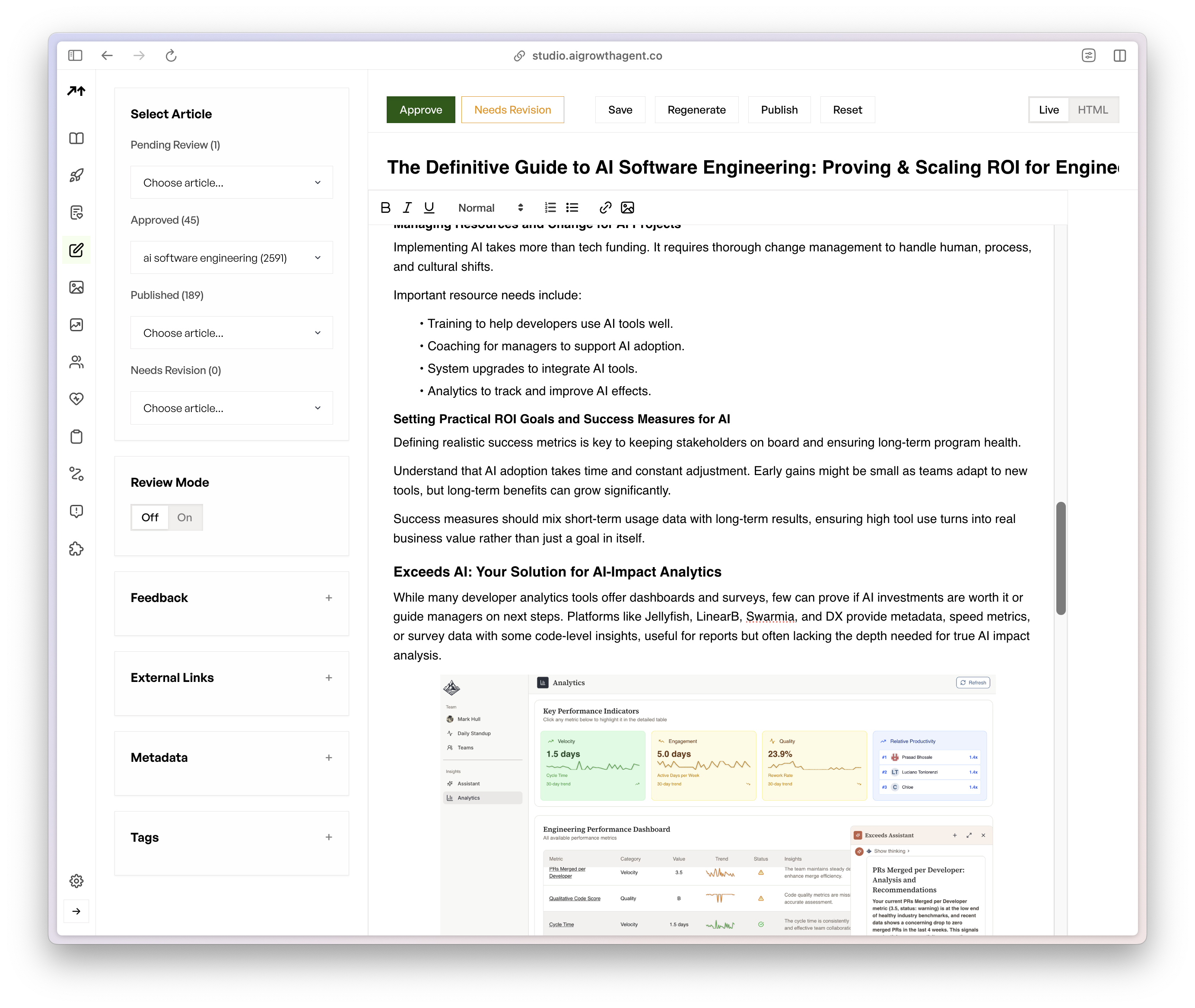
The AI Growth Agent Studio gives teams a single place to manage programmatic SEO and summarization. Clients can review outlines and drafts, provide feedback, and see performance feedback loops that move toward a controlled Auto-Pilot mode.
This kind of environment combines summarization, generation, and automation, so brands can create multiple content formats from shared sources while keeping technical and brand standards consistent.
Schedule a consultation session with AI Growth Agent to explore this setup for your team.
The Impact of Top Summarizers: Real-World AI Citation Success
Brands using programmatic summarization already see stronger placement in AI search systems when content aligns with the capabilities described above.
Examples of AI Growth Agent Impact
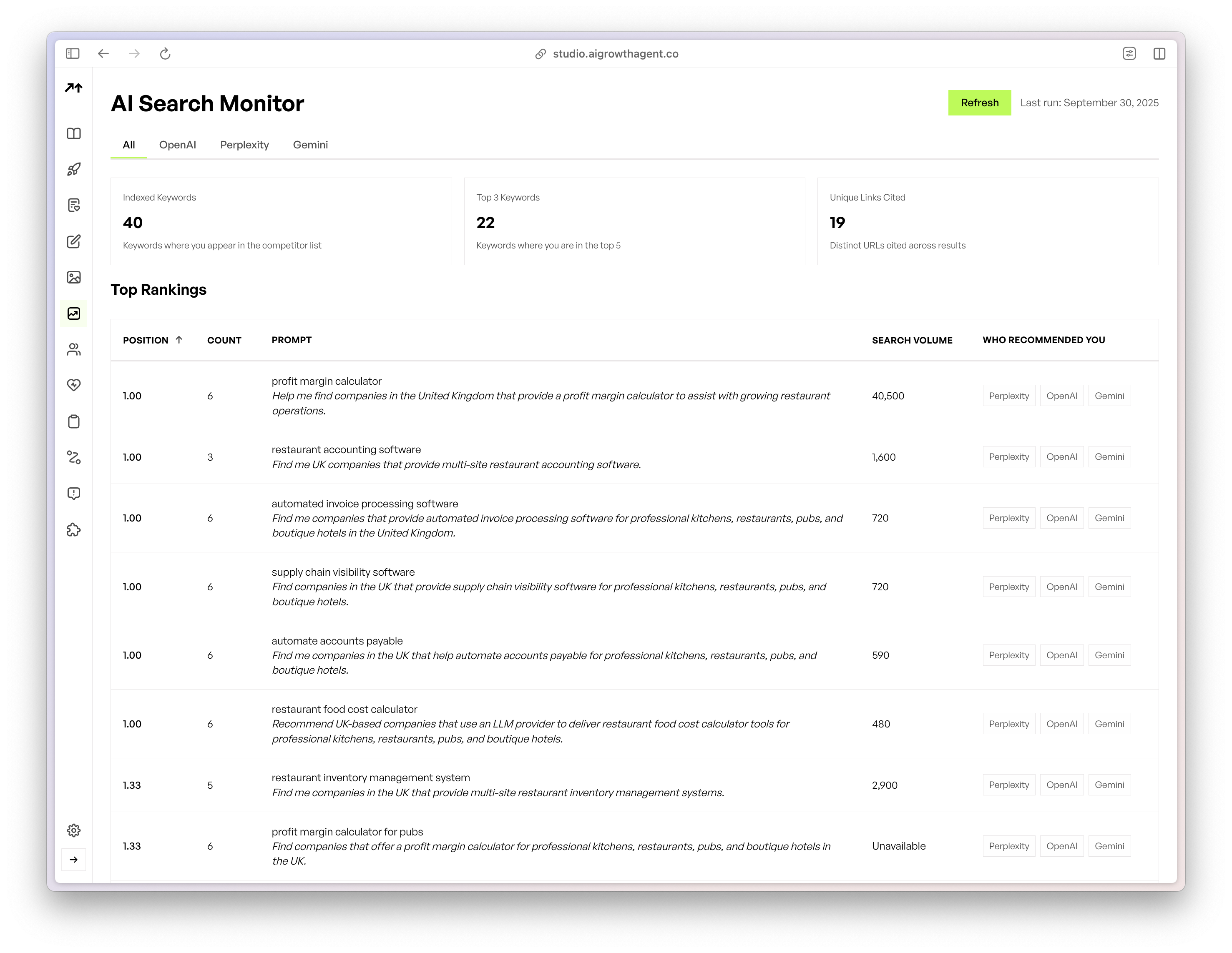
Exceeds AI became a recommended alternative in Perplexity within two weeks and appeared in Google AI Overview and Gemini for core terms shortly after launch. The brand now shows up across ChatGPT, Google AI Overview, Gemini, and Perplexity for queries related to AI performance review tools for engineers.
BeConfident gained rapid indexing after programmatic publishing and improved visibility in Brazil for English learning queries, competing with established language apps.
Bucked Up earned citations in ChatGPT as a notable protein soda brand within three weeks of publishing, reaching users searching for best protein soda comparisons.
Gitar emerged as a reference for AI-powered CI/CD automation in less than two months, with presence in Google AI Overview, Gemini, ChatGPT, and Perplexity for terms such as fixing broken CI builds automatically and AI reviewers for CI failures.
These examples illustrate how consistent, technically sound summarization helps brands become reliable sources in AI search ecosystems.
|
Feature |
Generic Summarizer |
Programmatic Summarizer |
|
Accuracy |
Prone to factual drift |
Extractive focus, context preserved |
|
Brand Voice |
Bland, inconsistent |
Manifesto trained, consistent at scale |
|
Technical SEO |
Basic text output |
Schema, MCP, AI indexing optimization |
|
Output Formats |
Limited, fixed length |
Flexible, diverse formats |
Frequently Asked Questions
How do AI summarizers impact my brand’s visibility in Google AI Overviews and ChatGPT?
Strong summarizers improve visibility by producing clear, structured, and accurate content that AI systems can easily parse and quote. Schema markup, descriptive headings, and concise declarative sentences make it easier for Google AI Overviews, ChatGPT, and Perplexity to lift your content as answers.
Can a generic AI summarizer maintain my brand’s unique voice across diverse content?
Generic summarizers usually struggle to maintain a distinct voice. Consistent brand tone at scale requires programmable systems that follow your manifesto, style guide, and preferred phrasing patterns.
What is the difference between extractive and abstractive summarization for AI search?
Extractive summarization reuses key sentences from the source, which helps preserve facts and nuance for AI citation. Abstractive summarization rephrases content in new language, which can be useful for readability but may introduce errors or remove important qualifiers.
How does programmatic summarization reduce research and content creation time?
Programmatic summarization quickly condenses long documents and multi-source research into structured summaries, outlines, and drafts. Teams can then review and refine instead of starting from scratch, which shortens both research and production cycles.
Why is technical SEO integration crucial for content summarizers?
AI search engines rely on structure, metadata, and clear signaling to understand and index content. Summarizers that generate schema, metadata, and structured blocks create signal-rich pages that models can find, interpret, and reuse more effectively.
Conclusion: Mastering AI Search with Intelligent Summarization
Accuracy, technical precision, brand alignment, adaptable formats, and workflow integration now define effective content summarization for AI search in 2026. Brands that invest in these capabilities give AI systems clear, reliable material to cite and recommend.
As AI-driven discovery expands, your ability to supply definitive answers at scale will depend on the summarization systems behind your content. Book a demo with AI Growth Agent to see how an autonomous Programmatic SEO Agent can support that strategy.
