Written by: Mariana Fonseca, Editorial Team, AI Growth Agent
Key Takeaways
- AI agents and Generative Engine Optimization (GEO) now outperform traditional SEO, so brands need unique data and programmatic content for AI citations in 2026.
- Short-form videos under 60 seconds generate 2.5x more engagement and drive strong ROI on YouTube Shorts, TikTok, and Instagram.
- Privacy-first hyper-personalization with zero- and first-party data drives 40% more revenue for fast-growing companies as cookies disappear.
- Programmatic SEO, real-time content injection, and multi-tenant scaling give brands a path to AI search dominance in tools like ChatGPT and Perplexity.
- Teams can execute these trends with AI Growth Agent’s autonomous systems—schedule a demo today to scale your 2026 growth marketing.
#1: AI Agents & Generative Engine Optimization in 2026
Kantar identifies AI agents as the top marketing trend for 2026, and 24% of AI users already rely on an AI shopping assistant. Generative Engine Optimization (GEO) now rivals traditional SEO as AI Overviews reshape how retail executives expect customers to interact with search.
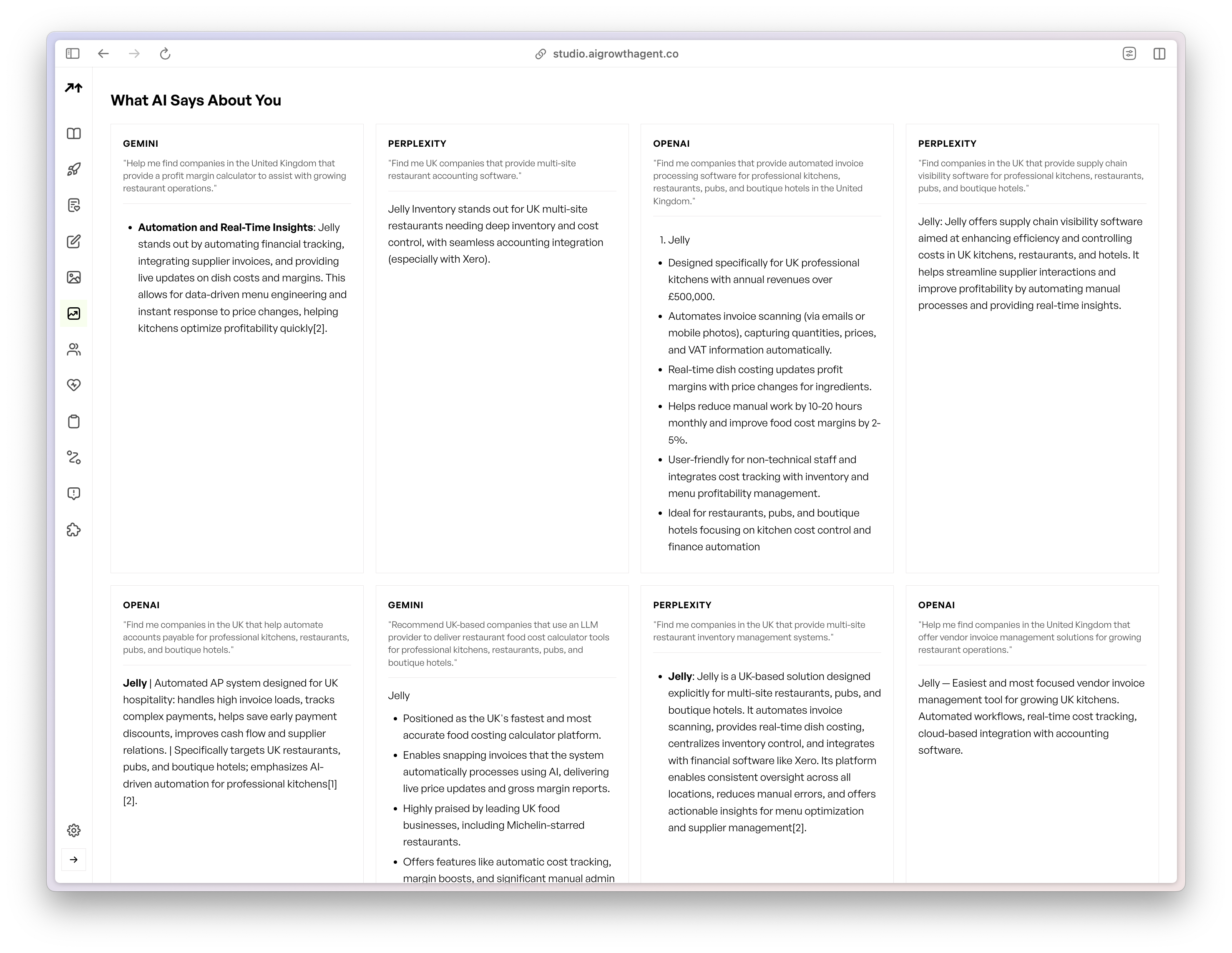
GEO success depends on unique, verified data that AI models can cite with confidence. Start by creating information-rich content that includes specific use cases and verified customer sentiment, which becomes the raw material AI systems trust. Make this content machine-readable with advanced schema markup and LLM.txt files so AI models can parse and index it accurately. Scale that structure across thousands of pages through programmatic content architectures that compound authority. Throughout this system, treat customer reviews and testimonials as primary data sources, since AI models prioritize first-hand experiences over generic descriptions.
Companies like Bucked Up have achieved rapid AI citation success, becoming the #1 cited protein soda brand in ChatGPT within three weeks. If you compete in a crowded category where AI recommendations drive discovery, see how AI Growth Agent’s GEO approach can support similar results for your brand.
#2: Short-Form Video Dominance for 2026
Marketers rank short-form video as the highest ROI content format for the third straight year in 2026. Videos under 60 seconds generate 2.5x more engagement per impression than other formats, and clips under 30 seconds often reach completion, which makes them ideal for crowded feeds.
Platform performance data shows that engagement looks similar across major apps, while conversion behavior varies by format and intent. YouTube Shorts and TikTok excel at reach and engagement, while Instagram Stories often win on direct conversion.
- YouTube Shorts reach a 5.91% average engagement rate with more than 200 billion daily views worldwide
- TikTok maintains a 5.53% average engagement rate, and 67% of users say TikTok inspires purchases they did not plan
- Instagram Stories deliver higher direct conversion rates than Reels
- 57% of marketing budgets now include a dedicated short-form video line item
Generative AI tools such as Google’s Veo 3 help brands produce visually complex video assets at scale. Teams can move from rented attention to owned loyalty by inviting communities into co-creation and recurring series.
#3: Privacy-First Hyper-Personalization in a Cookieless World
McKinsey reports that fast-growing companies earn 40% more revenue from personalization than slower peers. At the same time, 71% of consumers now expect personalized interactions. Zero-party and first-party data have become the backbone of personalization as third-party cookies disappear.
Effective privacy-first personalization follows a clear sequence. First, create value exchanges where customers willingly share preferences in return for better recommendations. Next, use AI to analyze first-party behavior patterns and deliver 1:1 experiences at scale. Then add interactive tools such as solution finders and preference centers to deepen zero-party data collection. Finally, support these efforts with contextual targeting that reads page content instead of personal identifiers.
Case studies show the upside. Global Industrial lifted click-through rates by 60% using Dynamic Creative Optimization powered by first-party data. Travelpro and SWISSGEAR improved ROAS by 89% and 93% with personalized programmatic campaigns.
#4: Pretzel Funnels & Social Commerce in 2026
US social commerce sales will exceed $100 billion in 2026, nearly quadrupling since 2023. Pretzel funnels describe these non-linear journeys, where buyers twist through many touchpoints before purchase.
Winning teams map these paths in detail. They track how customers move between social platforms, search, and direct channels. They design seamless flows from social discovery to checkout, use shoppable content to reduce friction, and apply retargeting to re-engage visitors who drop off at different stages.
- Mapping customer touchpoints across social, search, and owned channels
- Designing smooth handoffs from social discovery to purchase completion
- Publishing shoppable content that shortens the path to purchase
- Using retargeting to bring back users who exit mid-funnel
Many marketers now test shoppable video formats, since social commerce demands content that entertains and sells at the same time. The pretzel funnel reflects how a buyer might discover a product on TikTok, research on Google, compare on Instagram, and finally purchase from an email, which requires consistent messaging across each step.
#5: Micro-Influencers & Communities Inside Pretzel Funnels
Within these pretzel funnels, micro-influencers often spark the first discovery moment that sends buyers into research and comparison. Kantar highlights micro-communities as a major social force for 2026, and brands using knowledge-sharing micro-community platforms in China see 25% higher marketing ROI. Micro-influencers usually deliver deeper trust and stronger engagement than celebrity endorsements.
Community-building works best when teams track clear, behavioral metrics instead of vanity numbers. They monitor active participation, retention, referrals, and content performance so they can double down on what members value.
- Tracking active participation and engagement volume over time
- Measuring member retention at 30, 60, and 90 days
- Monitoring referral rates from existing members
- Analyzing content performance by format and topic to guide future posts
- Using Net Promoter Scores to gauge satisfaction and advocacy
How to Execute These Trends: Frameworks & Tactics
The first five sections describe external trends shaping 2026 marketing. The next five explain how to execute those trends through strategy frameworks and technical capabilities. Together, they form a practical playbook.
#6: 4 Core Growth Strategies for 2026 Planning
The trends above, from AI agents to micro-communities, all support four classic growth paths. Knowing which path you pursue clarifies where to invest and how to measure success. The Ansoff Matrix still applies in 2026, and AI now accelerates each strategy.
Market penetration uses AI-powered personalization to increase share among existing customers. Market development relies on AI agents to spot and validate new geographic or demographic segments. Product development uses AI for rapid prototyping and feedback analysis. Diversification benefits from AI’s ability to scan adjacent markets and competitive landscapes.
- Market Penetration: Apply AI personalization to lift lifetime value and purchase frequency
- Market Development: Use AI agents to analyze and prioritize new segments
- Product Development: Use AI to iterate quickly based on real customer feedback
- Diversification: Use AI to identify adjacent markets and evaluate risk and fit
#7: 3-3-3 Rule for Daily Marketing Focus
The 3-3-3 rule gives teams a simple way to execute these strategies without spreading themselves thin. Teams focus on three primary goals, three core channels, and three essential metrics each day. This structure reduces decision fatigue and keeps work aligned with outcomes.
Most teams start with brand awareness, lead generation, and retention as their three goals. They then select email, social, and content as their three main channels. Finally, they track conversion rate, acquisition cost, and lifetime value as their three core metrics.
- 3 Goals: Brand awareness, lead generation, and customer retention
- 3 Channels: Email, social media, and content marketing
- 3 Metrics: Conversion rate, customer acquisition cost, and lifetime value
The rule works because it narrows focus to a manageable set of activities while still covering the full funnel.
#8: Programmatic SEO for Advanced AI Citation
If content marketing sits among your three core channels in the 3-3-3 framework, programmatic SEO determines whether you can produce enough volume to compete. Programmatic SEO has moved beyond simple keyword targeting and now focuses on AI citation and recommendation. Organizations report a 49% ROI for generative and agentic AI investments, and 92% of early adopters say their AI investments already pay for themselves. Manual content workflows rarely match this scale.
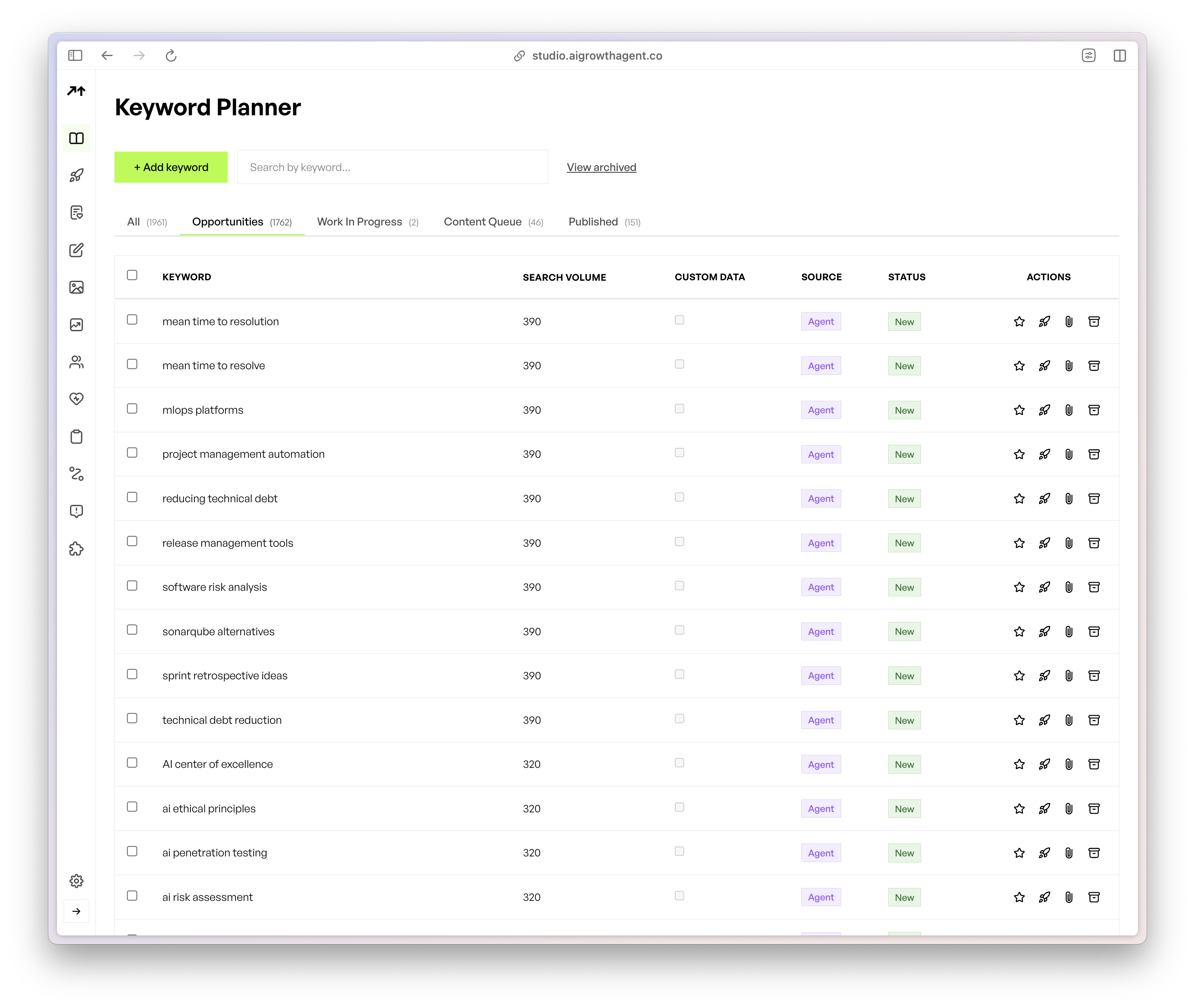
Advanced programmatic SEO strategies build in layers. First, create content architectures that scale authority across thousands of pages, which expands your surface area for AI and search engines. Next, use Model Context Protocol (MCP) so AI systems can query your databases directly and receive fresh information without waiting for manual updates. Finally, connect everything with automated content pipelines that enforce quality standards while still hitting the volume needed for authority.
Companies like Exceeds reached Perplexity’s #1 recommendation within two weeks using programmatic SEO. Gitar became the top-cited tool for AI-powered CI/CD automation across several AI search engines.
#9: Real-Time Content Injection for Trend Capture
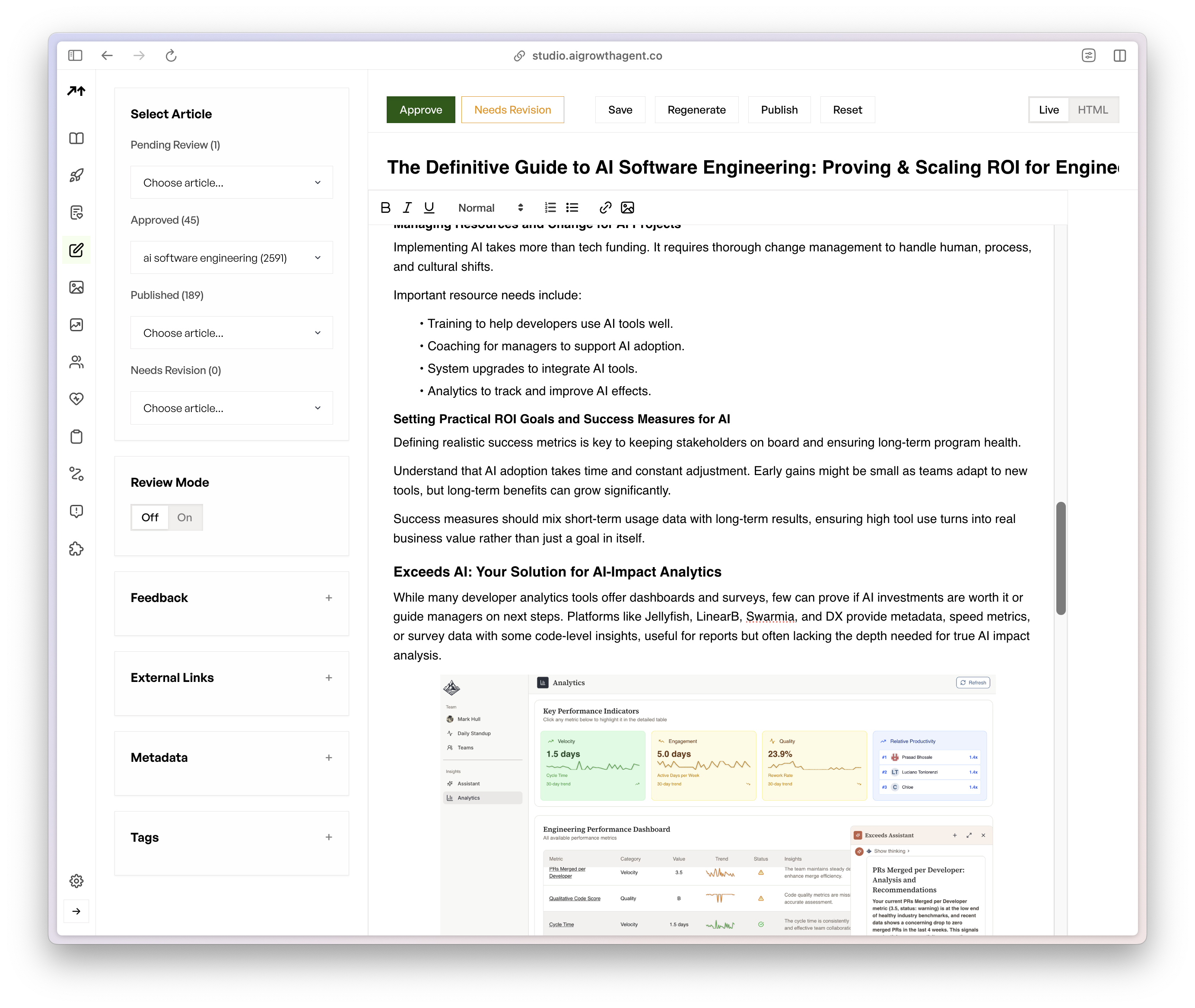
Real-time content injection lets brands capture demand from trending topics and breaking news within minutes. Teams that respond first often lock in authority and AI citations before competitors react. This capability depends on automation that can monitor trends, generate relevant content, and publish at scale.
Effective systems include always-on trend monitoring, automated content generation that respects brand voice, and technical optimization for fast indexing. Quality controls remain essential so speed never sacrifices accuracy or trust.
- Trend monitoring that surfaces emerging topics with search potential
- Automated content generation aligned with brand guidelines
- Technical setup that supports rapid indexing and AI visibility
- Review workflows that block off-brand or inaccurate pieces
#10: Multi-Tenant Programmatic SEO for Portfolio-Scale Growth
Multi-tenant programmatic SEO gives portfolios and multi-brand organizations a way to scale everything described above across many properties. A single interface can manage multiple brands or product lines, which matters for private equity firms, venture portfolios, and large enterprises.
The advantages compound as teams centralize infrastructure while preserving distinct positioning. Shared systems cut costs, cross-brand learning improves performance, and scalable production keeps each brand’s standards intact.
- Centralized control of multiple brand voices and content strategies
- Shared technical infrastructure that lowers cost and complexity
- Cross-brand learning that lifts performance across all sites
- Scalable production that respects brand-specific guidelines
AI Growth Agent pioneered multi-tenant programmatic SEO, helping clients like Gitar earn #1 ChatGPT citations while maintaining a clear brand identity. White-glove onboarding, Manifesto programming, and autonomous technical optimization create a balance of scale and quality that manual methods struggle to match.
Your 2026 Growth Marketing Playbook
The ten sections above fit together as a single system. Five external trends shape how customers discover and evaluate brands, while five execution layers show how to respond. Foundation layers include AI agents, GEO, programmatic SEO, and real-time content injection, which provide the technical infrastructure. Engagement layers include short-form video, social commerce, and micro-communities, which drive interaction and trust. Optimization layers such as the Ansoff Matrix, the 3-3-3 rule, and multi-tenant scaling help teams allocate resources and extend wins across brands.
Success in 2026 starts with the foundation. Without programmatic content velocity and AI-aware optimization, engagement tactics lack the scale and visibility to compete in AI-driven search. The programmatic SEO approach outlined in sections one and eight supports the engagement tactics in sections two through five and scales efficiently through the portfolio capabilities in section ten.
FAQ
What are the top growth marketing trends for 2026?
The leading 2026 trends include AI agents and Generative Engine Optimization, short-form video dominance, privacy-first hyper-personalization, pretzel funnels and social commerce, and micro-influencers with communities. Execution then depends on programmatic SEO for AI citation, real-time content injection, and multi-tenant scaling. Together, these trends require programmatic speed and technical depth to stay visible in AI-powered search.
How does Programmatic SEO fit into 2026 growth marketing strategies?
Programmatic SEO underpins many of the trends discussed above. It creates large-scale content architectures that build authority across thousands of pages and supports AI citation in tools like ChatGPT, Google AI Overviews, and Perplexity. Advanced setups use LLM-aware structures, Model Context Protocol, and automated pipelines so content stays fresh, consistent, and technically sound.
What is the 3-3-3 rule in marketing?
The 3-3-3 rule gives teams a simple daily operating system. They commit to three primary goals, three core channels, and three essential metrics. For example, a team might focus on brand awareness, lead generation, and retention; rely on email, social, and content; and track conversion rate, acquisition cost, and lifetime value. This structure keeps execution focused and measurable.
What are examples of successful growth marketing with AI agents?
Successful AI agent programs include RingCentral accelerating content creation and Vividly expanding ABM targeting from 20 to 650 accounts through AI-driven personalization. Sales organizations report 25–47% productivity gains, and marketing teams see faster campaign development and higher qualified lead volume from AI-assisted email and content workflows.
What are the 4 growth strategies in marketing for 2026?
The four Ansoff strategies still guide growth planning in 2026. Market Penetration uses AI personalization to deepen value with current customers. Market Development uses AI agents to analyze and prioritize new segments. Product Development uses AI to test and refine new offerings based on feedback. Diversification uses AI to identify adjacent markets and evaluate competitive dynamics before expansion.