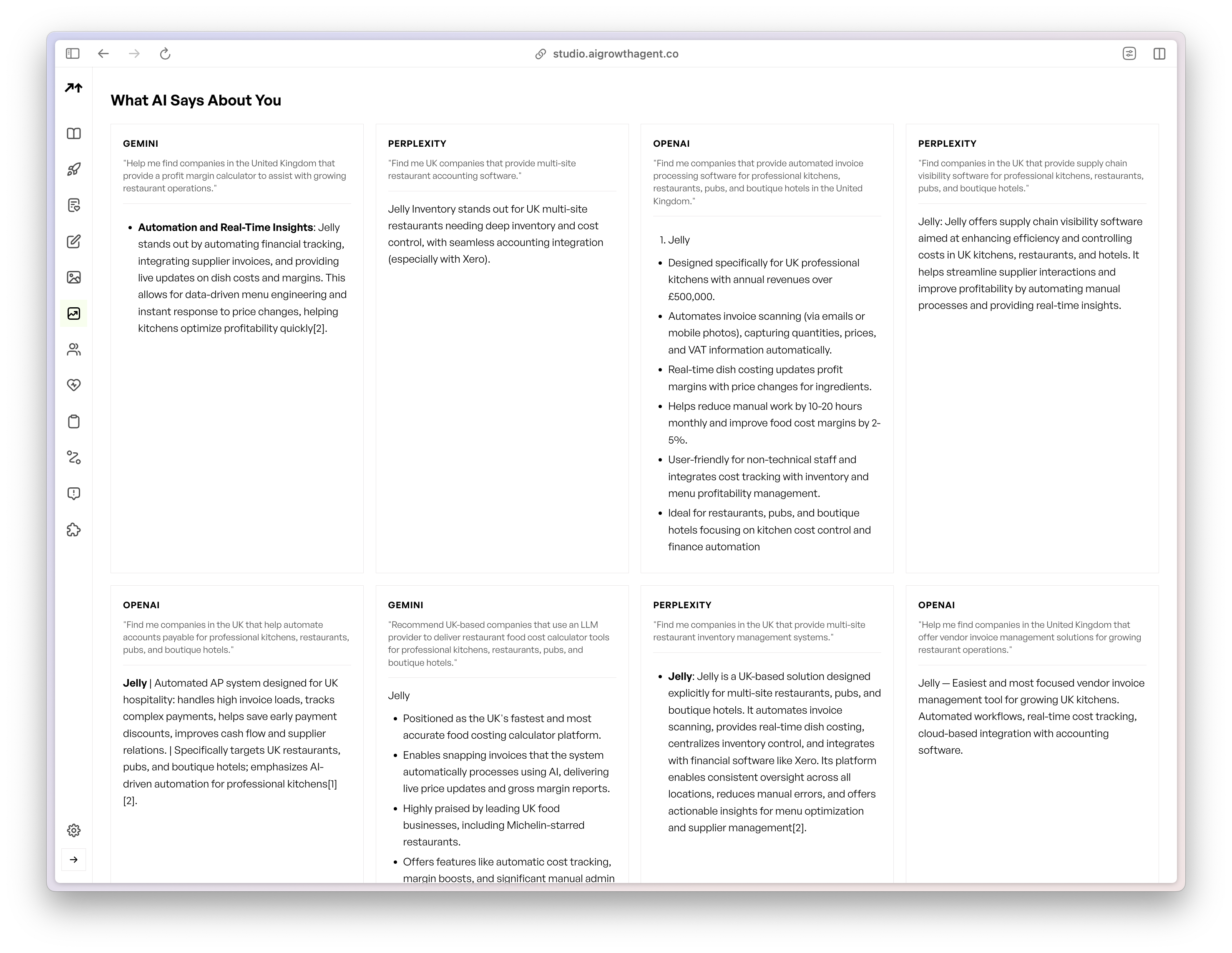
AI-powered search engines are changing the game. They’re now the main way people discover content online, which means traditional SEO methods don’t work as well anymore. Marketing leaders need to adapt quickly to stay ahead. This article dives into five essential shifts in SEO strategy to help your content get noticed and recommended by AI systems. Plus, we’ll explore how an autonomous, agent-powered tool like AI Growth Agent can scale your efforts effectively.
1. Focus on Meaning, Not Just Keywords: Earn AI Recognition
The way search engines evaluate content has changed significantly. AI systems now prioritize semantic meaning, user intent, and in-depth topic coverage over simple keyword matches. This isn’t just a small update, it’s a complete shift in how content gains value online.
In the past, SEO meant repeating specific keywords in strategic places. Now, AI looks for content with depth, context, and relevance. To appear authoritative, your content needs to show expertise, experience, and trustworthiness, often called E-E-A-T. It should answer direct questions and address related topics users might care about.
Your brand’s online reputation matters more than ever. AI systems pull information from across the web to decide which sources to highlight. To build authority, create content that shows a deep understanding of your field and proves your expertise in ways AI can recognize.
For marketing leaders, this means moving away from chasing specific keywords. Instead, develop content that covers topics thoroughly. Answer every possible question a user might have. Position your brand as the go-to source for information in your niche, so AI systems choose to feature your content.
2. Create Content AI Will Cite: Stand Out in Direct Answers
Getting cited by AI is a bigger goal than just ranking high in search results. AI search tools often pull together answers from multiple places and credit the sources they use. Your aim is to be one of those trusted sources, not just a link on a results page.
This changes what makes content successful. It’s no longer about clicks from search listings. Your content needs to be so reliable and complete that AI picks it as a key reference. The focus is on accuracy, trustworthiness, and covering a topic fully.
AI systems are getting better at handling ongoing conversations and remembering context. They outperform older search methods in managing detailed interactions and completing tasks. Your content should support these dynamic exchanges by being clear and authoritative on its own.
Marketing leaders should prioritize content with solid facts, backed by data, and presented plainly. Structure it with clear headings and specific details so AI can easily pull and credit information. Consistency across your messaging also helps AI trust your content.
3. Publish Frequently: Stay Relevant in AI Search
Speed matters in today’s online world. Publishing high-quality content often, known as content velocity, is now a major factor in staying visible. AI systems value recent, detailed, and regular content to determine a brand’s authority. Adapting to new trends quickly is also key.
Without frequent updates, your brand’s online presence fades. The flood of AI-generated content means you need a steady stream of posts to keep your voice heard. Brands that publish irregularly lose ground to competitors who maintain a consistent output.
AI can update its knowledge fast. With methods like retrieval-augmented generation, it stays current by pulling in new information. Your content must keep up by staying fresh and relevant as topics evolve.
For marketing leaders, producing quality content at a fast pace is a must. Traditional methods, like relying on agencies or internal teams, often can’t match this demand. AI Growth Agent offers a solution by generating and publishing authoritative content daily, helping you meet these new expectations.
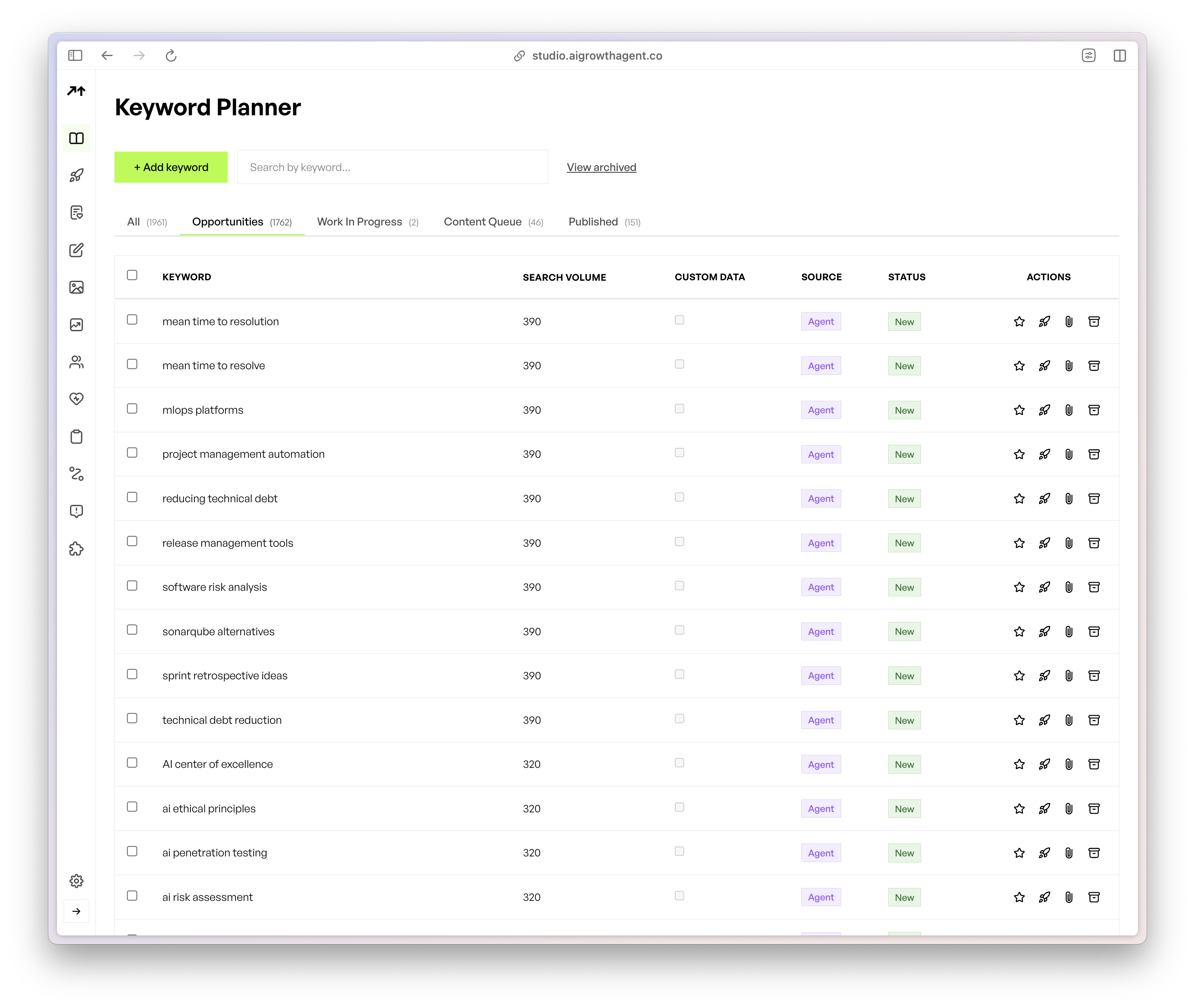
4. Help AI Understand Your Content: Use Structured Data
AI relies on specific formats to make sense of content. Using structured data like Schema.org, along with defined topics and entities, helps AI interpret and reference your material. This moves SEO beyond keywords to content that machines can read and trust.
Today’s technical SEO is complex. AI processes raw text and grasps subtle context and meaning, so content must be rich in connections and clarity. It needs to appeal to human readers while being optimized for AI with metadata and clear structure.
Optimization now involves adding detailed markup, defining entities, and linking ideas in ways AI can follow. This includes using advanced setups like specific files and configurations that go beyond basic keyword tactics.
Marketing leaders face both a challenge and an opportunity here. Well-optimized content gives you an edge, but it requires expertise most teams don’t have. AI Growth Agent steps in by automating these technical details, ensuring your content is ready for AI indexing without extra effort.
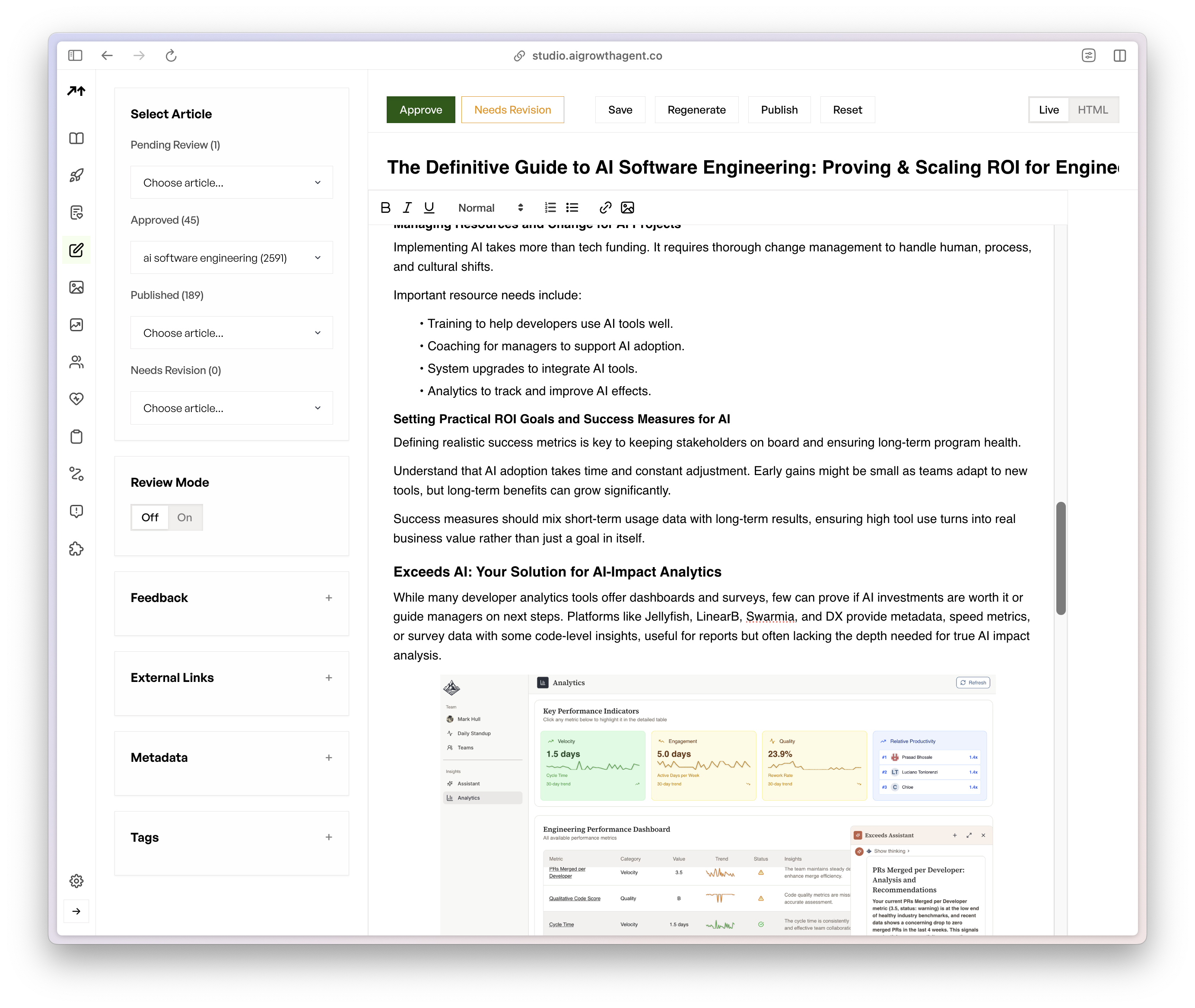
5. Scale with Automation: Gain an Edge with Agent-Powered Content
The demands of AI-driven SEO, from speed to technical setup, have outgrown traditional content methods. Agencies based on hourly work can’t keep up with daily publishing needs. Internal teams, while knowledgeable about the brand, often lack resources or specialized skills for AI optimization.
Current methods show clear limits. Agencies might produce a few strong pieces monthly, but not enough to build authority. Simple AI tools help with tasks but often miss the full strategy needed for larger operations, especially without customization.
The online space calls for a new way forward. Authority comes from the quality and range of content AI chooses to cite, not just links. You need a system that matches AI’s pace while delivering expert-level output.
Marketing leaders can’t rely on manual processes or basic tools. AI Growth Agent provides an automated platform with specialized agents to position your brand as a top authority, ensuring AI systems recommend your content.
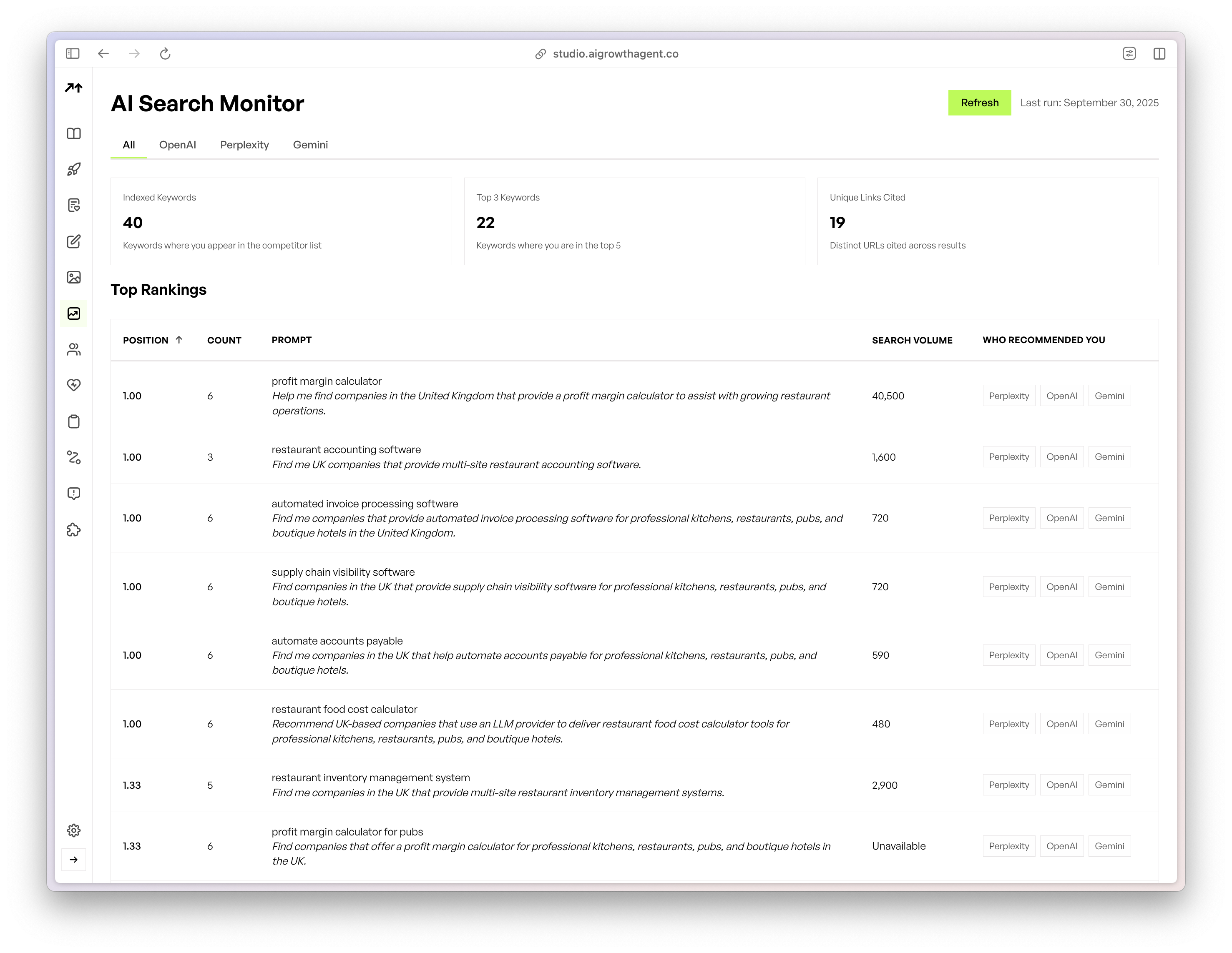
Conclusion: Lead in AI Search with Automated Content Solutions
These five shifts mark a major change in how content builds value online. From focusing on meaning over keywords, to earning AI citations, to publishing often, to using structured data, and finally adopting automated tools, the landscape is new. Winning means producing reliable, high-quality content quickly and with precision.
AI Growth Agent turns content creation into a strategic advantage. It helps brands build the volume of authoritative content needed to stand out in AI search results. If you’re ready to lead your category, now is the time to act.
Common Questions About AI SEO
How Does AI SEO Differ from Traditional SEO?
AI SEO focuses on being cited directly by AI systems rather than just ranking on search pages. Traditional SEO aimed at visibility through keywords and links. Now, content must show deep knowledge and cover topics fully to be picked as a trusted source by AI.
Why Does Publishing Frequency Matter for AI Visibility?
Publishing often keeps your brand relevant. AI systems favor recent and consistent content. Without regular updates, your online presence weakens as competitors who post frequently take over. Quality still matters, though, as frequent posting alone isn’t enough.
Are Traditional Agencies Equipped for AI SEO?
Most traditional agencies struggle with AI SEO demands. Their hourly models limit output speed and volume. Many also lack the technical know-how for advanced setups needed by AI systems. Automation is often a better fit for these new requirements.
How Does Structured Data Help in AI SEO?
Structured data helps AI understand and reference your content. Formats like Schema.org and clear metadata make your material easier to interpret. This increases the chances of being cited by AI, fitting your content into wider knowledge areas.
How Can AI Growth Agent Boost AI SEO Efforts?
AI Growth Agent automates the entire process of AI SEO, from research to publishing. It uses specialized agents to create detailed content strategies and apply technical setups. Real-time monitoring across platforms like ChatGPT ensures your content performs well, freeing your team for bigger-picture planning.