


Key Takeaways
- AI search engines such as ChatGPT, Google AI Overviews via Gemini, and Perplexity now influence how users discover content, so traditional engagement metrics alone no longer indicate true visibility.
- Conventional metrics like time on page, bounce rate, and pages per session still matter, but must be interpreted as signals that support AI understanding, summarization, and citation.
- New AI-centric metrics, including referral traffic from AI platforms, citation presence in AI overviews, and visibility in AI-generated results, help clarify how content performs in AI search.
- Programmatic SEO and technically consistent content architectures give brands the scale and structure needed to earn AI citations while supporting strong human engagement.
- AI Growth Agent provides programmatic content engineering and AI Search Monitor capabilities that help teams track, optimize, and expand their presence across both traditional and AI search channels.
- Marketing leaders who adopt AI-centric engagement strategies now are better positioned to maintain authority, visibility, and measurable outcomes as AI continues to reshape search behavior.
The Problem: Traditional User Engagement Metrics Fall Short in AI Search
The Shrinking Digital Footprint: Why AI Content Volume Obscures Brands
The internet now carries an unprecedented volume of AI-generated content. Millions of AI-produced articles, blog posts, and resources reach search engines every day, increasing digital noise and making it harder for well-crafted brand content to stand out. Many teams describe this as a shrinking pixel problem, where a company’s visible footprint contracts relative to the expanding universe of AI content.
Traditional engagement metrics do not fully reflect this shift. These metrics focus on how people behave after they discover content, not on the probability that content will be discovered. A page can show strong engagement signals, such as high time on page, low bounce rate, and strong scroll depth, yet still fail to earn attention in AI-powered search if AI systems do not view it as authoritative enough to reference.
This visibility challenge grows because traditional metrics like pages per session and average session duration were built for a model where organic rankings acted as a proxy for content quality. In an AI-mediated search environment, quality also depends on structural authority, citation potential, and semantic clarity. Traditional engagement metrics do not measure these elements well, so they provide an incomplete view of performance.
AI’s New Rules of Engagement: Beyond Pageviews to Citation Authority
AI search engines follow a different logic than legacy search algorithms. PageRank and similar systems emphasized backlinks and certain user behavior signals. AI-powered tools instead prioritize content that can be cited, summarized, and recommended with confidence. The focus moves from content that is findable to content that is quotable.
When ChatGPT or Perplexity evaluate content for possible citation, they examine structure, factual grounding, and depth more than traditional engagement signals. A blog post may generate substantial traffic and strong engagement, but if it lacks clear information hierarchy, precise language, and reliable sourcing, AI systems may not select it as a source for responses.
Google’s Helpful Content Update placed more weight on pages that satisfy user intent, creating a foundation for AI search engines that emphasize content quality and user satisfaction over narrow ranking signals. In an AI context, user satisfaction includes both human engagement and AI comprehension and citation confidence. This combination introduces requirements that standard engagement frameworks do not fully address.
The Disconnect: Marketers Navigating the AI Black Box of Visibility
Marketing leaders now need to optimize for systems whose internal decision rules remain largely opaque. Traditional SEO workflows relied on feedback from tools like Google Search Console, where teams could track rankings, clicks, and impressions. AI search engines do not yet provide comparable reporting, which creates a black box effect. Strong traditional engagement metrics do not automatically translate into AI visibility.
This disconnect often shows up as content that performs well by conventional measures but rarely appears in AI-generated results. Teams may see organic traffic, low bounce rates, and robust social engagement, yet find that AI assistants seldom reference their articles. Investment in content continues while discovery increasingly moves to AI-mediated experiences that remain difficult to measure.
The situation becomes more complex because there is no broad standard for measuring AI search performance. Marketers can track traditional metrics with established analytics tools, but measuring citation frequency, AI overview presence, or referral traffic from AI platforms requires specialized monitoring. Many teams do not yet have these tools, which leaves them with limited insight into their standing within AI search.
The Solution: A New Framework for AI-Centric Engagement Metrics
Reinterpreting Traditional Engagement: Signaling Value for AI Summarization
Traditional engagement metrics still matter in the AI era, but they need a new lens. Engagement rate in GA4, calculated as engaged sessions over total sessions, remains a core measure. It now also acts as a proxy for quality that AI systems can learn from and trust.
High engagement signals such as extended session duration, deeper scroll depth, and multiple page interactions continue to show relevance for humans. These behaviors also indicate that content answers questions thoroughly and holds attention, which makes it more likely that AI systems will treat it as a credible source for summaries and answers.
Session replays, scroll depth analysis, and heatmap data reveal where users concentrate their attention. These insights help teams refine on-page structure for both user experience and AI readability. Sections that consistently attract deeper engagement are strong candidates for technical enhancements that support AI comprehension, such as clearer headings, structured lists, and precise language.
The key insight is that AI search engines increasingly incorporate real user behavior as a quality signal. Content that earns authentic engagement, measured through time on page, scroll completion, and interaction frequency, supports the kind of comprehensive value that AI systems favor when selecting sources.
Emerging AI Engagement Signals: Citation, Authority, and Referential Value
The AI search environment introduces new metrics that standard analytics tools do not capture. These AI-centric signals focus on how effectively content participates in AI-driven discovery and recommendation flows.
Referral traffic from AI search tools serves as a direct indicator of AI engagement. Tracking visits originating from ChatGPT, Gemini, Perplexity, and similar platforms shows when AI assistants are sending users to specific pages. This traffic often reflects that AI systems view the content as reliable enough to cite or recommend.
Content citation in AI overviews and large language model responses measures how often specific URLs or brands appear as sources in AI-generated answers. This metric extends beyond backlink counts and focuses on the role content plays inside AI responses, including whether it appears as primary evidence or supporting context.
Organic visibility in AI-generated results captures how often content appears in Google AI Overviews, ChatGPT citations, and Perplexity source lists. Visibility in these surfaces indicates that content aligns well with the models’ understanding of a topic and meets their standards for relevance and clarity.
These emerging metrics require monitoring tools designed for AI search. Most analytics platforms do not yet track citation frequency or referral traffic from AI assistants in a structured way. Teams that want to understand their AI search performance need dedicated systems that can observe, store, and interpret these signals.
The Strategic Imperative: Prioritizing Programmatic Content for AI-Driven Engagement
Brands that want to perform consistently across traditional and AI-centric engagement metrics need to rethink how they produce content. Manual workflows, even with strong writing, cannot usually deliver the volume and technical consistency that AI search systems tend to reward. Programmatic content approaches address this gap.
Programmatic content strategies help teams publish larger volumes of technically sound content that support both human engagement and AI citation. These strategies often include automated keyword clustering, systematic schema implementation, and consistent on-page optimization across many pages. This scale is difficult to achieve with purely manual methods.
AI Growth Agent is a Programmatic SEO platform that engineers structured content architectures to help companies build recognizable authority in their category. The system deploys a specialized Programmatic SEO Agent that automates research, drafting, and technical optimization across a broad content library. This approach enables brands to build substantial collections of high-quality, well-structured content over time. Schedule a demo of AI Growth Agent to see how programmatic SEO supports AI-centric engagement and discovery.
Implementing the New Engagement Strategy with AI Growth Agent
Engineering Authority: How AI Growth Agent Builds Content for AI Citation
AI Growth Agent uses a programmatic approach to create content that supports both traditional engagement metrics and AI citation potential. The system combines automated research, structured planning, and technical optimization into a repeatable workflow.
The process starts with a white-glove onboarding session that programs the agent with a company manifesto, messaging guidelines, and target audience details. This step ensures that the agent produces content that aligns with the brand’s positioning. After onboarding, the agent runs programmatic keyword and content research to build a content strategy that includes pillars and clusters adapted to AI-powered search.
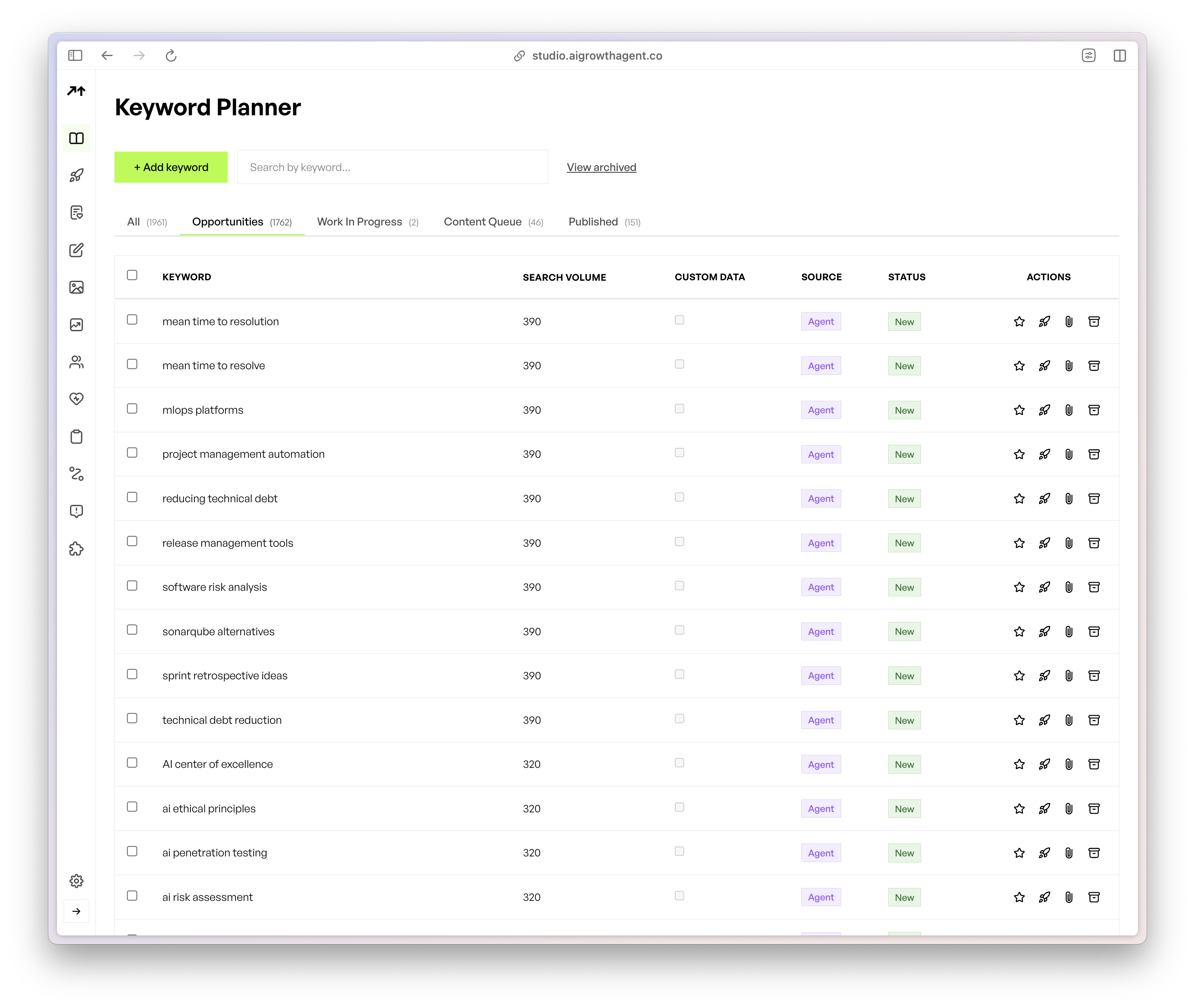
The technical setup includes an optimized blog architecture that generally lives on a subdomain of the main site to maintain brand continuity. The system implements advanced schema markup and a blog Model Context Protocol (MCP) configuration, which helps AI search engines interface more directly with the blog’s content for clearer understanding and more reliable citation.
The agent then runs the content lifecycle autonomously, from strategy and briefs through drafting, fact-checking, and technical engineering with structured metadata, schema, and image tags. Teams can also provide brand-approved images that the agent incorporates into content in natural, relevant placements.
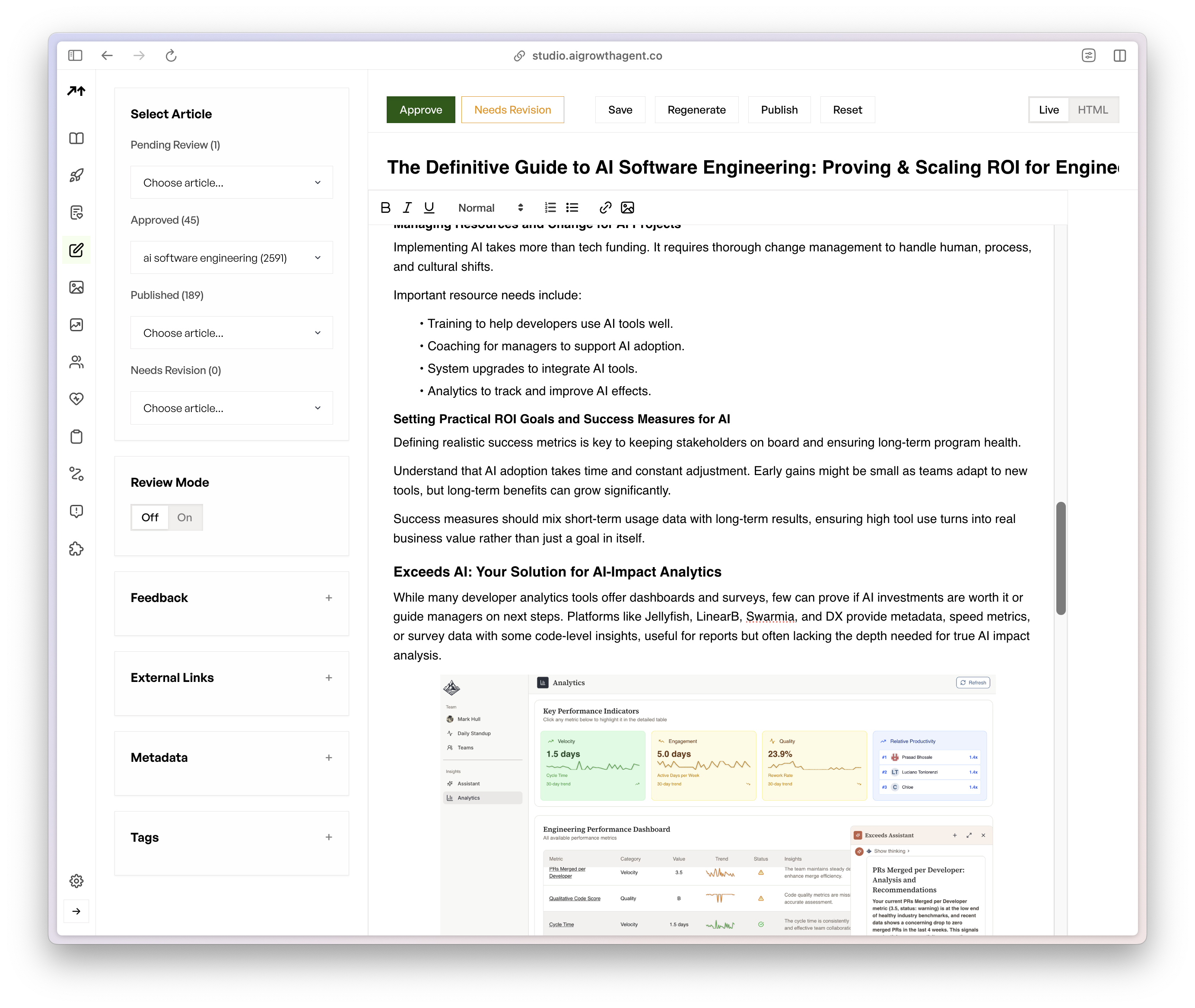
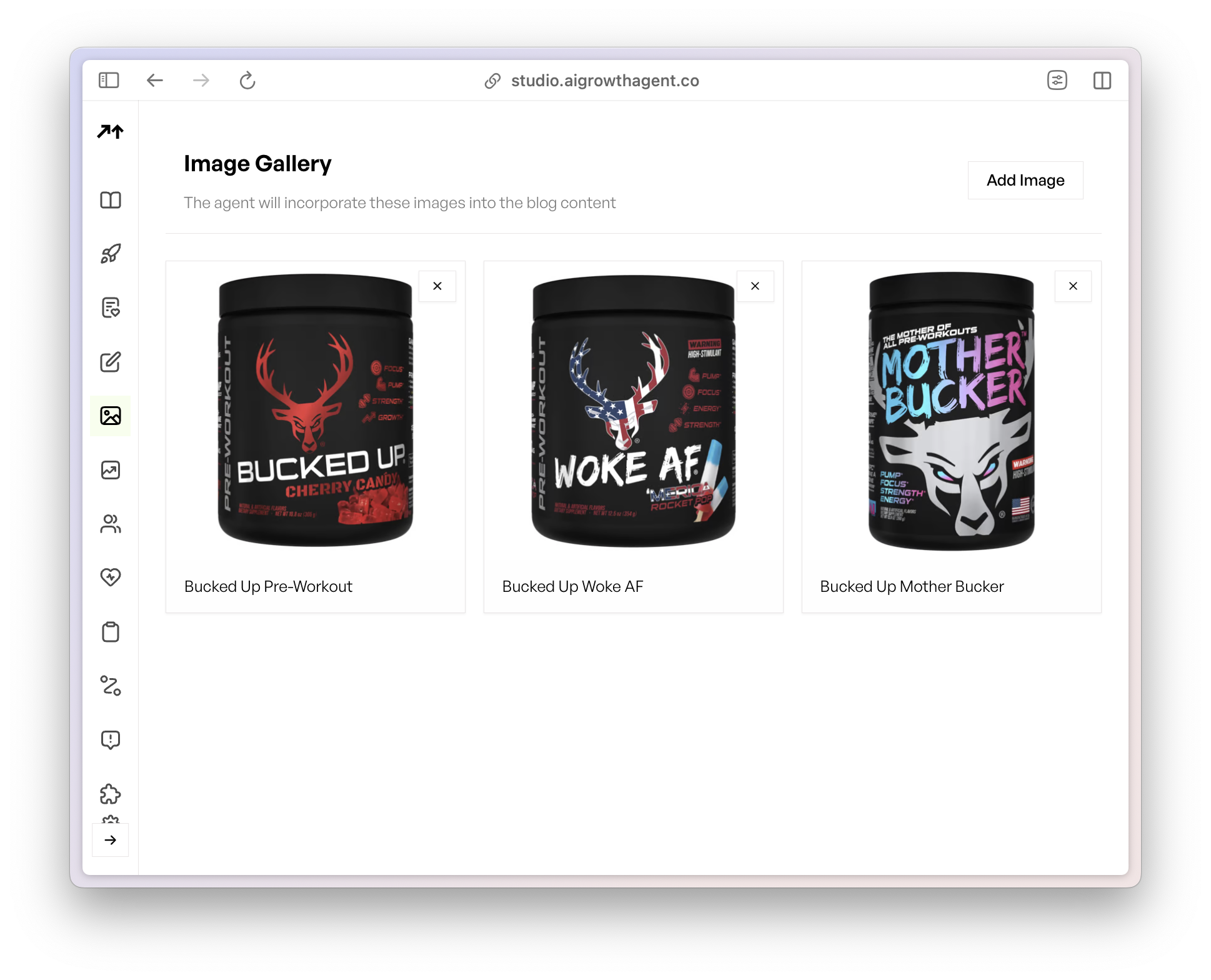
This level of consistent technical implementation across a large content set is increasingly important for competing in AI search environments.
Autonomous Monitoring: AI Search Monitor for Continuous Optimization
The AI Growth Agent Studio gives teams a central control panel for Programmatic SEO operations. It includes an AI Search Monitor that surfaces performance data from AI platforms alongside traditional SEO metrics.
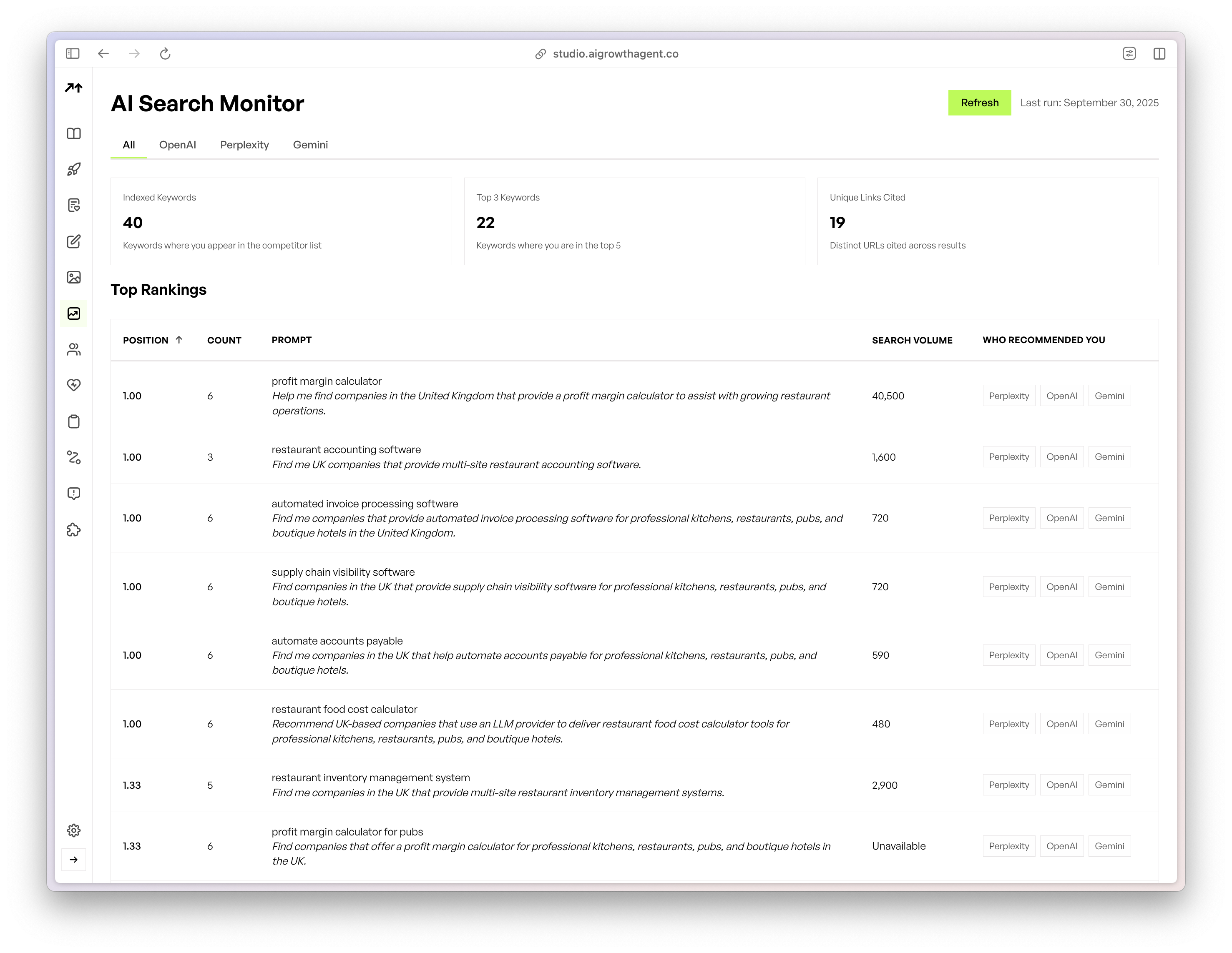
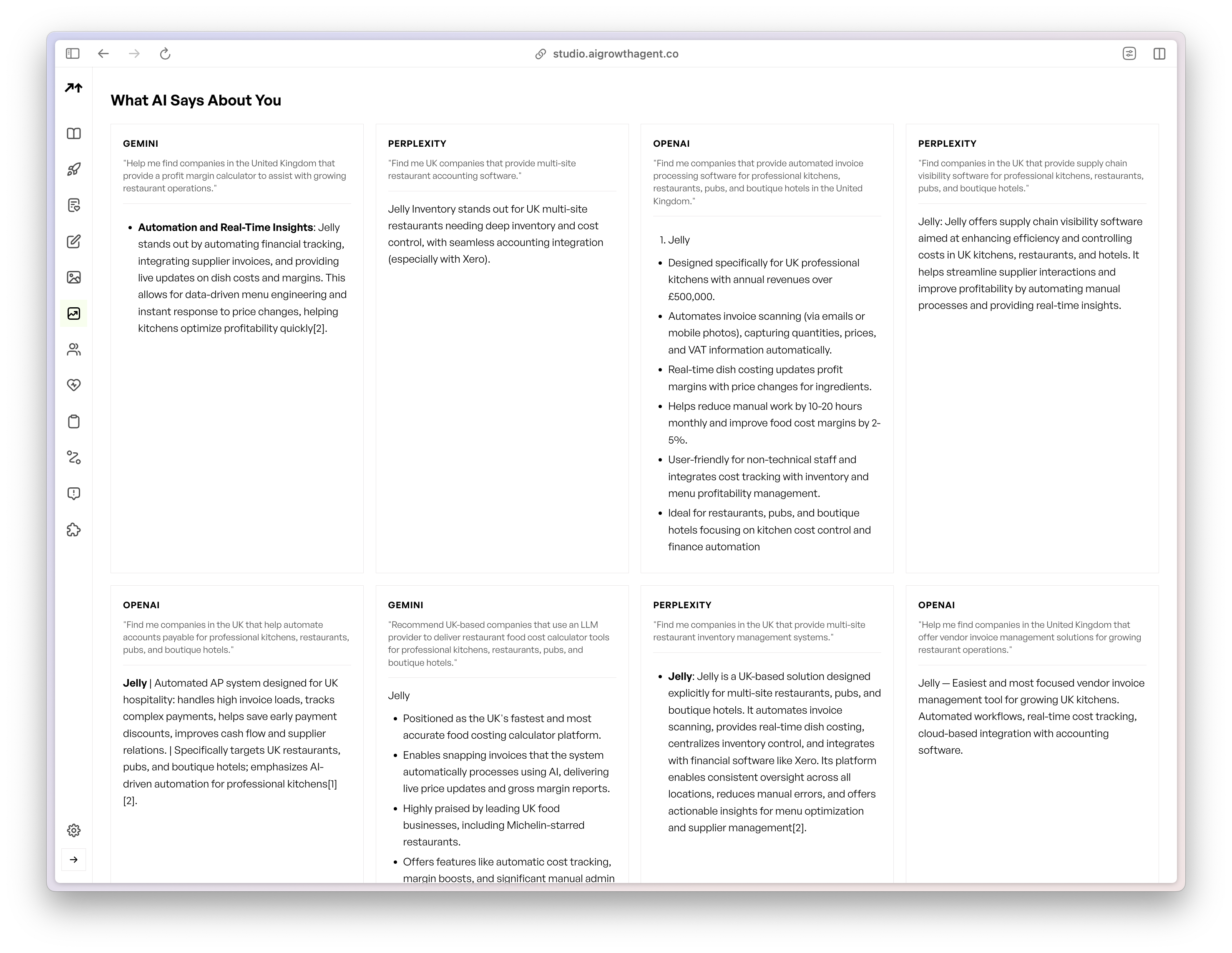
The monitoring system provides near real-time views of keyword indexing performance across ChatGPT, Gemini, and Perplexity. These views help identify which content gains recognition from AI systems and which topics need further coverage or refinement. The platform also integrates with Google Search Console to show changes in organic traffic and clicks that result from the agent’s content.
This feedback loop supports continuous optimization of both strategy and implementation. Teams can see which URLs appear most often in AI responses, then adjust content depth, structure, and internal linking to strengthen performance.
AI Growth Agent vs. Competitors: The Programmatic Advantage for AI Engagement
|
Feature/Approach |
Traditional SEO Agencies |
Basic AI Content Tools |
AI Growth Agent |
|
Content Volume & Velocity |
Varies based on agency staffing and processes |
High volume with inconsistent structure and optimization |
High volume with consistent technical optimization |
|
AI Citation & Authority |
Occasional AI visibility without explicit engineering |
Variable authority, often limited structural optimization |
Content and architecture designed to support AI citation |
|
Engagement Metric Focus |
Traditional metrics such as traffic and rankings |
Basic output metrics such as word count and frequency |
Combined focus on AI citation, referral traffic, and on-site quality |
|
ROI Measurement |
May not isolate AI-specific visibility |
Limited insight into AI-driven outcomes |
Clear tracking of AI discovery, citation, and growth metrics |
This comparison shows how AI Growth Agent’s programmatic model differs from both traditional agencies and basic AI content tools. The platform focuses on the technical and structural factors that influence AI citation while still supporting familiar SEO metrics.
The programmatic approach also includes ongoing intelligence about AI search behavior. The system learns from AI search performance data and adjusts strategies to increase citation frequency while maintaining strong user engagement. Schedule a demo to see how AI Growth Agent supports measurable growth across AI and traditional search channels.
Case Studies: Real-World AI Engagement & Citation Success
Exceeds AI: Performance Reviews for Engineers improved its AI search presence through AI Growth Agent’s programmatic workflow. Within two weeks of implementation, Perplexity began recommending Exceeds AI alongside competitors. By the third week, the company appeared in Google AI Overview and Gemini snapshots for core queries. Today, Exceeds AI regularly appears across ChatGPT, Google AI Overview and Gemini, and Perplexity for searches related to AI performance review tools for engineers.
Gitar: Supercharge CI with AI provides another example of programmatic content impact. In less than two months, Gitar.ai began to appear as a notable option for AI-supported CI and CD automation. The brand now surfaces frequently for prompts such as fixing broken CI builds automatically and AI reviewers that comment on CI failures across Google AI Overview and Gemini, ChatGPT, and Perplexity results.
Frequently Asked Questions (FAQ) on AI-Centric Engagement
What is the difference between traditional user engagement and AI-centric engagement metrics?
Traditional user engagement metrics focus on how people interact with content after they land on a page. Common examples include time on page, bounce rate, scroll depth, and session duration. These metrics describe user behavior but do not directly reflect how content enters the discovery journey.
AI-centric engagement extends the view upstream to include how AI systems understand, summarize, and cite content. This broader perspective covers citation frequency in AI responses, referral traffic from AI search tools, and the presence of content in AI-generated overviews. The difference lies in treating AI as a discovery and recommendation layer, not just a secondary channel.
Both sets of metrics matter. Content needs to satisfy human readers while also meeting the structural and technical standards that AI systems use to select sources.
How can marketing leaders effectively track their content’s visibility within AI search engines?
Marketing leaders need tools that observe how often AI assistants reference their content, which queries trigger those references, and how often users click through from AI surfaces to owned properties. This tracking extends beyond standard analytics, which usually label AI referral traffic as direct or do not segment it clearly.
The most complete approach uses dedicated AI search monitoring platforms that can:
- Detect citations and mentions across ChatGPT, Gemini, Perplexity, and similar tools
- Log queries and topics where the brand appears as a source
- Track referral traffic and user behavior from AI-originated visits
- Combine this data with traditional SEO metrics to show overall impact
AI Growth Agent’s AI Search Monitor offers this type of visibility, allowing teams to connect content decisions with AI search outcomes and refine their strategy based on observed citation patterns.
Is it possible to optimize for both traditional user engagement and AI citation simultaneously?
Teams can and should optimize for both traditional engagement and AI citation. Content that clearly answers user questions, provides specific examples, and includes accurate detail often performs well for both audiences. Human readers gain practical value, and AI systems can more easily parse and summarize the material.
Success depends on combining helpful content with clean structure and strong technical implementation. Pages benefit from clear headings, scannable sections, descriptive anchor text, and schema markup that explains entities, relationships, and context. Programmatic SEO approaches support this dual optimization by enforcing consistent structure and metadata across large content sets.
What technical requirements must content meet to achieve strong AI citation potential?
Content that earns frequent AI citations usually follows certain technical and structural practices. Helpful elements include:
- Comprehensive schema markup that clarifies the type of content and key entities on the page
- Descriptive and accurate metadata such as titles, descriptions, and headings
- Logical information hierarchy that allows AI systems to identify and extract key points
- Internal linking that connects related topics and reinforces topical authority
More advanced setups may include Model Context Protocol (MCP) integrations that help AI systems access content in a structured way. These requirements are easier to maintain at scale with programmatic systems that apply consistent rules across all pages.
How do engagement metrics differ between traffic from traditional search and AI search platforms?
Users who arrive from AI search platforms often behave differently than users from traditional search. AI-assisted visitors may show higher intent because they have already received an initial summary and click through for deeper detail or validation. This behavior can result in longer sessions, more focused scrolling, and higher conversion rates.
AI-referred users often concentrate on specific sections that align with the part of the content cited in the AI response. This pattern creates an opportunity to design pages that support both full-article reading and targeted consumption, for example through clear headings, summaries, and in-page navigation.
Traffic volume patterns also differ. Traditional search can drive large volumes for broad queries, while AI search may send smaller but more qualified segments. Understanding these differences helps teams design content that serves both audiences without sacrificing clarity or depth.
Conclusion: Competing Effectively in an AI-Driven Search Landscape
AI-driven search represents a significant shift in how users discover and evaluate information. Marketing leaders who rely only on traditional user engagement metrics risk missing how AI systems shape visibility and authority across categories.
Addressing this shift requires more than tactical adjustments. It calls for a new view of how content earns trust, both from people and from AI models that now influence search behavior. The move toward flexible, user-centric metrics that reflect modern search patterns naturally extends into AI search, where performance depends on a balance of human engagement signals and AI citation readiness.
AI Growth Agent offers a programmatic way to support this balance. The platform combines autonomous content engineering with AI-specific monitoring, helping brands build technically sound content libraries that support both traditional SEO and AI search outcomes. Teams gain a clearer view of how content contributes to short-term engagement and longer-term authority.
Brands that treat AI-centric engagement as a core part of their measurement and content strategy now will be better prepared for future changes in search behavior. Schedule a consultation with AI Growth Agent to explore how programmatic SEO and AI search monitoring can support your brand’s visibility across both traditional and AI-first environments.
