


Key Takeaways
- AI search engines now rely on structured data and clear entities, so WordPress sites need advanced schema and organized content hubs to earn citations.
- Technical SEO for AI includes crawlable architecture, sitemaps, and LLM-focused files, supported by AI-powered tools rather than manual fixes.
- Factually dense, updated content that aligns with user intent and topic depth is more likely to be quoted directly in AI answers.
- Real-time tracking of AI citations and mentions helps teams adjust strategy quickly and measure the impact of optimization work.
- AI Growth Agent provides programmatic content, schema, and AI visibility monitoring for WordPress; schedule a demo to see how it supports AI citation growth.
1. Use advanced schema markup and structured data for AI-readiness
Clear, structured data helps AI understand your pages, link entities, and reuse your content as citations. WordPress supports this well, but basic schema often is not enough.
Technical GEO tools show how AI and crawlers interpret site hierarchies, internal links, and metadata when evaluating topical authority.
AI Growth Agent integrates with WordPress to inject rich schema into templates and posts, reducing manual markup and keeping implementations consistent across the site.
Why it matters: Structured data makes your content easier for AI systems to parse, trust, and cite.
Trade-offs: Manual schema at scale is complex, so automation and template-level control are important for accuracy.
2. Build entity-rich topical authority on WordPress
WordPress sites that own a topic with deep, interlinked content hubs have a higher chance of being cited in AI answers than sites with isolated posts.
AI citation optimization software can map keyword clusters, surface content gaps, and suggest supporting articles so your WordPress site forms a cohesive authority hub instead of scattered posts. AI Growth Agent uses programmatic content planning to define these clusters and link structures for you.
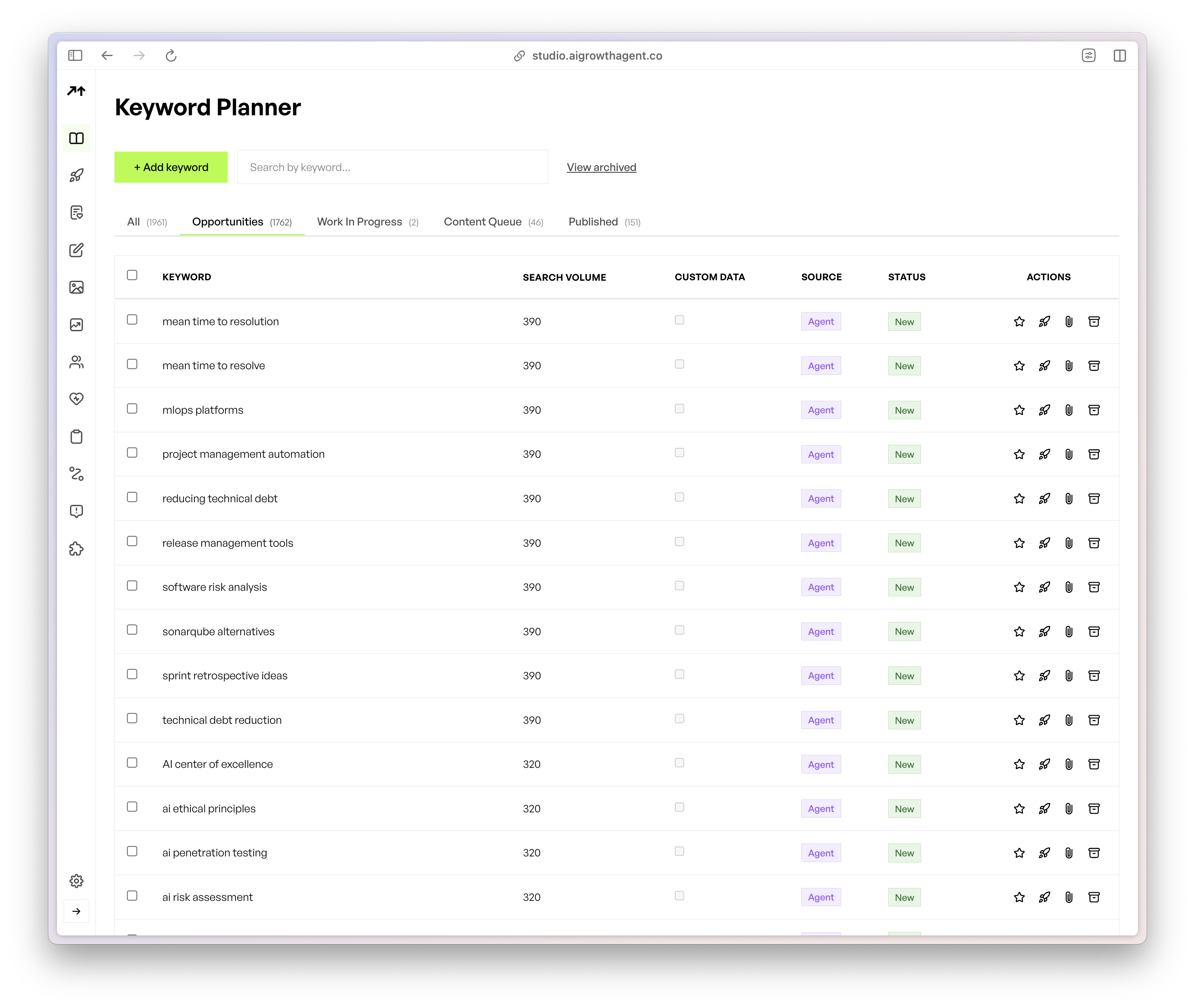
Why it matters: Clusters of related content signal expertise to both search engines and AI assistants.
Trade-offs: Building topic hubs takes sustained effort, so automated research and drafting can reduce workload.
3. Automate technical SEO for AI crawlability and indexability
AI citations depend on AI crawlers and traditional bots being able to access, render, and interpret your content with minimal friction.
Clean URLs, logical navigation, internal links, XML sitemaps, and correct canonical tags still matter. New AI-specific elements, such as LLM.txt and Model Context Protocol (MCP) files, now add another layer of technical work.
Technical GEO solutions highlight where structured data, performance, or rendering issues may limit how AI systems process your site.
AI Growth Agent configures WordPress architectures, LLM.txt, and MCP so AI engines can read which sections of your site to use, how to interpret them, and where the most authoritative resources live.
Why it matters: Strong technical SEO is a prerequisite for AI discovery and citation, not a bonus.
Trade-offs: Manual audits are slow and require specialized skills, so automation and repeatable templates reduce risk.
4. Optimize content with AI assistance for factual density and quality
High-quality, detailed content with clear sources and current information gives AI systems more material to quote directly.
ClickRank integrates into the WordPress Gutenberg editor to provide real-time scoring, term suggestions, and quality checks while you write.
Tools like these help align each article with target topics, entities, and reading ease while still leaving room for editorial review. AI Growth Agent adds structured outlines, reference checks, and schema-ready content blocks to keep quality high.
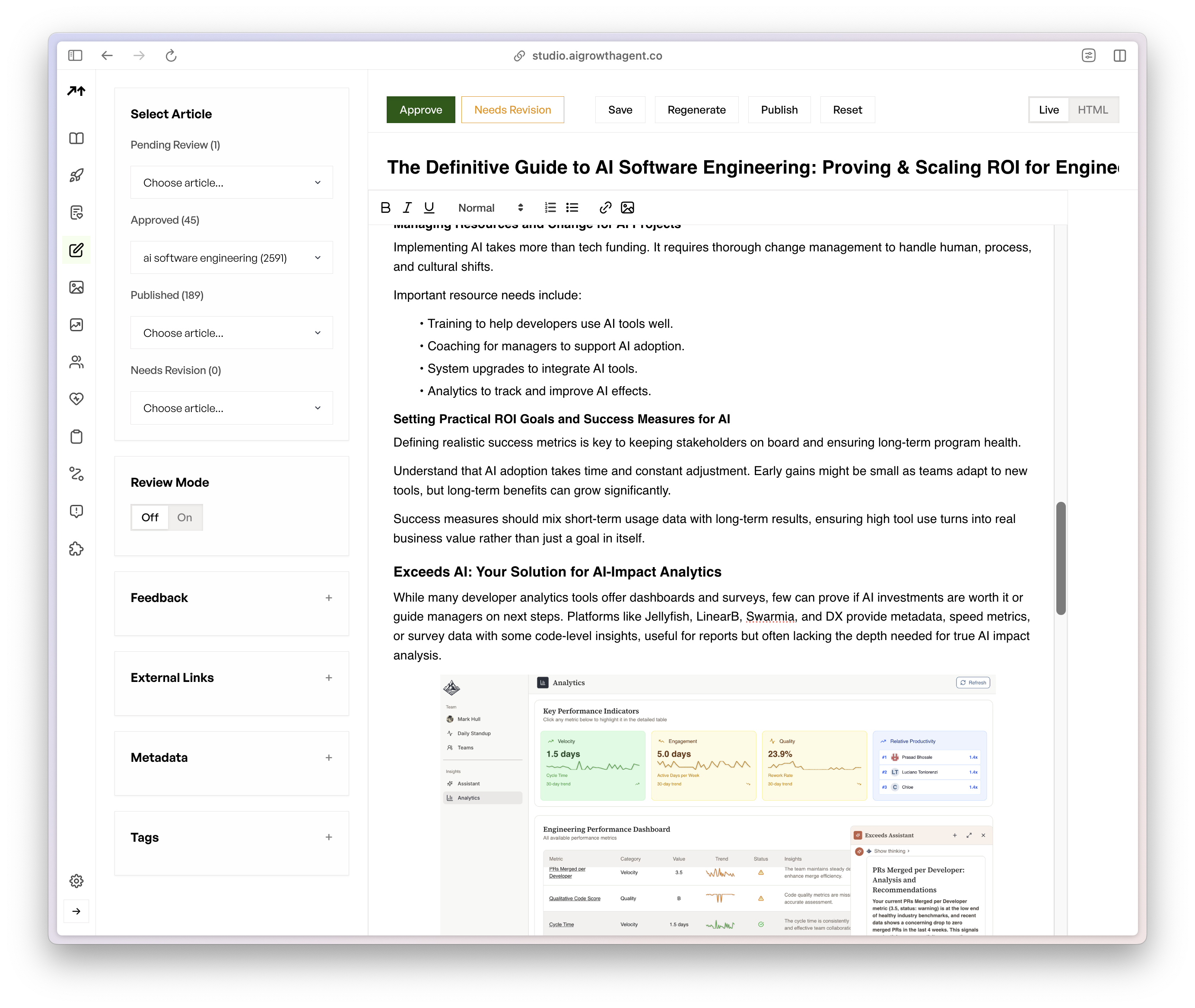
Why it matters: AI systems favor clear, accurate, and complete explanations when selecting text for citations.
Trade-offs: AI-driven optimization still benefits from human review to confirm facts and maintain brand tone.
Book a demo with AI Growth Agent to see how engineered content improves AI citation potential.
5. Track AI citations and mentions in real time
Measurement is central to improving AI visibility. Teams need to see where their brand appears inside ChatGPT-style interfaces, not just in classic search results.
Regular visibility reports that summarize shifts in AI mentions help teams tie optimization work to changes in exposure.
AI Growth Agent’s AI Search Monitor tracks where ChatGPT, Gemini, and Perplexity reference your content, which keywords trigger citations, and how often your URLs appear in AI answers.
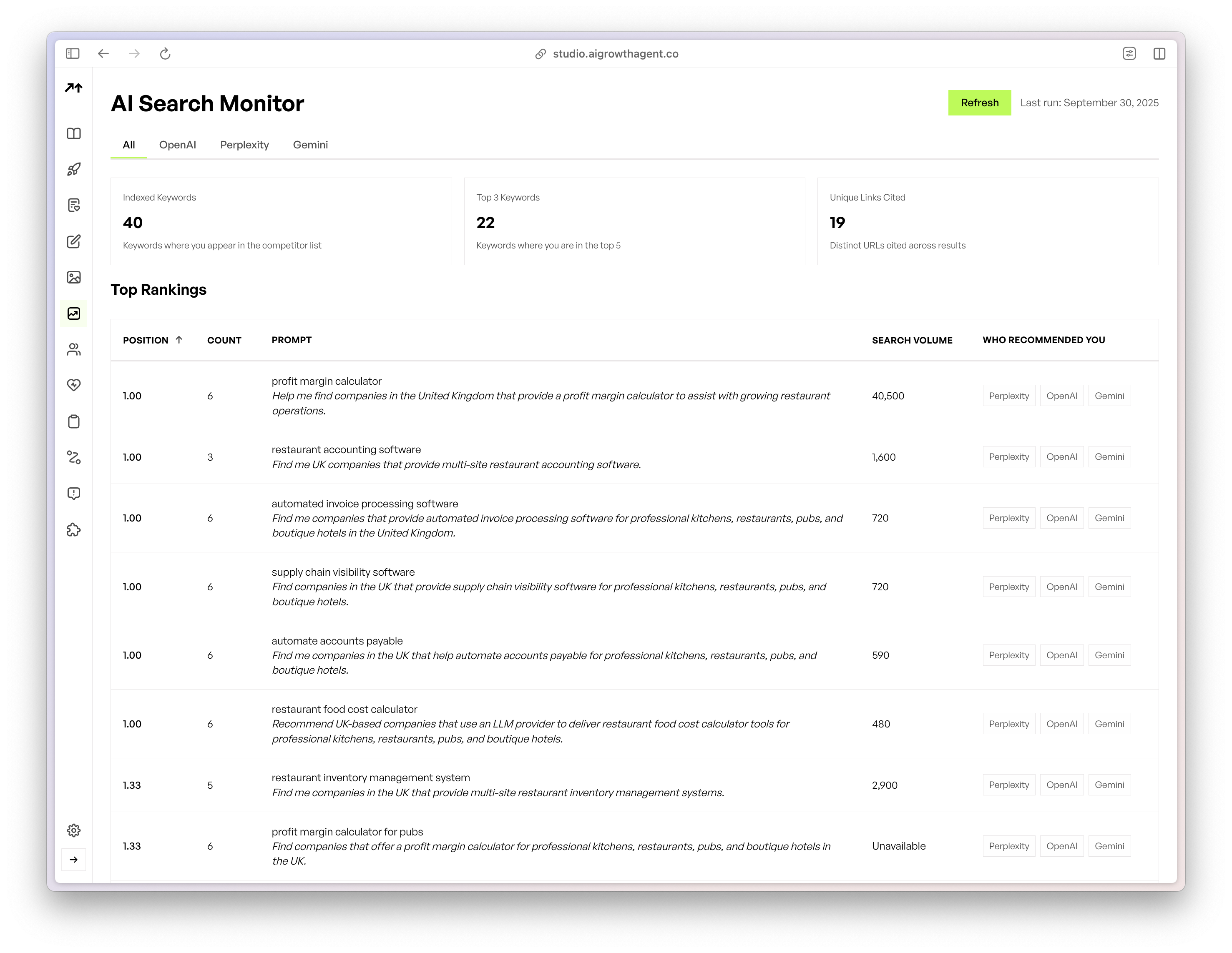
Why it matters: Direct visibility data shows which pages and tactics drive real AI citations.
Trade-offs: Fragmented tools can overwhelm teams, so a consolidated dashboard and clear KPIs are important.
6. Use programmatic content and update strategies
AI-generated and AI-informed content volumes continue to increase, so manual production alone often cannot keep pace for competitive topics.
AI Growth Agent’s Programmatic SEO Content Agent handles research, outlining, drafting, fact-checking, and technical preparation across many URLs, so teams can update legacy content and publish new material more efficiently.
Why it matters: Consistent publishing and refreshing shows AI systems that your site stays current and reliable.
Trade-offs: Generic AI text generators can dilute quality, so programmatic workflows should include quality controls and topic boundaries.
7. Manage multi-tenant deployments and content injection on WordPress
Agencies and multi-brand organizations often manage several WordPress instances or sections that each need AI-ready content and tracking.
With the right software, one central team can manage schemas, content templates, and AI-oriented guidelines across brands while still honoring unique voice and positioning. Real-time content injection lets sites react quickly to news and emerging queries with targeted, AI-optimized posts.
AI Growth Agent supports multi-tenant programmatic deployment and real-time SEO content injection across WordPress, so teams can roll out AI citation strategies for many properties from a single control point.
Why it matters: Shared infrastructure reduces duplicated effort and speeds up implementation across portfolios.
Trade-offs: Initial setup requires clear governance for permissions, workflows, and content standards.
See how AI Growth Agent’s AI Search Monitor tracks citations across brands by scheduling a demo.
Implementation considerations for WordPress AI citation optimization
Successful AI citation work on WordPress starts with a baseline audit. This includes technical health, content quality, and topical coverage across your main themes.
Theme and plugin choices matter as well. Lightweight themes and clean code support faster rendering and clearer markup for crawlers.
Monitoring and iteration form the final piece. Teams should review AI visibility reports, identify topics where they underperform, and adjust schemas, internal links, and content coverage.
Clear, scannable sections with descriptive headings support both human readers and AI agents in extracting precise answer snippets.
AI Growth Agent pairs this process with onboarding support and continuous monitoring so marketing and SEO teams can focus on strategy rather than manual checks.
Key answers about WordPress AI citation optimization
Definition and importance of AI citation optimization for WordPress
AI citation optimization is the practice of structuring, writing, and engineering WordPress content so AI systems like ChatGPT, Google AI Overviews, and Perplexity select it as a referenced source. This now shapes how users discover brands, since many answers appear inside AI interfaces rather than as simple blue links.
Difference between AI-powered WordPress plugins and dedicated citation software
General AI plugins for WordPress generate copy, meta descriptions, or basic schema inside the editor. Dedicated AI citation platforms such as AI Growth Agent focus on sitewide architecture, LLM-specific files, monitoring of AI mentions, and programmatic content workflows designed specifically to improve citation likelihood.
Optimizing existing WordPress content for AI citations
Existing posts and pages can gain AI visibility through added schema, clear entities, updated facts, improved internal links, and cleaner structure. AI-centric software can scan archives, flag pages for upgrades, and roll out structured improvements across many URLs.
Role of structured data in WordPress AI citation
Schema markup gives AI agents explicit labels for the type of page, key entities, dates, prices, and relationships between concepts. Accurate schema on WordPress pages increases confidence for AI models when selecting which passages to quote and which URLs to reference.
Expected timelines for results from AI citation work
Timelines vary by domain strength and publishing volume, but brands using programmatic approaches often see early improvements in AI mentions within weeks, not months, as new content and technical updates roll out and are recrawled.
Discuss timelines and milestones for your site in a consultation with an AI Growth Agent specialist.
Conclusion: Position your WordPress site as an AI-ready authority
AI search is reshaping how users find information, compare options, and select vendors. WordPress sites that combine strong technical foundations, clear topical authority, and programmatic content workflows are better positioned to be cited in those experiences.
AI Growth Agent provides structured planning, automated content and schema deployment, and AI visibility monitoring so teams can manage this shift without rebuilding their stack from scratch.
