


Key Takeaways
- AI-powered search engines in 2026 rely on structured data to understand content, surface rich results, and select sources for AI-generated answers.
- WordPress schema plugins can cover most common markup needs, but their automation is often rule-based and still requires ongoing management.
- Sites with large content libraries benefit from tools that can standardize and scale schema across post types, products, and archives.
- Programmatic SEO expands beyond plugins to automate both content creation and structured data for AI search visibility.
- AI Growth Agent offers programmatic structured data automation for WordPress; schedule a demo to see how it can support your AI search strategy.
AI-focused search tools such as ChatGPT, Google AI Overviews, and Perplexity have changed how websites compete for visibility. Structured data now acts as a core signal that helps these systems interpret pages and decide which sources to surface or cite.
The AI Search Imperative: Why WordPress Structured Data Automation Matters
AI search engines rely on structured data to clarify entities, relationships, and page context. Accurate schema improves the odds that your WordPress content appears in rich snippets, AI Overviews, and conversational answers.
Sites that ignore structured data often see competitors outrank them, even when their content quality is similar. Manual schema entry on a page-by-page basis rarely scales for growing catalogs or content hubs.
Programmatic SEO has emerged as a way to automate content engineering tasks such as schema generation, internal linking, and metadata at scale. WordPress plugins play an important role, but the largest gains for AI search usually come from combining plugins with a programmatic framework.
Top WordPress Structured Data Automation Solutions for 2026
1. Rank Math: All-in-One SEO With Extensive Schema Support
Rank Math provides SEO features with advanced schema support, including 840+ schema types, a 4.9/5 rating, and freemium pricing from $5.75 per month. The plugin combines on-page SEO tools with schema templates for common content types.
- Best fit: Site owners who want one plugin for meta tags, sitemaps, and structured data.
- Limitations: The interface can feel complex, paid plans unlock important automation, and large sites still need careful template setup.
2. Schema Pro: Rules-Based Schema for Scaled Markup
Schema Pro automates schema with rules for posts, products, and custom post types, covering 20+ types such as Product, Service, and Event. The plugin uses JSON-LD markup and applies schema across multiple content types.
- Best fit: Publishers and ecommerce brands with repeatable templates that benefit from rules-based schema.
- Limitations: Focus stays on schema only, so other SEO tasks need separate tools, and complex edge cases can exceed what rules can describe easily.
Discuss how Schema Pro and programmatic SEO can work together in your WordPress stack.
3. AIOSEO: Accessible Schema for Non-Technical Teams
AIOSEO offers a no-code schema interface with a Schema Catalog that supports 15+ types such as Course, Recipe, Event, and FAQ. The Pro version extends this catalog for broader coverage.
- Best fit: Teams that want guided workflows and checklists to add schema without editing code.
- Limitations: Advanced or very custom schemas often require more flexible tools or developer support.
4. WPSSO Core: Site-Wide Schema Plus Social Metadata
WPSSO Core supports 500+ schema types, pulls data from content and APIs, and integrates with Facebook Open Graph and Twitter Cards. The plugin has a 4.6/5 rating and freemium pricing from $89 per license.
- Best fit: Sites that care about consistent metadata across search and social platforms.
- Limitations: The large number of options creates a learning curve, and very large sites may still hit configuration limits.
5. Schema & Structured Data for WP & AMP: Conditional Markup by Context
Schema & Structured Data for WP & AMP lets users show or hide schema based on conditions such as post type, and it works with Google AMP. The plugin supports 35+ schema types, offers AMP compatibility, and uses a freemium model from $99 per year with a 4.6/5 rating.
- Best fit: Publishers that need different schema rules for specific layouts, categories, or AMP pages.
- Limitations: Complex conditional logic can be hard to maintain across thousands of URLs.
Explore how conditional schema and programmatic SEO can support AI-focused content strategies.
6. WP SEO Structured Data Schema: Manual Precision for Each Page
WP SEO Structured Data Schema supports schema types such as Article, Product, FAQ, Recipe, and LocalBusiness. The Pro version adds custom post type support, WooCommerce integration, extra types such as Books and Job Postings, and auto-fill functions. The plugin emphasizes per-page control and offers paid upgrades from $49.
- Best fit: Technical users who want to fine-tune schema on individual URLs.
- Limitations: Manual entry does not scale well for large catalogs or fast publishing schedules.
7. Structured Content: Block-Based Schema for the Block Editor
Structured Content provides free WordPress blocks for FAQ, Job Posting, and Event schema. The plugin outputs simple JSON-LD for FAQ, Event, Job Posting, and Person types.
- Best fit: Content teams that work primarily inside the block editor and need basic schema for specific sections.
- Limitations: Coverage is narrow, and there is no site-wide automation for complex AI search strategies.
Beyond Plugins: Programmatic SEO for WordPress Structured Data
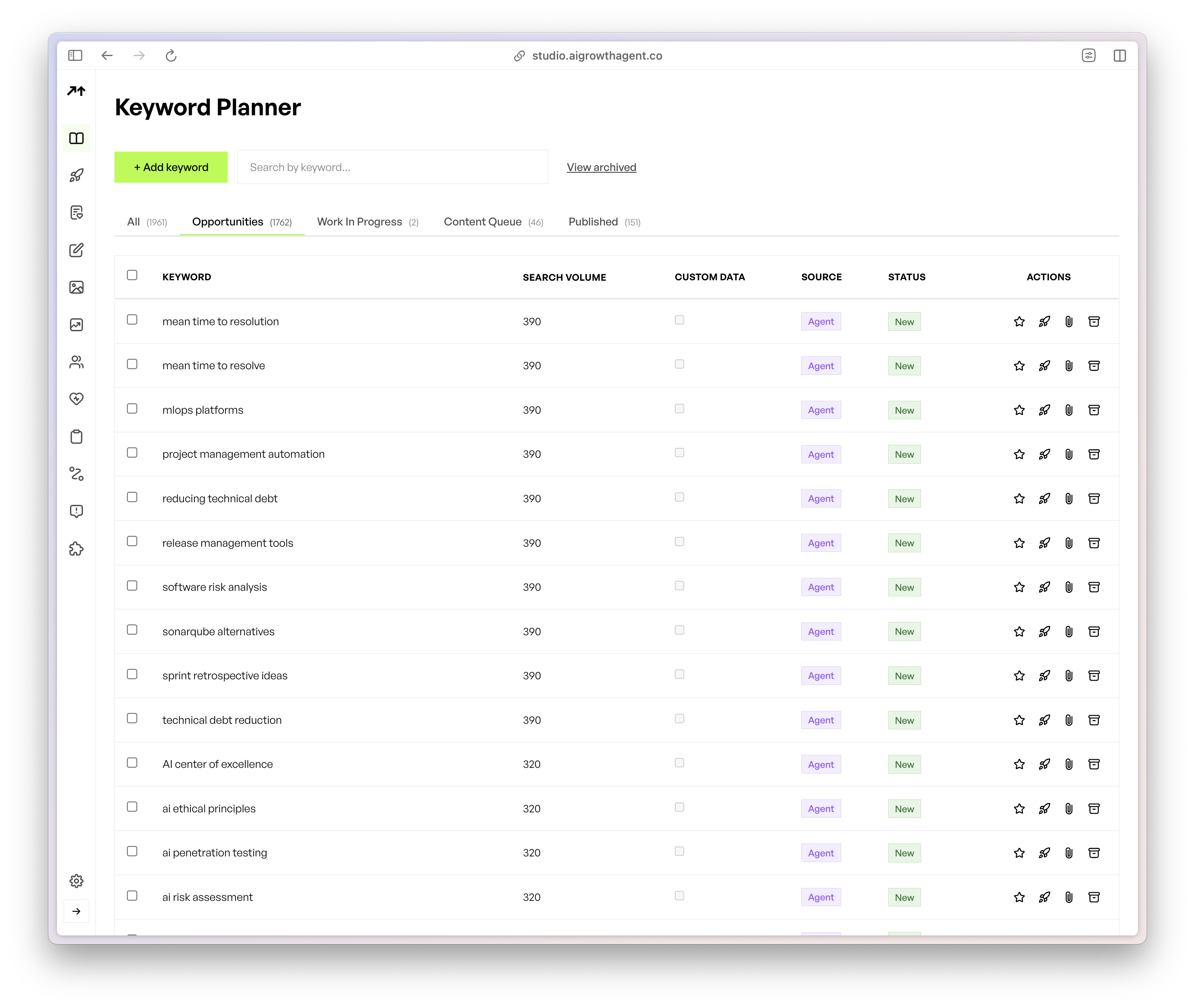
Plugin-based tools handle many structured data needs but often stop at rules and templates. Programmatic SEO adds a layer that can generate, optimize, and deploy content and schema together across large sites.
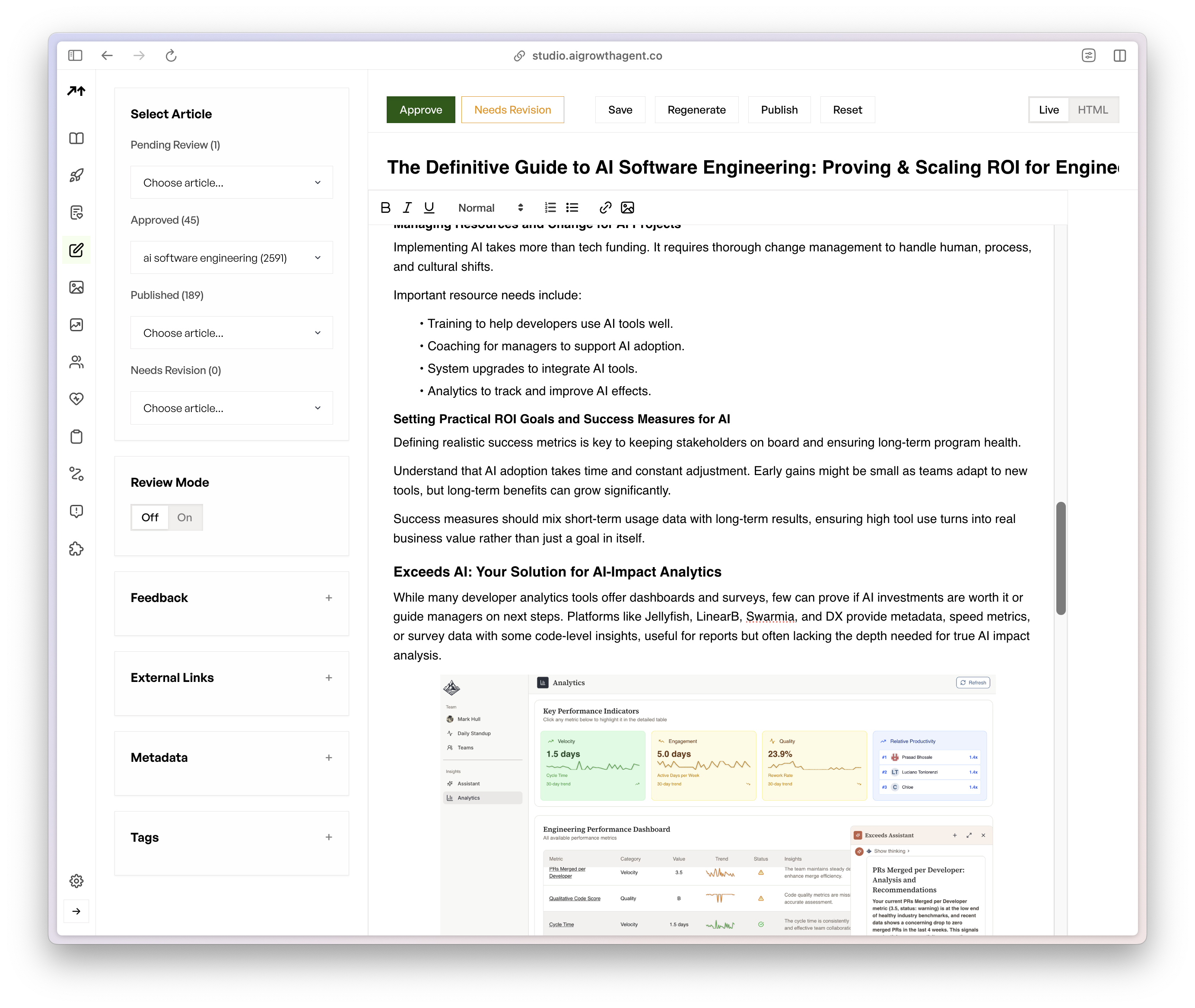
AI Growth Agent offers a Programmatic SEO Agent that automates content engineering and technical optimization for AI search engines. The system integrates with WordPress so that schema, metadata, and content structure align with your brand standards.
- Scale: Automates content and technical SEO workflows across large libraries instead of relying on one-off plugin settings.
- Technical depth: Applies advanced schema and metadata patterns, including protocols designed for AI-focused indexing.
- Integration: Connects with WordPress to reduce manual engineering work while keeping content and templates consistent.
- Authority focus: Aims to increase brand presence in AI-generated results through structured, well-labeled content.
|
Aspect |
Plugin-Based Solutions |
AI Growth Agent |
|
Scale of automation |
Rules and templates with manual oversight |
Large-scale content and schema workflows |
|
Technical depth |
Standard schema catalogs |
Advanced patterns and AI-oriented protocols |
|
Integration effort |
Per-site configuration and tuning |
Programmatic infrastructure with WordPress integration |
|
AI search focus |
Improves basic discoverability |
Designed around AI search visibility and citation potential |
Schedule a demo to see how programmatic SEO can extend your WordPress structured data setup.
Frequently Asked Questions About WordPress Structured Data Automation
What is structured data and why is it important for WordPress sites in 2026?
Structured data is a standardized way to label information on a page so that search engines can interpret it accurately. In 2026, AI search systems use this markup to power AI Overviews, answer summaries, and citations, so WordPress sites that deploy consistent schema gain an advantage in visibility.
Can structured data automation help a site appear in ChatGPT or Google AI Overviews?
Well-implemented schema in formats such as JSON-LD makes it easier for AI models and search engines to understand page context. This clarity increases the likelihood that content is considered for inclusion in AI-generated responses on platforms such as ChatGPT, Google AI Overviews, and Perplexity, although no tool can guarantee a citation.
How do general SEO plugins differ from dedicated schema plugins?
General SEO plugins such as Rank Math or Yoast bundle meta tags, sitemaps, basic schema, and other essentials. Dedicated schema plugins focus more deeply on structured data through broader schema catalogs, conditional logic, and detailed field control, which can benefit sites with complex content models.
How does AI Growth Agent support WordPress structured data compared with plugins?
Plugins add schema to existing content inside WordPress. AI Growth Agent uses a programmatic system that plans, creates, and optimizes content along with structured data at scale, then integrates that work into WordPress so pages arrive already engineered for AI search.
Book a demo with AI Growth Agent to review your current WordPress structured data approach.
Conclusion: Prepare Your WordPress Site for AI-Driven Search in 2026
Structured data now plays a central role in how AI search engines interpret and rank WordPress content. Plugins provide important building blocks, but sites that compete in AI Overviews and conversational search often pair those tools with programmatic SEO.
AI Growth Agent offers programmatic structured data automation and WordPress integration to help brands publish content that is ready for AI search from the start.
