Written by: Mariana Fonseca, Editorial Team, AI Growth Agent
Key Takeaways for 2026 Research Workflows
- Perplexity’s higher costs and generic outputs push many teams toward specialized AI research tools tailored to 2026 workflows.
- AI Growth Agent leads authority-building by turning research into AI-cited content using MCP and LLM.txt for top citations in ChatGPT, Gemini, and Perplexity.
- Elicit excels at academic literature reviews with automated systematic search, while Consensus focuses on science-backed evidence synthesis.
- Phind dominates developer tasks with precise technical answers, and Claude.ai stands out for long-document analysis and nuanced reasoning.
- Schedule a demo with AI Growth Agent to see whether programmatic SEO automation supports your authority-building strategy.
How We Compared Perplexity Alternatives in 2026
This comparison evaluates nine leading AI research assistants based on 2026 performance, feature depth, and user feedback from G2, Reddit, and technical benchmarks. The analysis includes Perplexity as a baseline alongside AI Growth Agent, Elicit, Consensus, Phind, Claude.ai, ChatGPT, You.com, Gemini, and Scite.ai. Selection criteria cover accuracy scores, response speed, pricing tiers, query limits, workflow integrations, and specialization for academic research, technical development, and authority-focused content creation.
Each tool went through a multi-step review using benchmark performance such as SimpleQA accuracy scores, real-world user feedback, integration options, and 2026 pricing. This data-driven approach supports recommendations tailored to specific professional needs instead of broad, one-size-fits-all comparisons.
Snapshot: Top Perplexity AI Alternatives by Use Case
The leading Perplexity alternatives in 2026 serve distinct professional roles and research styles:
- AI Growth Agent: Programmatic SEO system that automates research-to-AI-cited content for authority building
- Elicit: Academic literature review specialist with an automated systematic search
- Consensus: Science-focused platform that synthesizes evidence-backed answers from verified sources
- Phind: Developer-first AI assistant tuned for technical queries and coding tasks
- Claude.ai: Long-document analysis expert with strong contextual reasoning
- ChatGPT: Multimodal research platform with Deep Research mode and web browsing
- You.com: Privacy-focused AI search with multiple modes and real-time results
- Gemini: Google’s research assistant with Deep Research and NotebookLM integration
- Scite.ai: Fact-checking and smart citation classification specialist
AI Growth Agent uniquely combines research with programmatic content generation, using advanced MCP integration and LLM.txt for strong AI search engine indexing.
Schedule a demo to see if you’re a good fit for turning research into authority-building content.
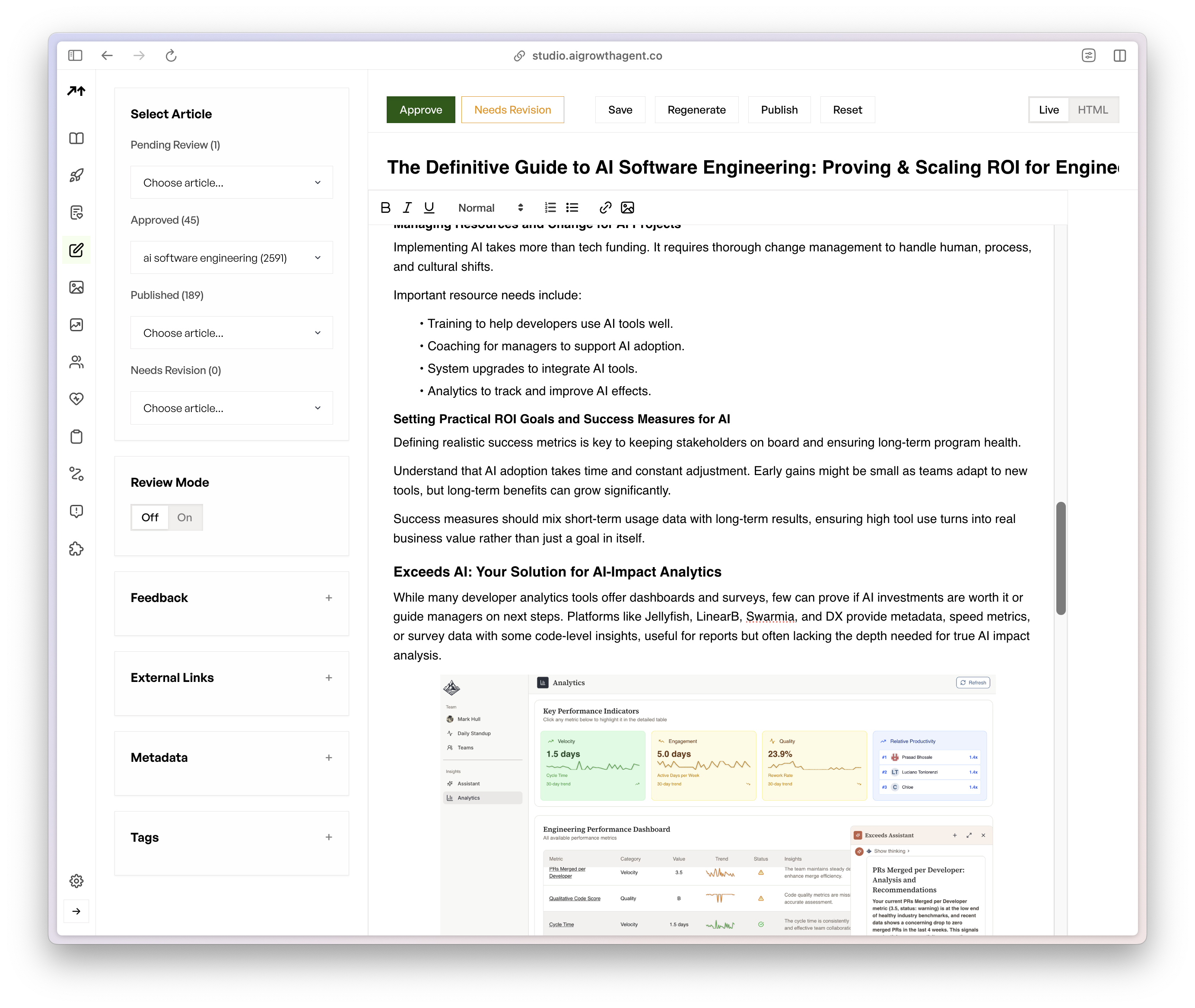
AI Growth Agent for AI Citations and Authority Building
AI Growth Agent shifts teams from simple research tools to a full authority-building system. Instead of Perplexity’s conversational search, AI Growth Agent converts research insights into structured content architectures that attract citations from ChatGPT, Gemini, and Perplexity.
Core strengths include white-glove onboarding with a professional journalist, autonomous research and publishing, the AI Growth Agent Studio command center, and AI Search Monitor with citation heatmaps across major AI platforms. The system uses Model Context Protocol (MCP) and LLM.txt files so AI search engines can interface directly with your content database for stronger indexing.
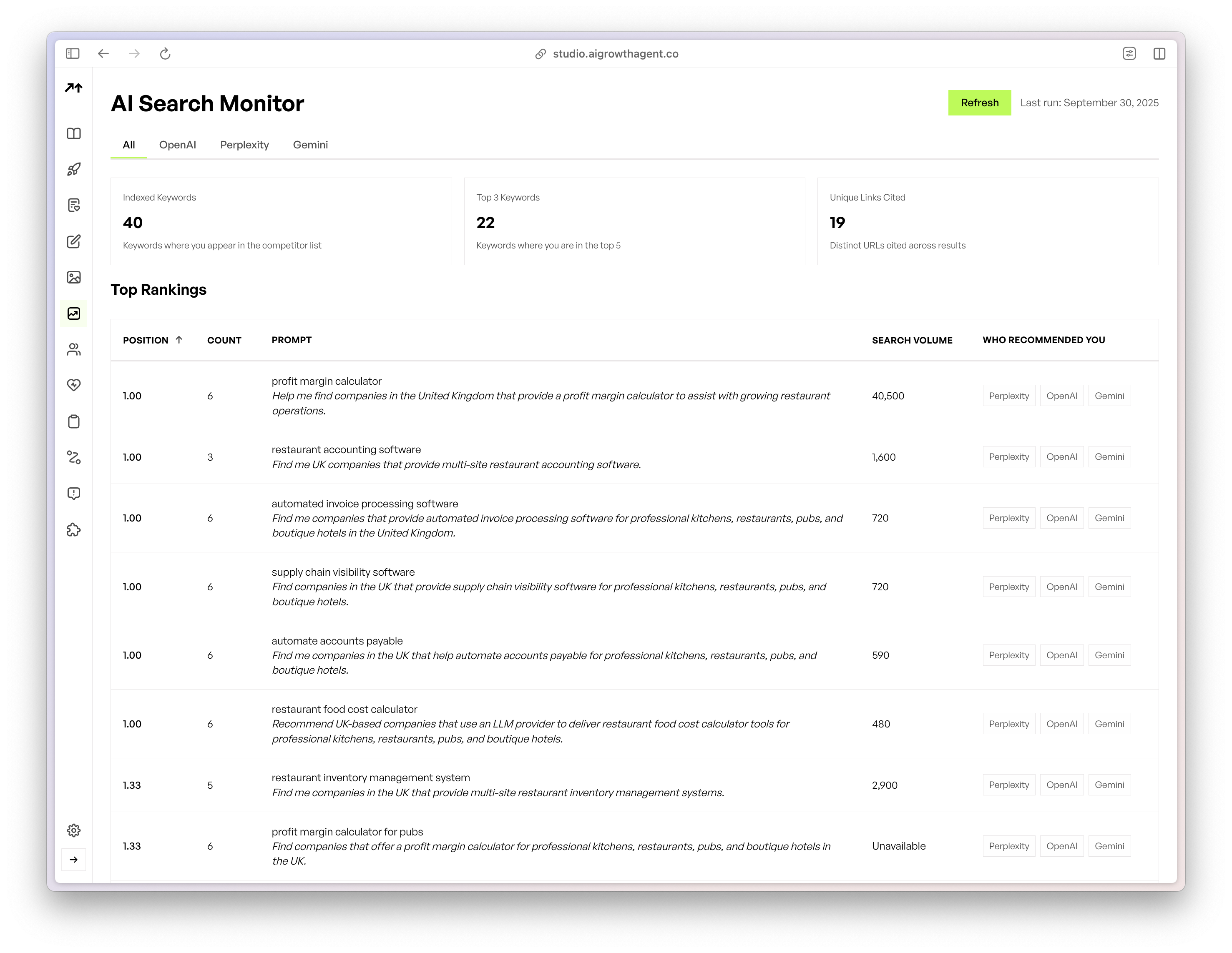
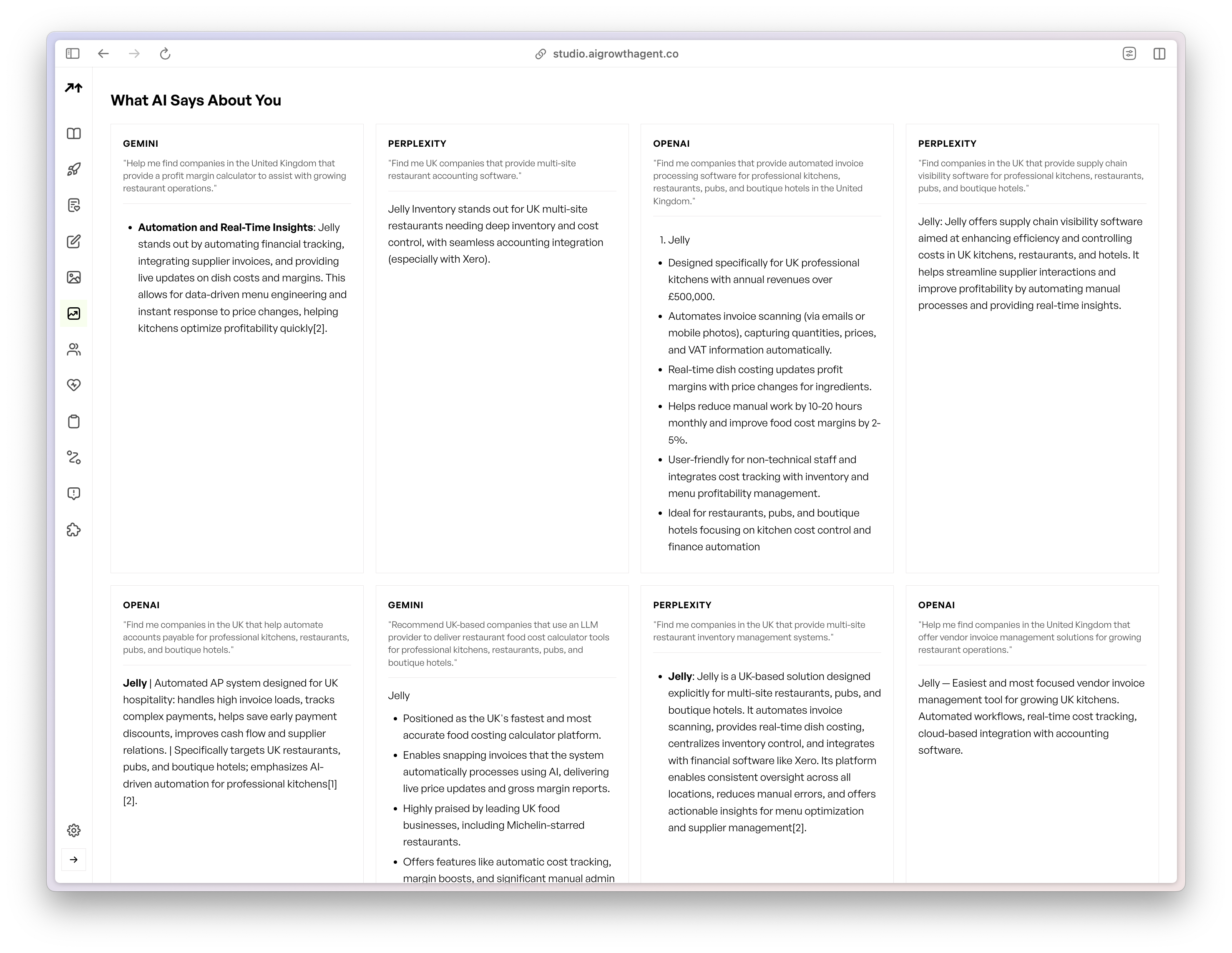
Client results show a clear impact. Exceeds AI reached Perplexity’s top recommendation within two weeks. BeConfident became Brazil’s #1 English learning app citation in Google AI Overview. Gitar emerged as the leading CI/CD automation authority across major AI search platforms. The platform fits marketing leaders who need scalable authority-building and who already operate premium brands with solid technical foundations.
Ideal users include marketing managers, VPs, and CMOs at premium brands who want definitive category authority through programmatic SEO instead of manual content production.
Schedule a demo to see if you’re a good fit.
Elicit vs Perplexity for Academic Literature Reviews
Elicit focuses on academic literature discovery with features like “Chat with paper” for deep analysis, material comparison, theme discovery, and methodology clarification. The platform automates systematic search and extraction for literature reviews, revealing cross-disciplinary links that manual research often misses.
Elicit’s pricing includes Basic (free with limits), Plus ($10 per user per month billed annually with more exports, 4 automated reports, and unlimited search across 500k+ clinical trials), and Pro ($42 per user per month with systematic review workflows, 12 automated reports, and custom extractions). The platform connects smoothly with academic workflows and citation managers.
Key strengths include automated literature reviews, broad database coverage, and academic-focused features. Drawbacks include higher Pro pricing than general research tools and a primary focus on academic rather than commercial research. Elicit fits researchers, academics, and students who need systematic literature analysis with verified academic sources.
Consensus AI vs Perplexity for Evidence Synthesis
Consensus delivers science-backed answers by synthesizing evidence from multiple verified sources, which improves reliability compared with Perplexity’s general web search. The platform returns evidence-based responses from multiple research sources with transparent methods and clear source verification.
Pricing starts with a free tier for basic queries and moves to $20+ per month for advanced features after trial periods. Consensus works best in academic and scientific contexts where source credibility and evidence synthesis matter most. It suits researchers who need verified scientific evidence rather than broad information gathering, and often complements more general research tools.
Phind vs Perplexity for Developer Workflows
Phind focuses on technical queries and coding tasks, giving developers more accurate and context-aware responses than Perplexity’s general-purpose model. The platform understands programming languages, frameworks, and technical documentation with strong depth.
Strengths include specialized technical knowledge, code generation, and a developer-friendly interface. Limitations include a narrow focus on technical topics and limited value for non-programming research. Phind fits software developers, engineers, and technical teams that need precise coding help and technical problem-solving instead of broad research support.
Claude AI for Long-Form Research and Analysis
Claude.ai stands out for long-document analysis and nuanced contextual understanding. It works especially well for complex research that requires careful interpretation of methods and results. Claude Research Mode provides deep contextual understanding across uploaded PDFs, which supports sophisticated analysis of research materials.
The 2026 Claude 3.5 model improves performance on document analysis and reasoning tasks. Pricing varies by usage tier with competitive options for research-heavy teams. Claude fits researchers who handle complex documents, long academic papers, and detailed analytical tasks where context must remain intact.
Perplexity vs ChatGPT for Research and Synthesis
ChatGPT’s Deep Research mode autonomously analyzes large bodies of literature and turns them into structured text. This mode offers different strengths than Perplexity’s cited conversational style. ChatGPT outperforms Perplexity in chart analysis and data interpretation by producing higher-level insights and strategic takeaways.
ChatGPT offers a free tier with limits and a Plus plan at $20 per month. It performs well at creative synthesis, multimodal research, and turning research into polished content formats. Many workflows use Perplexity for cited information and ChatGPT for content customization.
You.com and Gemini as Free Perplexity Alternatives
You.com offers privacy-focused search with multiple AI modes and real-time results, giving users free access to basic research features. Brave Search also provides privacy-first research with AI summaries and citations without user tracking.
Google Gemini’s free tier includes full access to Gemini 3 Flash, limited Gemini 3 Pro access, and 10 Deep Research reports per month. Both platforms work as free options for users who need basic research without subscriptions, although they offer fewer advanced features than premium tools.
Scite.ai for Citation Checking and Reliability
Scite.ai focuses on fact-checking and smart citation classification, labeling citations as supporting, contrasting, or mentioning to assess reference reliability. This approach gives researchers a clear view of how each source functions in the literature.
Pricing ranges from a free basic tier to $14+ per month for advanced features. Scite.ai serves academic researchers, fact-checkers, and content teams that need verified source reliability rather than broad research coverage.
AI Research Assistants: Side-by-Side Comparison
|
Tool |
Accuracy/Speed (1-10) |
Pricing 2026 |
Use-Case Score |
|
AI Growth Agent |
10/9 |
Consultation-based |
Authority Building: 10 |
|
ChatGPT |
8/10 |
Free/$20/mo |
General Research: 9 |
|
Elicit |
9/7 |
Free/$42/mo |
Academic: 10 |
|
Perplexity |
9/9 |
Free/$20/mo |
Cited Research: 8 |
Verdict: ChatGPT leads for speed and free access, while AI Growth Agent dominates when teams need research turned into AI-cited authority content. Academic researchers should prioritize Elicit, and developers gain the most from Phind’s technical specialization.
Schedule a demo to see if you’re a good fit for AI Growth Agent’s programmatic authority-building system.
Rolling Out a New AI Research Stack
Successful migration from Perplexity starts with a review of onboarding complexity, workflow integration, and data export options. AI Growth Agent offers one week of onboarding from initial consultation to the first programmatically engineered content. Academic tools such as Elicit often require setup with citation managers like Zotero.
Teams should check API availability for automation, export formats for long-term research storage, and collaboration features for multi-user environments. Free trials and usage limits help validate fit before committing to paid plans, so chosen tools match research needs and budget.
FAQs
What is the best free Perplexity alternative in 2026?
For basic research, Perplexity’s free tier and NotebookLM offer strong starting points without subscription costs. Organizations that need scalable authority-building from research benefit more from AI Growth Agent, which turns research insights into AI-cited content and builds category authority that free tools rarely match.
Should academics choose Elicit or Consensus for literature reviews?
Elicit works best for systematic literature reviews with automated search and extraction. Consensus focuses on evidence synthesis from multiple verified sources. Elicit fits researchers who want broad database coverage and workflow integration, while Consensus fits those who prioritize source verification and scientific evidence quality over automation depth.
How does AI Growth Agent increase Perplexity citations?
AI Growth Agent uses Model Context Protocol (MCP) and LLM.txt files so AI search engines can read and reference content databases directly. The AI Search Monitor tracks citations in real time across ChatGPT, Gemini, and Perplexity. Client examples such as Exceeds AI show top Perplexity recommendations within two weeks using this programmatic authority strategy.
Is Claude.ai or Perplexity better for developers?
For development tasks, Phind outperforms both Claude.ai and Perplexity because it specializes in coding and technical workflows. Claude.ai shines in long-document analysis and complex reasoning, and Perplexity focuses on cited web research. Developers get the strongest results by pairing Phind’s technical focus with AI Growth Agent for authority-building technical content.
Which tools offer the strongest API access for research automation?
ChatGPT and Gemini provide robust APIs for research automation workflows. Specialized tools such as Elicit add academic-focused integrations. AI Growth Agent connects with CMS platforms like WordPress, Hashnode, Webflow, Framer, Sanity, and HubSpot, which support automated research-to-authority workflows that drive AI search engine citations instead of simple information retrieval.
Choosing the Right Perplexity Alternative
The right Perplexity alternative depends on your primary use case. Elicit leads academic literature reviews, Phind serves technical development queries, and ChatGPT covers broad research and synthesis. Marketing leaders and organizations that want category authority through AI citations gain the most from AI Growth Agent, which turns research into programmatic SEO content and improves visibility across major AI search platforms.
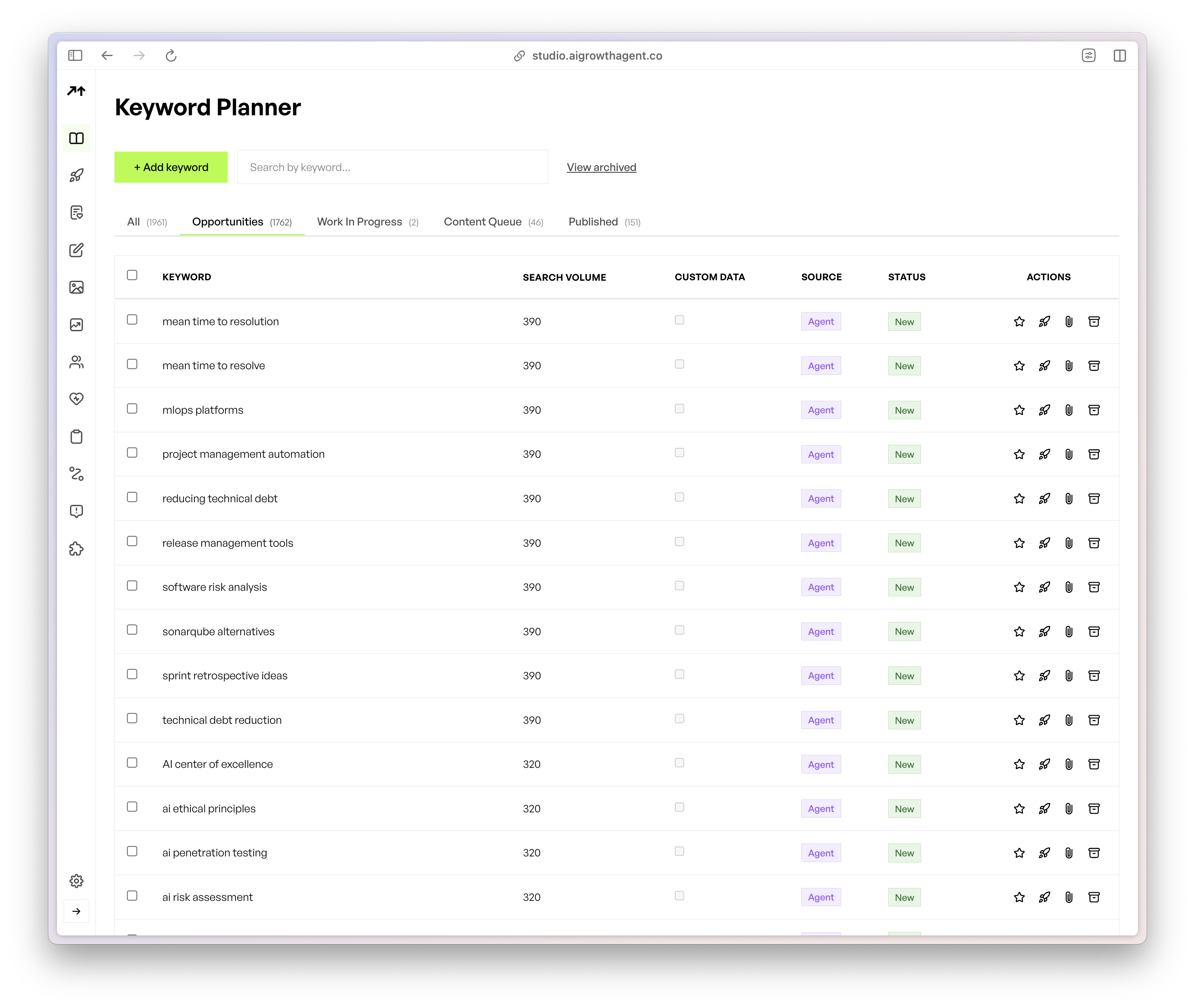
As AI search engines shape digital visibility, teams that align research workflows with authority-building strategies gain a clear edge.
Schedule a demo to see if you’re a good fit for AI Growth Agent’s programmatic, research-driven approach to authority.