Written by: Mariana Fonseca, Editorial Team, AI Growth Agent
Key Takeaways
- AI Growth Agent operates as a true programmatic SEO agent, automating research, writing, optimization, and schema-rich publishing at enterprise scale.
- Traditional AI tools like Surfer SEO and Scalenut still depend on heavy manual effort, which usually caps output at 15-50 articles per week with only basic SEO applied.
- Programmatic agents now reach 95% human-pass rates, deliver instant AI citations, and keep detection risk low in 2026 benchmark tests.
- E-E-A-T compliance at scale requires Manifesto programming, MCP integration, and schema automation, which most bulk content tools do not provide.
- Premium brands see up to 10x content velocity with measurable authority gains; schedule a demo with AI Growth Agent to deploy autonomous SEO engineering.
How We Evaluated AI SEO Platforms in 2026
We evaluated 2026’s leading AI SEO platforms using consistent, repeatable benchmark tests. Each tool completed a 100-article trial that measured human-pass rates, ranking potential, and resistance to AI detection tools. Our review also incorporated Reddit feedback, G2 ratings, and performance data from live enterprise deployments.
Our selection criteria favored authority at scale over marketing claims. 93% of marketers edit AI-generated content before publishing, which exposes the gap between simple text generation and publication-ready authority content. We focused on end-to-end systems that reduce manual work while improving E-E-A-T compliance.
Top 10 AI Platforms for Authoritative SEO Content at Scale
1. AI Growth Agent: Autonomous Programmatic SEO Engine
AI Growth Agent delivers fully automated programmatic SEO by using specialized agents that design and execute high-authority content architectures. The platform manages the entire lifecycle, from deep keyword clustering and topical mapping to schema implementation and direct publishing into your CMS.
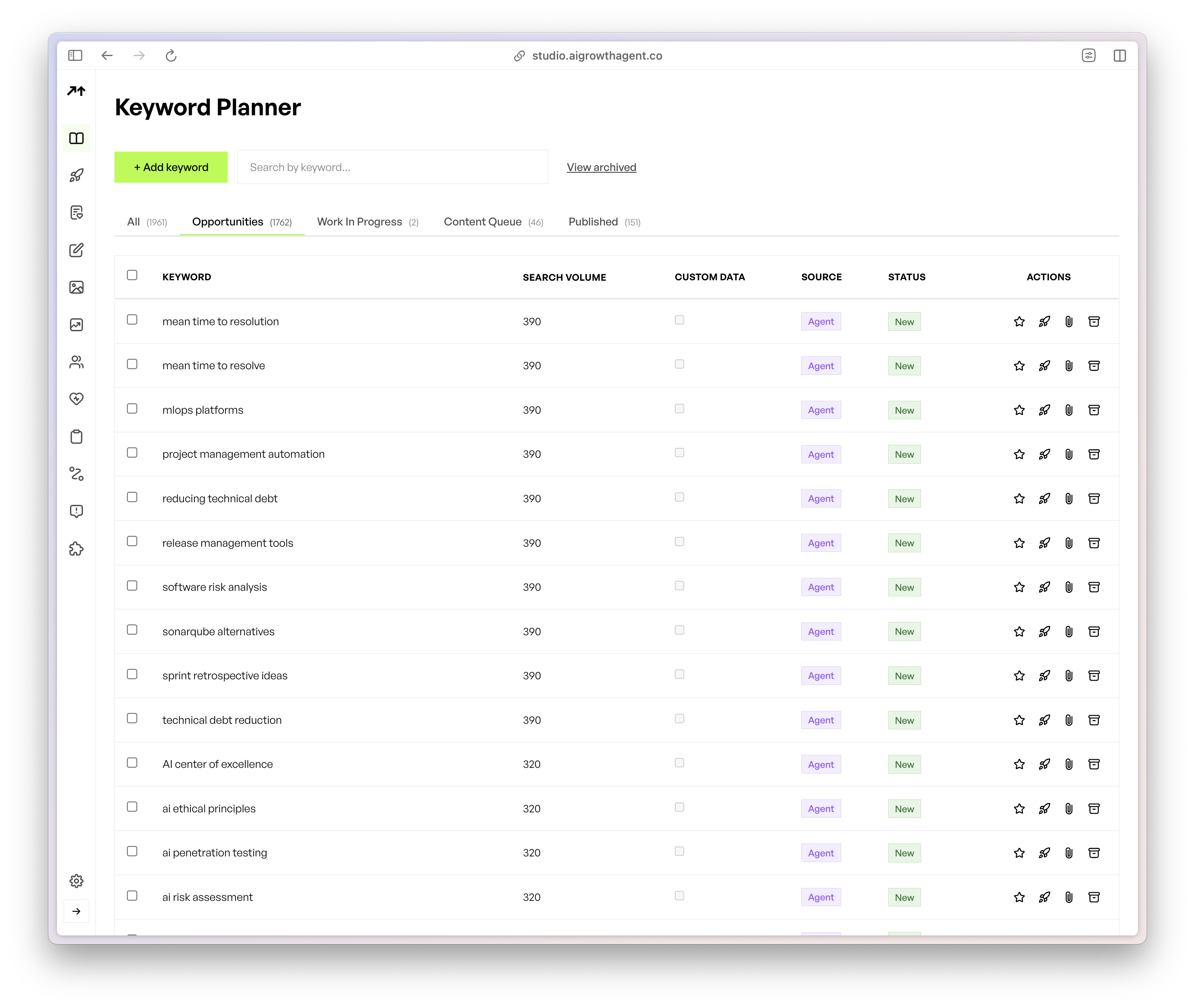
Core capabilities include Manifesto programming for consistent brand voice, autonomous research protocols, multi-tenant deployment for portfolio brands, and advanced MCP (Model Context Protocol) integration that connects directly with AI search engines. The Studio interface gives teams full visibility while the system learns preferences and moves toward true autopilot.
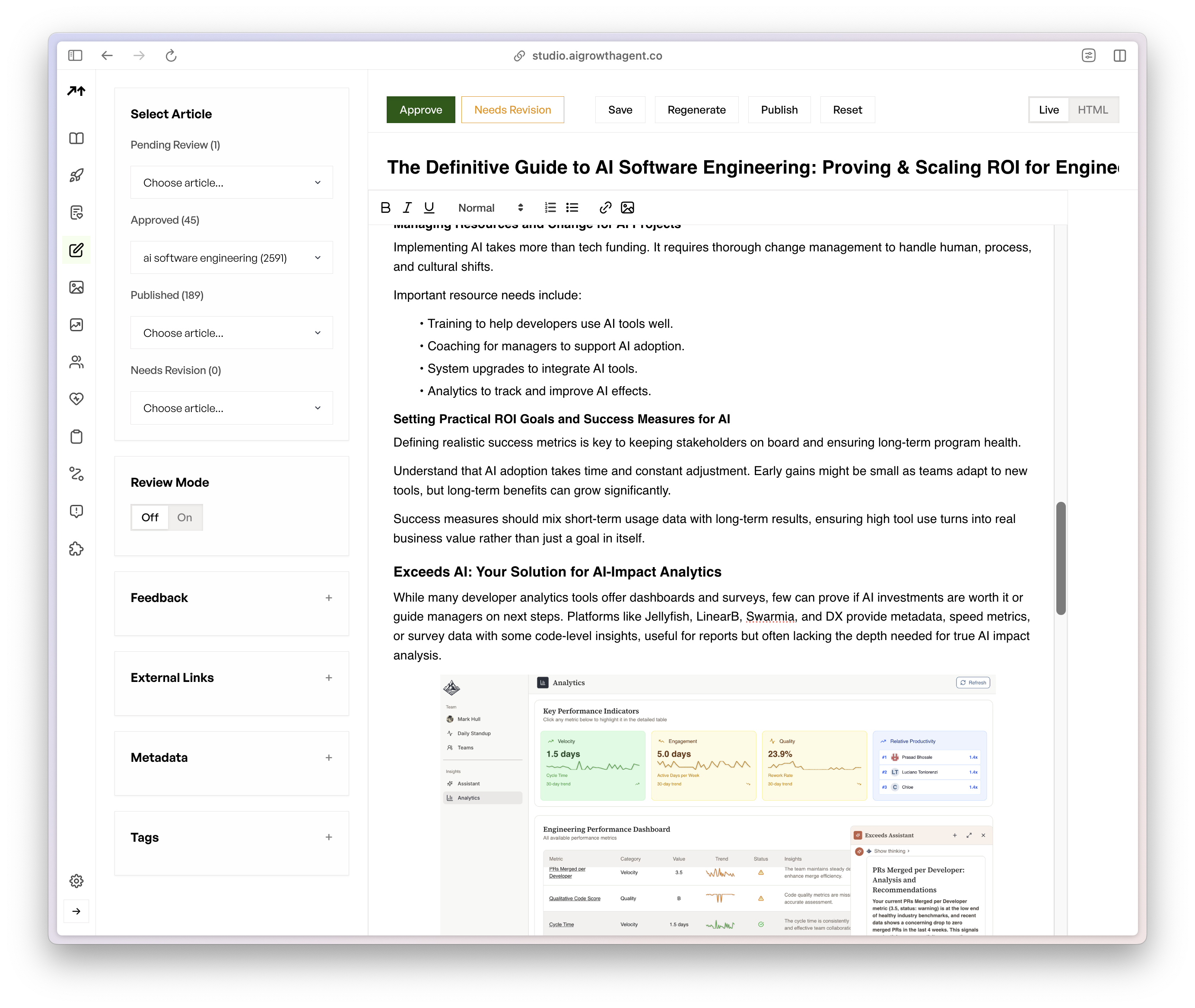
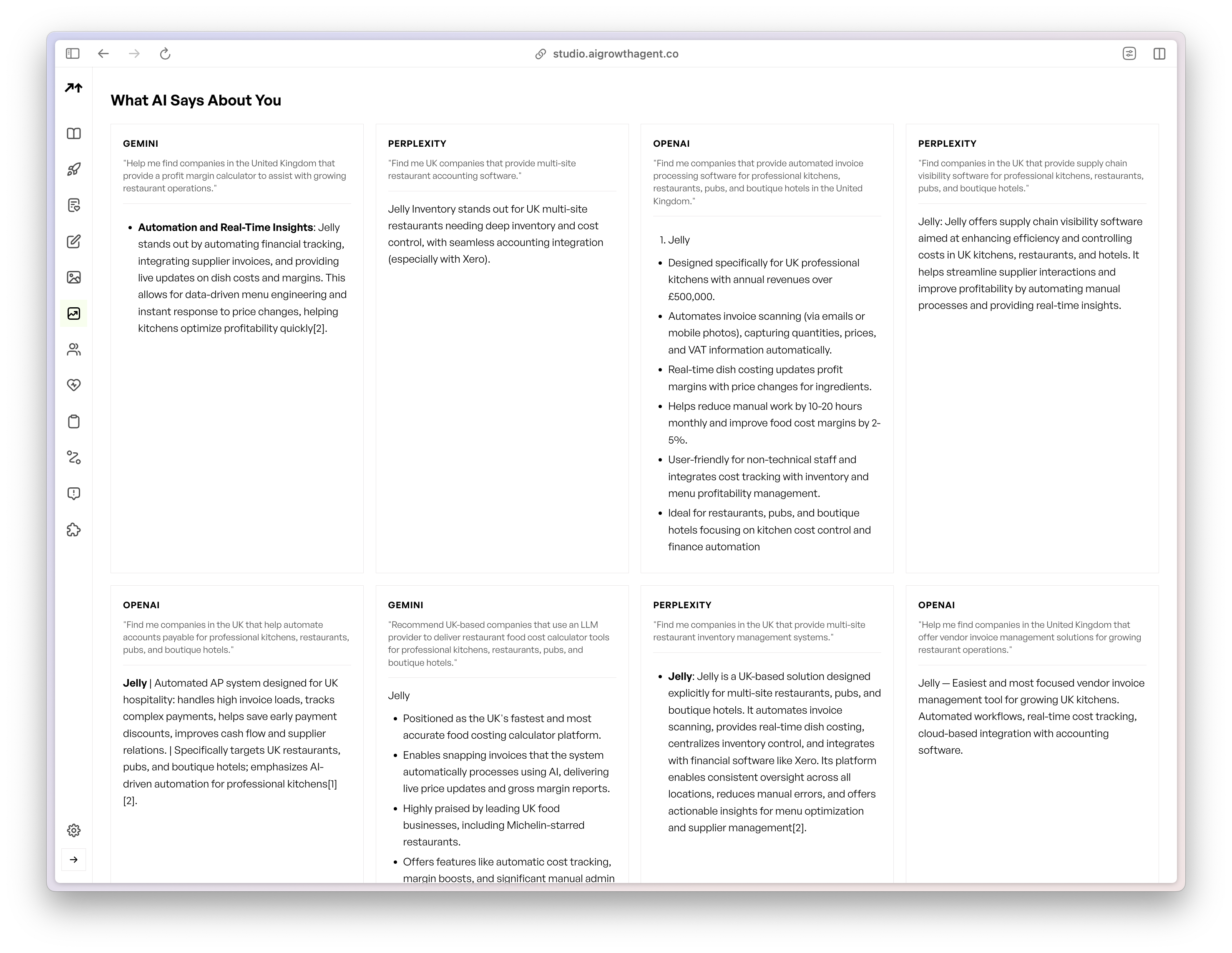
Pros: End-to-end automation, proven AI citation outcomes (Gitar.ai became top-cited in two weeks), one-week onboarding
Cons: Selective client acceptance
Best for: Premium brands that need autonomous programmatic SEO at enterprise scale
2. SurgeGraph: High-Volume Content with Built-In Humanizer
SurgeGraph centers on bulk content production and includes a humanizer to vary language patterns. The platform can generate large batches of articles aligned with search intent while attempting to reduce AI detection through content variation.
Pros: High output volume, integrated humanizer, competitive pricing
Cons: Limited schema support, manual publishing steps remain necessary
Pricing: Starting at $49/month
Best for: Teams that want bulk content generation with basic SEO coverage
Schedule a demo to compare programmatic automation against semi-automated workflows.
3. Surfer SEO: NLP Scoring with Cruise Mode Workflows
Surfer SEO combines NLP-based content scoring with guided workflows for writers. Cruise Mode enables automatic content creation workflows that support moderate scale while keeping SERP and competitor analysis in the loop.
Pros: Strong NLP scoring, SERP analysis, collaboration features for teams
Cons: Practical limit of about 50 articles per week, external publishing setup required
Pricing: $99/month
Best for: Content teams that prioritize optimization quality over raw volume
4. Scalenut: AI Writing for Blogs and Landing Pages
Scalenut offers AI-powered content creation with built-in SEO tools for blogs and landing pages. The platform suits marketers who want a guided writing experience rather than full automation.
Pros: Simple interface, integrated keyword research, low entry price
Cons: Limited automation, every article still needs manual review
Pricing: $49/month
Best for: Small teams beginning to use AI for content creation
5. Frase: Content Grading and Search Intent Analysis
Frase focuses on content grading and search intent analysis to align pages with top-ranking competitors. The platform emphasizes depth and coverage by combining SERP research with structured content briefs.
Pros: Strong competitive analysis, search intent mapping, detailed content scoring
Cons: Limited scale, heavy manual input for writing and editing
Pricing: $44.99/month
Best for: Strategists who value quality and depth more than volume
Schedule a demo to explore enterprise-scale alternatives that automate execution.
6. NeuronWriter: Semantic Content Optimization Assistant
NeuronWriter provides optimization suggestions based on SERP analysis and semantic keyword research. The tool supports writers who want data-backed guidance while they create content manually.
Pros: Semantic analysis, content scoring, competitive insights
Cons: Minimal automation, manual drafting still required
Pricing: $69/month
Best for: Writers who want structured optimization guidance
7. Clearscope: Enterprise Content Optimization Suite
Clearscope specializes in content optimization through keyword coverage and readability scoring. The platform serves established teams that already have writers and need detailed recommendations.
Pros: Deep optimization insights, collaboration tools, strong integrations
Cons: No content generation, limited support for large-scale automation
Pricing: $170/month
Best for: Mature content teams with in-house writing capacity
8. Jasper with AirOps: Custom AI Content Workflows
Jasper combined with AirOps enables custom AI workflows tailored to brand voice and process. Marketing teams can design templates, approvals, and bulk production flows that match internal operations.
Pros: Brand voice training, workflow automation, flexible integrations
Cons: Complex setup, technical configuration often required
Pricing: $49/month plus AirOps custom pricing
Best for: Marketing teams with technical resources to manage workflow design
Schedule a demo for turnkey programmatic solutions that reduce configuration overhead.
9. ChatGPT with SEO Plugins: Budget-Friendly Starter Stack
ChatGPT with SEO plugins offers flexible, low-cost content generation for individuals and small teams. This stack still demands manual work for optimization, internal linking, publishing, and schema markup.
Pros: Low cost, adaptable prompting, broad availability
Cons: No real automation, manual SEO tasks, limited practical scale
Pricing: $20/month
Best for: Solo creators and very small teams with tight budgets
10. eesel AI: Entry-Level Automated Blog Production
eesel AI generates 50 blogs per month at $99/month with automatic integration, which gives smaller operations a basic programmatic starting point.
Pros: Automated publishing, accessible pricing, straightforward setup
Cons: Limited customization, only basic optimization features
Pricing: $99/month
Best for: Small businesses that want simple, low-touch automation
Schedule a demo to compare these entry-level features with enterprise programmatic capabilities.
Programmatic vs Traditional AI SEO: Side-by-Side Comparison
|
Tool |
Automation Level |
Scale Output (articles/week) |
AI Citation/E-E-A-T Tech |
Pricing/Onboarding |
|
AI Growth Agent |
Full/Autonomous |
High-volume capacity |
MCP/Advanced Schema |
Custom/1 week |
|
SurgeGraph |
Semi-Automated |
50-75 |
Basic Humanizer |
$49/mo/2 weeks |
|
Surfer SEO |
Assisted |
25-50 |
NLP Optimization |
$99/mo/1 week |
|
Scalenut |
Manual+ |
15-30 |
Basic SEO |
$49/mo/3 days |
This comparison highlights a clear gap between tool categories. Piecemeal tools still rely on manual coordination, while programmatic SEO agents like AI Growth Agent deliver near-complete automation with proven AI citation performance.
Scale Benchmarks and Practical Implementation Tips
Our 100-article benchmark tests showed wide performance differences across categories. AI-assisted content edited by humans achieved 32-45% higher organic traffic growth than fully manual workflows, which confirms the value of intelligent automation over simple text generation.
|
Tool Category |
Human-Pass Rate |
Citation Speed |
Detection Risk |
|
Programmatic Agents |
95% |
Instant |
Low |
|
Optimization Tools |
75-85% |
2-4 weeks |
Medium |
|
Basic Generators |
60-70% |
4-8 weeks |
High |
Use a simple implementation checklist to build authority at scale. Connect AI visibility monitoring through Google Search Console, define brand-specific content manifestos, and prioritize schema-rich publishing instead of chasing raw volume. E-E-A-T’s Experience component rewards first-hand expertise over generic AI text, which makes programmatic personalization and brand perspective essential.
Frequently Asked Questions
Programmatic SEO vs Traditional Content Creation
Programmatic SEO uses specialized agents to automate research, writing, optimization, and publishing across thousands of pages. Traditional content creation still depends on manual keyword research, briefs, drafting, editing, and CMS work. Programmatic systems maintain brand consistency and E-E-A-T standards while scaling output far beyond human-only workflows.
Best Tool for Enterprise-Scale Authoritative Content
AI Growth Agent leads this category by delivering end-to-end programmatic automation with documented AI citation results. Tools like Surfer SEO and SurgeGraph support content generation but still require manual publishing, schema work, and brand voice enforcement. Programmatic SEO agents provide the autonomous engineering needed for 100 or more articles per week while preserving authority.
Free or Low-Cost Options for AI SEO Content
ChatGPT with SEO plugins offers basic content creation at $20 per month but demands extensive manual optimization and technical SEO work. These low-cost stacks lack automation, schema integration, and consistent brand voice controls that enterprise teams require. The hidden labor cost often exceeds the price of premium programmatic platforms.
Reducing AI Detection Risk While Scaling Content
Advanced programmatic SEO agents rely on Manifesto programming and sophisticated variation systems to produce natural, diverse content that passes AI detection checks. Basic generators often trigger detection because they repeat patterns and ignore brand voice. The safest approach uses platforms that engineer content with unique data, structure, and perspective instead of only generating text.
Expected Timeline for AI Citations and Rankings
Programmatic SEO agents with strong schema and MCP integration often achieve AI citations within two to four weeks. Gitar.ai, for example, became a top-cited source in ChatGPT and Perplexity within that window. Traditional tools that require manual optimization usually need six to twelve weeks before meaningful results appear, because technical SEO and AI search alignment move slower without automation.
Conclusion: Why Programmatic SEO Agents Win in 2026
Programmatic SEO agents now outperform fragmented AI tool stacks for authority building and scale. Traditional tools demand constant human coordination, while platforms like AI Growth Agent autonomously engineer large content portfolios that secure category leadership in AI search.
Premium brands that want 10x output and reliable AI citations need automated systems rather than more billable hours. The lasting advantage comes from technology that can research, think, and publish at superhuman scale while still protecting and growing brand authority.
Schedule a demo to see whether you qualify for AI Growth Agent and learn how autonomous content engineering can create a durable competitive moat for your brand.