Written by: Mariana Fonseca, Editorial Team, AI Growth Agent
Key Takeaways
- Most companies feel let down by SEO agencies in 2026. About 65% are dissatisfied, and 47% switch providers within a year because results lag behind AI-driven search.
- You can quickly audit your agency using 8 concrete metrics, including 20%+ quarter-over-quarter organic traffic growth, top-3 rankings for high-intent keywords, a 724% ROI benchmark, and 90%+ AI citation rates.
- Common red flags include vague reports, slow manual content output at 1–2 posts per month, ignoring AI search visibility, and promising outcomes no one can realistically guarantee.
- Traditional agencies struggle to match AI-powered content volume and structure. Programmatic SEO supports daily high-authority content with advanced schema and real-time AI monitoring.
- AI Growth Agent delivers autonomous programmatic SEO that drives rapid AI citations and stronger ROI. Schedule a demo today to upgrade your results.
Quick Checklist: 8 Metrics That Reveal Your Agency’s Real Performance
This checklist helps you compare your current results against 2026 benchmarks and see where your agency falls short.
1. Organic Traffic Growth: Benchmark 412% year-over-year growth, which roughly equals 20% quarter-over-quarter increases in Google Search Console. If traffic stays flat after 4–6 months, that gap from the benchmark signals deeper strategy problems that rarely fix themselves.
2. Top-3 Rankings for High-Intent Keywords: Top 3 positions capture 68.7% of clicks. Prioritize the 20% of high-intent terms that drive about 80% of your revenue, and track how many of those sit in the top three spots.
3. Quality Backlink Growth: Use Ahrefs to monitor new referring domains each month. A shrinking or stagnant domain count often signals link decay, which erodes authority and rankings over time.
4. Organic Conversions and ROI: Calculate (Organic Revenue – SEO Costs) ÷ SEO Costs × 100. The median benchmark reaches 724% ROI at 13 months, as highlighted in the key takeaways above. Remember that SEO generates leads at $31 per conversion vs. a $198 industry average, so underperformance here carries a real opportunity cost.
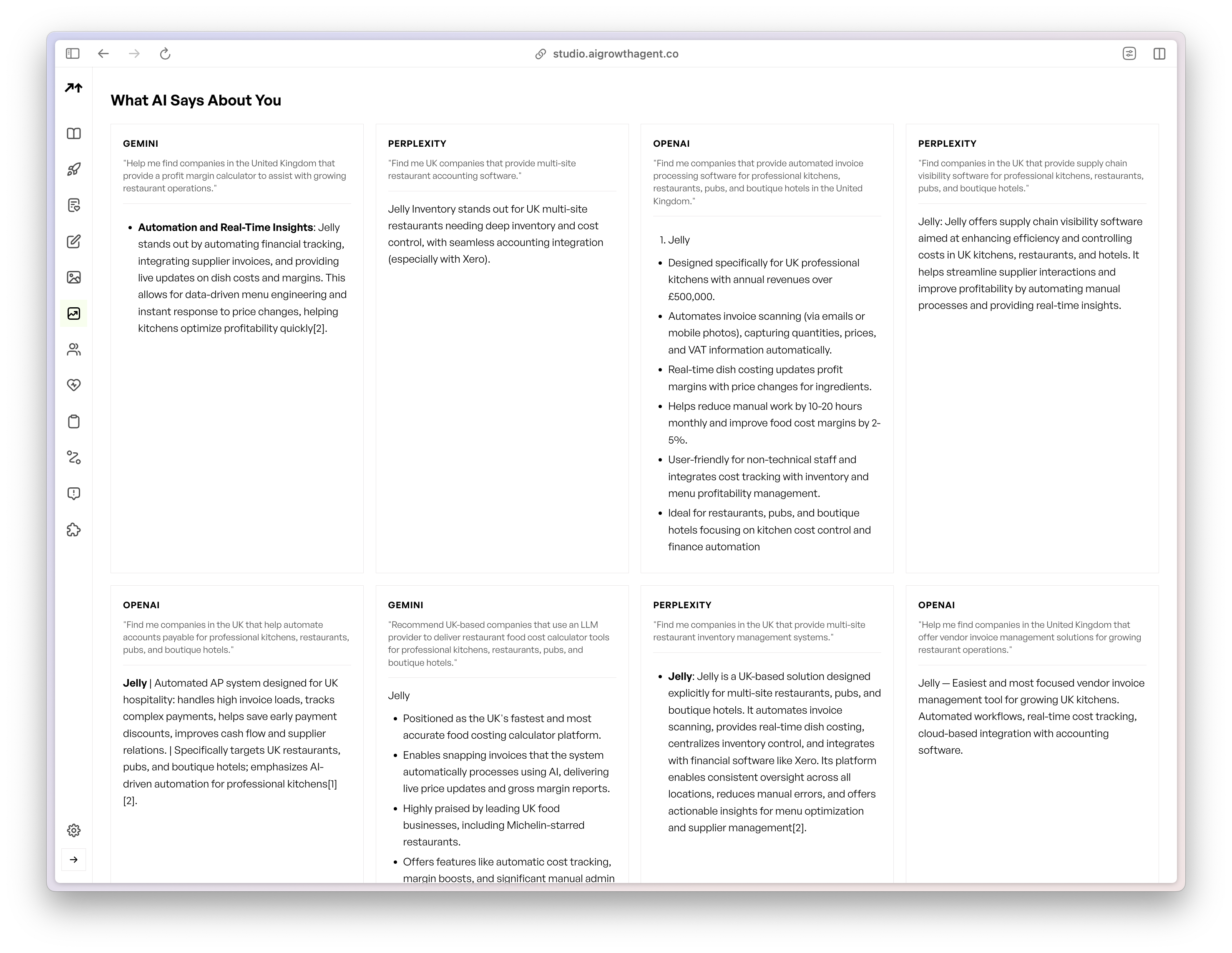
5. AI Visibility and Citations: Run your core queries in ChatGPT, Perplexity, and Google AI Overviews. A 90%+ recommendation rate across AI platforms signals that your brand consistently appears as a trusted source.
6. Technical SEO Health: Aim for Core Web Vitals benchmarks of LCP ≤ 2.5s, CLS ≤ 0.1, and FID ≤ 100ms. Use the Core Web Vitals report in Google Search Console to confirm that most key pages meet these thresholds.
7. Content Velocity: AI-era search rewards brands that publish daily. About 74.2% of new webpages now contain AI-generated content, which means manual agencies struggle to keep pace with programmatic output.
8. Search Console Click Data: Track organic clicks instead of sessions to see true demand. Healthy campaigns reach 8–12% CTR for branded terms and 2–4% for non-brand queries.
The table below summarizes these benchmarks, the tools you need to track them, and how AI Growth Agent’s approach differs from traditional methods.
|
Metric |
2026 Benchmark |
Tool |
AI Growth Agent Edge |
|
Organic Traffic Growth |
>20% QoQ |
GSC/GA4 |
Daily content velocity |
|
AI Citations |
90%+ recommendation rate |
Manual testing |
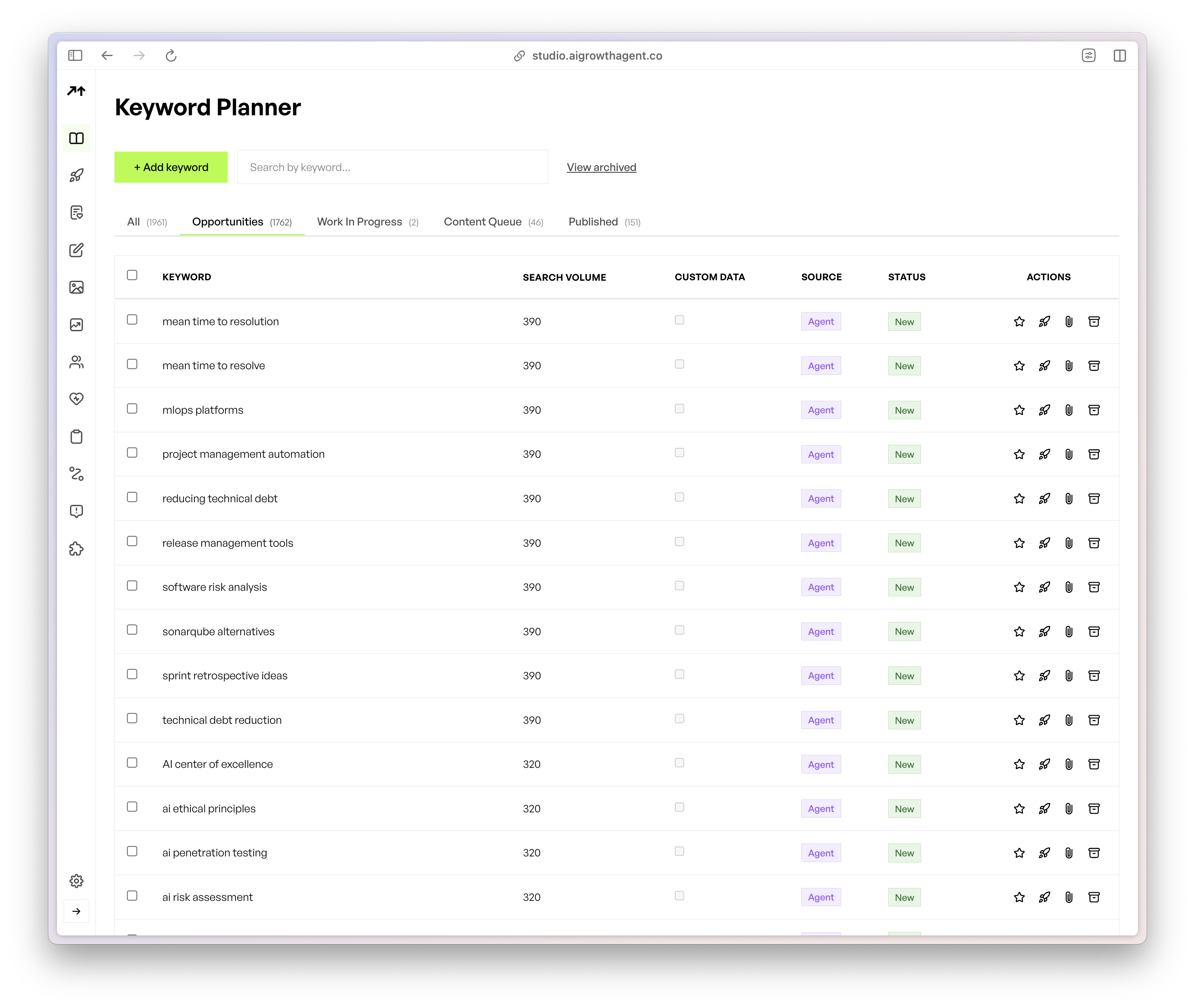
AI Search Monitor dashboard |
|
Content Volume |
Daily publishing |
CMS tracking |
Autonomous programmatic engine |
|
ROI |
724% at 13 months |
Revenue tracking |
Set-and-forget automation |
Step-by-Step Framework to Audit Your Agency
This framework walks you through a practical audit, from traffic trends to AI visibility, so you can judge performance with confidence.
1. Review Google Search Console Data: Log into GSC and open the Performance report. Focus on organic clicks, impressions, and average position trends for the past 6 months. Campaigns should show the kind of position improvement outlined in metric 1 above, moving from mid-page visibility to top positions across a 12-month window.
2. Demand Transparent Reporting: Ask for reports that connect SEO activity to revenue, pipeline, and conversions. Generic monthly PDFs filled with vanity metrics usually signal that your agency runs on autopilot instead of strategy.
3. Use ChatGPT for Quick Analysis: After you export your GSC and Ahrefs data, you can speed up your review by feeding that data into ChatGPT. Use prompts like “Analyze this Google Search Console data for red flags: [paste performance data]”, “Audit these backlinks for quality issues: [paste Ahrefs export]”, and “Evaluate this content strategy for AI search optimization: [paste content plan]” to uncover patterns you might miss manually.
4. Check Backlink Quality in Ahrefs: Open the Backlinks and Referring Domains reports. Look for steady growth in referring domains, varied and natural anchor text, and strong domain authority from linking sites, since these factors influence both rankings and AI trust.
5. Test AI Citations: Search for your brand and priority topics in ChatGPT, Perplexity, and Google AI Overviews. About 43.2% of Google #1 ranking pages are cited by ChatGPT, so missing citations often reveal a gap between traditional rankings and AI visibility.
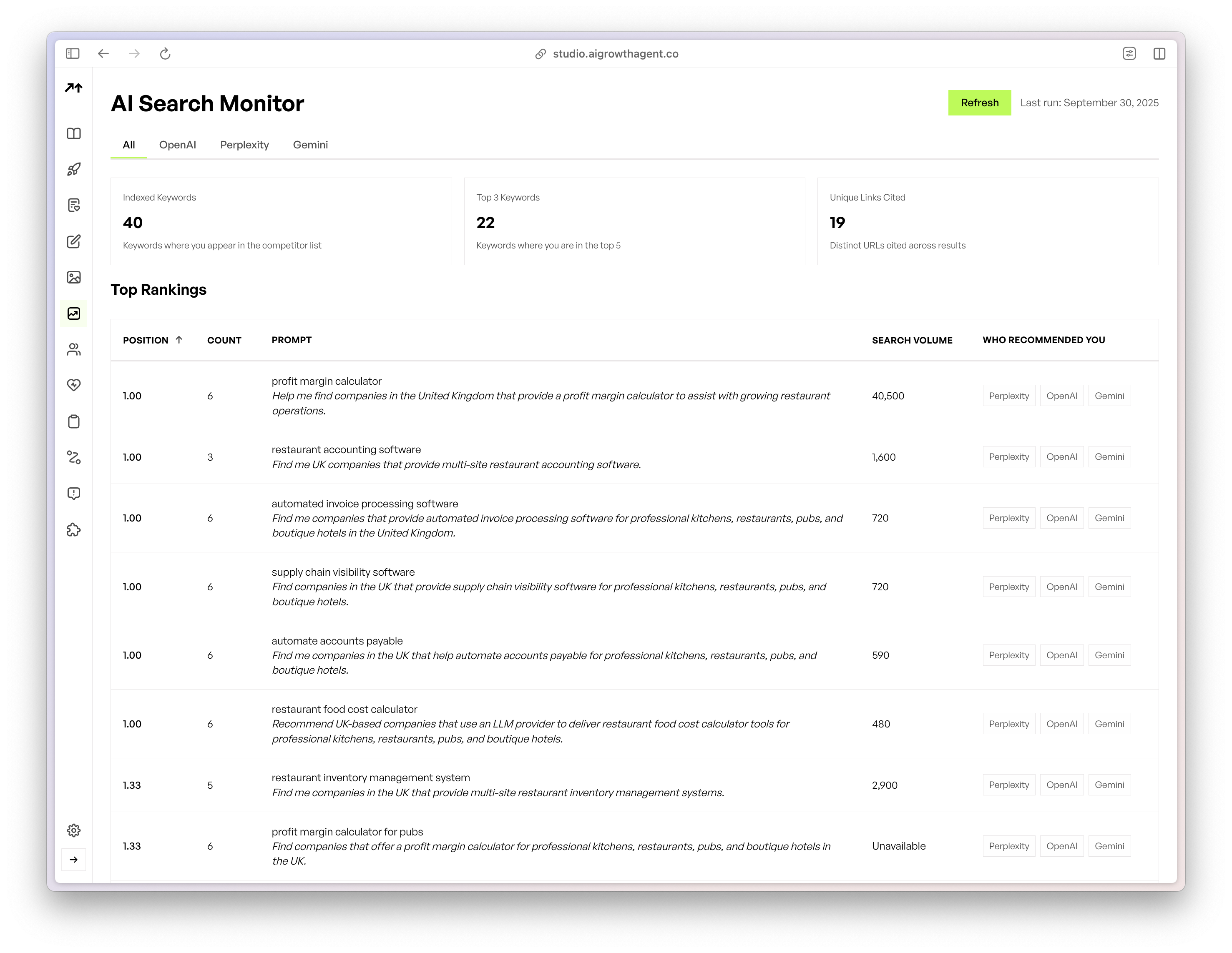
ROI Calculation: Use the formula (Organic Revenue – SEO Costs) ÷ SEO Costs × 100. When you run this calculation, you may find that your agency cannot show how AI citations contribute to that revenue. Traditional teams usually lack AI monitoring, while AI Growth Agent uses an AI Search Monitor for real-time citation tracking and performance heatmaps that connect AI visibility directly to revenue impact.
Schedule a demo to see if you’re a good fit for programmatic SEO that delivers measurable outcomes.
SEO Red Flags to Watch For
- Vague Reports Without Conversions: Rankings may rise while revenue stays flat, which usually means the agency targets keywords that do not convert.
- Slow Manual Content Production: Publishing 1–2 posts per month cannot compete with AI-driven content ecosystems that update daily.
- Ignoring AI Search: Missing LLM.txt files, weak schema markup, and no AI citation tracking show that your agency still thinks only in blue links.
- Over-Promising Results: Guarantees around specific rankings or aggressive timelines often signal sales pressure instead of realistic planning.
- Missed Deadlines: Repeated delays on content, audits, or technical fixes point to operational issues that will slow growth.
- Complex Jargon Explanations: Heavy technical language without clear business impact usually hides poor performance rather than advanced expertise.
AI Growth Agent takes the opposite approach by offering transparent Studio dashboards, autonomous content production at scale, and ROI reporting that includes AI citation performance.
Why Traditional Agencies Fail in the AI Era
The 2026 search environment rewards brands that combine strong rankings with AI visibility. Traditional ranking position still acts as the gatekeeper for AI citations, yet manual agencies struggle to produce enough structured content to win those citations consistently.
The Manual Limitation: Traditional agencies follow a craftsman model that moves slowly and costs more per asset. They may create excellent individual articles, but they rarely generate the structured, schema-rich volume that AI systems prefer for indexing and recommendations.
The AI Advantage: LLM referral traffic converts at 15.9% for ChatGPT vs. 1.76% for Google organic. Visitors who arrive through AI citations usually show higher intent and sit further along in their buying journey.
The Programmatic Solution: AI Growth Agent addresses the scale and quality challenge with a programmatic model that maps directly to these limitations.
- Manifesto-Driven Onboarding: A one-hour session programs your agent with company context and positioning, which removes the long ramp-up period that traditional agencies often require.
- Autonomous Research and Content: Daily publication with advanced schema, LLM.txt, and Model Context Protocol delivers the content volume manual teams cannot match while preserving the structured data AI systems need for citations.
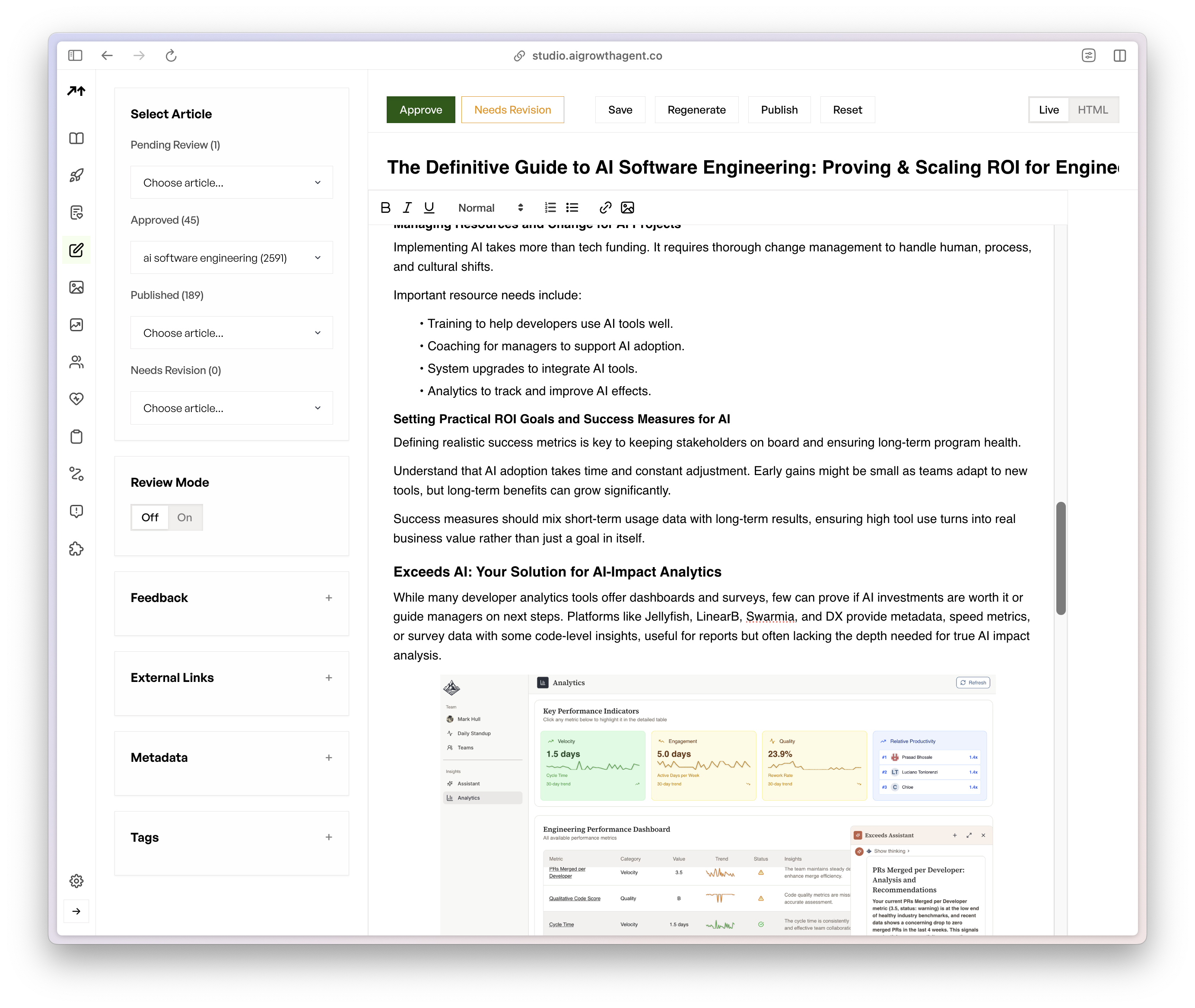
- Studio Dashboard: A central dashboard provides full transparency, editing controls, and approval workflows so your team stays in control without managing every task.
- AI Search Monitor: Real-time tracking across ChatGPT, Perplexity, and Google AI Overviews shows exactly where your brand appears inside AI answers.
Proven Results: Exceeds achieved AI appearances in Perplexity recommendations within 2 weeks. Bucked Up secured the #1 citation for “best protein soda” in only 3 weeks. This set-and-forget style execution lets CMOs stay focused on strategy while the agent manages daily SEO operations.
Advanced 2026 Tactics for AI Visibility and Beyond
iPullRank’s analysis of 79,000 URL-query pairs highlights seven core metrics for AI-focused optimization: Cosine Similarity, Comprehensive Coverage Index, Strategic Entity Richness, Explanatory Efficiency, Conceptual Depth Score, Information Gain Score, and Entity Density.
Free ChatGPT Audit Prompts:
- “Analyze my website’s entity density and schema markup: [URL]”
- “Compare my content depth to top-ranking competitors for: [keyword]”
- “Evaluate this page for AI citation potential: [URL]”
Technical Implementation: Make sure your site includes LLM.txt files, robust schema markup, and fast-loading pages. Pages with First Contentful Paint under 0.4 seconds receive about 3x more ChatGPT citations, so performance tuning directly supports AI visibility.
AI Growth Agent handles these advanced tactics through multi-tenant programmatic deployment, which gives you sophisticated AI optimization without requiring deep technical skills on your team.
Can ChatGPT Audit Your SEO Agency?
ChatGPT can support your audit by spotting patterns in exported data, highlighting obvious red flags, and suggesting next steps. It still cannot access real-time search data, run full technical crawls, or replace human strategic judgment.
Use ChatGPT for quick pattern analysis, then pair its insights with tools like Google Search Console, Ahrefs, and dedicated AI monitoring platforms to build a complete picture.
Is SEO Dead in 2026?
SEO continues to matter in 2026, but it now centers on programmatic execution and AI visibility. Traditional KPIs like raw rankings carry less weight, while share of voice inside AI systems becomes the strategic indicator.
Brands that win will publish authoritative content at scale without sacrificing quality. Manual approaches cannot keep up with programmatic velocity in an AI-first world.
Schedule a consultation session to see how AI Growth Agent can position your brand for AI search dominance.
FAQ
What if my organic traffic is flat but rankings look good?
Check your AI citation performance when this pattern appears. Your content may already power AI Overviews without generating direct clicks, which still supports brand awareness and authority. Track conversion-weighted visibility and branded search volume growth, since both often rise as AI citations increase.
How much should I expect to pay for quality SEO?
Most quality SEO retainers fall between $3,000 and $15,000 or more per month. Evaluate that spend against ROI, because SEO often generates leads at $31 per conversion compared to a $198 industry average. Programmatic solutions like AI Growth Agent improve value by scaling autonomously and providing transparent ROI tracking.
Is programmatic SEO better than traditional agency services?
Programmatic SEO fits the 2026 landscape better than manual services for most growth-focused brands. It delivers the content velocity AI search requires while maintaining quality through consistent, rules-based optimization. B2B SaaS companies often see 702% ROI with programmatic approaches compared to slower manual methods that cannot match AI-era demand.
How quickly should I see results from my SEO agency?
You should notice positive movement within 4–6 weeks on technical fixes and early content improvements. Larger traffic gains usually appear between 3 and 6 months, while full ROI tends to arrive around 8–13 months. If nothing improves after 6 months, start evaluating alternative partners.
What’s the most important metric to track in 2026?
AI citation rate across ChatGPT, Perplexity, and Google AI Overviews now acts as the primary signal of authority. A 90%+ recommendation rate shows that AI systems consistently trust your brand, even as traditional rankings matter less when users receive synthesized answers without clicking through.
Conclusion
You do not need to accept another quarter of flat performance and vague reporting. Use this framework to compare your agency’s work against 2026 benchmarks, then decide whether a programmatic model will serve you better.
AI Growth Agent’s autonomous content engine helps your brand deliver the definitive answers AI systems prefer.
Schedule a demo with AI Growth Agent to reclaim authority in your category through programmatic SEO that consistently performs.