Written by: Mariana Fonseca, Editorial Team, AI Growth Agent
Key Takeaways for Programmatic SEO in 2026
- AI Growth Agent leads as the top autonomous programmatic SEO tool, handling the full content lifecycle without manual input, ideal for premium brands.
- SEOmatic and CapGo.AI excel in CMS integrations and data-to-page scalability but require more setup than fully autonomous solutions.
- Surfer SEO and Jasper stacks focus on optimization and content quality but do not provide true hands-off programmatic scale.
- Key challenges include spam penalties, integration complexity, and quality control, best handled by end-to-end autonomous platforms.
- Businesses with 40+ landing pages generate 12x more leads, and you can see how AI Growth Agent builds those pages autonomously in a tailored demo.
How We Tested & Ranked These Tools
Our 2026 evaluation methodology prioritizes real-world performance over marketing claims. We tested page generation speed, technical SEO capabilities including schema markup and AI search optimization, visibility tracking across ChatGPT and Perplexity, pricing transparency, and deployment complexity for non-technical teams. The table below shows how we weighted each criterion, with autonomy and AI citation tracking making up over half of each tool’s final score because these factors most directly affect hands-off scaling success.
| Criteria | Weight | Metric/Source |
|---|---|---|
| Autonomy/Scale | 30% | Pages/hr; Concurate analysis |
| AI Citation Tracking | 25% | Citations/mo; internal testing |
| Integrations/Tech SEO | 20% | CMS/MCP support |
| Pricing/ROI | 15% | $/traffic; McKinsey 22% ROI boost |
| Non-Dev Ease | 10% | Onboard days |
Top 8 Programmatic SEO Tools with AI Automation in 2026
1. AI Growth Agent – Autonomous pSEO for Premium Brands
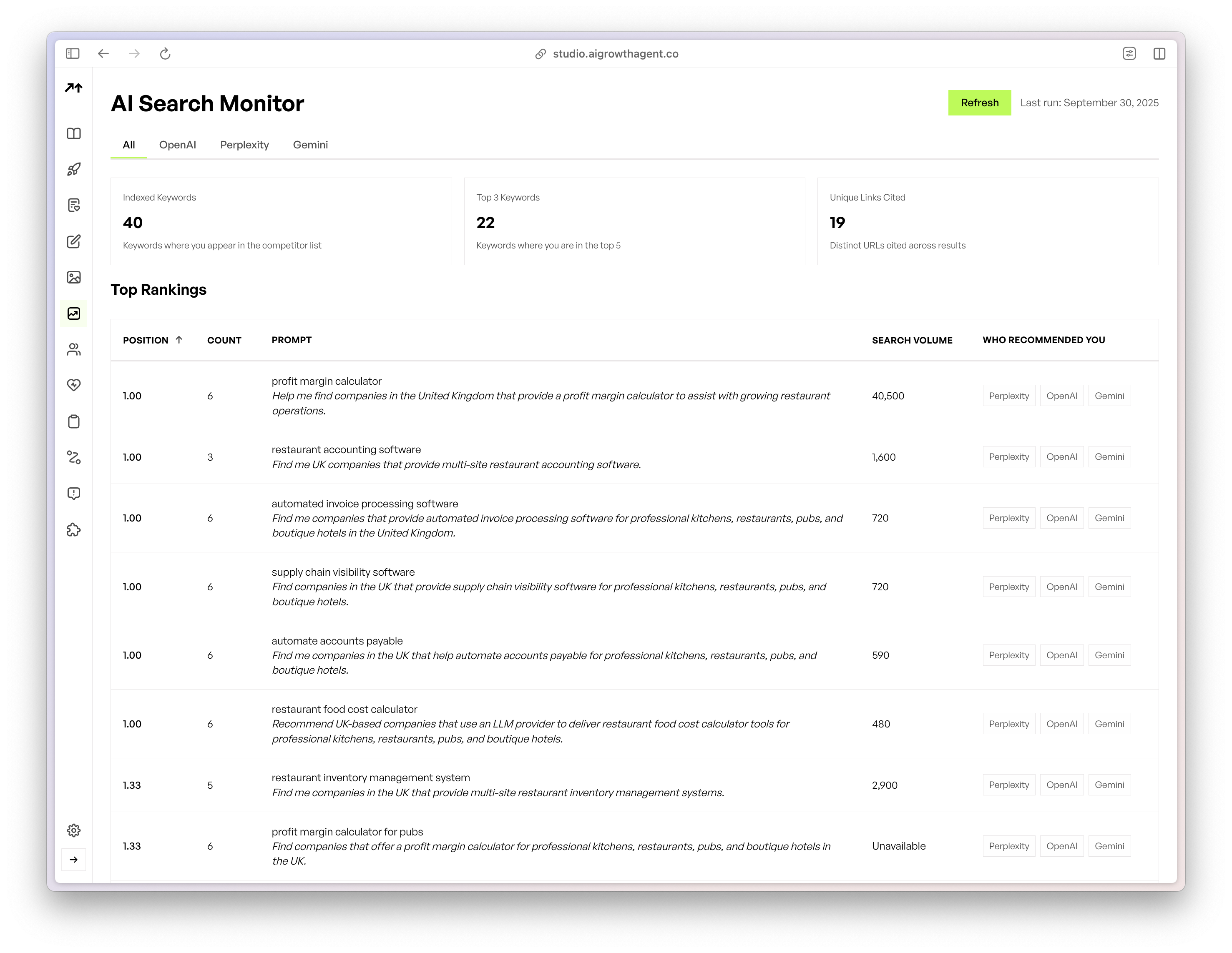
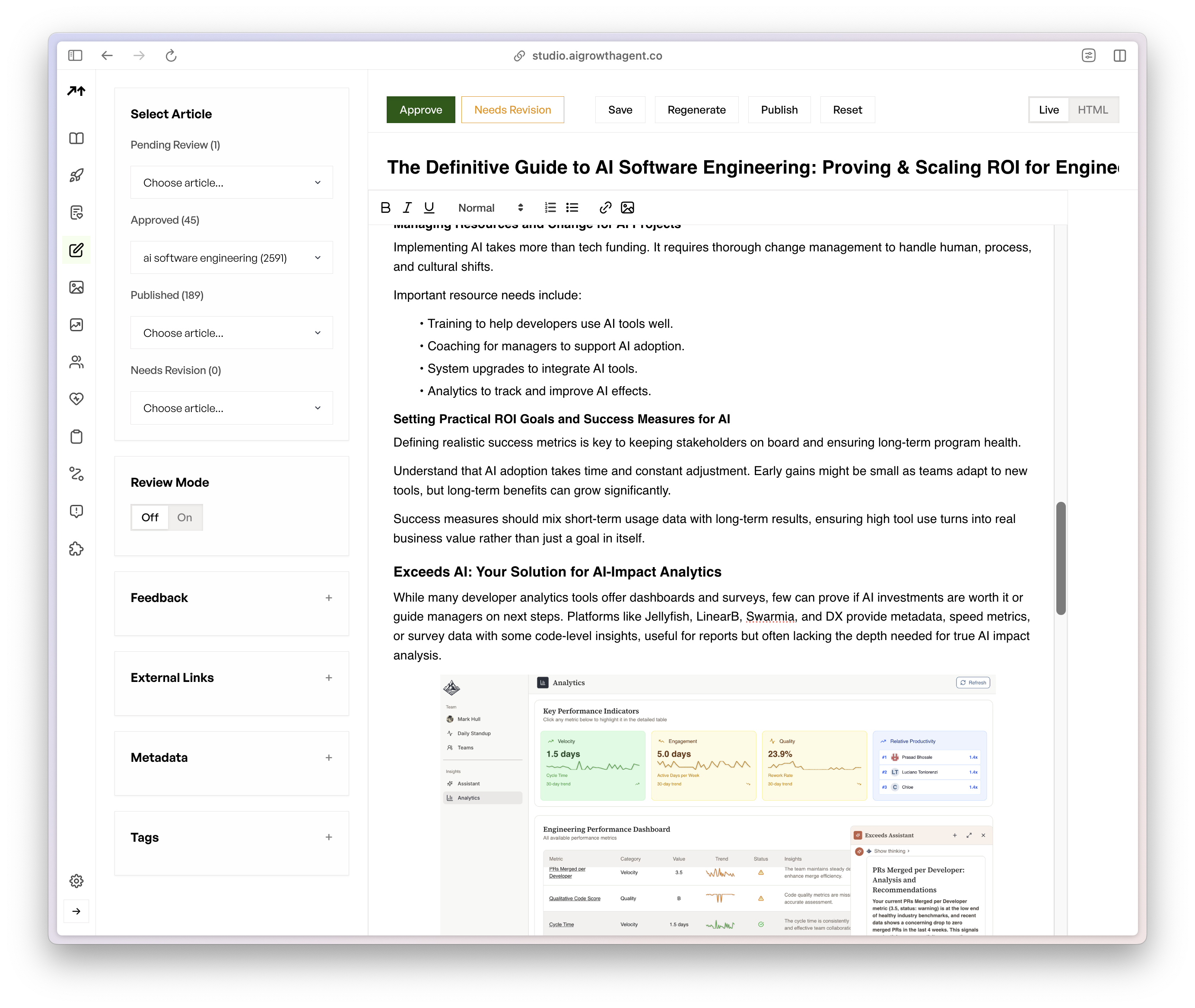
AI Growth Agent stands alone as the only truly autonomous programmatic SEO solution. Unlike tools that require manual keyword input or content templates, AI Growth Agent deploys specialized agents that handle the entire content lifecycle from strategy development to technical publishing. This autonomy extends to brand consistency through the platform’s Company Manifesto system, which enables deep brand voice customization without manual template creation. The platform’s proprietary AI Search Monitor then tracks how these autonomous agents perform, measuring citations across ChatGPT, Perplexity, and Google AI Overviews in real time.
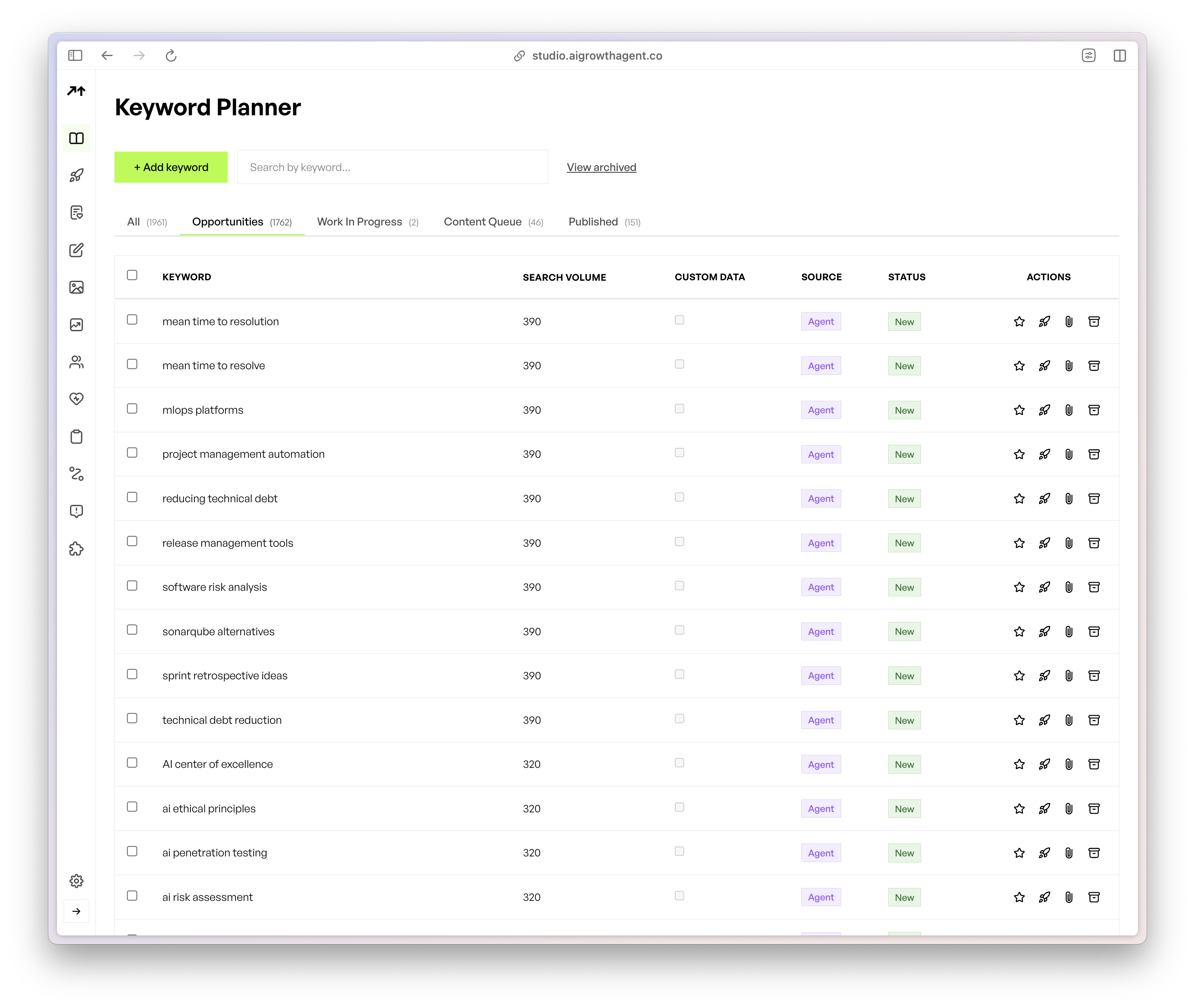
Pros: Complete autonomy, multi-tenant deployment for portfolios, real-time content injection, database-to-content automation, advanced schema and LLM.txt implementation
Cons: Premium pricing, selective client acceptance
2026 Pricing: Custom enterprise pricing (see ROI benchmark above)
Verdict: Best for premium brands requiring end-to-end autonomous pSEO without technical teams
2. SEOmatic – WordPress and Webflow Automation Specialist
SEOmatic excels at bulk WordPress and Webflow publishing with strong template customization. The platform supports scalable content generation through data-driven templates, which suits agencies managing multiple client sites. It requires significant manual setup and does not include advanced AI search optimization features, so teams still handle strategy and quality control.
Pros: Strong CMS integrations, bulk publishing capabilities, template flexibility
Cons: Manual keyword research required, limited AI search tracking
2026 Pricing: $149+ monthly
Verdict: Best for WordPress-focused agencies with technical resources
3. CapGo.AI – Turning Data into Landing Pages at Scale
CapGo.AI transforms structured databases into optimized landing pages at scale. The platform converts existing business data into SEO-friendly content, especially for e-commerce and directory sites that rely on large catalogs. Its strength lies in handling large datasets efficiently, while content quality depends on careful template tuning and ongoing testing.
Pros: Excellent data processing, high-volume page generation, API integrations
Cons: Template-dependent quality, limited content creativity
2026 Pricing: Tiered based on page volume
Verdict: Best for data-rich businesses needing systematic page creation
4. Surfer SEO – SERP Optimization and Content Scoring
Surfer SEO provides real-time content scoring and SERP analysis with programmatic capabilities through its AI Writer. The platform focuses on on-page optimization and competitor analysis, which helps teams refine content that already exists or that writers create manually. It still relies on manual workflow management and keyword clustering when teams attempt true programmatic scale.
Pros: Excellent SERP analysis, real-time optimization scoring, Google Docs integration
Cons: Limited automation, manual keyword clustering required
2026 Pricing: Standard $99/month, Pro $182/month (billed yearly)
Verdict: Best for content teams focused on optimization over volume
If you spend hours on manual optimization workflows like Surfer requires, see how autonomous agents handle the same tasks in minutes in a side-by-side demo.
5. Sight AI – Tracking AI Search Visibility
Sight AI specializes in monitoring brand mentions across AI search platforms. It does not generate content, yet it provides valuable insight into AI citation performance and competitive positioning. The platform helps identify content gaps and high-performing topics, while teams still rely on separate tools for content creation and publishing.
Pros: Comprehensive AI search monitoring, competitive analysis, citation tracking
Cons: No content generation, requires additional tools for execution
2026 Pricing: Monitoring-focused subscription model
Verdict: Best for brands prioritizing AI search visibility measurement
6. Jasper + AirOps – Programmatic Content Generation Stack
Jasper’s integration with AirOps creates a programmatic content workflow that combines AI writing with automation. Jasper excels in long-form SEO content generation with Surfer SEO integration, while AirOps manages workflow automation and routing. The combination delivers strong content quality but demands significant technical setup and still lacks autonomous decision-making about topics and publishing.
Pros: Strong content quality, workflow automation, brand voice adaptation
Cons: Complex integration, manual oversight required, limited technical SEO
2026 Pricing: Subscription-based pricing
Verdict: Best for content teams with technical resources
7. PageFactory + Wordlift – Webflow Schema and Semantic SEO
This combination targets Webflow users who need advanced schema markup and semantic SEO. PageFactory manages programmatic page generation, and Wordlift adds knowledge graph optimization that helps search engines understand entities and relationships. The stack works well for content-heavy sites, although it requires Webflow expertise and a manually defined content strategy.
Pros: Advanced schema implementation, semantic SEO, Webflow optimization
Cons: Platform-specific, manual strategy required, limited AI features
2026 Pricing: Combined subscription model
Verdict: Best for Webflow-based publishers prioritizing semantic SEO
8. Zapier + AI Tools – Custom Programmatic Workflow Builder
Zapier’s 8,000+ app integrations and 400+ AI tools enable custom programmatic SEO workflows. Advanced users connect keyword research, content generation, and publishing tools into automated sequences that match their internal processes. This approach offers high flexibility but requires significant technical expertise and ongoing maintenance to keep workflows stable.
Pros: High flexibility, extensive integrations, cost-effective for simple workflows
Cons: Complex setup, maintenance overhead, no unified interface
2026 Pricing: Variable based on usage and connected tools
Verdict: Best for technical teams building custom solutions
The table below summarizes how each tool performs across three critical metrics, autonomy level, pricing structure, and scalability ceiling, so you can quickly match options to your team’s technical resources and volume needs.
| Tool | Autonomy (1-10) | Pricing (2026/mo) | Scalability Score |
|---|---|---|---|
| AI Growth Agent | 10 | Custom (see ROI data) | Unlimited agents |
| SEOmatic | 8 | $149+ | High (10k pages) |
| CapGo.AI | 7 | Volume-based | Very High |
| Surfer SEO | 6 | $99-182 | Medium |
| Sight AI | 3 | Subscription | Monitoring only |
| Jasper + AirOps | 7 | Varies | High |
| PageFactory + Wordlift | 6 | Combined | Medium |
| Zapier + AI | 9 | Variable | Custom |
Real-User Challenges with Programmatic SEO AI (Reddit Insights)
Reddit communities consistently highlight three major pain points with current programmatic SEO tools. First, scaling content without triggering spam penalties requires sophisticated quality controls that most tools lack. This quality challenge is compounded by free plan limitations that force expensive upgrades before teams can properly evaluate whether a tool’s safeguards actually work. Even when teams commit to paid plans, integration complexity between keyword research, content generation, and publishing tools creates workflow bottlenecks that block the scale needed to justify the investment.
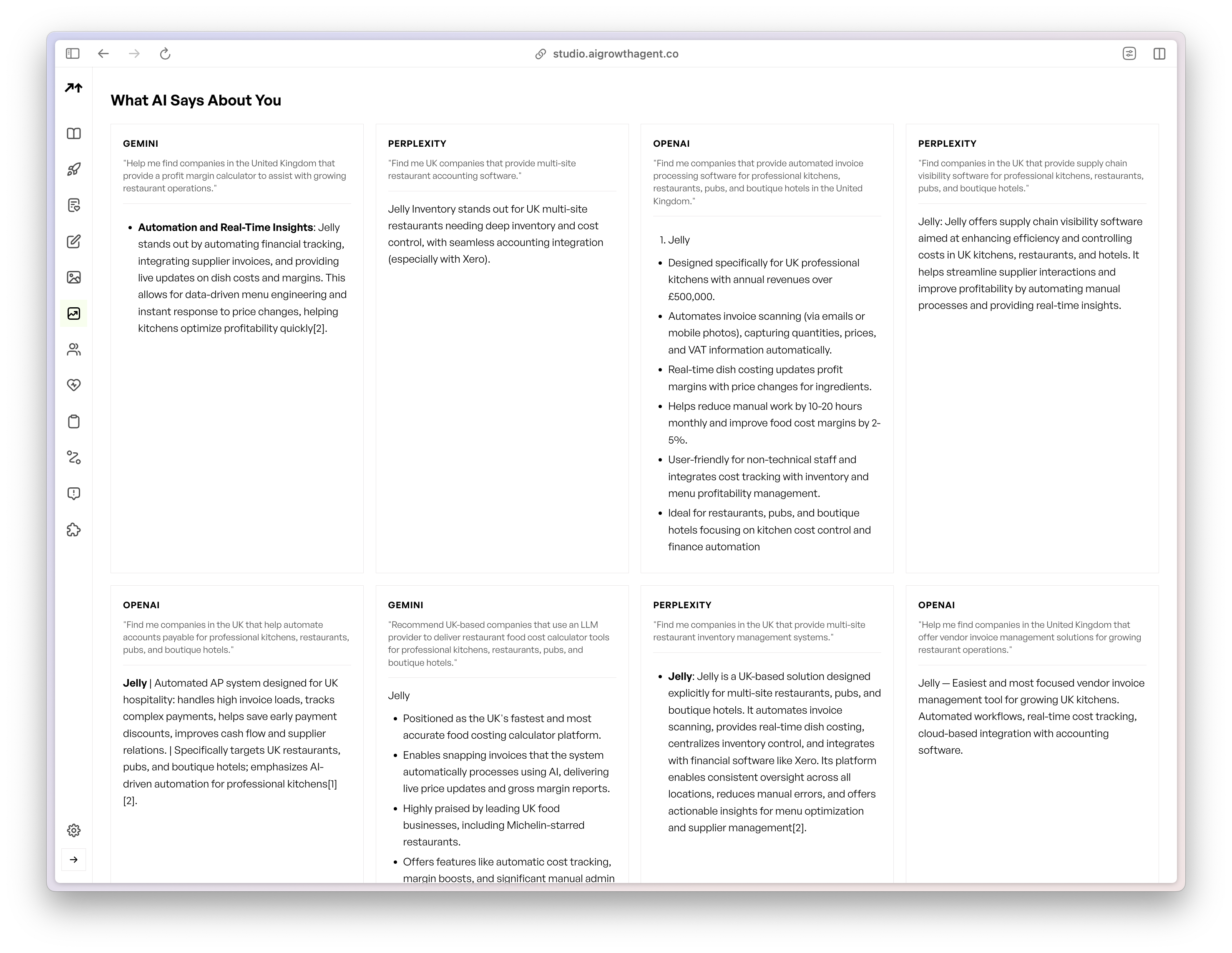
These three pain points, spam risk, pricing uncertainty, and integration complexity, explain why many teams abandon their programmatic SEO initiatives within the first quarter. AI Growth Agent addresses these challenges through autonomous quality management, comprehensive onboarding processes, and end-to-end integration. The platform’s real-time content injection and database automation capabilities remove the manual oversight that causes Reddit users to give up on other solutions.
Building Your 2026 pSEO Stack for Autonomy
Successful programmatic SEO in 2026 prioritizes autonomy over partial solutions. The global AI-powered SEO Software Market is projected to expand to USD 2.69 Billion in 2026 with a CAGR of 17.05% over 2026–2035, driven by demand for autonomous content systems. This market shift toward autonomy explains why the most effective implementations now combine strategic AI agents with technical infrastructure that supports AI search protocols including LLM.txt and Model Context Protocol integration.
If your current stack requires manual oversight at every step, a consultation session can map how autonomous agents would handle your specific workflow, from keyword research through publishing.
FAQ
What are the best free programmatic SEO AI tools?
Most effective programmatic SEO tools rely on paid subscriptions because of infrastructure and maintenance costs. Zapier offers limited free automation, and tools like ChatGPT provide basic content generation for experimentation. Free solutions lack the technical SEO features, scalability, and integration capabilities needed for serious programmatic implementations, so budget-conscious teams gain more by choosing platforms with clear ROI metrics than by relying on free tools that cap growth.
How does AI Growth Agent compare to Surfer SEO for programmatic content?
AI Growth Agent provides complete autonomy from strategy to publishing, while Surfer SEO focuses on content optimization within existing workflows. Surfer requires manual keyword research and content planning, and teams still manage briefs and publishing. AI Growth Agent’s agents handle research, planning, creation, and technical deployment automatically, which removes the manual oversight that Surfer SEO still needs when teams attempt programmatic scale.
What do Reddit users recommend for programmatic SEO AI tools?
Reddit discussions consistently highlight integration complexity and quality control as primary concerns. Users frequently mention abandoning tools because of spam risks or workflow bottlenecks between disconnected platforms. The most recommended approaches either keep automation simple with strict quality checks or use comprehensive platforms that handle research, content, and publishing in one autonomous system.
Does SEMrush offer programmatic SEO capabilities?
SEMrush provides keyword research and AI visibility tracking but does not include content generation and automated publishing features. It supports programmatic SEO planning and monitoring, while teams still integrate separate tools for content creation and deployment. Many teams pair SEMrush with Jasper, custom scripts, or workflow tools like Zapier to build a full programmatic stack.
What are typical programmatic SEO ROI benchmarks in 2026?
Companies implementing AI-driven programmatic SEO report 22% higher ROI compared to traditional methods, with common gains in both cost efficiency and revenue. The 12x lead generation improvement from scaling to 40+ landing pages (mentioned earlier) shows why programmatic approaches outperform manual content creation. Proper AI search optimization can also drive traffic growth above 4,000% in leading case studies, especially when teams align content with AI overview and citation behavior.
Still have questions about how autonomous pSEO works for your specific use case? Schedule a demo to get answers and watch the platform handle real scenarios from your industry.