Written by: Mariana Fonseca, Editorial Team, AI Growth Agent
Key Takeaways
- Perplexity AI optimization in 2026 requires moving beyond traditional SEO so your brand becomes the cited source that shapes AI-generated answers, with 42% of consumers now using AI tools to shop.
- Advanced prompting techniques like Chain-of-Thought and Tree-of-Thought, combined with structured templates for market analysis and competitive intelligence, significantly improve answer accuracy and relevance.
- Content structured with Bottom Line Up Front (BLUF) formatting, Answer-Evidence-Depth (AED) structure, and question-based headings dramatically increases citation probability on Perplexity.
- Enterprise-scale success depends on autonomous systems that map complete search universes, produce living content with regular updates, and maintain citation eligibility across hundreds of articles.
- AI Growth Agent provides an autonomous engine that maps your search universe and wins it on autopilot, so you can schedule a demo and see how it fits your growth goals.
Prompting Techniques That Make Perplexity Answers More Accurate
Accurate answers in Perplexity come from structured prompting that guides the model through complex reasoning. Chain-of-Thought prompting improves accuracy on multi-step calculations, performance reviews, financial analysis, and debugging by guiding the model through a numbered sequence of sub-questions where each answer becomes context for the next step.
For strategic planning and competitive analysis, Tree-of-Thought prompting improves relevance by asking the model to generate multiple solution branches, evaluate each path using criteria such as expected impact and ease of implementation, and then recommend the best option.
Template 1 – Market Analysis:
“Act as a senior market research analyst. Analyze [specific market/competitor] using a numbered decision tree. First, identify the top 3 market drivers in 2026. Second, evaluate each driver’s impact on [your industry]. Third, recommend the highest-priority opportunity. Support each step with named sources and flag any gaps with ‘No data available.'”
Template 2 – Competitive Intelligence:
“Act as a competitive intelligence specialist. Compare [Company A] vs [Company B] on pricing, features, and market positioning. Structure your analysis as: 1) Direct comparison table, 2) Competitive advantages for each, 3) Market gap opportunities. Cite 2026 sources for each claim.”
Template 3 – Content Strategy:
“Act as a content strategist. Identify the top 5 content gaps in [industry/topic] based on current search trends. For each gap: 1) Define the opportunity, 2) Estimate search volume potential, 3) Suggest content format. Use 2026 data and name specific sources.”
Clear constraints reduce hallucinations and protect decision quality. Anchor the model to real data sources, explicitly instruct it to say “No data available” when unsure, require step-by-step reasoning before answering, and forbid the invention of numbers or facts. These prompting techniques improve individual query accuracy, and they set the stage for smarter choices about search modes.
Perplexity Focus Modes for Research, Strategy, and Internal Knowledge
Correct use of Pro Search and Focus modes controls output quality and source breadth for every query. For Enterprise Pro users, Perplexity offers source selection options that let users restrict answers to web sources, organization files, both, or combinations thereof. The table below shows which mode delivers the strongest results for specific business scenarios.
| Mode | Best Use Cases | Source Breadth | Output Quality |
|---|---|---|---|
| Pro Search | Comprehensive investigations and detailed reports with extensive source documentation | Broadest web coverage | Most thorough analysis |
| Web Sources | Market research, competitor analysis, trend identification | Internet-only sources | Current, diverse perspectives |
| Org Files | Internal strategy, compliance checks, brand consistency | Organization’s file repository only | Company-specific accuracy |
| Web + Org Files | Strategic planning, market positioning, competitive response | Combined internal and external | Contextual business insights |
Enterprise administrators can upload files to a central organization repository that all team members can access, enabling persistent, organization-wide internal knowledge search. This capability changes how marketing teams access brand guidelines, competitive intelligence, and strategic documentation.
The 2026 Enterprise updates include enhanced source selection and Internal Knowledge Search to combine web results with internal files for answers that incorporate company-specific context, which improves relevance for research and decision-making tasks. Learn how AI Growth Agent selects optimal focus modes for each query in your search universe and book a consultation.
How to Rank on Perplexity AI With Extraction-Ready Content
Ranking on Perplexity depends on content structured for extraction instead of traditional SEO metrics. Research shows 90% of winning Perplexity citations provide a direct definition or answer within the first 100 words, making Bottom Line Up Front (BLUF) formatting the single most impactful change for visibility.
The Answer-Evidence-Depth (AED) structure maximizes citation probability by frontloading clarity. Use a direct self-contained answer in the first 50 words, followed by 100-150 words of supporting data or citations, then expanded context and examples.
Question-based H2 and H3 headings that mirror actual user queries to Perplexity improve extraction and citation probability by creating parseable content blocks. Instead of “Our Approach to Customer Service,” use “How to Reduce Customer Support Response Times by 40%.” Once your content is structured and labeled for extraction, schema markup strengthens credibility.
Technical implementation requires schema markup that helps Perplexity identify answer-ready passages. Implementing FAQPage, HowTo, Article, Organization, and Person schema markup helps Perplexity identify answer-ready passages, publication dates, and entity identity for verification.
Authority signals matter more in AI search than traditional SEO. Brand web mentions correlate at 0.664 with AI Overview brand visibility, compared to 0.218 for the number of backlinks. This shift means narrative control across your search universe becomes the primary ranking factor. Discover how AI Growth Agent structures content for maximum citation probability at scale and talk to our team.
Scaling Content for Perplexity Citation at Enterprise Level
Content optimization for Perplexity citation builds on extraction-focused formatting and extends it across your entire search universe. The foundation starts with authority signals that AI systems can verify. Perplexity’s RAG-based system applies seven core ranking signals including domain authority, content freshness (pages updated within 2–3 days prioritized), extractability, factual density, structural clarity, entity coverage, and third-party validation.
Living content updates keep high-value pages citation-eligible over time. High-priority pages should receive meaningful updates every 2–4 weeks by adding current-year data, refreshing statistics, and updating source links to maintain citation eligibility. For a brand with 200 or more articles, this cadence can require 25 to 50 content updates every week, which exceeds what most teams can handle manually.
This workload makes enterprise-scale content optimization essential. Individual brands cannot manually update hundreds of articles every few weeks while maintaining quality and accuracy. AI Growth Agent’s Company Manifesto creates the strategic foundation by defining your brand positioning and authority domains. From this foundation, Content Topology maps the complete search universe of seed terms and long-tail queries that matter to your market. The autonomous engine then produces living content that self-heals through batched updates, so every article maintains citation eligibility without adding headcount.
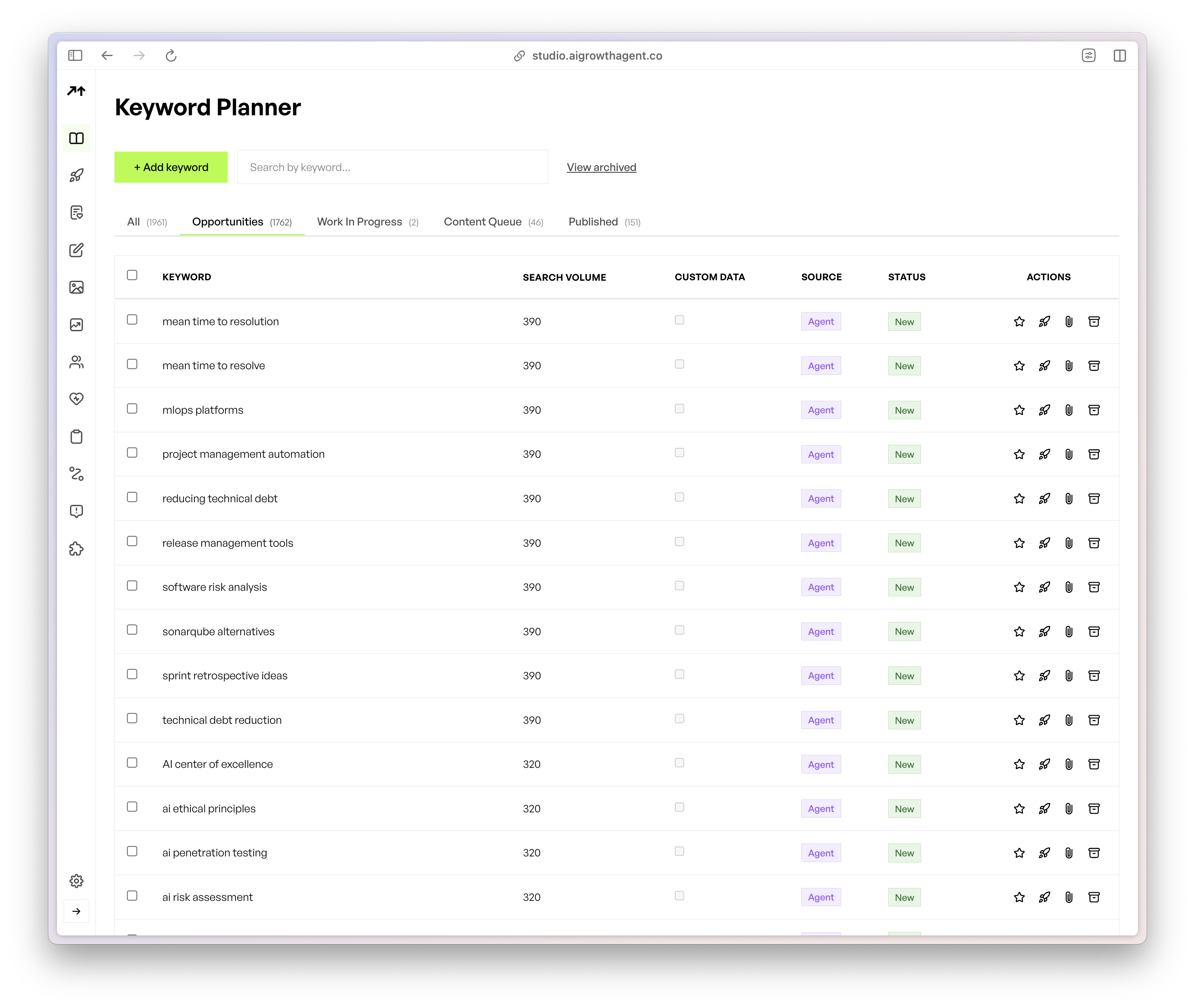
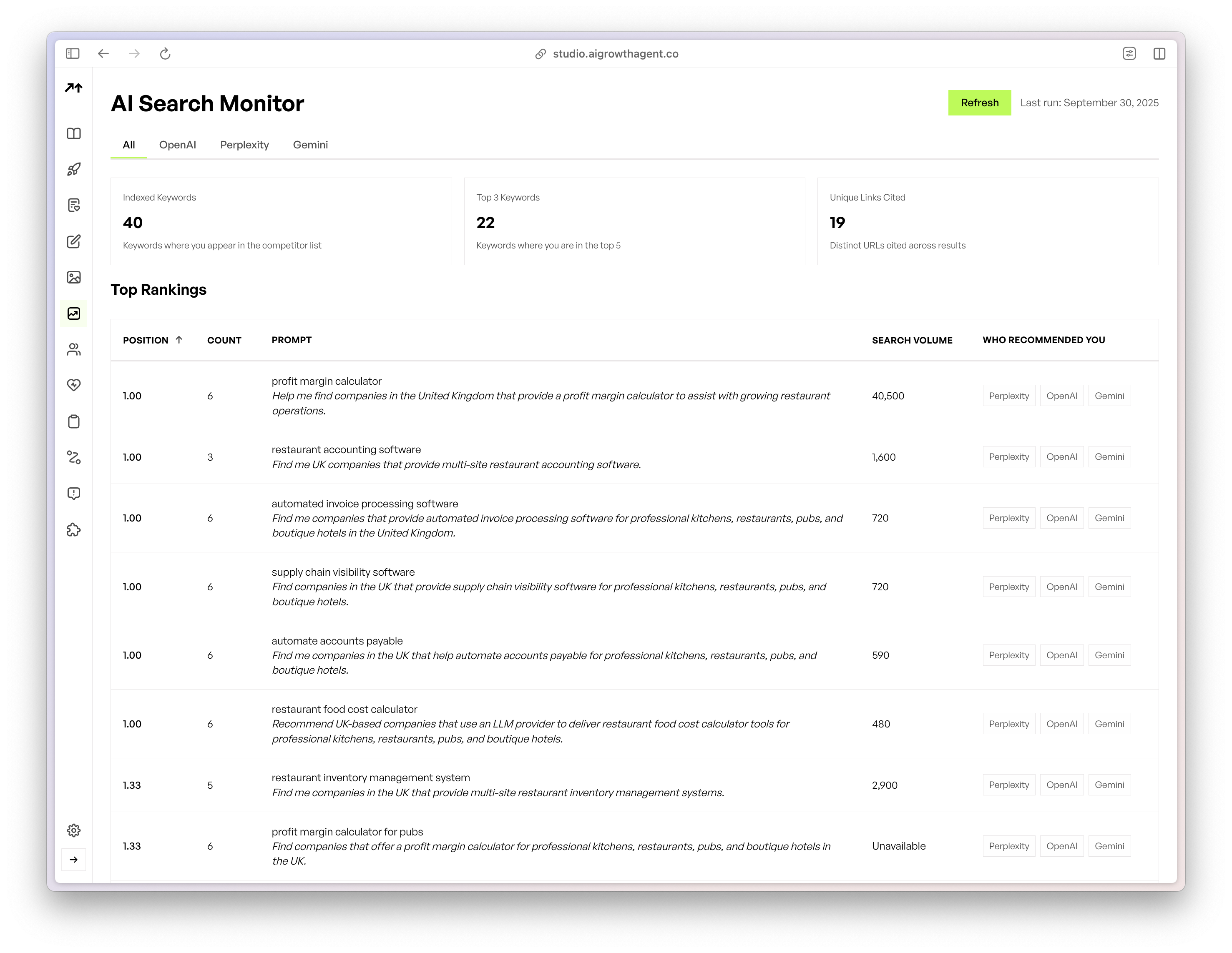
The system tracks incremental visibility across Google Rankings, Google AI Overviews, and ChatGPT through proprietary dashboards, plus bot traffic via WordPress plugins and impressions via Google Search Console. This multi-layer measurement proves exactly what content drives results versus existing brand visibility. See how autonomous content optimization scales these tactics across your entire search universe and request a live walkthrough.
Iterative Follow-Up Strategies That Compound Perplexity Results
Iterative follow-up strategies extract more value from each Perplexity session while protecting credit efficiency. Recursive refinement loops improve output quality by treating the first response as a rough draft and then iteratively applying critique and enhancement steps.
Credit management becomes crucial for sustained use. In Perplexity Computer, the compound context tax causes each successive message in a long thread to cost more because the model re-reads the full conversation history, so running an SEO audit at message 50 can cost 200–320 credits versus 40 credits at message 5 in a clean thread.
For complex workflows, the two-thread pattern separates strategy (analysis and planning, 8–12 messages) from execution (rendering from a saved spec file, 3–5 messages), which can reduce total costs compared with running both phases in one thread. Beyond credit efficiency, the structure of your follow-up questions determines strategic value. Multi-turn refinement loops work best when each follow-up builds toward narrative control.
Structured follow-ups turn raw answers into brand authority. Instead of asking random clarifying questions, structure follow-ups to establish your brand as the authoritative source: “Based on this analysis, how should [your company] position itself as the market leader?” or “What content gaps exist that [your brand] could fill to become the cited authority?” This approach transforms individual Perplexity sessions into strategic intelligence that compounds across your entire search universe. Each refined answer becomes input for content that wins citations and shapes the narrative around your brand positioning. Explore how AI Growth Agent turns prompting mastery into owned visibility and schedule a strategy session.
Frequently Asked Questions
How long does it take to see results from Perplexity optimization?
Content optimized for Perplexity can begin appearing in citations within 2 to 3 weeks of publication, depending on domain authority and content quality. Building consistent citation rates across a full search universe typically requires 3 to 6 months of systematic content production and optimization. The key is producing content at scale rather than optimizing individual pieces.
What is the difference between monitoring Perplexity visibility and actually improving it?
Monitoring tools track whether your brand appears in a limited set of prompts you define yourself, but they do not act on the data. They function as a rearview mirror that shows where you currently stand. Improving Perplexity visibility requires mapping your complete search universe, producing citation-ready content, and formatting for extraction across hundreds or thousands of relevant queries.
Can Perplexity optimization scale to enterprise-level content needs?
Manual Perplexity optimization does not scale beyond a few dozen articles without significant team resources. Enterprise brands need autonomous systems that can map search universes of 1,500 or more queries, produce authoritative content consistently, and maintain living updates across hundreds of articles. The alternative is hiring large content teams or accepting limited visibility in AI search.
How do you measure incremental visibility from Perplexity optimization?
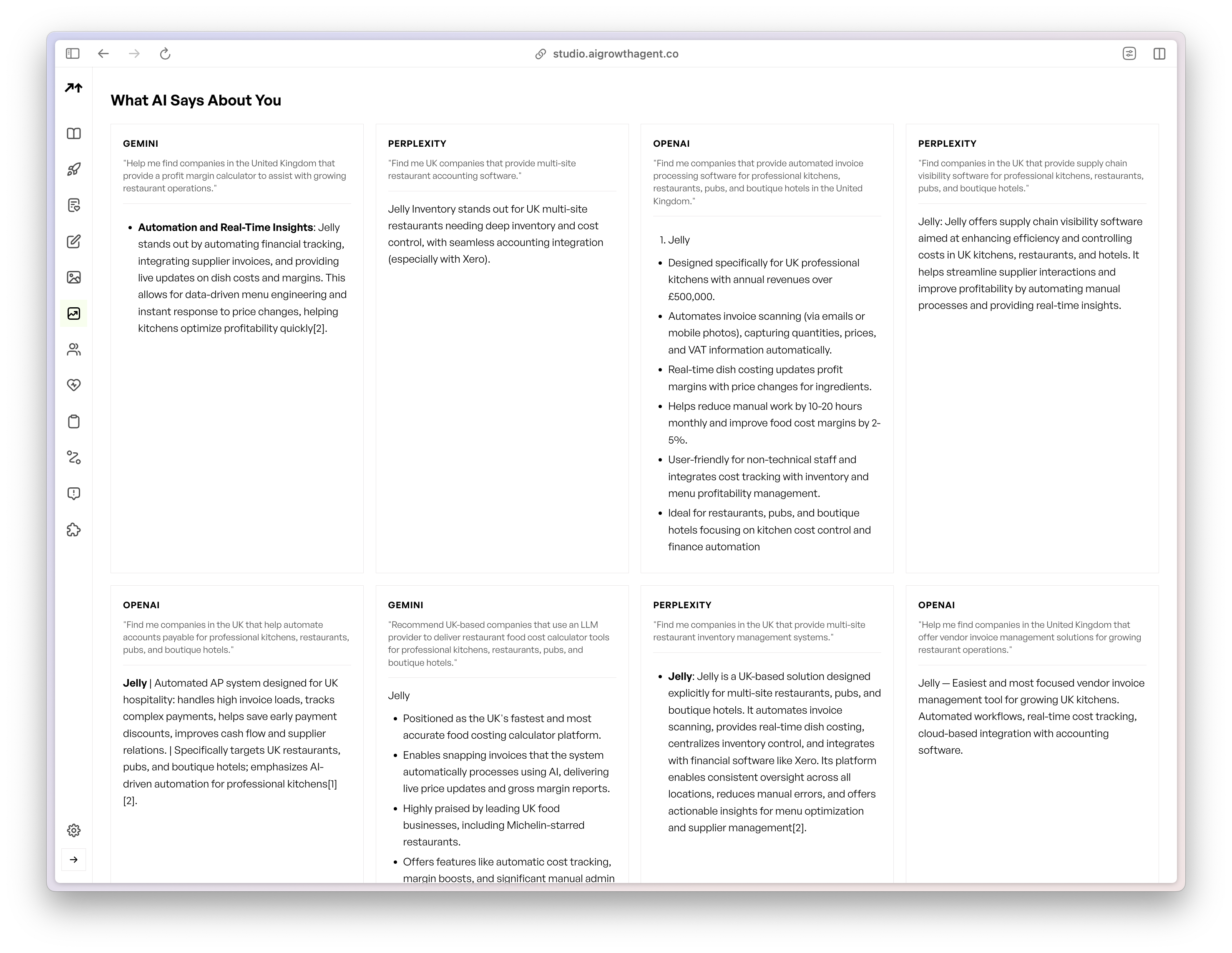
Effective measurement requires isolating what your optimization efforts actually generated versus existing brand visibility. This approach means tracking bot traffic through specialized plugins, monitoring citations across multiple AI platforms, measuring impressions lift in Google Search Console, and maintaining clear attribution between optimized content and visibility gains.
What happens to Perplexity optimization when AI search evolves?
Core principles such as authoritative content, extraction-friendly formatting, and systematic coverage of search intent remain constant across AI platforms. Brands that build comprehensive content strategies around these principles adapt faster to new AI search tools than those that focus on specific platform features that may change.
Conclusion: Turn Prompting Mastery Into Owned Visibility
Perplexity prompting mastery delivers immediate tactical wins, and systematic content optimization turns those wins into durable visibility. The techniques covered here, including advanced prompting, focus mode selection, AED formatting, and iterative refinement, work for individual queries. Scaling them to enterprise level requires autonomous systems that map seed terms, produce living content, and track incremental visibility without constant management.
The awareness window is closing fast. A Bain & Company report found that about 80% of search users rely on AI summaries at least 40% of the time, while competitors with real systems educate robots on your market’s narrative. Monitoring tools only show you the problem. AI Growth Agent provides the steering wheel.
AI Growth Agent maps your brand’s complete search universe, produces authoritative content that wins citations, and delivers measurable incremental visibility on autopilot. From first meeting to first article in as early as one week, with content indexing in as little as two weeks. Across the first three months, clients average more than 12,000 additional AI citations and mentions, over 100,000 additional bot visits, and a 20% or greater lift in impressions.
Schedule a demo to see if you’re a good fit for the autonomous engine that makes your brand the answer.