Written by: Mariana Fonseca, Editorial Team, AI Growth Agent
Key Takeaways
- AI automation delivers 3-5x productivity gains and 200-400% ROI within months, so content teams publish 42% more content than manual workflows.
- Modern content workflows span ideation, drafting, optimization, and publishing, with evaluation focused on time savings, output gains, and programmatic SEO integration.
- Across six tools compared, AI Growth Agent delivers the strongest time savings, output multiplication, and autonomous programmatic SEO features such as Manifesto, MCP, and LLM.txt.
- AI tools adapt to unstructured data with 1-week implementation, while traditional automation often requires 3-6 months, and AI-native setups support AI search visibility through schema and citations.
- Enterprises already achieve outcomes like ChatGPT citations in weeks; see how AI Growth Agent can support your AI-era content workflows.
Content Workflow Scope and Evaluation Criteria
Modern content workflows follow four stages: ideation, drafting, optimization, and publishing. Ideation covers research and planning. Drafting covers content creation. Optimization covers SEO and technical enhancement. Publishing covers distribution and monitoring.
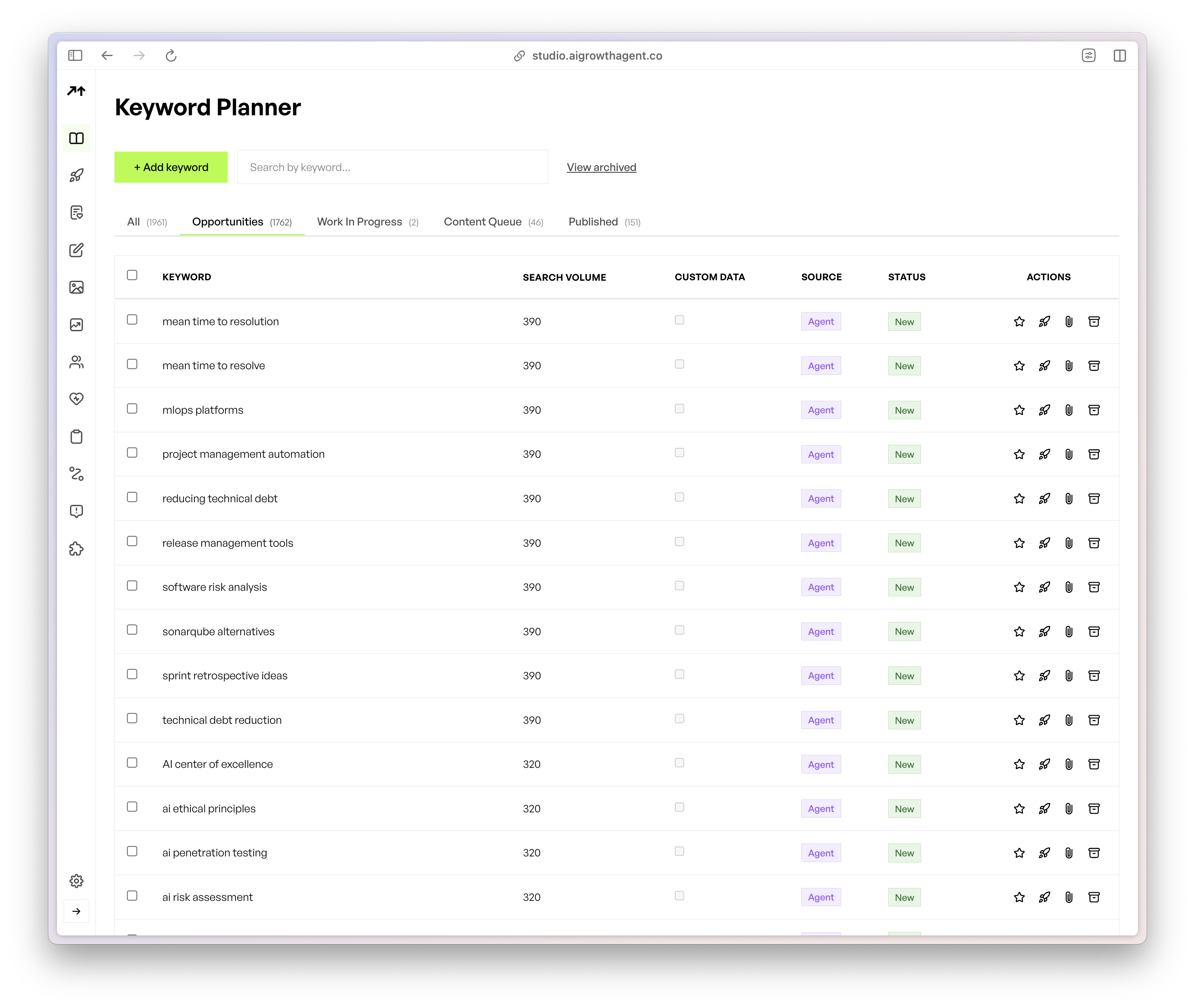
Evaluation criteria focus on measurable time savings, scalable output gains, and quality integration with AI search features such as schema markup and citations. Pricing structure and implementation complexity also shape tool selection for both small teams and large enterprises.
Side-by-Side Comparison of 6 AI Content Workflow Tools
The comparison below highlights a clear pattern. Most tools improve basic productivity, yet only one provides autonomous programmatic SEO that aligns with AI search requirements for 2026.
| Tool | Time Savings | Output Boost | pSEO Integration |
|---|---|---|---|
| Zapier | Significant time savings | Increased output | Basic zaps, no schema |
| n8n | Significant time savings | Increased output | Custom nodes, manual |
| Jasper | Significant time savings | Increased output | Templates, limited schema |
| AirOps | Significant time savings | Increased output | Workflows, no MCP |
| Make.com | Significant time savings | Increased output | Orchestration, basic |
| AI Growth Agent | Highest time savings | Highest output boost | Autonomous Manifesto/MCP/LLM.txt |
This analysis reveals significant gaps in technical SEO capabilities among generic tools. Zapier and n8n excel at basic workflow connections, yet they lack programmatic SEO features that support AI search visibility. Jasper focuses on content generation but offers only limited schema implementation.
AI Growth Agent stands apart by delivering autonomous end-to-end programmatic SEO through its Studio dashboard. The platform supports true autopilot content operations with Model Context Protocol integration and LLM.txt implementation, so AI search engines can understand and cite your content at scale.
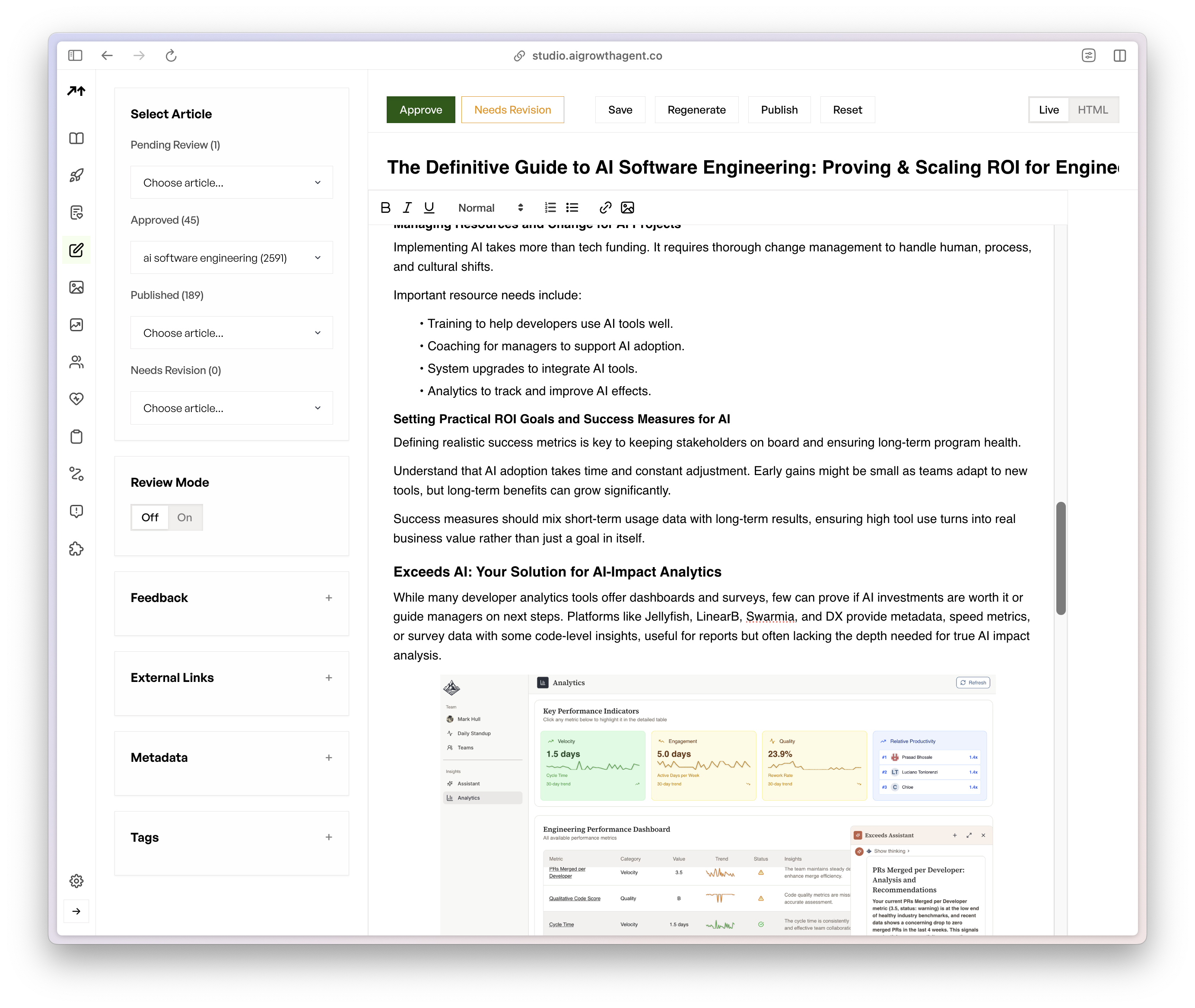
See AI Growth Agent’s programmatic SEO in action.
AI Automation vs Traditional Automation and Tool Matchups
The capability gap between tools becomes clearer when comparing AI-powered automation with traditional rule-based systems. This broader view explains why content teams increasingly move away from legacy automation toward adaptive AI agents.
| Metric | AI Automation | Traditional |
|---|---|---|
| Adaptability | Learns unstructured data | Rule-based |
| Velocity | Automatic.co clients see 3–5× productivity gains using agentic AI systems, according to their 2026 Agentic AI Productivity Benchmark Report | Traditional automation’s output velocity multiplier is significantly greater than 1x manual, scaling processes at machine speeds such as 5,000 times per second compared to manual rates, per expert analysis |
| Implementation | 1-week to first article | Traditional full IT automation transformations take 3-6 months of setup |
Zapier versus n8n illustrates the tradeoff between ease of use and technical flexibility. Zapier offers simpler setup for basic automations, while n8n provides open-source scalability for engineering teams. However, neither platform delivers programmatic SEO capabilities required for AI search dominance.
Both platforms require manual schema implementation and lack autonomous content optimization features. AI Growth Agent fills this gap by pairing AI-native automation with built-in technical SEO, so teams avoid stitching together multiple tools for core search visibility.
Start your path to AI search dominance.
Best-Fit Use Cases and Decision Factors for Content Teams
Different teams benefit from different tools, depending on scale and technical needs. Small teams often gain value from Jasper and AirOps for basic content drafting and simple workflows. Enterprises, by contrast, require AI Growth Agent’s multi-tenant programmatic deployment to manage many brands and domains from one system.
The one-week implementation timeline mentioned earlier includes white-glove onboarding with professional journalists. These specialists configure your first programmatically engineered article and align the Manifesto with your brand voice. Teams avoid long IT projects and can test results quickly.
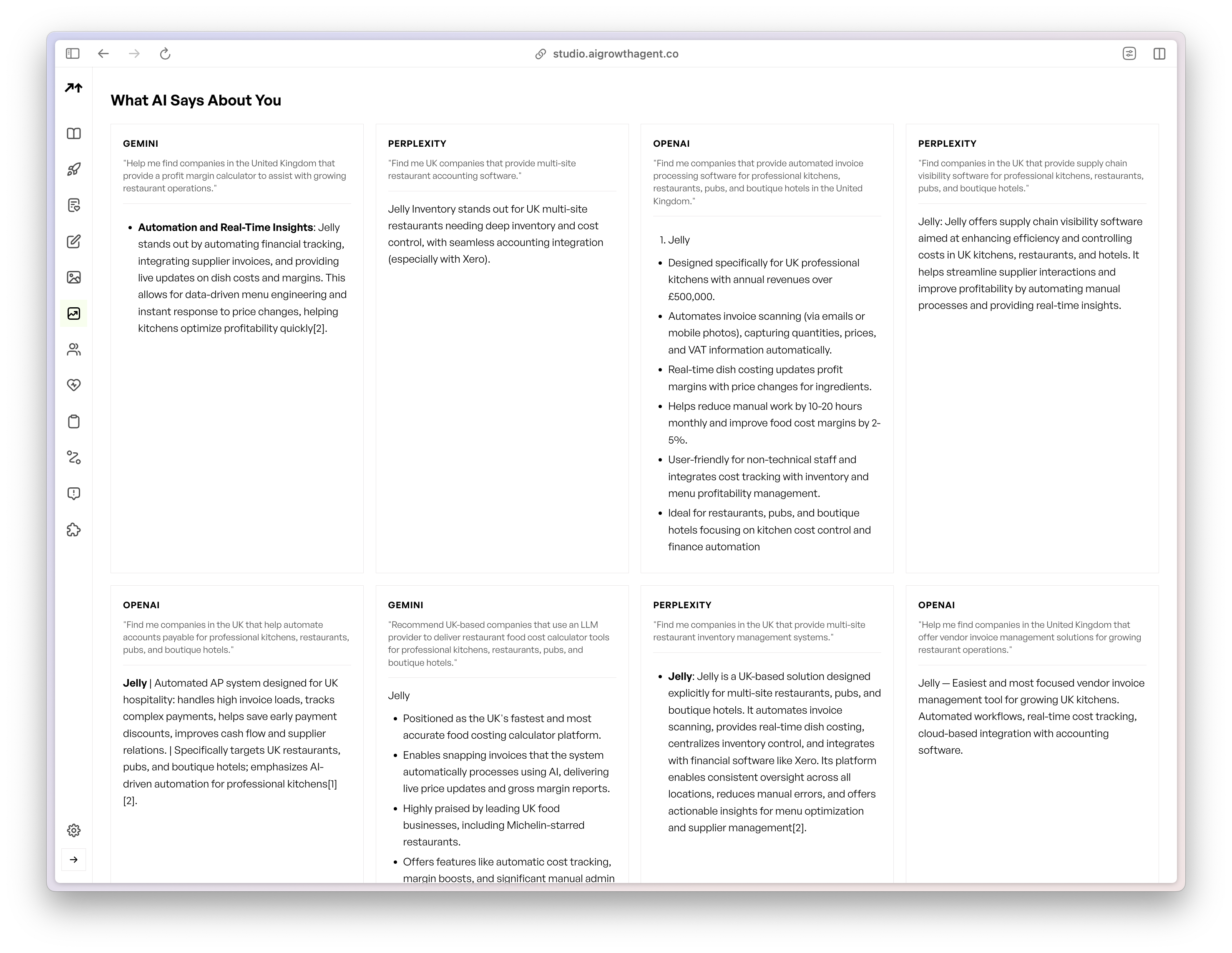
Operational success depends on continuous learning and feedback. AI Growth Agent’s Studio feedback loop supports progressive agent learning and more autonomous operation over time. Success stories such as Gitar achieving AI leadership positioning within 2 months and Bucked Up earning ChatGPT citations in 3 weeks show how this loop translates into real ROI.
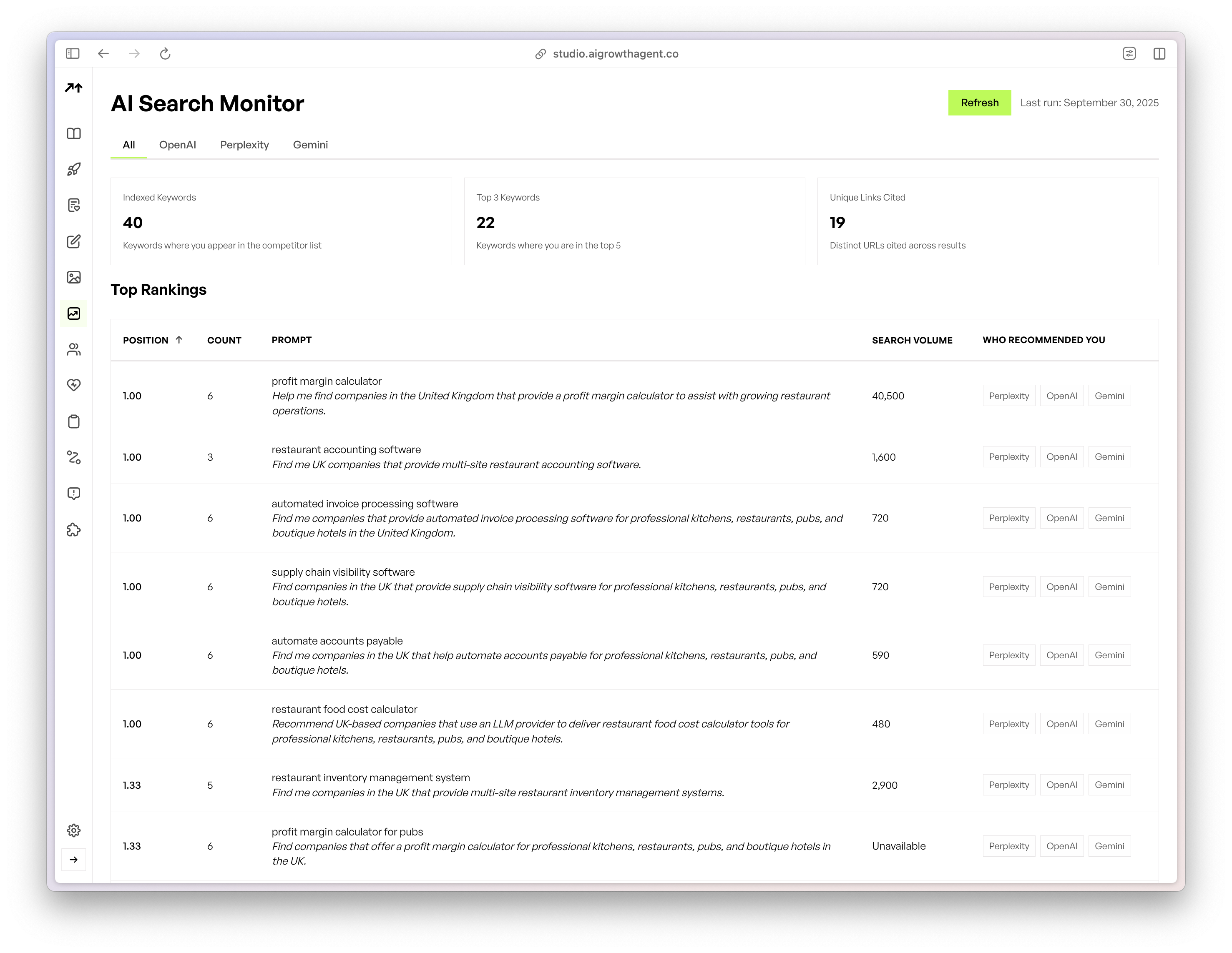
Risk management also plays a central role in tool selection. Generic tools often ship content without schema markup, which results in zero AI search citations and weak visibility. AI Growth Agent counters this risk with human-in-the-loop governance guided by its Manifesto-driven approach, so editors retain control while agents handle technical execution.
The platform’s advanced LLM.txt and Model Context Protocol integrations help AI search engines interface directly with your content databases. This direct connection increases citation potential and supports more accurate answers from systems such as ChatGPT and Perplexity. Decision matrix scoring therefore places AI Growth Agent as the autonomous leader across time savings, output gains, and programmatic SEO automation.
Book your white-glove onboarding consultation.
FAQ
What is the difference between AI and traditional content automation?
AI automation delivers significant time savings and velocity gains by learning from unstructured data and adapting to new patterns. Traditional automation relies on rigid rule-based systems that struggle with changing inputs and complex language tasks. AI systems such as AI Growth Agent also optimize content for search engines and generate schema markup, while traditional tools require manual configuration for each technical SEO step.
Can Zapier handle content workflows effectively?
Zapier handles basic workflow connections well and can deliver meaningful time savings for simple tasks. However, it lacks programmatic SEO capabilities that support AI search visibility. The platform cannot generate schema markup, implement LLM.txt files, or create Model Context Protocol integrations required for ChatGPT and Perplexity citations, so teams still need manual technical SEO work when they rely on Zapier.
What ROI can organizations expect from AI workflow automation?
Organizations typically reach breakeven within 2-4 months and see 200-400% first-year ROI from AI workflow automation. Content teams report higher output and more consistent publishing, while enterprises experience large gains in content velocity. Cost reductions come from labor savings and reduced dependence on contractors for technical SEO implementation.
How do AI tools scale for enterprise content operations?
AI Growth Agent supports multi-tenant programmatic deployment, which enables parallel content agents across multiple brands from a single interface. Each agent maintains unique Manifesto programming and keyword strategies while publishing to different domains. This architecture suits portfolio companies and enterprises with several product lines that require distinct brand voices and tailored technical SEO strategies.
What implementation timeline should teams expect?
AI Growth Agent typically enables a 1-week implementation from initial consultation to the first programmatically engineered article. White-glove onboarding with professional journalists accelerates setup and reduces internal workload. Traditional CMS integrations can require several months of development time, and generic AI tools demand ongoing manual configuration for technical SEO features that AI Growth Agent automates.
Conclusion: Why AI Growth Agent Leads in AI-Era Content Operations
Generic automation tools deliver basic time savings but fall short at the programmatic SEO scale required for AI search visibility. AI Growth Agent combines strong time savings with substantial output multiplication through autonomous Manifesto-driven content engineering, advanced schema implementation, and direct AI search integration via LLM.txt and Model Context Protocol.
The success stories detailed earlier, from Exceeds AI’s 2-week Perplexity recommendations to Gitar’s 2-month leadership positioning, all stem from this end-to-end programmatic approach. AI Growth Agent removes technical friction while preserving brand integrity, so teams can focus on strategy and storytelling instead of manual configuration.
Schedule a demo to scale your content authority with AI-powered programmatic SEO.