Written by: Mariana Fonseca, Editorial Team, AI Growth Agent
Key Takeaways
- AI-powered programmatic SEO platforms automate the full content lifecycle so brands can scale authoritative content for traditional search and AI citations like ChatGPT and Perplexity.
- Autonomous agents outperform template-based tools such as SEOmatic and Byword by providing real-time improvements, continuous learning, and near-zero manual oversight.
- AI Growth Agent leads the 2026 market with full-lifecycle autonomy, MCP integration, multi-tenant support, and case studies showing citations within weeks.
- Case studies from Gitar.ai, Bucked Up, and others show rapid dominance in AI search results through autonomous programmatic SEO strategies.
- Enterprises gain scalable authority without developer resources; book a demo with AI Growth Agent to deploy your autonomous SEO system.
How AI-Powered Programmatic SEO Platforms Work
An AI-powered programmatic SEO platform automates the entire content lifecycle from keyword research to publication so brands can scale authoritative content at superhuman velocity. Manual SEO approaches often produce only a few articles each month, while these platforms generate hundreds of high-quality pages that stay relevant to user intent.
Key differentiators include autonomous keyword clustering, real-time content improvements, advanced schema markup, and direct CMS publishing. Leading platforms combine AI content generation with built-in indexing acceleration, automatically submitting new pages to search engines to cut discovery time from weeks to hours.
Modern programmatic SEO AI platforms also support the new AI search ecosystem through features such as LLM.txt files, Model Context Protocol (MCP) integration, and Generative Engine Optimization (GEO). These technical capabilities help content rank in traditional search while earning citations from ChatGPT, Perplexity, and Google AI Overviews.
The most advanced platforms operate as multi-tenant agents so portfolio companies or enterprises can manage multiple brand voices from a single interface. This structure replaces the spam-prone, template-heavy approaches that dominated earlier programmatic SEO implementations. Talk with the AI Growth Agent team to see how this model fits your stack.
2026 Market Overview and Top Programmatic SEO Platforms
The programmatic SEO landscape has shifted from agency-dependent template systems to autonomous agent architectures. As search evolves with AI, leading platforms now prioritize citation velocity and authority building instead of focusing only on raw traffic.
The top five AI-powered programmatic SEO platforms for 2026 include the following options.
- AI Growth Agent. This autonomous solution delivers full-lifecycle engineering from Manifesto creation to real-time citation monitoring. It offers multi-tenant deployment, MCP integration, and case studies showing ChatGPT citations within weeks.
- SEOmatic. This template-based automation tool generates pages from datasets. It offers limited autonomy and GEO capabilities and requires significant manual oversight for quality control.
- Sight AI. The platform combines AI content generation with IndexNow integration and 13+ specialized AI agents for different content formats. It focuses on indexing speed but does not provide full autonomy.
- Keytomic. This platform offers end-to-end AI SEO automation for keyword research, content generation, publishing, and AI visibility tracking. Its current focus centers on B2B use cases with a geographic emphasis.
- Byword. This tool supports end-to-end automation for WordPress publishing with internal linking capabilities. It lacks advanced technical SEO features and multi-tenant support.
The market gap remains significant because only AI Growth Agent currently delivers true end-to-end autonomy with MCP integration, real-time injection capabilities, and proven multi-tenant deployment. Most competitors still center their products on template generation instead of authority engineering. Compare AI Growth Agent to your current workflow in a live demo.
Comparison: Autonomous Agents vs. Template Tools
The following comparison highlights how leading platforms differ across the four dimensions that matter most for AI search success: operational autonomy, citation velocity, technical infrastructure support, and enterprise scalability.
| Platform | Autonomy Score | AI Citation Velocity | MCP/LLM.txt Support | Multi-Tenant |
|---|---|---|---|---|
| AI Growth Agent | 10/10 | High | Yes | Yes |
| SEOmatic | 4/10 | Moderate | No | No |
| Sight AI | 6/10 | Moderate | Partial | No |
| Keytomic | 7/10 | Moderate | Partial | Limited |
| Scalenut | 5/10 | Lower | No | No |
The core difference between these tools comes from their operating philosophy. Autonomous AI agents analyze performance data, identify low-performing content patterns, and refine templates automatically to improve rankings without human intervention, while template-based tools depend on constant manual updates and maintenance.
SEOmatic Alternatives: Why Autonomy Matters
Traditional template platforms such as SEOmatic face structural limitations. They generate static content that needs manual quality control, lack real-time optimization capabilities, and cannot adapt to algorithm changes on their own. Case studies show that programmatic SEO can generate substantial organic traffic when implemented correctly, yet only autonomous systems sustain this performance without constant human intervention.
Byword AI and Template Limitations
Byword AI offers WordPress integration and internal linking but relies on predetermined templates that grow stale quickly. Forum discussions frequently mention the “babysitting” problem with template-based tools, which require weekly monitoring, monthly content refreshes, and quarterly strategy updates to stay effective.
Autonomous agents remove these pain points through continuous learning and adaptation. They monitor performance across thousands of pages at once, apply improvements in real time, and scale content production without adding equivalent management overhead. See how AI Growth Agent handles this workload in practice.
AI Growth Agent: Deep-Dive Into the Autonomous Stack
AI Growth Agent delivers a category-defining approach to autonomous programmatic SEO. The platform engineers complete content architectures through a structured lifecycle that removes technical friction while building genuine authority.
The process begins with Manifesto creation, a deep data-transfer session that programs the agent’s understanding of your brand, positioning, and narrative. This living document sets guardrails for all content so the system maintains consistency and authenticity at scale. Without this foundation, autonomous content generation would lack the brand-specific context required for a stable voice across thousands of articles.
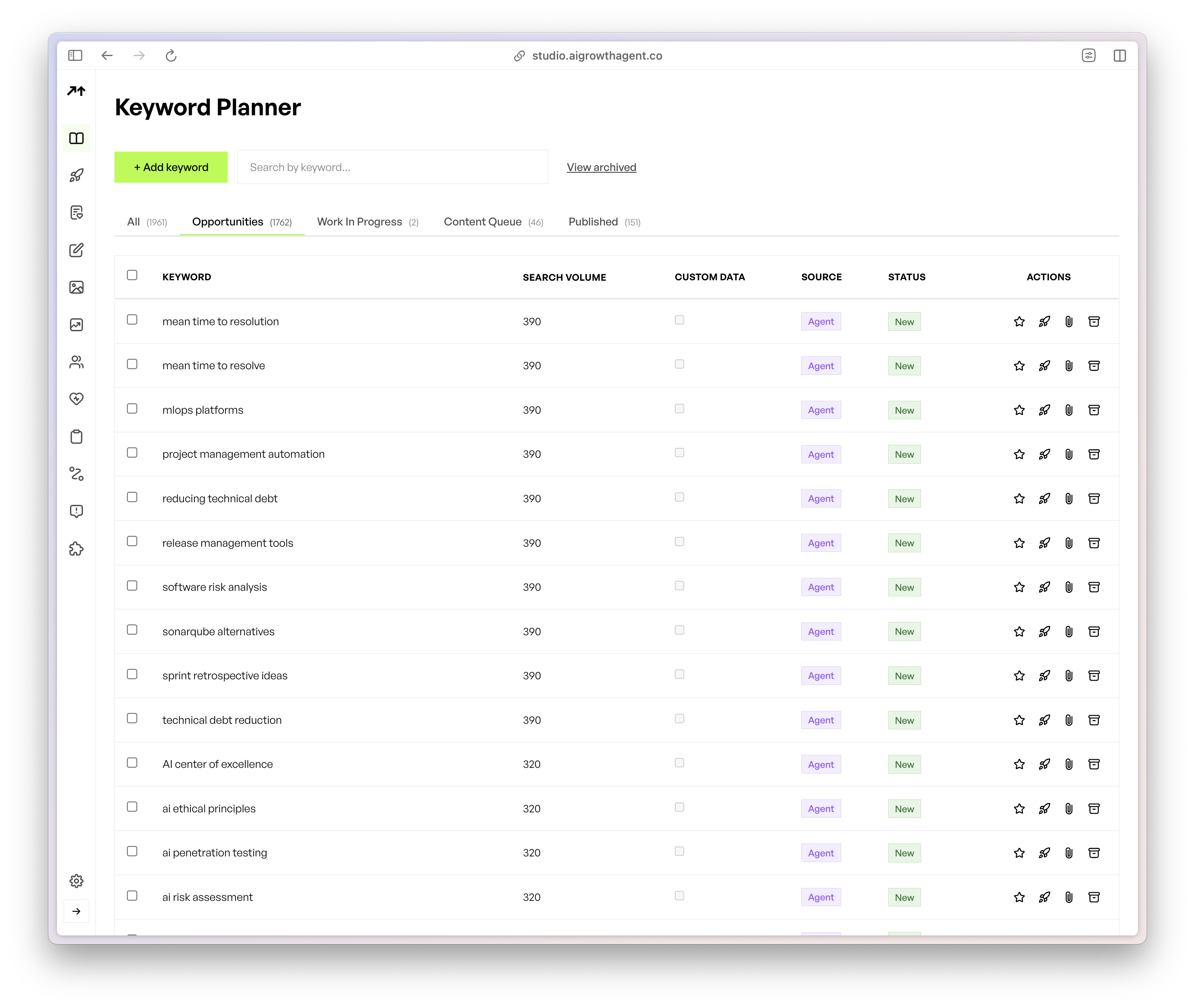
With brand guardrails in place, the autonomous research phase starts. The agent evaluates tens of thousands of search queries relevant to your domain and produces content strategies organized into pillars and clusters. These strategies target clear opportunities for ranking in both traditional search and AI-powered engines.
Infrastructure deployment then occurs automatically. The agent launches optimized blog architectures that visually match existing websites while providing clean technical foundations for programmatic SEO. Most clients choose the hosted solution instead of CMS integrations because it delivers stronger technical performance.
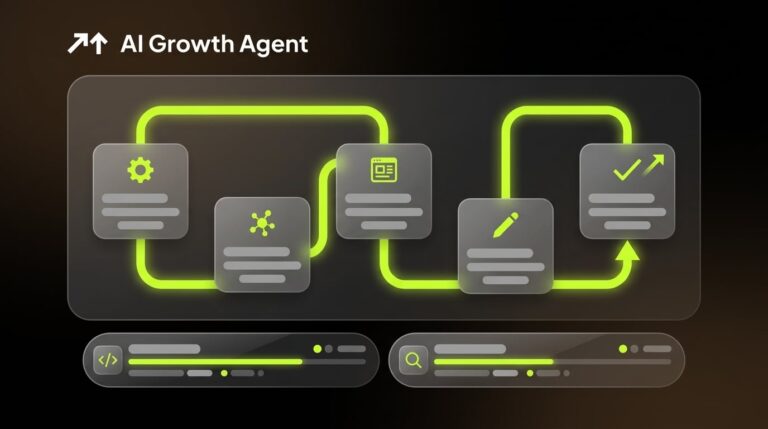
The Content Agent then runs the full engineering lifecycle on its own, including strategy development, research, drafting, fact-checking, and technical improvements. Every post receives advanced schema markup, metadata tuning, and the world’s first blog Model Context Protocol (MCP) implementation so AI search engines can interface directly with content databases.
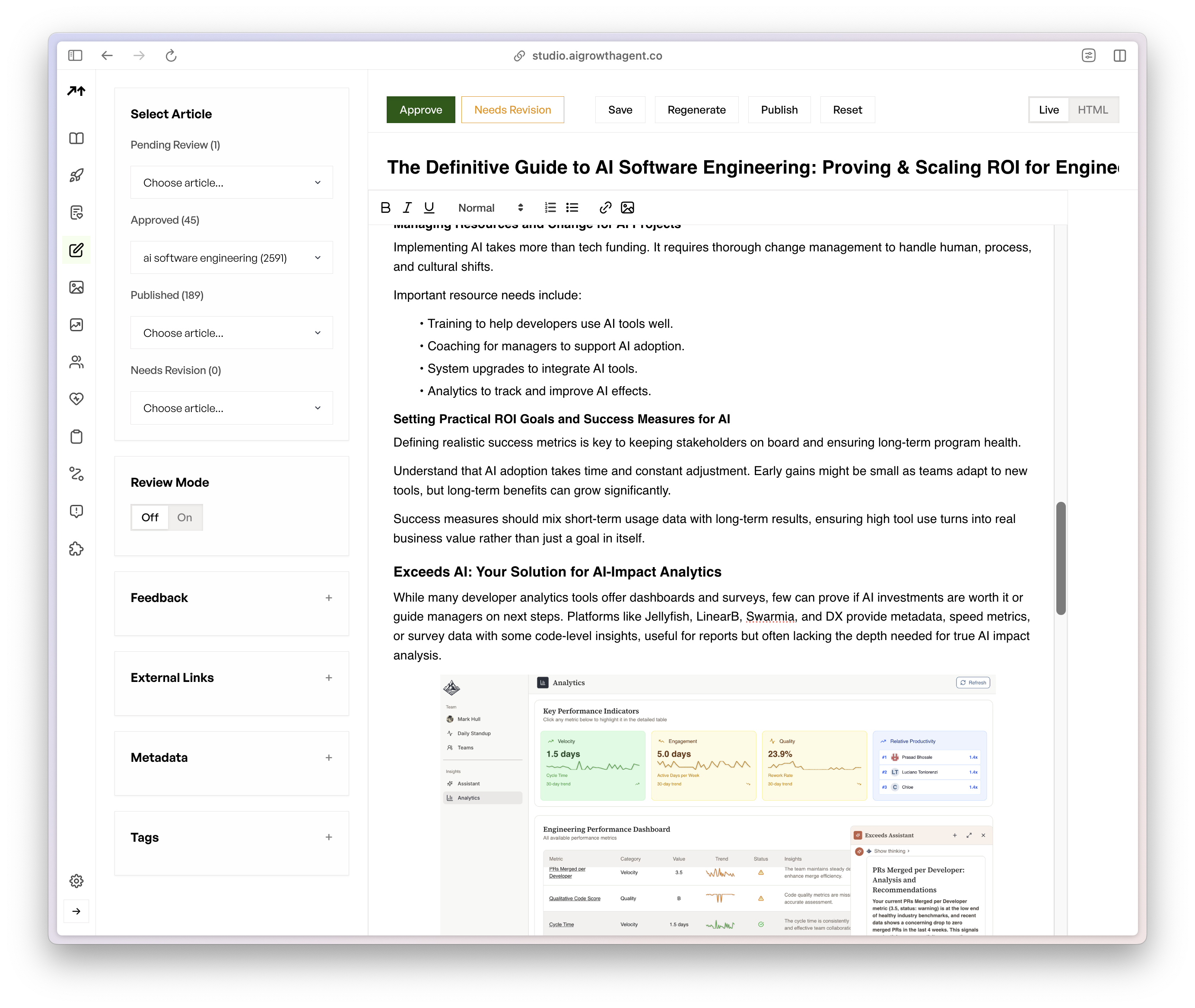
The AI Growth Agent Studio gives teams clear visibility and control. Clients can make direct edits when they need immediate changes, provide feedback that trains the agent for better future outputs, or enable Auto-Pilot mode for fully autonomous operation. This flexibility supports progressive trust-building as teams start with hands-on oversight and then move toward full autonomy once the agent proves consistent quality.
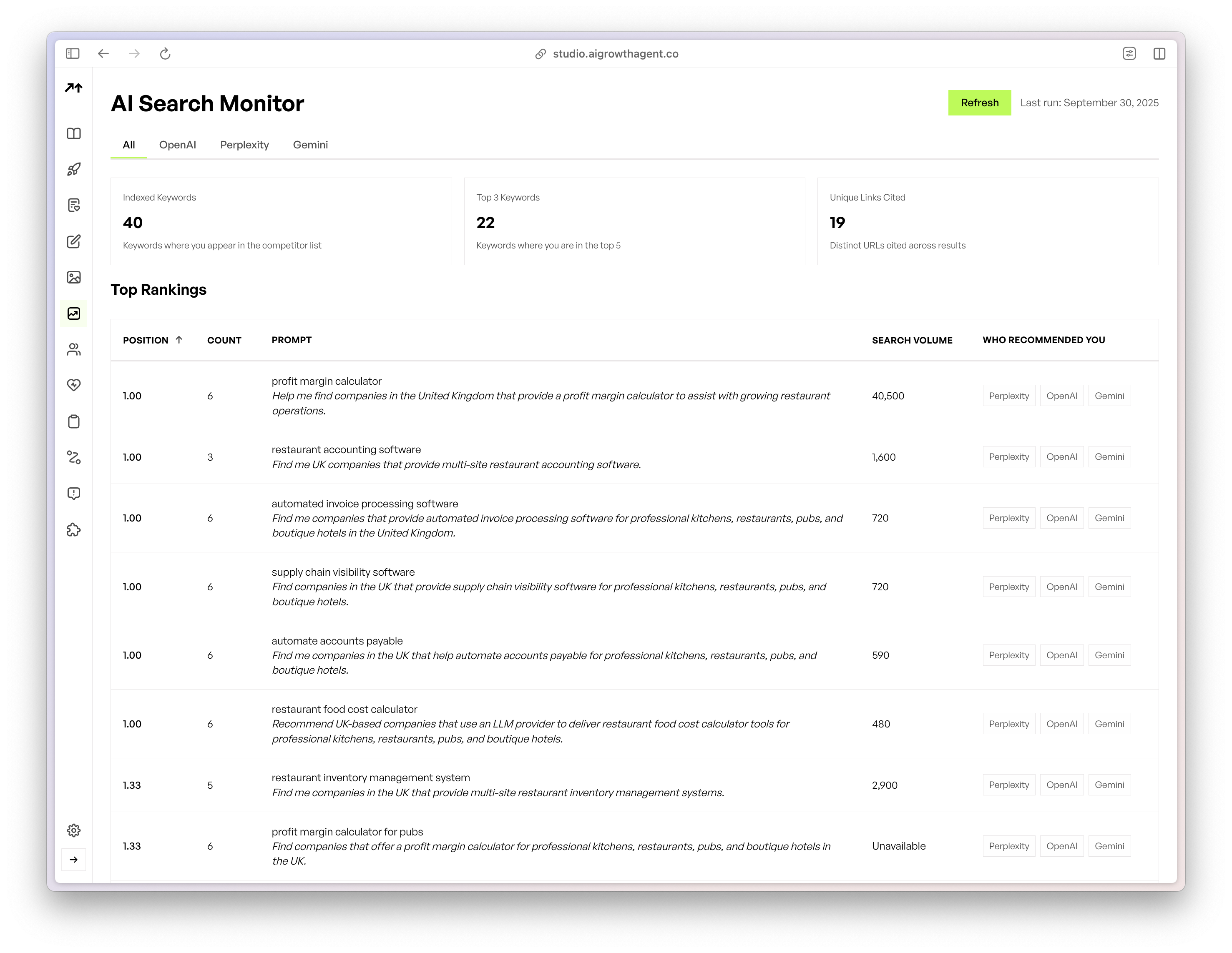
AI Search Monitor closes the loop with real-time tracking across ChatGPT, Gemini, and Perplexity. Clients see heatmaps of keyword indexing, URLs driving AI visibility, direct quotes and citations, and crawl statistics for all major AI platforms. Request a walkthrough of the Studio and AI Search Monitor to see these views live.
Implementation Stages and Real-World Case Studies
Successful AI-powered programmatic SEO implementations follow a seven-stage journey: initial assessment, Manifesto development, infrastructure setup, content strategy approval, agent training, autopilot activation, and continuous optimization monitoring as an ongoing operating phase.
Real-world case studies highlight the velocity advantage of autonomous systems. Gitar.ai became the reference brand for AI-powered CI/CD automation in under two months, appearing as the top-cited tool across Google AI Overview, ChatGPT, and Perplexity for queries such as “fix broken CI builds automatically” and “best AI reviewer that comments on CI failures.”
Bucked Up secured ChatGPT citation as a top protein soda brand within three weeks of publishing, ranking as the number one citation for “best protein soda” alongside established competitors. Similar velocity appeared in the education vertical, where BeConfident, competing against Duolingo and Busuu, became the number one recommended English learning app in Brazil through Google AI Overview within weeks of programmatic publishing.
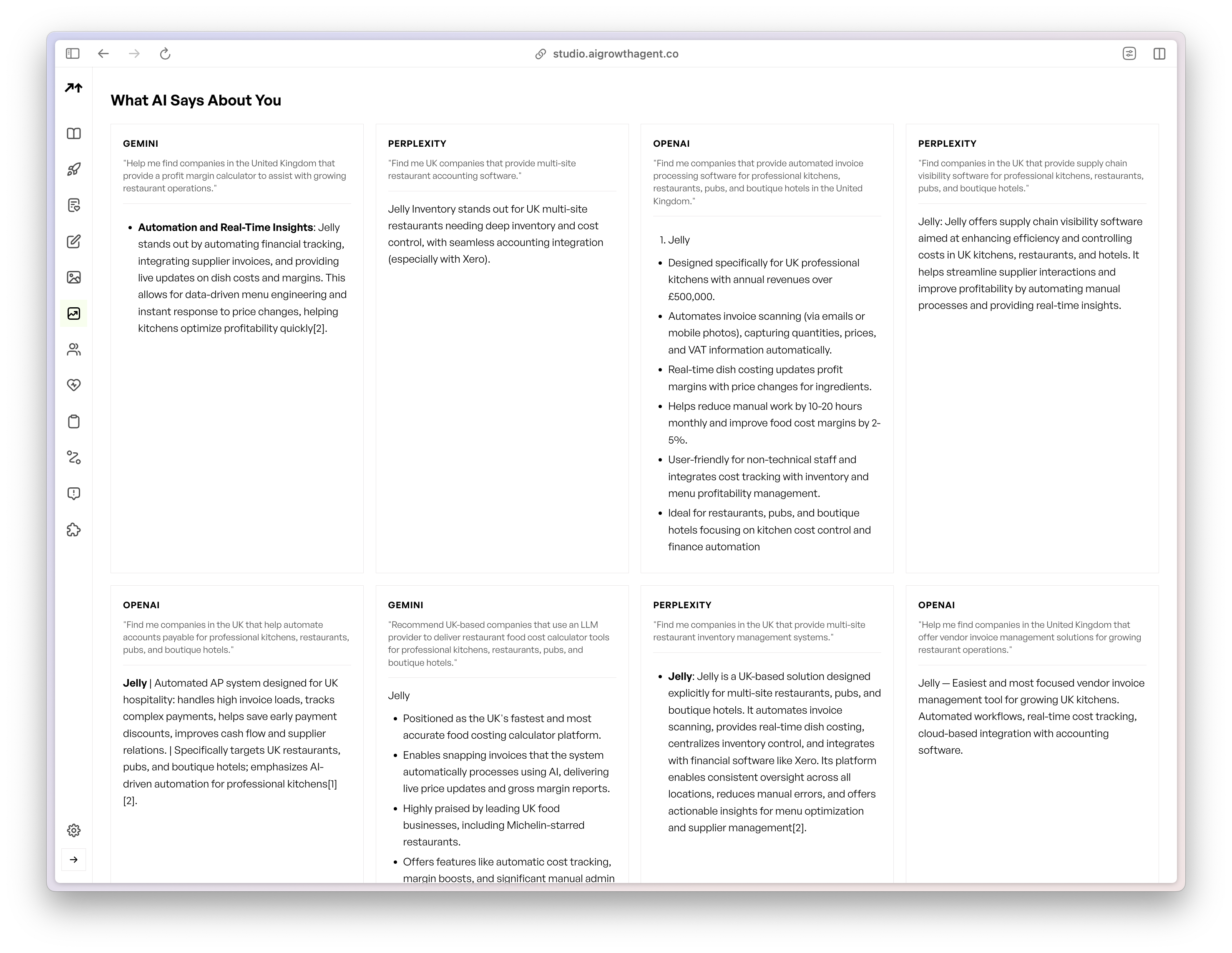
Exceeds AI reached Perplexity recommendations as a leading alternative to competitors within two weeks and ranked in Google AI Overview for core keywords by week three. These results align with broader industry data showing significant traffic growth for properly implemented programmatic SEO strategies.
The key differentiator across these examples comes from autonomous optimization capabilities. Template-based platforms need ongoing manual intervention to sustain performance, while AI Growth Agent’s continuous learning supports long-term growth without adding equivalent management effort. Explore whether this model fits your growth targets in a strategy session.
Ongoing Management, Risk Control, and Future-Proofing
Autonomous programmatic SEO platforms reduce ongoing management needs through Studio-based feedback loops and automated performance monitoring. This hands-off operation depends on strong initial configuration, which often represents the primary risk factor in programmatic SEO deployments. AI Growth Agent addresses this risk through selective client acceptance and detailed onboarding that establishes a solid foundation before automation begins.
Future-proofing requires platforms that already support emerging standards such as GEO optimization and MCP integration. As AI search engines evolve, content must stay discoverable and citable across multiple AI interfaces at the same time.
The autopilot approach enables scalability without matching increases in headcount. Once configured correctly, autonomous agents run continuously, improving content performance and adapting to algorithm changes without human intervention, which delivers the scalability advantage described earlier. Discuss long-term risk and governance with the AI Growth Agent team.
Summary and Decision Support for Platform Selection
AI-powered programmatic SEO platforms now provide a practical path to scaling authoritative content in the AI search era. AI Growth Agent leads this category through full autonomy, measurable ROI, and capabilities such as multi-tenant deployment and real-time injection.
Decision criteria should focus on autonomous operation, citation velocity, technical depth, and documented case studies. Template-based alternatives still depend on ongoing manual intervention that erodes scalability benefits. Schedule a tailored demo to evaluate AI Growth Agent against these criteria.
Frequently Asked Questions
What is the best programmatic SEO AI platform for 2026?
AI Growth Agent currently leads the category as the only platform offering full-lifecycle autonomy with proven citation velocity. Unlike template-based competitors, it delivers end-to-end engineering from research to publication without developer resources or constant oversight. The platform’s multi-tenant capabilities and MCP integration introduce technologies that competing tools do not yet match.
How do autonomous agents compare to SEOmatic and other template tools?
Autonomous agents provide real-time improvements and continuous learning that template-based tools cannot match. SEOmatic, for example, requires manual template updates and ongoing quality control, while autonomous systems adapt automatically to performance data and algorithm changes. This approach removes the “babysitting” problem that often appears with traditional programmatic SEO implementations.
Why is programmatic SEO essential for AI search engines?
AI search engines prioritize authoritative, well-structured content with strong citation signals. Manual content creation rarely reaches the velocity required to build comprehensive authority across entire topic clusters. Programmatic SEO allows brands to establish deep expertise through scaled, high-quality content that earns citations from ChatGPT, Perplexity, and Google AI Overviews.
What ROI can enterprises expect from AI-powered programmatic SEO?
Industry data shows that programmatic SEO can drive significant organic traffic growth when executed correctly. Leading platforms such as AI Growth Agent also deliver strong citation velocity compared to template-based alternatives. Case studies report measurable gains in AI search visibility and traditional rankings at the same time.
How do multi-tenant capabilities benefit portfolio companies?
Multi-tenant deployment lets portfolio companies or enterprises manage multiple brand voices from a single interface while keeping distinct content strategies. Each agent maintains its own Manifesto, keyword strategy, and optimization parameters. This structure allows small central teams to scale programmatic SEO across many brands without matching increases in resources.
Book a portfolio-focused demo to see how multi-tenant agents support your brands.