Written by: Mariana Fonseca, Editorial Team, AI Growth Agent
Key Takeaways
- AI-powered growth frameworks like AAARRR, growth loops, and Bullseye replace obsolete linear funnels and support scalable 2026 growth.
- AAARRR Pirate Metrics improve every funnel stage, with activation and retention delivering the strongest ROI through structured experimentation.
- Growth loops create self-sustaining compounding mechanisms, proven by Dropbox’s 3900% user growth via viral referrals.
- Five GTM pillars, including data-driven decisions, experimentation culture, cross-functional alignment, customer focus, and scalable automation, support framework success.
- AI Growth Agent automates programmatic SEO to scale frameworks and dominate AI search; explore an AI Growth Agent demo to implement without bottlenecks.
Core Growth Frameworks for 2026 Growth Teams
A growth marketing framework provides a structured way to drive scalable acquisition, activation, retention, and revenue through data-driven experimentation. Traditional funnels follow linear paths. Modern growth frameworks create circular, compounding systems that reinvest outputs to fuel future growth.
The AAARRR framework (Awareness, Acquisition, Activation, Retention, Revenue, Referral) remains the gold standard for growth marketing because it breaks growth into measurable stages where small improvements compound into significant results. Improving activation by 10% can significantly lift revenue, while increasing retention by 5% can boost lifetime value and profits by 25–95%. These measurable stages enable companies with structured AAARRR experimentation systems to achieve 15–25% improvements in activation rates, 10–15% increases in retention, 20% gains in marketing efficiency, and 30% faster payback periods.
The G.R.O.W.S. framework (Gather, Rank, Outline, Work, Study) provides a systematic approach to growth experimentation, and the Bullseye framework helps teams identify the most effective marketing channels through structured testing. Growth loops represent the evolution beyond funnels and create self-reinforcing mechanisms where each cycle generates more output than input.
The table below compares these four frameworks so you can match them to your product’s growth model and your team’s capabilities.
| Framework | Primary Focus | Key Strength | Best Fit |
|---|---|---|---|
| AAARRR | Full funnel optimization | High ROI from activation tests | SaaS with clear conversion stages |
| Growth Loops | Compounding mechanisms | Self-sustaining with decreasing CAC | Products with viral/network effects |
| Bullseye | Channel identification | AI automation via BullseyeAI | Multi-channel testing scenarios |
| G.R.O.W.S. | Experimentation process | Systematic hypothesis testing | Data-driven optimization teams |
In 2026, AI search prioritizes structured, authoritative content. Many marketers tracking AI ROI report significant gains, which makes programmatic SEO the baseline for framework success. To meet AI search requirements at scale, teams need automation that extends beyond manual processes. See how AI Growth Agent automates framework implementation at scale.
AAARRR Stages: Deep Dive into Pirate Metrics
The AAARRR framework breaks growth into six measurable stages, and each stage has specific KPIs and optimization opportunities. Awareness covers brand discovery and reach metrics. Acquisition measures how effectively awareness converts into users through channels such as organic search, paid ads, and referrals.
Activation represents the critical “aha moment” when users experience core product value. Activation tests often deliver strong positive ROI in growth experiments, which makes this stage the highest-impact optimization target. Key activation metrics include time-to-value, feature adoption rates, and completion of key user actions.
Retention measures how well you keep users engaged over time. As mentioned earlier, even small retention improvements deliver outsized profit gains. Revenue optimization focuses on monetization through pricing, upsells, and expansion revenue. Revenue tests can drive meaningful gains but require careful experimentation because they directly affect cash flow.
Referral creates viral growth loops where satisfied customers drive new acquisition. The most successful AAARRR implementations create feedback loops between stages. Referral programs boost acquisition, strong activation improves retention, and retained users generate more revenue and referrals.
4 Core Marketing Growth Strategies for 2026
Four strategies consistently support modern growth frameworks: AAARRR optimization, growth loops, Bullseye channel selection, and programmatic SEO automation. Together they cover lifecycle optimization, compounding mechanics, channel focus, and technical distribution.
The Bullseye framework systematically identifies your most effective marketing channels through concentric circles that group your best channel, promising channels, and long-shot channels. United Real Estate’s BullseyeAI evolution shows how AI automation upgrades traditional Bullseye workflows by using AI agents like Sofie and Rosie to handle multi-step tasks autonomously.
Growth loops represent the strategic evolution beyond linear funnels. Dropbox’s viral referral loop drove 3900% user growth from 100,000 to 4 million users in 15 months, which illustrates the exponential potential of loops. Growth loops create compounding patterns where each cycle generates more output than input and build durable competitive advantages.
AAARRR optimization aligns these strategies with the full customer lifecycle. Teams test improvements at each stage, then feed successful experiments into loops and priority channels.
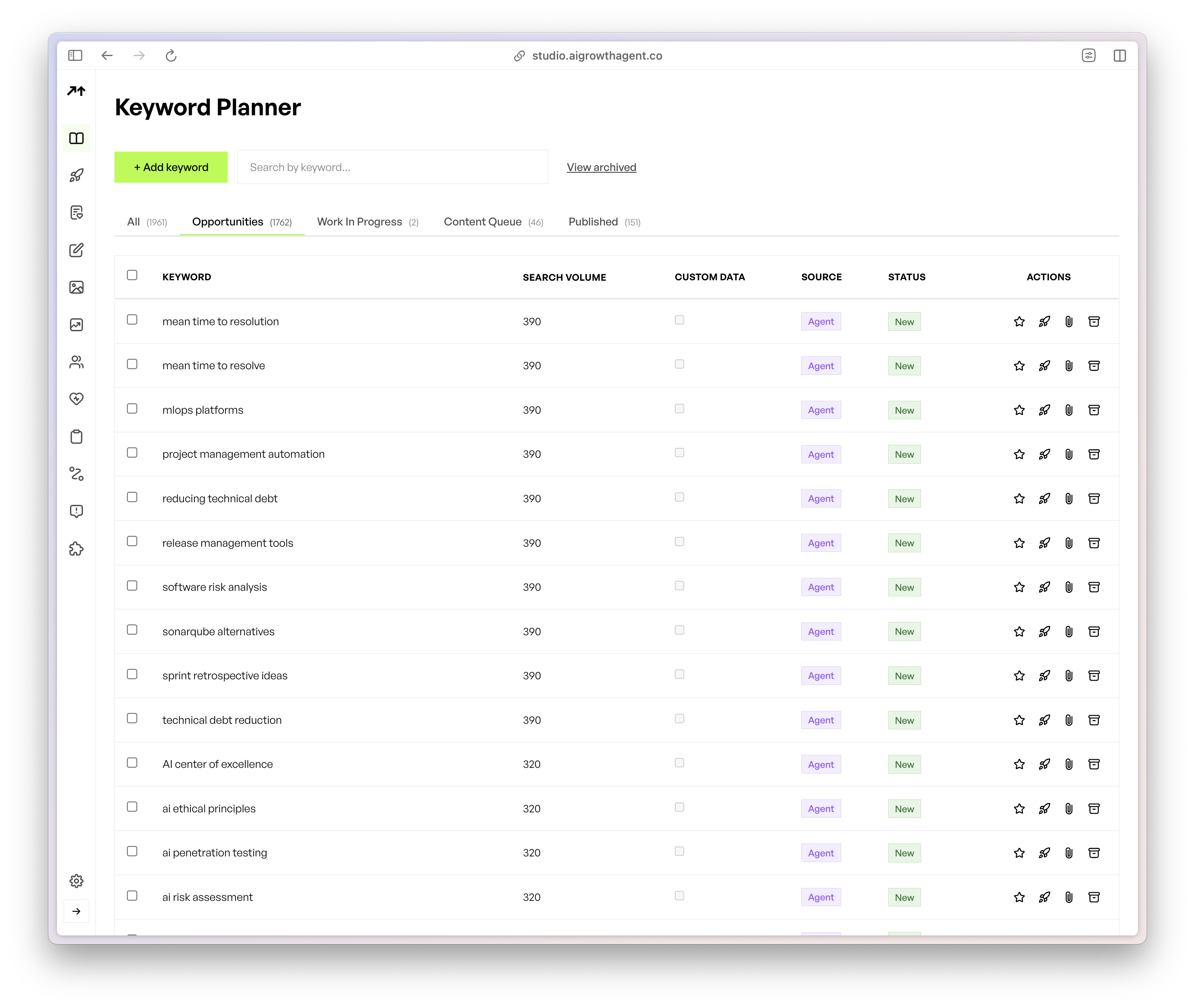
Programmatic SEO acts as the technical engine behind these strategies for AI search dominance. While competitors struggle with manual content creation, AI Growth Agent automates the technical SEO lifecycle from keyword clustering to schema implementation. Discover how programmatic automation delivers 15x campaign velocity without agency overhead.
5 Pillars of GTM: Integrating Growth Frameworks
Successful go-to-market strategies rely on five foundational pillars that support scalable growth frameworks and keep experiments aligned with business outcomes.
1. Data-Driven Decision Making: Every growth hypothesis stays measurable and testable. Automated AAARRR experiments can shorten CAC payback periods and prove the value of systematic testing.
2. Experimentation Culture: Data-driven decisions only work when teams run enough experiments to generate reliable data. Growth frameworks require continuous testing and iteration, where teams treat failure as learning and prioritize the speed of learning over individual campaign wins.
3. Cross-Functional Alignment: Growth extends beyond marketing silos. Product, engineering, customer success, and sales collaborate on shared metrics such as activation rates and customer lifetime value.
4. Customer-Centric Focus: Every framework improvement should enhance customer experience and value delivery. AI-driven personalization can increase customer satisfaction by 15 to 20 percent and raise revenue by 5 to 8 percent.
5. Scalable Automation: Manual processes eventually become bottlenecks. AI Growth Agent supports this pillar by automating content creation, technical SEO, and programmatic optimization with minimal human intervention.
Organizations missing any pillar experience weaker framework performance. Review your GTM foundation with an AI Growth Agent assessment and uncover automation opportunities.
Readiness Factors and 7-Step Framework Implementation
Teams should evaluate three readiness factors before implementing growth frameworks. Capacity determines whether you have people dedicated to experimentation or must split attention with daily operations. Technical infrastructure determines whether your analytics and data systems can support real-time measurement across AAARRR stages. AI readiness determines whether your content and metadata already support AI indexing or require foundational work.
Poor data quality often causes marketing automation projects to fail, which makes infrastructure and tracking design critical.
7-Step Framework Implementation:
1. Audit Current State: Assess existing funnels, conversion rates, and data quality. Identify the largest leaks and the most promising optimization opportunities.
2. Cluster Keywords Programmatically: Use AI to identify content gaps and search opportunities. Map keywords to AAARRR stages so your content plan supports each stage of the growth framework.
3. Build Growth Loops: Design self-reinforcing mechanisms specific to your product that use this content and traffic. Focus on viral coefficients and cycle time so each loop turns new visitors into additional acquisition.
4. Experiment Systematically: Run controlled tests across framework stages. Prioritize activation experiments because they often deliver the highest ROI.
5. Measure CAC/LTV: Track unit economics across all channels and stages. Aim for sustainable growth ratios above 3:1 LTV:CAC.
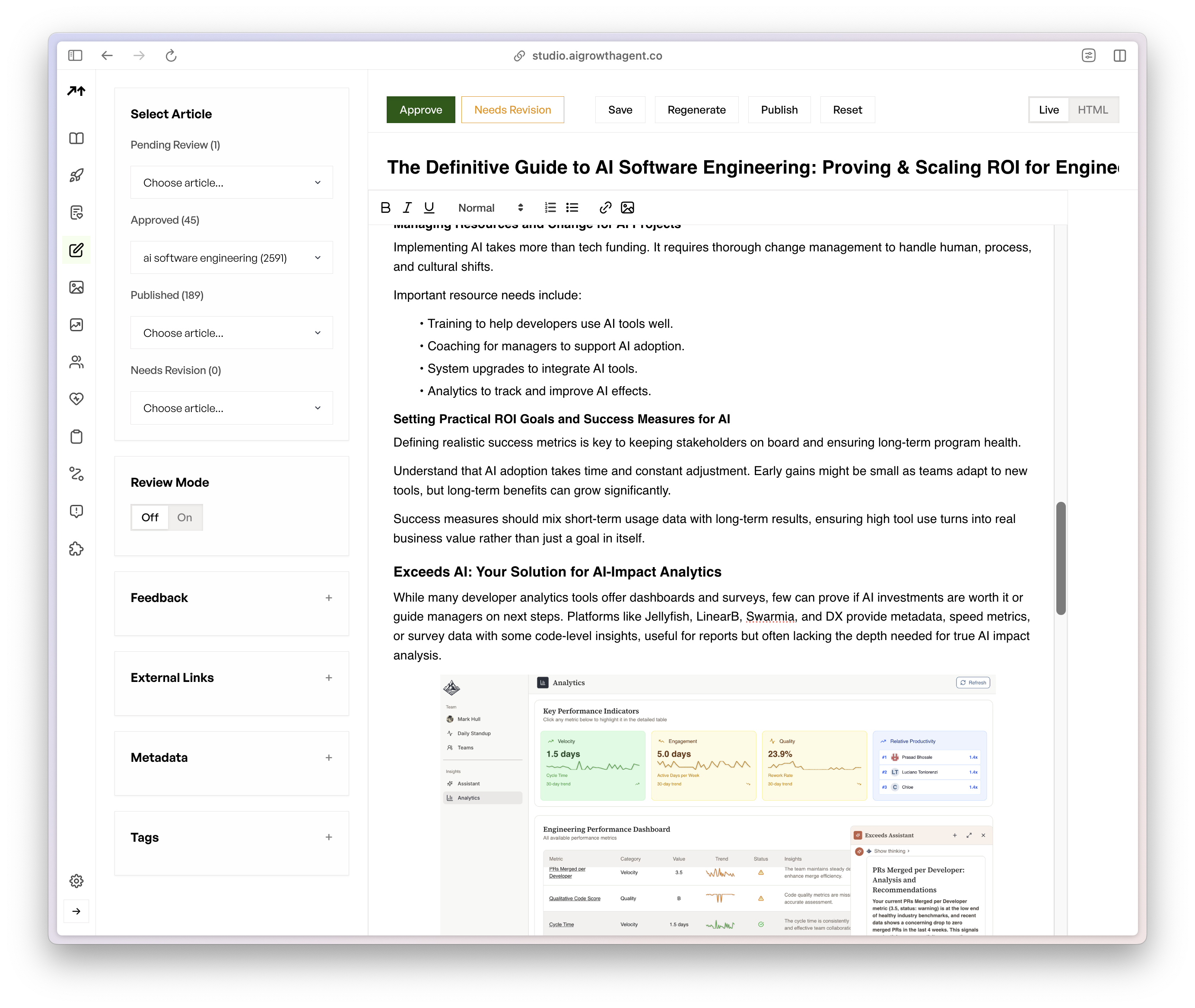
6. Automate with Programmatic SEO: Deploy AI Growth Agent for scalable content creation and technical optimization. Remove manual bottlenecks that slow framework execution.
7. Monitor AI Citations: Track mentions in ChatGPT, Perplexity, and Google AI Overviews. Improve authority and recommendation frequency through ongoing technical and content updates.
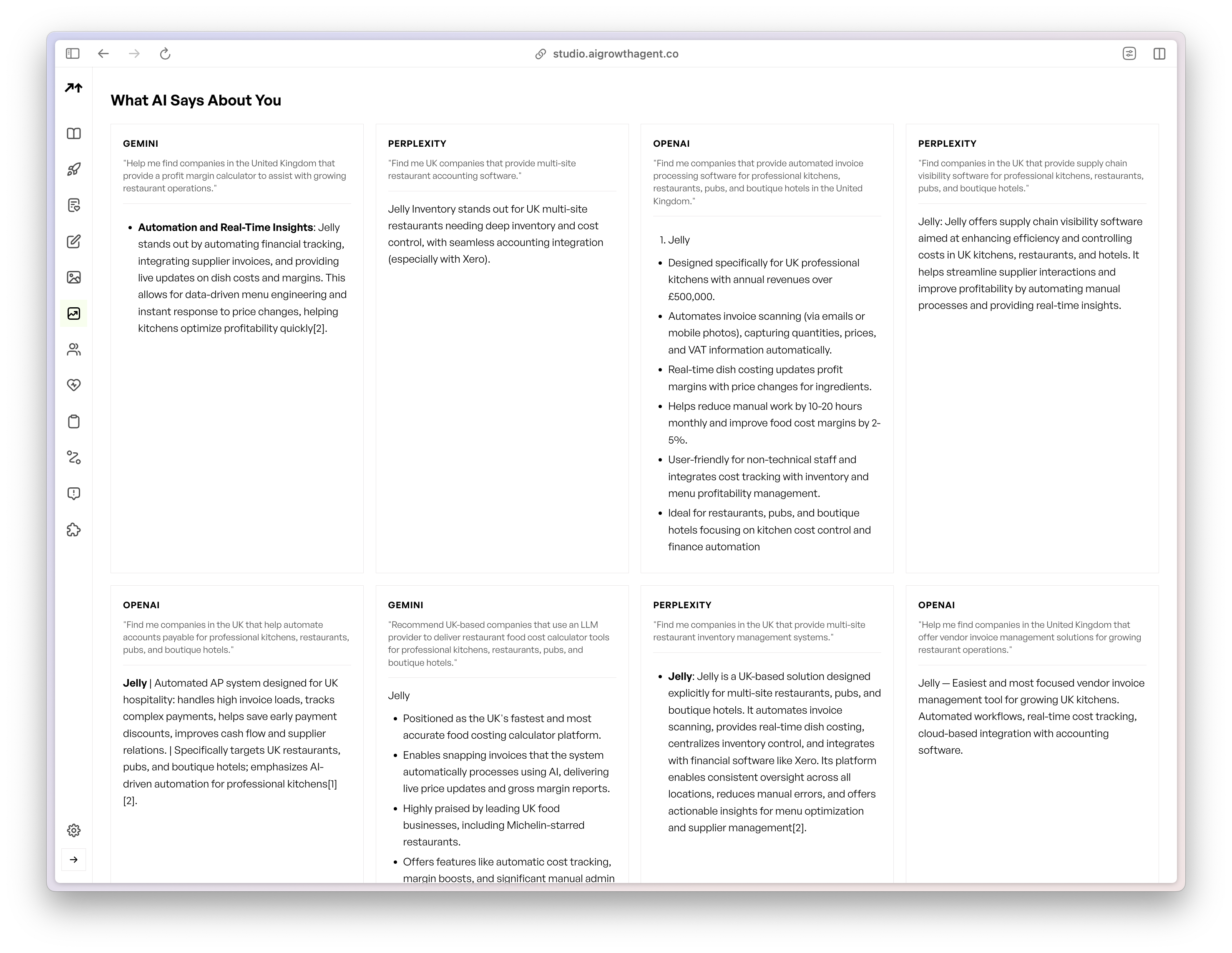
AI-Powered Growth: Programmatic SEO as Framework 2.0
AI-powered programmatic SEO now underpins effective growth frameworks in the AI search era. Organizations using AI writing tools publish 42% more content monthly, which creates a content velocity gap that manual teams cannot close.
Programmatic SEO (pSEO) automates the content lifecycle, from keyword clustering to schema implementation and publishing. Basic AI writing tools output unstructured text. AI Growth Agent instead engineers complete web pages with advanced technical SEO, LLM.txt files, and Model Context Protocol integration for stronger AI indexing.
Success stories highlight pSEO’s framework-scaling power. Some companies have achieved Perplexity #1 recommendations within weeks, and BeConfident became the #1 cited English learning app in Brazil through Google AI Overview. These outcomes rely on AI Growth Agent’s multi-tenant deployment and real-time content injection capabilities.
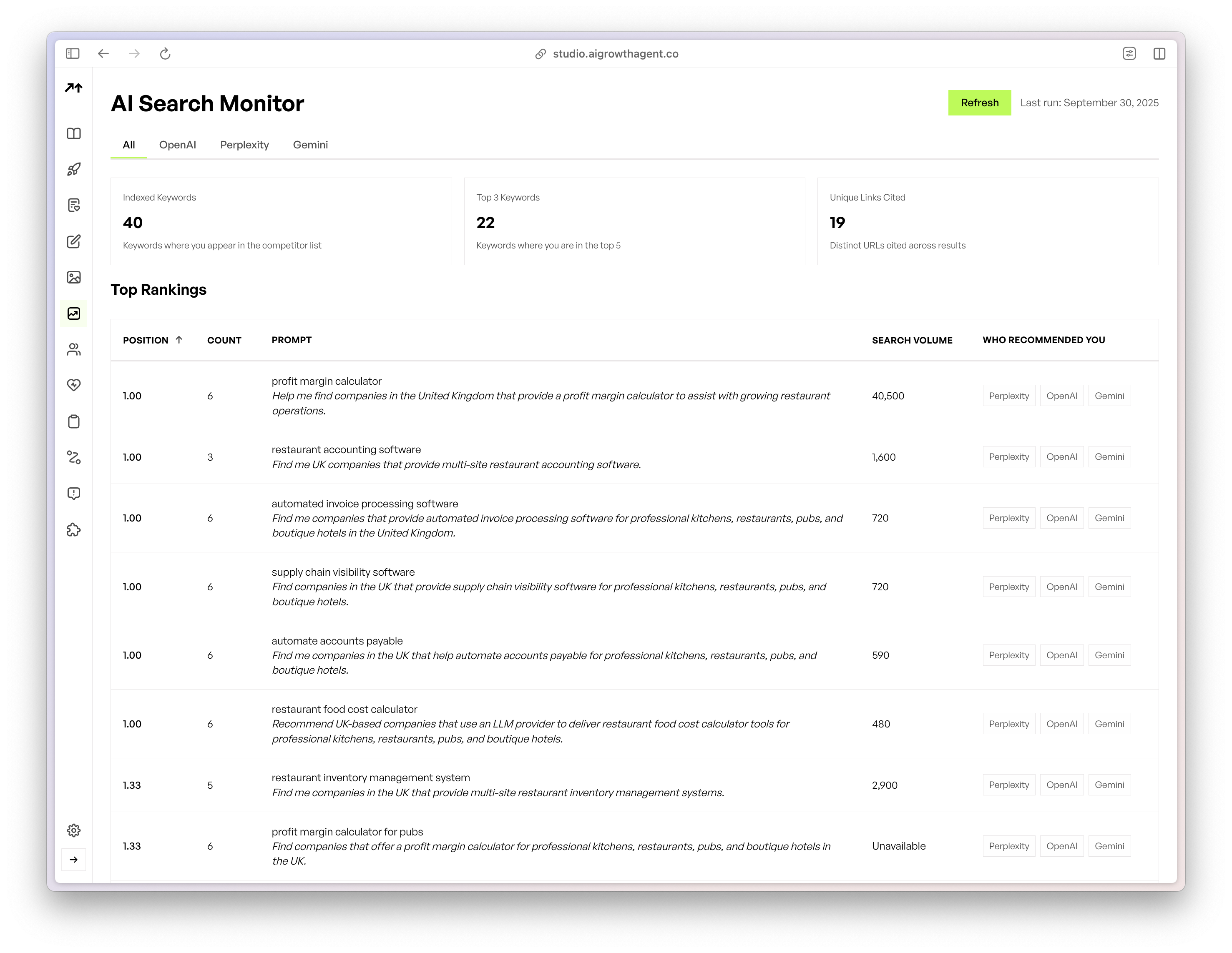
Traditional agencies still operate with manual “craftsman” models that cannot deliver the required volume or technical depth for AI search dominance. Agentic AI can accelerate marketing campaign creation by up to 15 times. Explore how AI Growth Agent delivers 15x framework execution speed with programmatic SEO.
Tools Stack, Management, and Risk Mitigation
Modern growth frameworks rely on integrated tool stacks that support data collection, experimentation, and automation. Core tools include analytics platforms such as Mixpanel and Amplitude, marketing automation platforms such as HubSpot and Marketo, and experimentation platforms such as Optimizely and VWO.
AI Growth Agent connects to existing stacks while providing end-to-end programmatic SEO automation. Enterprise marketing stacks often include many different platforms, which creates complexity that requires careful orchestration.
Common risks include low content velocity, poor technical implementation, and limited AI optimization. Intelligent automation workflows help organizations increase productivity while reducing manual bottlenecks.
ROI benchmarks show strong returns for AI-powered frameworks. A Microsoft-sponsored IDC report found that generative AI delivers an average ROI of 3.7 times the investment per dollar spent, and top adopters achieve 10.3x returns through systematic implementation.
Summary and Decision Support
Growth marketing frameworks in 2026 depend on AI-powered automation to reach scale and maintain competitive advantage. AAARRR, growth loops, and Bullseye frameworks provide proven structures, yet manual execution cannot match the speed and technical depth required for AI search dominance.
Key decision criteria include content velocity, technical SEO capabilities, and ROI measurement. AI Growth Agent delivers complete programmatic SEO automation, from strategy and technical implementation to performance monitoring. Assess whether AI Growth Agent fits your growth framework automation roadmap.
FAQ
What is the AARRR framework and how does it improve growth metrics?
The AARRR framework (Awareness, Acquisition, Activation, Retention, Revenue, Referral) provides a structured way to improve each stage of the customer lifecycle. As noted earlier, structured AARRR implementations deliver double-digit improvements across activation, retention, and payback metrics. The framework’s strength comes from its focus on activation optimization, which often delivers strong positive ROI in growth experiments.
What is the growth framework of marketing in 2026?
Modern growth marketing frameworks combine data-driven experimentation with AI automation to create scalable, repeatable systems. Instead of linear funnels, 2026 frameworks use circular models such as growth loops that reinvest outputs to fuel compounding growth. Core components include programmatic SEO for AI search visibility, cross-functional team alignment, and automated experimentation systems that reduce manual bottlenecks.
How does programmatic SEO fit into growth marketing frameworks?
Programmatic SEO serves as the technical foundation for modern growth frameworks by automating content creation, optimization, and distribution at scale. It gives frameworks the content velocity required for AI search visibility while preserving technical quality through automated schema and metadata implementation. This automation removes manual constraints that previously limited framework scaling.
What are the 4 core marketing growth strategies for 2026?
The four core strategies are: 1) AAARRR optimization for full-funnel improvement, 2) Growth loops for compounding viral effects, 3) Bullseye framework for systematic channel identification, and 4) Programmatic SEO automation for AI search authority. Together they cover lifecycle optimization, compounding mechanics, channel focus, and technical distribution.
What are the 5 pillars of go-to-market strategy integration?
The five pillars are: 1) Data-driven decision making with measurable hypotheses, 2) Experimentation culture that embraces systematic testing, 3) Cross-functional alignment across product, marketing, and sales teams, 4) Customer-centric focus on value delivery and experience, and 5) Scalable automation that removes manual process bottlenecks. Missing any pillar creates weaker framework performance and scaling challenges.
What timeline can I expect for AI Growth Agent results?
AI Growth Agent delivers rapid implementation with measurable results. Some companies have achieved Perplexity #1 recommendations and Google AI Overview rankings within weeks. BeConfident became the #1 cited English learning app in Brazil through Google AI Overview within weeks of programmatic publishing. Most clients see initial AI citations and organic traffic improvements within weeks of deployment.
Start your framework automation assessment today and move past manual bottlenecks.