Written by: Mariana Fonseca, Editorial Team, AI Growth Agent
Key Takeaways
- Schema markup gives AI systems explicit signals about what your page contains, so correct implementation becomes a competitive necessity in 2026.
- JSON-LD format, exact content mirroring, and consistent @id values create a stable foundation that prevents markup drift and strengthens entity recognition.
- Hyper-specific schema types, layered markup, and sameAs links to external knowledge graphs raise citation probability by giving crawlers clearer semantic context.
- Continuous testing and bot monitoring keep schema valid and show whether GPTBot, ClaudeBot, and PerplexityBot are actually crawling your pages.
- AI Growth Agent provisions the full schema suite automatically – schedule a demo to see how your brand can start earning AI citations within the first week.
What AI Schema Markup Is and How It Drives Citations
Schema markup is structured vocabulary embedded in a page’s HTML that labels content explicitly for machines. Schema tells a crawler that a number is a price or a string is an author name in a format every major AI system can parse.
Microsoft describes schema markup as “a type of code that helps search engines and AI systems understand your content.” Google’s guidance on succeeding in AI search reinforces the same idea from the other direction: structured data must match visible content so AI systems can trust what they read.
Within agentic technical SEO, schema does more than enable rich results. It builds a machine-readable authority layer that LLMs use when deciding which sources to cite in zero-click answers. Pages with well-implemented structured data are more likely to appear in AI-generated summaries than pages without schema, creating a widening citation gap as AI surfaces handle more discovery.
Narrative control in AI search starts with this layer. A brand that defines its own entities, relationships, and claims in structured data trains the models that describe it. A brand that skips this work leaves its description to whatever the model can infer from unstructured text.
1. Use JSON-LD Format for Maintainable Schema
Google recommends embedding structured data exclusively as a JSON-LD script tag in the document head or body, because Microdata and RDFa are harder to maintain and more error-prone. The W3C JSON-LD Best Practices (June 2026) reinforces this and recommends that JSON documents include an @context entry pointing to https://schema.org so they are interpretable as JSON-LD with unambiguous meaning.
The following example shows a minimal Article schema implementation that includes all required properties and a clear @context reference:
<script type="application/ld+json"> { "@context": "https://schema.org", "@type": "Article", "@id": "https://example.com/blog/ai-schema-guide#article", "headline": "AI Schema Markup Best Practices for LLM Citation in 2026", "datePublished": "2026-06-09", "dateModified": "2026-06-09", "author": { "@type": "Person", "@id": "https://example.com/#author-jane-smith", "name": "Jane Smith" }, "publisher": { "@type": "Organization", "@id": "https://example.com/#organization", "name": "Example Brand" } } </script>JSON-LD keeps structured data separate from the visible HTML, which makes programmatic updates easier and reduces the risk of markup drift as content changes. That separation allows large sites to generate schema at build time and keep it synchronized with what users see.
2. Mirror Visible Content Exactly in Schema
Google’s guide to succeeding in AI search states: “Make sure structured data matches the visible content.” AI systems cross-reference markup against actual content, and discrepancies damage credibility. A headline in schema that differs from the visible H1, or a price in markup that does not match the displayed figure, signals unreliability to the crawler and reduces citation probability.
The following Product schema example demonstrates exact mirroring, where every property value must appear verbatim on the page:
<script type="application/ld+json"> { "@context": "https://schema.org", "@type": "Product", "@id": "https://example.com/products/adjustable-base-pro#product", "name": "Adjustable Base Pro", "description": "Zero-gravity and anti-snore positions, wireless remote, compatible with most mattress sizes.", "offers": { "@type": "Offer", "price": "1299.00", "priceCurrency": "USD", "availability": "https://schema.org/InStock" } } </script>Every property value in this block must appear exactly the same on the page. When schema and visible content agree, AI crawlers treat the page as a reliable source and are more likely to cite it in generated answers.

3. Maintain a Consistent @id Strategy Across Your Site
Without @id, every schema declaration is treated as an isolated island, and the same entity declared on different pages becomes multiple disconnected entities. That fragmentation prevents signals from compounding and weakens entity recognition by AI systems. To solve this, assign a stable, canonical URI to each entity once and reference that same @id everywhere the entity appears.
<script type="application/ld+json"> { "@context": "https://schema.org", "@type": "Organization", "@id": "https://example.com/#organization", "name": "Example Brand", "url": "https://example.com", "logo": "https://example.com/logo.png" } </script>Every Article, Product, and BlogPosting on the site should reference this same @id in its publisher field. Dropping the @id field from Organization schema breaks entity linkage across pages and causes each page to be treated as a separate entity claim by search engines and AI models.
Consistent @id Across Pages
Businesses using structured data with @id and sameAs properties achieve higher citation rates in AI engines and an increase in AI Overview visibility. The mechanism is straightforward. When GPTBot, ClaudeBot, and PerplexityBot encounter the same @id URI across dozens of pages, they connect those declarations into a unified entity graph that AI systems use for recognition and citation. This consistency turns many weak signals into one strong entity node.
4. Choose Hyper-Specific Schema Types for Clearer Signals
AI systems reward precise schema types over generic ones because specificity signals deeper semantic understanding. Using MedicalBusiness rather than generic LocalBusiness, or Restaurant rather than FoodEstablishment, improves entity resolution for AI citation. Conversely, generic types like WebPage applied where Article or BlogPosting is appropriate dilute semantic precision and reduce usefulness to AI systems for citation decisions.
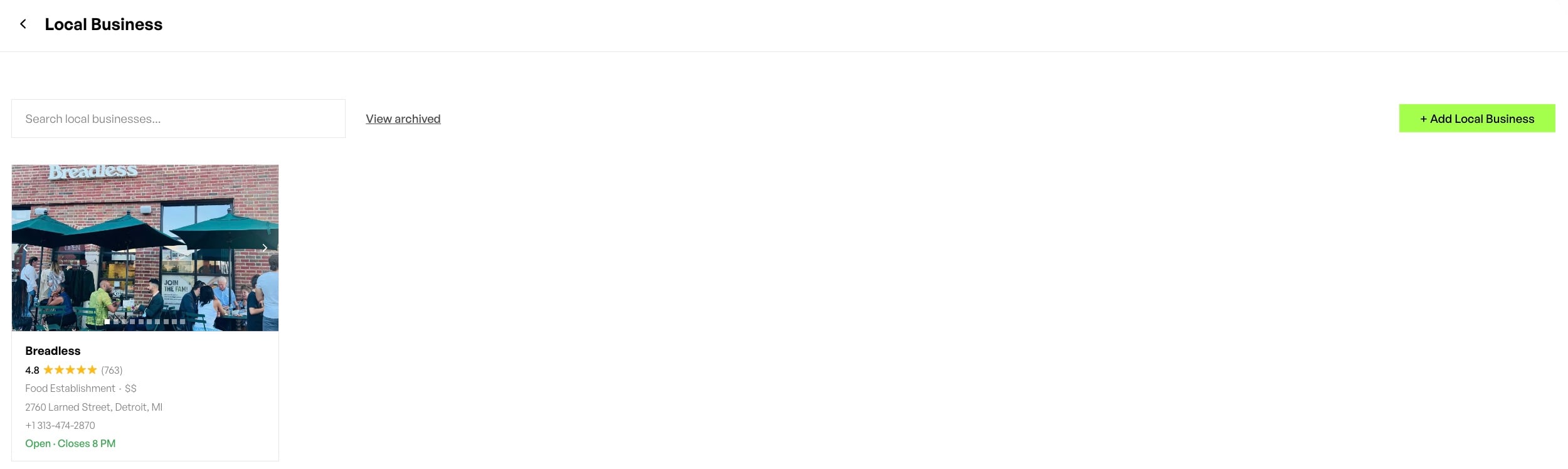
<script type="application/ld+json"> { "@context": "https://schema.org", "@type": "SoftwareApplication", "@id": "https://example.com/product/platform#software", "name": "Example Platform", "applicationCategory": "BusinessApplication", "operatingSystem": "Web", "offers": { "@type": "Offer", "price": "0", "priceCurrency": "USD" }, "aggregateRating": { "@type": "AggregateRating", "ratingValue": "4.8", "reviewCount": "312" } } </script>Choosing SoftwareApplication over Product for a SaaS platform tells the crawler exactly what category of entity it is processing. The more specific type reduces ambiguity and increases the confidence score the AI assigns to the page as a citable source.
5. Layer Multiple Schema Types on Comprehensive Pages
A single page can include multiple JSON-LD script tags, each implementing a different schema type, and unrelated schema types should never be combined into one JSON-LD object. Nesting multiple schema types on comprehensive pages, such as an Article schema containing a hasPart HowTo and mainEntity FAQPage, provides complete context that AI systems can traverse for extraction and citation.
The following example shows how to nest an FAQPage inside an Article using the mainEntity property so LLMs can pull question-and-answer pairs directly:
<script type="application/ld+json"> { "@context": "https://schema.org", "@type": "Article", "@id": "https://example.com/blog/adjustable-beds-guide#article", "headline": "How to Choose an Adjustable Bed Base in 2026", "mainEntity": { "@type": "FAQPage", "mainEntity": [ { "@type": "Question", "name": "What positions does an adjustable base support?", "acceptedAnswer": { "@type": "Answer", "text": "Most adjustable bases support zero-gravity, anti-snore, flat, and custom head-and-foot positions via a wireless remote or app." } } ] } } </script>Layering Schema Types for LLMs
A three-phase layering approach is recommended. Phase 1 establishes foundational identity via Organization or LocalBusiness schema. Phase 2 marks up high-value content with FAQPage and Article schema. Phase 3 adds trust layers using Person, Review, AggregateRating, VideoObject, ImageObject, and BreadcrumbList schema. Analysis of AI-cited websites found ImageObject present in nearly every cited website type, and ImageObject, BreadcrumbList, and ListItem schema types appear frequently among sources that AI systems reference. Research from AirOps confirms that pages with clear structure plus schema markup receive more AI citations.
Layering is not the same as stacking unrelated types. Each layer must correspond to content that actually exists on the page, and each type should reference the same core @id values to keep the entity graph coherent.
Implementing this level of schema complexity manually is time-intensive and error-prone at scale. Ready to see what a complete schema suite looks like in production? Book a walkthrough and watch AI Growth Agent provision the full stack within the first week.
6. Connect Entities via sameAs to External Knowledge Graphs
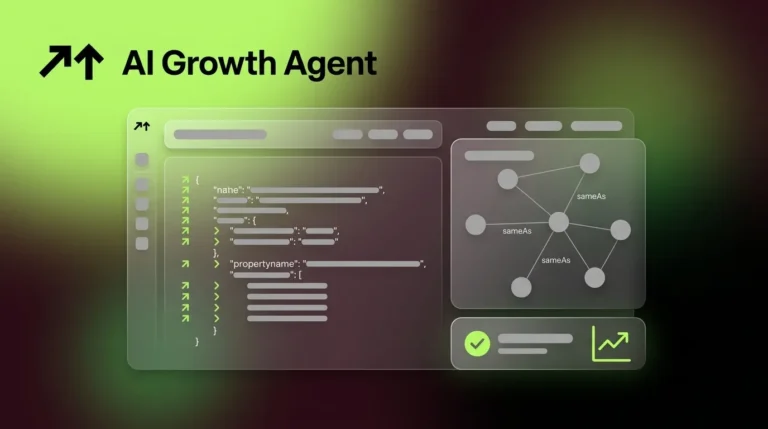
The sameAs property acts as the “glue” of the Knowledge Graph by telling search engines that multiple profiles belong to the same entity, building a robust confidence score for the brand entity. Brands that maintain consistent entity data across five or more authoritative sources are mentioned more often in AI-generated responses, while brands with inconsistent data are inaccurately described in at least one major AI-generated answer.
The following Organization schema demonstrates how to connect your brand entity to five external knowledge graphs using the sameAs property and to declare topical expertise with knowsAbout:
<script type="application/ld+json"> { "@context": "https://schema.org", "@type": "Organization", "@id": "https://example.com/#organization", "name": "Example Brand", "url": "https://example.com", "sameAs": [ "https://en.wikipedia.org/wiki/Example_Brand", "https://www.wikidata.org/wiki/Q12345678", "https://www.linkedin.com/company/example-brand", "https://www.crunchbase.com/organization/example-brand", "https://twitter.com/examplebrand" ], "knowsAbout": [ "Adjustable Bed Bases", "Sleep Technology", "Zero-Gravity Sleep Positions" ] } </script>Connecting Schema to Knowledge Graphs
Connecting schema markup to external knowledge graphs via sameAs helps close entity gaps, enabling brands to be cited as canonical answers in AI Overviews and answer engines rather than being treated as ambiguous text strings. Connecting schema markup to external knowledge graphs via sameAs extends the entity graph established by consistent @id values, linking your brand to authoritative sources like Wikipedia and Wikidata. This external validation helps close entity gaps and increases citation probability. The knowsAbout property extends this further by declaring topical expertise, giving AI systems an explicit signal about which subject areas the organization is authoritative on.
This entity recognition is not optional. In 2026, if a search engine does not recognize a brand as a distinct entity in the Knowledge Graph, that brand is effectively invisible to the reasoning layer of search and AI agents. The sameAs array is the fastest path to establishing that recognition.
7. Test and Monitor Schema Continuously
Structured data must be tested before and after deployment using tools like Google’s Rich Results Test because errors can trigger a structured data manual action, making pages ineligible for rich results. AI-generated schema markup frequently contains errors such as invalid datetime values, missing time zone information in the datePublished property, or omission of the optional dateModified property, which requires manual validation before implementation.
<script type="application/ld+json"> { "@context": "https://schema.org", "@type": "Article", "@id": "https://example.com/blog/schema-guide-2026#article", "headline": "AI Schema Markup Best Practices for LLM Citation in 2026", "datePublished": "2026-06-09T08:00:00+00:00", "dateModified": "2026-06-09T08:00:00+00:00", "author": { "@type": "Person", "@id": "https://example.com/#author-jane-smith", "name": "Jane Smith" }, "publisher": { "@type": "Organization", "@id": "https://example.com/#organization", "name": "Example Brand" } } </script>Monitoring extends beyond validation. Bot tracking that shows when GPTBot, ClaudeBot, and PerplexityBot crawl specific pages reveals which schema implementations attract AI crawler attention and which are ignored. Schema that passes validation but never attracts a training-cycle crawl is schema that is not earning citations. Continuous monitoring closes that loop.
Schema Markup Examples for a Complete Suite
The seven practices above work best when you apply them together as a complete schema suite. The following blocks represent the foundational schema suite for a content-driven brand, showing how the principles from sections 1–7 translate into production-ready code. Each block is independent and should be deployed as a separate <script type="application/ld+json"> tag. Together, these three examples show how to establish authorship (Person schema), improve search result display (BreadcrumbList schema), and add trust signals (AggregateRating schema).
Author Person schema – establishes named authorship and connects the author entity to the organization:
<script type="application/ld+json"> { "@context": "https://schema.org", "@type": "Person", "@id": "https://example.com/#author-jane-smith", "name": "Jane Smith", "jobTitle": "Senior Content Strategist", "worksFor": { "@type": "Organization", "@id": "https://example.com/#organization" }, "sameAs": [ "https://www.linkedin.com/in/jane-smith-example", "https://twitter.com/janesmith_example" ] } </script>BreadcrumbList schema – replaces raw URLs in search results with a human-readable path hierarchy and delivers a CTR lift while reinforcing site structure for AI crawlers:
<script type="application/ld+json"> { "@context": "https://schema.org", "@type": "BreadcrumbList", "itemListElement": [ { "@type": "ListItem", "position": 1, "name": "Home", "item": "https://example.com" }, { "@type": "ListItem", "position": 2, "name": "Blog", "item": "https://example.com/blog" }, { "@type": "ListItem", "position": 3, "name": "AI Schema Markup Best Practices", "item": "https://example.com/blog/ai-schema-guide" } ] } </script>Review and AggregateRating schema – adds trust signals that AI systems use when evaluating source credibility:
<script type="application/ld+json"> { "@context": "https://schema.org", "@type": "Product", "@id": "https://example.com/products/adjustable-base-pro#product", "name": "Adjustable Base Pro", "aggregateRating": { "@type": "AggregateRating", "ratingValue": "4.7", "reviewCount": "214", "bestRating": "5" } } </script>How AI Growth Agent Provisions the Full Schema Suite
Implementing and maintaining a complete schema suite across hundreds of articles requires either a dedicated technical team or a system that handles it automatically. Most mid-market and enterprise marketing teams lack both the engineering headcount and the schema expertise needed to keep structured data synchronized with content at scale.
AI Growth Agent provisions the full schema suite automatically as part of every engagement. Article, FAQ, Organization, Person, Product, Review, AggregateRating, SoftwareApplication, LocalBusiness, and BreadcrumbList schema are generated and kept current on every published page without any action from the client. The same engine that writes and publishes content also deploys the schema, which keeps markup and visible content aligned.
The technical stack extends beyond schema. Every site AI Growth Agent stands up ships with Blog MCP for direct interoperability with AI search agents, llms.txt and llms-full.txt so AI surfaces can read the brand in the format they prefer, OpenAI discovery and Agent Card guidance served via /.well-known/, natural language query parameters that return personalized responses to agent crawlers, and real-time bot tracking that shows exactly when ChatGPT, ClaudeBot, and PerplexityBot crawl and cite specific pages.
AI Growth Agent clients average additional AI citations and mentions across the first twelve weeks. Leva Sleep, using AI Growth Agent content and schema, became the most mentioned retailer for adjustable beds in Canada, with ChatGPT citing its content over 40 times per month and deals closed in under three weeks from AI-driven buyers. Breadless achieved a lift in Google Search Console impressions over six months and is now the most recommended healthy franchise in the US ahead of CAVA, Rush Bowls, and Sweetgreen.
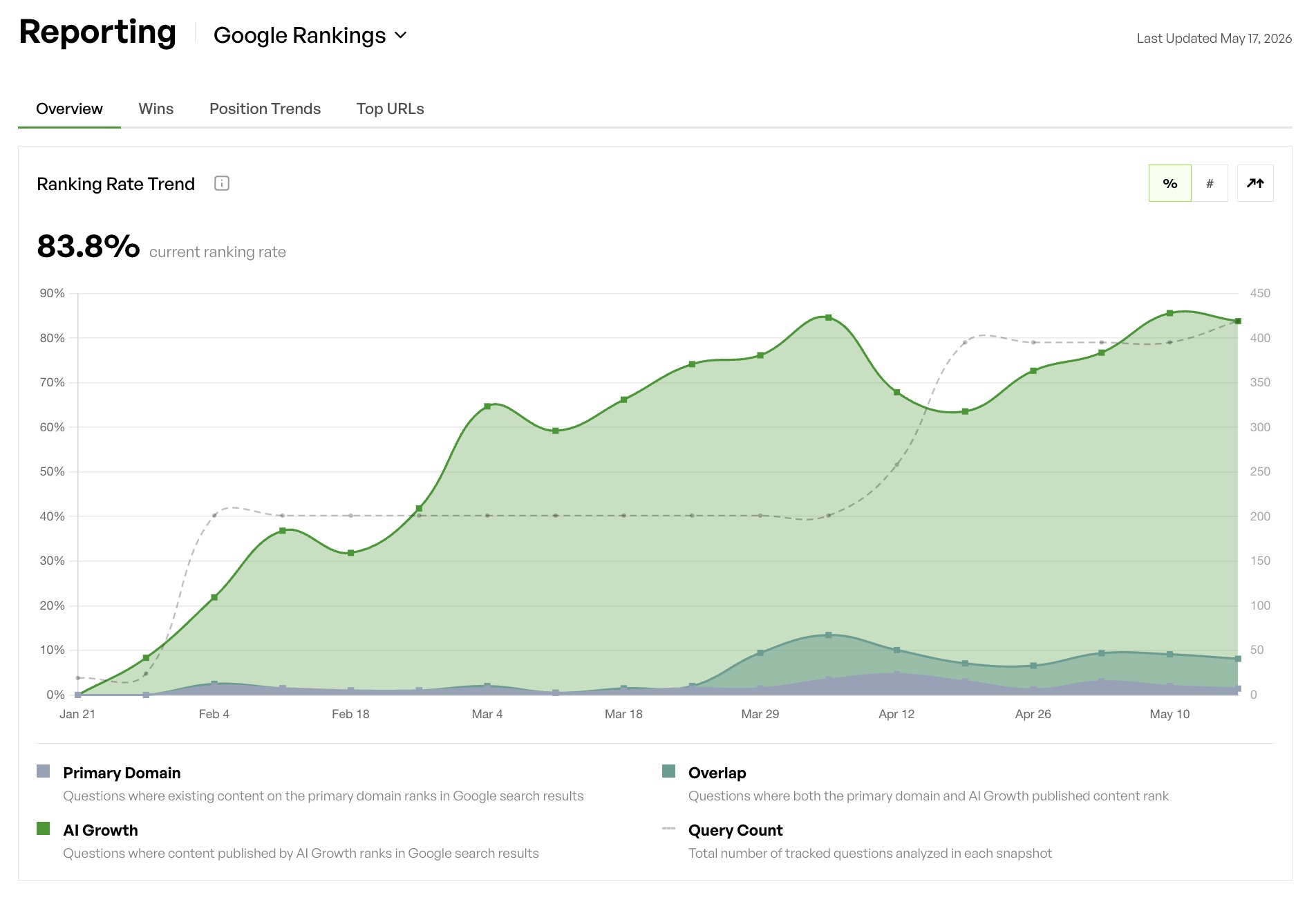
The first article goes live within a week of kickoff. Schema, bot tracking, agentic technical SEO, and the full content stack are included in every package at a flat fee with no per-article charges or per-prompt billing.
See the full schema suite in action and learn how AI Growth Agent makes your brand the answer in AI search.
Frequently Asked Questions
What is the difference between schema markup and structured data?
Structured data is the broader concept and covers any format that organizes information so machines can parse it reliably. Schema markup is a specific implementation of structured data using the Schema.org vocabulary. In practice, the terms are used interchangeably in SEO and AI search contexts. JSON-LD is the recommended format for implementing Schema.org markup because it is easy to maintain, decoupled from visible HTML, and preferred by Google, Microsoft, and the W3C.
Does schema markup directly cause AI systems to cite a page?
Schema markup improves citation probability through two mechanisms. The first is direct: structured data gives AI crawlers explicit, machine-readable facts about entities, relationships, and content types, which reduces inference work and increases the confidence score assigned to the page as a citable source. The second is indirect: schema enables rich results and improved indexing signals that increase a page’s overall authority in the traditional search layer, which feeds into the training data and retrieval indexes that AI systems draw from. Both mechanisms matter, and neither works effectively without the other.
How complex is it to implement a full schema suite at scale?
For a single page, schema implementation is straightforward. You identify the main entity, choose the correct type, write the JSON-LD, embed it, and validate it. At scale, across hundreds or thousands of pages, the challenge is keeping schema synchronized with visible content as pages are updated, ensuring consistent @id values across the entire domain, and maintaining the layered type structure that maximizes AI citation probability. Most marketing teams do not have the engineering resources to do this reliably. AI Growth Agent provisions and maintains the full schema suite automatically as part of every engagement, with no technical action required from the client.
How do I measure whether schema markup is improving AI citations?
Three signals are most reliable. First, bot tracking at the article level shows when GPTBot, ClaudeBot, and PerplexityBot crawl specific pages, which indicates that AI systems are reading the content. Second, Google Search Console impressions and AI Overview appearances reflect schema-driven improvements in rich result eligibility. Third, direct citation monitoring tracks how often and in what context the brand appears in AI-generated answers across ChatGPT, Perplexity, and Google’s AI Mode. Incremental visibility reporting that isolates what schema-optimized content generated, separate from pre-existing brand visibility, provides the most defensible measurement approach.
Which schema types matter most for AI citation in 2026?
Organization schema with consistent @id and sameAs references forms the foundation, because without it every other schema type operates in isolation. Article or BlogPosting schema with named author Person schema and publisher Organization schema establishes content-to-entity connections that AI systems use for authorship and credibility signals. FAQPage schema, where eligible, produces the question-and-answer format that AI systems naturally prefer for citation blocks. Product and SoftwareApplication schema with AggregateRating add trust signals. BreadcrumbList and ImageObject appear frequently among AI-cited sources and should be included on every content page. The full suite, deployed together with consistent @id references throughout, produces stronger entity recognition than any single type deployed alone.
Conclusion
Schema markup functions as the mechanism by which a brand communicates its identity, authority, and content to the AI systems that now control discovery for most buyers. The seven practices covered here, JSON-LD format, content mirroring, consistent @id strategy, hyper-specific types, layered schema, sameAs knowledge graph connections, and continuous testing, are each individually valuable and collectively decisive.
The brands earning citations in ChatGPT, Perplexity, and Google’s AI Mode today are the ones that implemented this infrastructure early. The leaderboard in AI search is still forming, and structured data remains one of the clearest signals that separates cited sources from invisible ones.
AI Growth Agent provisions the complete schema suite, Blog MCP, llms.txt, agent discovery, and the full agentic technical SEO stack automatically within the first week, with no engineering hours required from the client. The engine writes, publishes, monitors, and self-heals content across the entire schema layer on autopilot.
Schedule your demo and go from kickoff to your first schema-optimized, AI-cited article in about one week.