Written by: Mariana Fonseca, Editorial Team, AI Growth Agent | Last updated: January 10, 2026
Key Takeaways
- AI-first search in 2026 compresses organic visibility, so brands need consistent, structured content that large language models can understand and cite.
- Traditional AI writing tools increase draft speed and reduce production time, but they provide limited technical SEO depth for enterprise-level authority.
- Internal teams that layer AI onto existing workflows can protect quality, yet often face rising costs, coordination overhead, and scalability limits.
- Programmatic SEO Agents connect research, technical SEO, and publishing in one system, giving enterprises a focused way to earn AI citations and organic traffic.
- Marketing leaders can use AI Growth Agent as a single platform to run programmatic SEO and AI search optimization at scale; schedule a demo with AI Growth Agent to evaluate fit.
The New Reality of AI Search: Why Your Digital Footprint is Shrinking
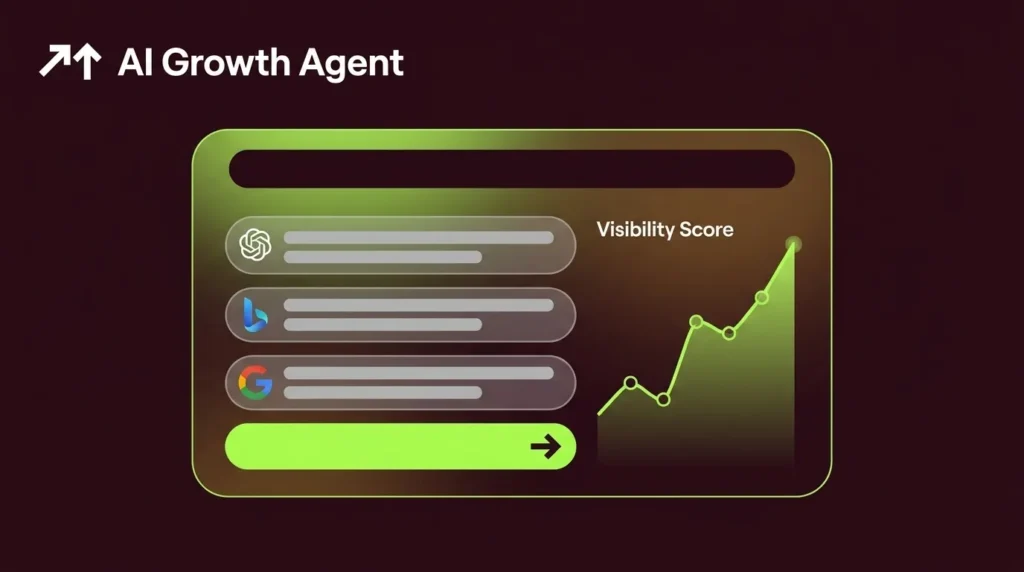
AI-powered search engines such as ChatGPT, Google AI Overviews via Gemini, and Perplexity now shape how many buyers discover brands. These systems summarize information directly in the interface, so fewer users click through to traditional search results.
The surge of AI-generated content reduces the relative visibility of every individual site. Your company’s digital presence, or pixel, becomes smaller unless you publish structured, high-quality content at a consistent volume. Modern AI search favors recency, depth, and clear structure over a few manually written posts each month.
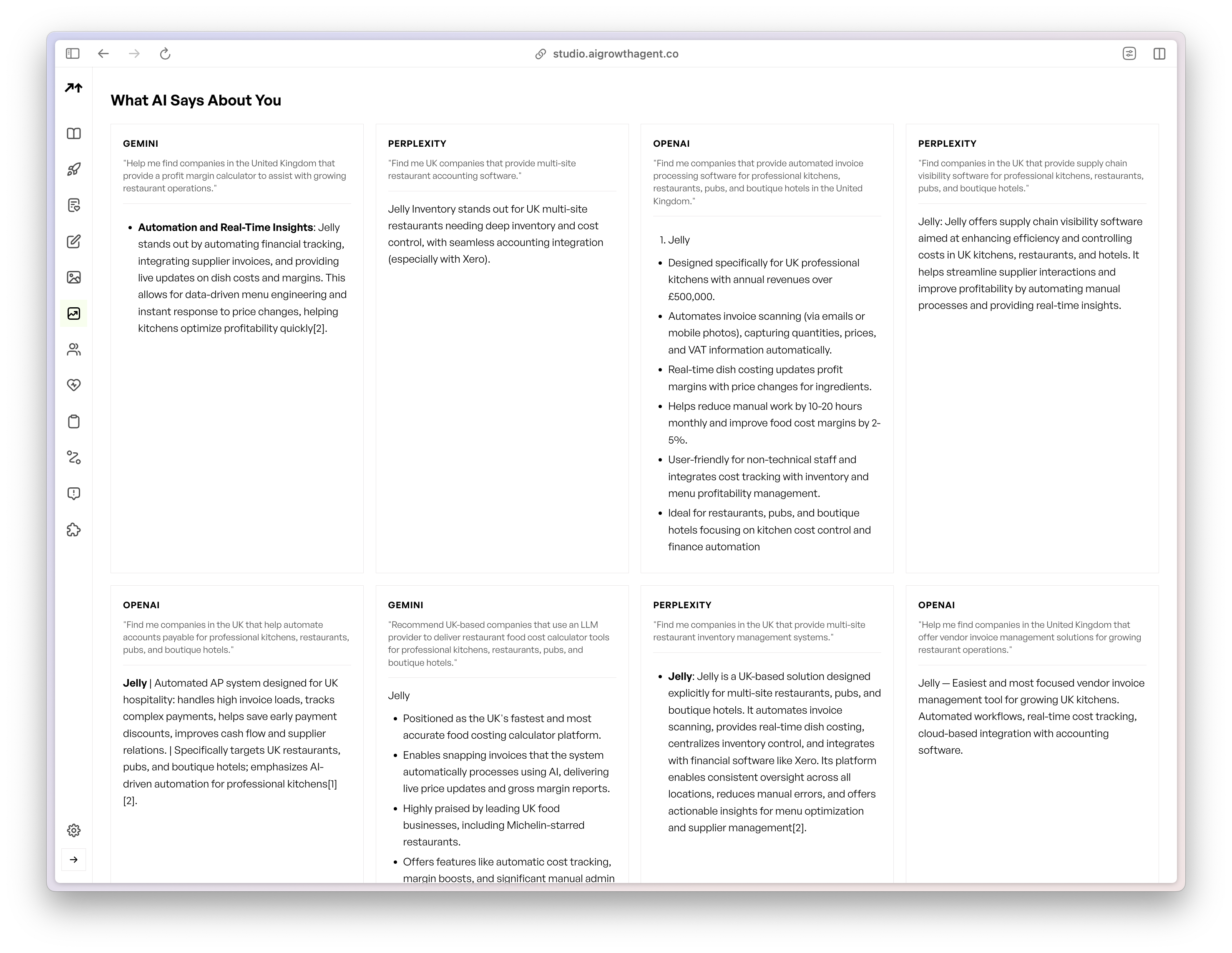
Brands that do not supply enough high-quality data points for AI systems leave a gap that competitors can fill. When a model has limited information about your company, it is more likely to recommend and cite competing sources.
Teams that want to protect and grow their pixel need a programmatic content strategy that supports daily publishing, strong technical SEO, and formats that AI indexers can parse reliably. Discuss your AI search strategy with the AI Growth Agent.
Traditional AI Writing Tools: Fast Content, Limited ROI for Enterprise Authority
How Teams Commonly Use Traditional AI Writing Tools
Traditional AI writing tools such as Jasper, Copy.ai, Writesonic, and Anyword help teams produce first drafts, short-form marketing copy, and basic blog posts. Content teams often use them to reduce blank-page time, brainstorm ideas, and generate variations for ads or emails.
Cost Structure
AI writing tools often range from about $20 to $60 per user per month for individual plans, and enterprise licenses can reach thousands per month. Jasper’s Creator plan starts around $49 per month for one user when billed monthly, while Copy.ai’s paid plans start at around $36 per month and scale up for large teams. SEO-focused tools such as SurferSEO typically fall between $29 and $299 per month, depending on features and usage, and platforms such as Semrush offer core plans around $130 to $500 per month, with AI writing features sold as credits or add-ons. Organizations that combine several tools for writing, SEO, and analytics see these costs compound.
Limits in an AI-Search-First Landscape
Most traditional tools output unstructured text. Internal teams still need to handle strategy, topic selection, internal linking, and technical formatting. Advanced elements such as schema markup, LLM.txt files, and structured data often require developers or SEO specialists.
As a result, teams gain speed on drafts but still spend time converting those drafts into optimized, on-brand pages. This manual effort reduces the net ROI and slows the programmatic scale needed for AI citations.
ROI Profile
Some organizations report cutting production time per post from 8–10 hours to roughly 2 hours with tools such as Jasper, along with triple-digit percentage gains in organic traffic. For enterprise marketers, the main limitation is that unstructured content has lower odds of becoming a trusted reference for AI systems, so authority grows slowly even when traffic improves.
Internal Teams Leveraging AI: The Craftsman Model at Scale
How Enterprises Structure Internal AI-Enabled Content Teams
Many enterprises keep content in-house and layer AI tools into existing workflows. Teams combine AI writing platforms, SEO suites, analytics tools, and manual editing to maintain brand voice and regulatory compliance.
Cost Structure
Enterprise AI content plans often land between $150 and $300 per user per month when advanced analytics and integrations are included. Full stacks that bundle writing tools, SEO platforms, and analytics commonly reach mid-four to low-five figures per year. Salaries for writers, editors, SEO specialists, and developers add high fixed costs, along with training and coordination.
Scalability and Technical Gaps
Most internal teams do not have dedicated engineering capacity for programmatic SEO. Building and maintaining hundreds or thousands of pages with clean metadata, schema, robots rules, and LLM.txt coverage is difficult with manual workflows.
Velocity typically plateaus at a level that works for traditional search but not for AI search, where indexers benefit from large, consistent, structured content sets. This constraint limits the potential volume of AI citations the brand can earn.
ROI Profile
Internal teams can produce strong, on-brand assets, yet they often trade scale for control. High labor and tool costs, combined with slower throughput, reduce ROI compared with more automated approaches, especially in competitive categories.
Programmatic SEO Agents (e.g., AI Growth Agent): Engineering Authority for AI Search ROI
What a Programmatic SEO Agent Does
A Programmatic SEO Agent is an autonomous system that connects strategy, keyword research, technical SEO, and publishing. The goal is to create structured, indexable content libraries that AI systems can easily crawl, understand, and cite.
How AI Growth Agent Approaches Programmatic SEO
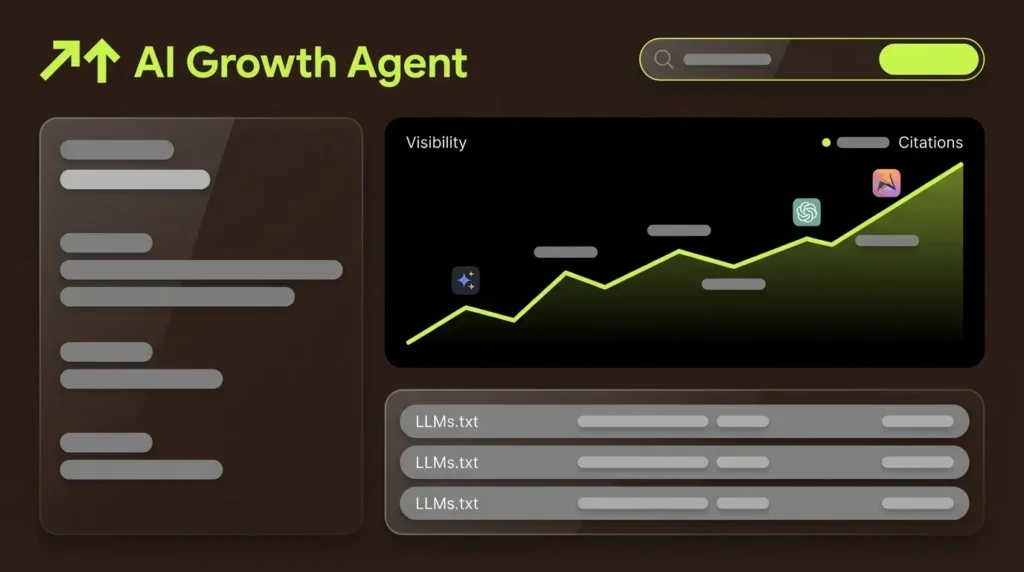
AI Growth Agent starts by building a detailed company manifesto and content model, then runs autonomous keyword research across large query sets. The platform deploys the required infrastructure, including advanced LLM.txt files and a blog Model Context Protocol (MCP) that lets AI systems interface directly with your content database.
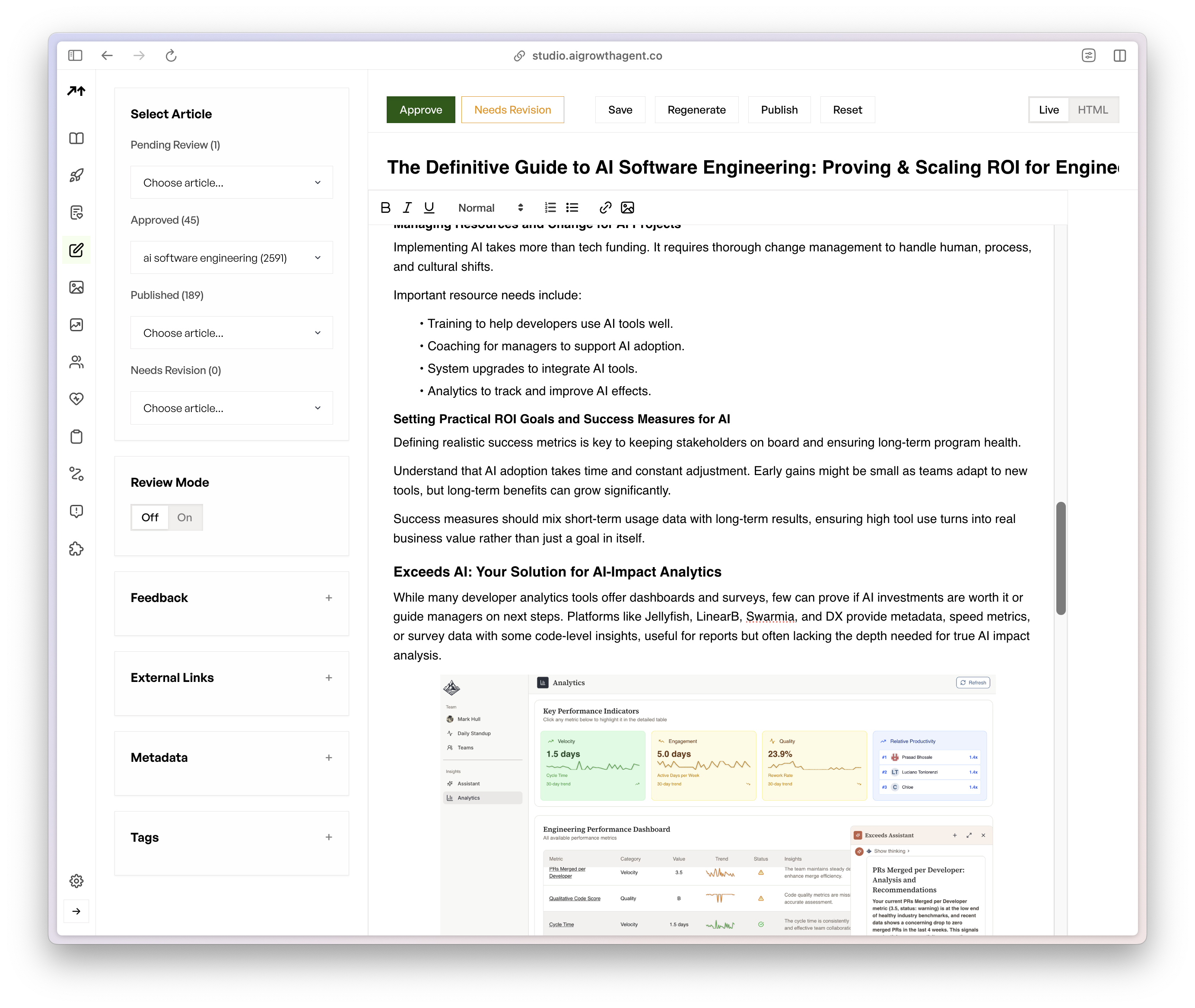
Multi-tenant deployment supports multiple brands from one environment, while real-time content injection enables rapid response to emerging topics. The AI Growth Agent Studio gives marketers visibility and control, and the system adapts based on feedback over time.
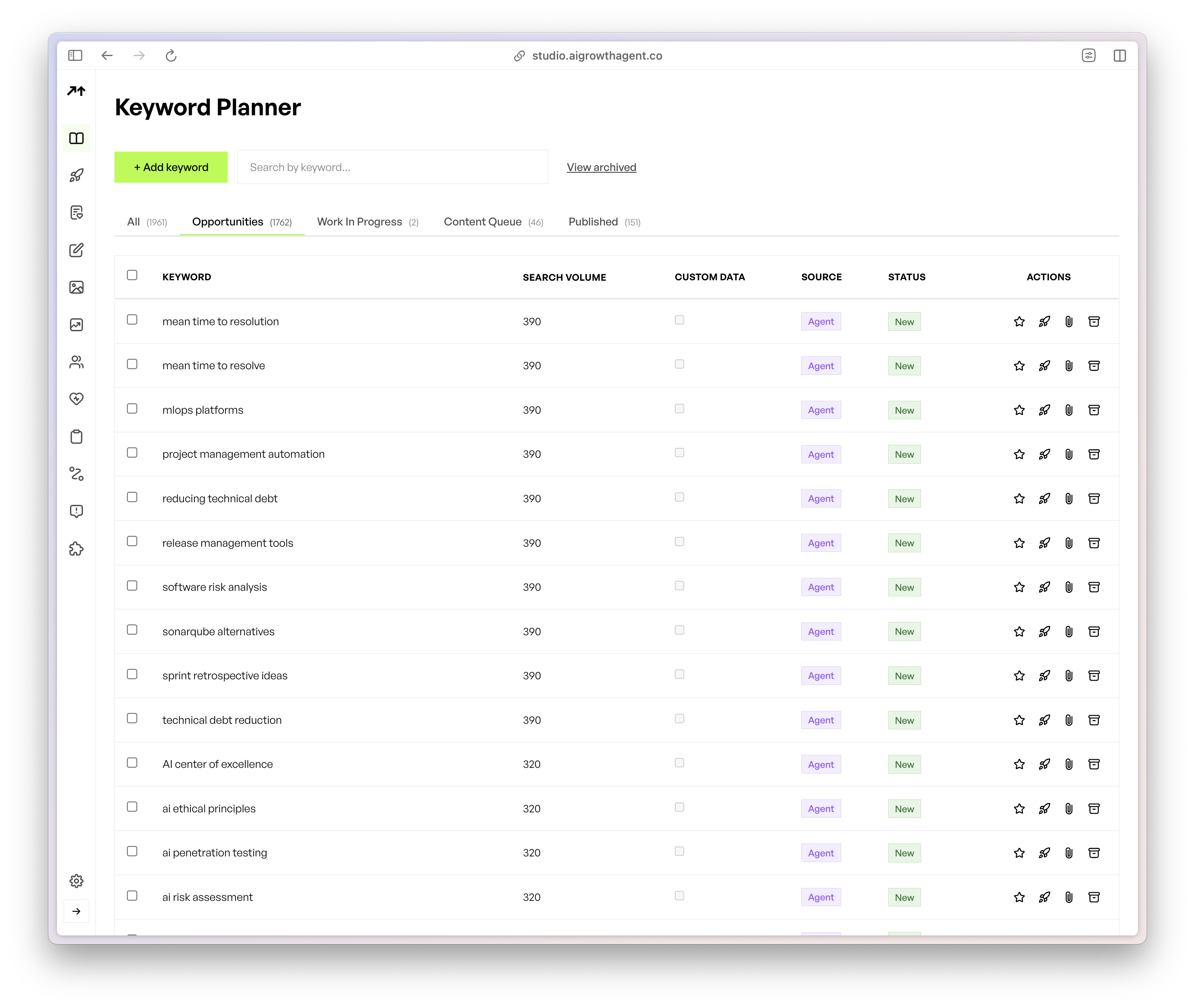
AI Growth Agent replaces fragmented tool stacks with a single platform oriented around outcomes such as organic traffic, AI citations, and category authority, rather than charging by seat or billable hour.
ROI Profile
Client outcomes illustrate the model’s potential. Exceeds AI earned Perplexity recommendations within two weeks. BeConfident was highlighted as a leading English-learning app in Brazil via Google AI Overview and Gemini within weeks. Bucked Up gained ChatGPT citations as a notable protein soda brand within three weeks, and Gitar became a frequent reference for AI-powered CI/CD automation across major AI search platforms in under two months.
Schedule a demo to see how AI Growth Agent could support your AI search goals.
Comparative ROI Analysis: Traditional vs. Programmatic for AI Search Authority
AI Content Creation ROI Factors
|
Feature Area |
Traditional AI Tools |
Internal Teams + AI |
AI Growth Agent |
|
Content Velocity |
High for raw drafts |
Moderate with manual refinement |
Very high with automated workflows |
|
Technical SEO Depth |
Low manual work required |
Moderate, depends on developers |
Advanced LLM.txt, MCP, schema |
|
AI Citation Potential |
Low, unstructured pages |
Moderate, often inconsistent |
High, built for AI indexers |
|
Cost Efficiency |
Variable per-seat and add-ons |
High salaries and tool costs |
Value focused on outcomes |
|
Scalability |
Limited by manual oversight |
Limited by human bandwidth |
High, multi-tenant, and agentic |
|
Authority Building |
Indirect, human-driven |
Slow and uneven |
Direct, designed for authority |
|
Deployment Complexity |
Moderate integrations |
High stack complexity |
Low with guided onboarding |
|
Real-time Adaptability |
Low, manual updates |
Low, slow execution |
High, near real-time injection |
Traditional AI tools and internal teams offer partial gains but struggle to combine speed, technical precision, and scale. Programmatic SEO Agents give enterprises a way to coordinate all three, which improves the odds of earning citations from AI systems and sustaining ROI.
Conclusion: Secure Your Brand’s Authority with Programmatic SEO
The 2026 AI search environment rewards brands that publish structured, technically sound content at programmatic scale. Traditional AI tools and internal teams contribute value, yet they often cannot resolve the scale-versus-quality tradeoff on their own.
AI Growth Agent focuses on autonomous content engineering, from research to publishing, to help brands gain visibility in AI search engines and accumulate citations. Clients have seen results within weeks, supported by consistent, technically optimized output.
Your digital footprint shrinks as AI-generated content grows. Brands that adopt programmatic SEO early are better positioned to retain visibility and authority in AI-first discovery channels. Schedule a consultation to explore whether AI Growth Agent is the right programmatic SEO partner for your team.
Frequently Asked Questions
How quickly can I expect to see ROI with a Programmatic SEO Agent like AI Growth Agent?
Most clients see early AI citations and movement in organic traffic within weeks of deployment. Exceeds AI gained Perplexity recommendations within two weeks, Bucked Up earned ChatGPT citations within three weeks, and BeConfident reached a top recommendation position in Brazil through Google AI Overview and Gemini within weeks. These timelines are typically faster than results from traditional tool-based or fully manual approaches.
Is AI Growth Agent only for large enterprises, or can smaller businesses benefit?
AI Growth Agent is best suited for brands that already have a strong product and clear positioning, and that want to expand share of voice in AI and organic search. Both larger enterprises and growing companies can benefit if they are ready to invest in structured, programmatic content as a core growth channel.
What kind of technical expertise is required to implement AI Growth Agent?
AI Growth Agent provides high-touch onboarding and then manages the technical infrastructure autonomously. Tasks such as schema implementation, LLM.txt deployment, and ongoing technical SEO updates run within the agent. Your team focuses on inputs such as positioning, approvals, and priorities, not on day-to-day technical configuration.
How does the cost compare to building an internal AI content team?
Internal teams require ongoing investment in salaries, stacked tool subscriptions, training, and coordination. Those costs can rise quickly, especially when you aim for programmatic scale. AI Growth Agent consolidates much of this work into one platform and pricing model focused on outcomes such as organic growth and AI citations, which often improves cost predictability and efficiency.
Can AI Growth Agent integrate with our existing content management system?
AI Growth Agent integrates with platforms such as WordPress, Webflow, Framer, and HubSpot. Many clients choose the hosted option, which deploys as a subdomain that closely matches the existing brand while providing a clean, AI-search-optimized technical foundation for programmatic SEO.