Written by: Mariana Fonseca, Editorial Team, AI Growth Agent
Key Takeaways
-
Advanced keyword research in 2026 maps the full search universe by mining real-user language from support logs and forums instead of relying on outdated volume metrics.
-
Seed terms and SERP emulation uncover long-tail prompts and conversational queries that AI surfaces favor, shifting focus from head terms to citation opportunities.
-
Competitor overlap analysis now requires separate maps for organic rankings and AI-cited sources, because brand mentions and narrative alignment drive visibility more than backlinks.
-
Hub-and-spoke clustering builds topical authority through depth, with living content that self-updates so research stays current and compounds over time.
-
AI Growth Agent automates this entire system from search-universe mapping to living content, delivering measurable lifts in AI citations and impressions, and you can schedule a demo to see how fast your brand can own its search universe.
Introduction: A New System for AI-Native Keyword Research
Volume-based keyword tools were built for a search landscape that no longer exists. The seven techniques below move from foundational language mining to autonomous living content, forming a repeatable system that maps the full search universe and turns research into narrative control. You will first capture real customer language in and outside your walls, then turn that language into seed terms and long-tail prompts.
Next, you will map competitors across organic and AI surfaces, cluster content for topical authority, and shift from rank tracking to citation context. Finally, you will feed everything into living content that keeps your visibility current without constant manual updates. Each technique addresses a specific failure point in the old model and compounds with the ones that follow.
1. Mine Real-User Language from Support Logs and Forums
An estimated 15% of daily searches in 2026 are brand-new queries with zero historical data, which means keyword tools built on historical volume are structurally blind to a significant share of real demand. The fix is to go upstream of the tool entirely and listen where customers already speak in their own words.
Support logs, chat transcripts, and internal search analytics capture the exact language customers use before they ever reach a search bar. Enterprise search analytics dashboards surface repeated user phrasing, content gaps, and pain points hidden in support-like data, giving marketing teams a direct feed of unfiltered intent. A support manager who notices repeated searches for “cancel subscription” is sitting on a keyword cluster most competitors will never find in a tool.
Forum threads on Reddit and niche communities extend the same logic externally. WSI recommends using social listening and customer queries across platforms including Reddit, TikTok, YouTube, and AI interfaces to understand what audiences are really asking. The output is a vocabulary map of real-user language that no competitor running a standard keyword tool will replicate.
2. Turn Real Language into Seed Terms That Anchor Your Search Universe
Seed terms act as strategic anchors that organize your entire search universe. Each seed term spawns dozens of long-tail queries beneath it, and the collection of those clusters becomes a complete portrait of your market. Most brands track a handful of head terms and lose the rest of the conversation by default.
Building seed terms correctly starts by working backward from the brand’s actual positioning, not forward from a tool’s volume suggestions. This positioning-first approach keeps seed terms aligned with what you truly offer, not just what appears popular in a database. With that direction set, you use the real-user language from step one and group it into thematic anchors that match your positioning. You then validate each anchor against live search data to confirm that real queries exist beneath it.
Google’s 2026 trends analysis positions AI-driven search as requiring content ecosystems rather than single-keyword pages, so seed terms must be broad enough to support a cluster yet specific enough to own a defined narrative space. A mature search universe built this way reaches 1,500 or more queries, refreshed weekly, which gives the brand a current and actionable view of the competitive landscape instead of a static keyword list.
3. Use SERP Emulation to Uncover Long-Tail Prompts
Long-tail prompts now carry most real customer intent, and AI surfaces increasingly favor them. Ahrefs analysis of 146 million SERPs found Google AI Overviews appear for 21% of all queries, with 99% occurring on informational searches. Those informational, conversational queries are exactly the ones that volume-based tools undercount or ignore.
SERP emulation means you run the actual search for a target query and study the page before writing a single word of content. Checking whether a target keyword triggers a Google AI Overview is now a required step, because those summaries push organic listings further down the page and may reduce click-through rates. The presence or absence of an AI Overview changes the content format and depth required to win that query.
Ahrefs’ April 2025 study found that when Google AI Overviews appear, they reduce clicks to the top-ranking organic result by 34.5%, so the goal for informational queries shifts from ranking to citation. Expanding People Also Ask boxes by repeatedly clicking questions surfaces dozens of real user sub-queries. Those sub-queries reveal the exact conversational language you need to earn that citation.
4. Compare Competitors Across Organic Results and AI Citations
Competitor analysis in 2026 requires two separate maps: one for organic SERP competitors and one for AI-cited source competitors. 5W Public Relations’ 2026 research showed that overlap between top Google organic links and AI-cited sources has dropped from about 70% to below 20%. A brand can rank on page one and remain invisible in AI answers, or earn AI citations without a page-one ranking, so you now operate in two distinct arenas.
The practical implication is clear. Competitor gap analysis must extend beyond organic rank tracking and into the stories AI tells. Brand mentions correlate 0.664 with AI citation probability, compared with 0.218 for backlinks, which shifts the focus from link overlap to mention and narrative overlap. The key issue becomes who gets cited alongside you and for which claims, not just who ranks above you.
Eighty-five percent of brand mentions in AI answers originate from third-party pages, not owned domains, so third-party source analysis now sits at the center of any competitor overlap audit.
5. Build Hub-and-Spoke Clusters to Earn Topical Authority
Topical authority now determines which sources search engines and AI models trust most. It grows through depth, not sheer content volume. Following Google’s March 2026 core update, sites with 50 deeply researched articles in a focused niche outrank those with 500 generic articles spanning dozens of topics. The hub-and-spoke model gives you a practical structure for that depth.
Each seed term becomes a hub page that states your authoritative position on a topic. Spoke articles then address every long-tail query beneath that seed term and link back to the hub and to each other. The cluster signals to both crawlers and AI models that your brand offers comprehensive, trustworthy coverage of the subject.
The performance data behind this approach stays consistent across industries. Wolters Kluwer, after building high-performing topic clusters including a Tax Resource Center with Conductor, increased the number of its organic search results appearing in the top 10 by 400%. Thrive Internet Marketing Agency’s local SEO strategy for Liberty Moving produced a 135% increase in top-10 keyword rankings over six months, further reinforcing the impact of structured topical depth.
6. Track Citation Context Instead of Simple Rankings
Citation context now matters more than a bare ranking number. A ranking number shows a position on a static list, while citation context shows where your brand appears in an AI answer, who appears alongside you, and which claim triggers the mention. These signals differ, and in 2026 citation context drives discovery more reliably.
AI platforms cite sources rather than rank them, which makes brand mentions across trusted sources more influential than traditional backlinks for visibility. Mapping citation context means auditing which AI answers mention your brand, what prompts or claims trigger those mentions, which third-party sources appear beside you, and what narrative the model builds around your category.
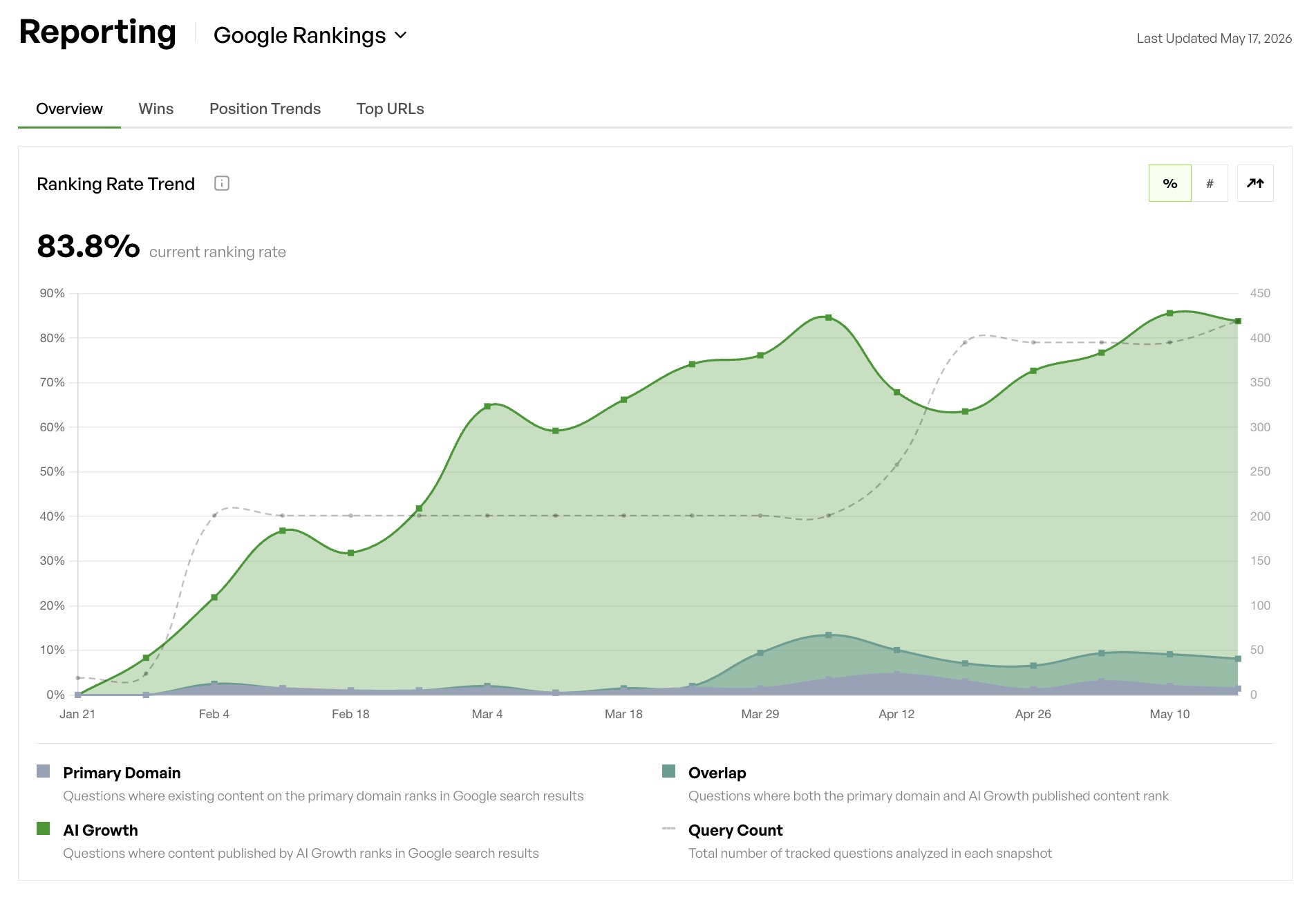
Zero-click searches are rising in AI-driven environments, where users often get answers without clicking through to any website. This shift makes traffic volume alone a weak success metric, because you can win visibility without receiving a click. Citation context mapping therefore replaces rank tracking as the primary visibility metric for brands operating in AI-native search environments.
7. Turn Research into Living Content That Self-Heals
Living content keeps every previous technique working over time. It updates automatically as the brand, the market, and the search landscape change. Without a living system, the research from steps one through six produces assets that start decaying the day they ship.
Jill Grozalsky Roberson, senior vice president of marketing and partnerships at Velir x Brooklyn Data, states that winners in 2026 will treat content like a living data ecosystem that measures what matters and feeds insights back into narrative decisions. That mindset describes an infrastructure decision, not just a content calendar.
Sites publishing proprietary data, first-hand case studies, and expert commentary saw visibility gains after Google’s March 2026 core update, while thin and templated content lost organic visibility. The depth-over-breadth principle from that update also applies to freshness, because content that stays current, validated, and structurally sound keeps earning citations as models retrain.
AI Growth Agent’s engine operationalizes this approach. Every article in a client’s cluster is refreshed in batches, rule changes propagate overnight across all live articles, and anti-hallucination checks validate every claim against live sources instead of a model’s training data. The result is authority that compounds instead of decaying, with no republishing workload for the brand.
Across the first three months, AI Growth Agent clients average more than 12,000 additional AI citations and mentions, over 100,000 additional bot visits, and a lift of more than 20% in impressions in Google Search Console.
Conclusion: Replace Volume Chasing with Narrative Control
The seven techniques above form a single repeatable system. You mine real-user language, anchor it in seed terms, extract long-tail prompts through SERP emulation, map competitor overlap across both organic and AI surfaces, cluster for topical authority, track citation context instead of rankings, and feed everything into living content that self-heals. Each step builds on the last so you trade volume chasing for durable narrative control.
As Jeff Coyle, head of strategy at Siteimprove, explains, success in 2026 comes from authority, trust, and systems that scale human judgment, not from volume or prompts. Brands that build this system now are training the next generation of AI models with their own narrative. Brands that wait leave that job to whatever happens to be sitting on the open web.
AI Growth Agent runs this system on autopilot, from search universe mapping to living content to incremental visibility reporting, without adding headcount. You can schedule a demo to see if you are a good fit and find out how fast your brand can own its search universe.
Frequently Asked Questions
What is the difference between advanced keyword research and standard keyword research?
Standard keyword research prioritizes search volume and competition scores from historical tool data. Advanced keyword research maps the full search universe by extracting real-user language from support logs and forums, clustering content for topical authority, analyzing competitor overlap across both organic and AI surfaces, and tracking citation context inside AI-generated answers. The goal shifts from ranking for pre-selected head terms to earning incremental visibility across every query a real customer might ask.
Why is volume-based keyword research losing effectiveness in 2026?
An estimated 15% of daily searches are brand-new queries with zero historical data, which means volume-based tools are structurally blind to a significant share of real demand. At the same time, the overlap between top Google organic results and AI-cited sources has dropped sharply, so ranking for high-volume terms no longer guarantees visibility in the AI answers where a growing share of discovery happens. Intent, narrative overlap, and citation context now drive visibility more reliably than volume alone.
How does hub-and-spoke clustering build topical authority?
Hub-and-spoke clustering organizes content around a central seed term, the hub, supported by spoke articles that address every long-tail query beneath it. The internal linking structure signals to search engines and AI models that the brand has comprehensive, trustworthy coverage of the subject. Depth within a focused topic cluster consistently outperforms broad content spread across many unrelated topics, because both Google’s ranking systems and AI citation models reward demonstrated expertise over surface-level coverage.
What is citation context and how is it measured?
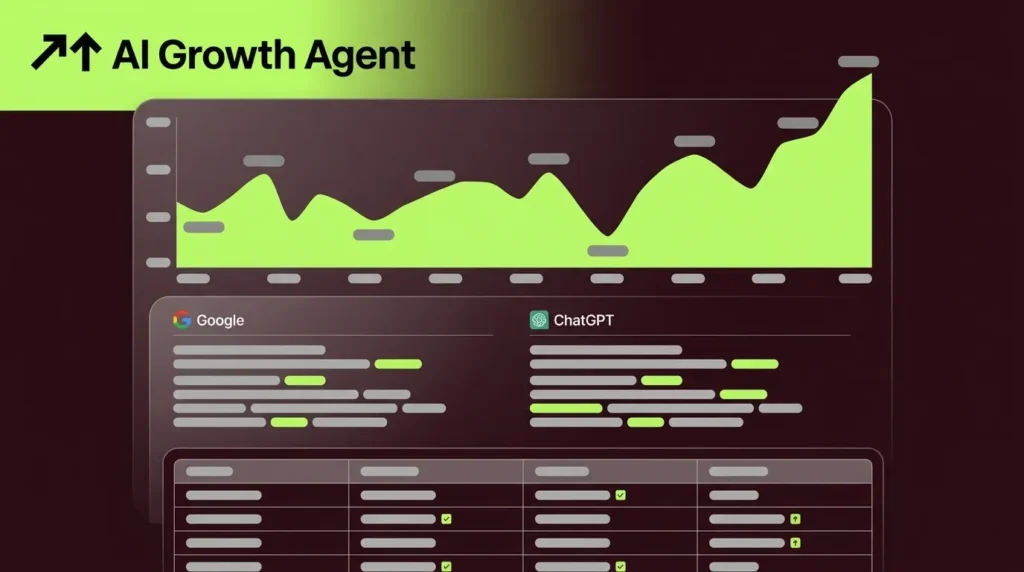
Citation context describes where a brand appears in an AI-generated answer, which sources it is grouped with, and what specific claim triggers the mention. It replaces the traditional ranking number as the primary visibility metric in AI-native search environments. Measurement requires monitoring AI answers across platforms like Google AI Overviews and ChatGPT for brand mentions, tracking the order of appearance, auditing which third-party sources are cited alongside the brand, and identifying the narrative the model constructs around the brand’s category.
What makes content “living” and why does it matter for keyword research?
Living content is content that updates automatically as the brand, the competitive landscape, and search behavior evolve. It matters for keyword research because the search universe keeps shifting as new queries emerge, competitor narratives change, and AI models retrain on current web data. Content that goes stale loses citation eligibility as models encounter more current sources. A living content system ensures that keyword research findings translate into durable visibility rather than a one-time ranking spike that fades within months.