Written by: Mariana Fonseca, Editorial Team, AI Growth Agent
Key Takeaways
- Website architecture in 2026 splits into agentic sites that embed agent runtimes and agent-friendly sites tuned for external AI discovery and citation.
- Most brands need both architectures, and the choice of which to build first directs technical investment toward transactional or informational use cases.
- AI Growth Agent clients see more than 12,000 additional AI citations, over 100,000 bot visits, and a 20%+ lift in impressions within the first twelve weeks through complete agentic technical SEO stack provisioning.
- Implementation follows five phases: universe mapping, architecture decision, technical provisioning of MCP endpoints and discovery files, content publishing, and self-healing monitoring.
- Map your query universe and get your first agent-enabled article live within one week by booking a consultation with AI Growth Agent.
Prerequisites for Agent-Enabled Architecture
Agent-enabled architecture requires clear content direction and clean technical integration without changing the main site. Three conditions must be in place before implementation starts. First, a brand manifesto: a structured document capturing voice, factual references, deny lists, primary source URLs, and the strategic seed terms that define the brand’s market. This manifesto becomes the single source of truth the engine draws from at every generation step so every article reflects the brand’s positioning. Second, domain control: the ability to add a subdirectory or subdomain and configure a reverse proxy rewrite, typically through Cloudflare, Vercel, or an equivalent provider. This control enables the third requirement, reverse-proxy capability, which routes a path such as /blog or a subdomain to an external origin without modifying the existing main site. That single integration step is the only engineering dependency the client carries.
Process Overview and Headless Marketing
The implementation follows five sequential phases that apply headless marketing principles. The brand keeps its curated main site for human visitors while AI Growth Agent provisions a separate, fully optimized blog for AI discovery and citation, connected through a reverse proxy. Phase one is universe mapping: ingest the manifesto and run real-time searches across Google and ChatGPT to build a topology of seed terms and the long-tail queries beneath them. Phase two is architecture decision: choose between an agentic site, an agent-friendly site, or both, based on the brand’s technical maturity and the agent interaction patterns that matter most in its market. Phase three is technical provisioning: stand up MCP and WebMCP endpoints, /.well-known/ discovery files, llms.txt and llms-full.txt, full schema markup, and the WordPress plugin stack. Phase four is content publishing: generate authoritative, semantically structured articles against the prioritized query universe and connect them to the owned domain via reverse proxy. Phase five is monitoring and self-healing: activate incremental visibility reporting, bot traffic tracking, and the living content system that refreshes articles in response to Google Search Console signals and bot-traffic awareness.
Step-by-Step Implementation
Step 1: Map the Full Query Universe
Goal: Produce an evidence-based topology of every query the brand’s ideal customer asks, across head terms and the long tail, before writing a single word of content.
Inputs: Brand manifesto, product pages, competitor domains, real-time Google AI Overview results, and ChatGPT search results used as the objective function for which long-tail queries are worth pursuing.
Roles: AI Growth Agent runs 3,000+ searches weekly to refresh the universe snapshot. The client reviews seed term priorities in the Content Planner.
Validation: The topology should surface 300 to 400 queries at launch, expanding to 1,600+ as the universe matures. Every query must be backed by a real search signal, not a keyword guess.
Suggested visual: A seed-term hierarchy table showing each seed term, its long-tail query count, current AI citation status, and priority tier.
Step 2: Choose Architecture: Agentic, Agent-Friendly, or Both
Goal: Make a deliberate decision about which site type to build first, based on the brand’s agent interaction requirements and technical readiness.
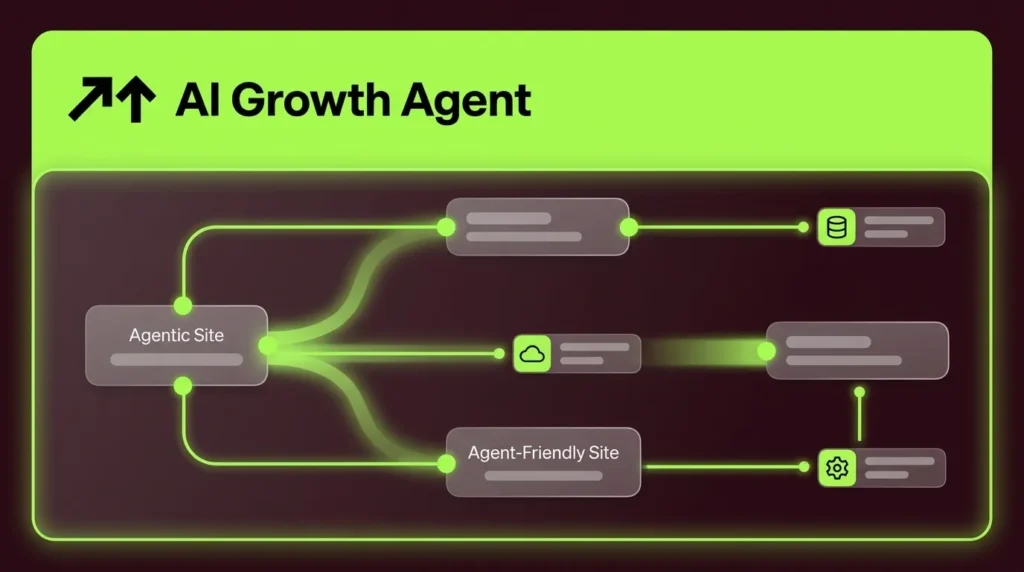
The comparison below highlights how agentic and agent-friendly architectures differ across four practical dimensions: primary function, technical layer, state management, and typical first use case. Use these differences to decide which architecture should launch first for your brand.
| Dimension | Agentic Site | Agent-Friendly Site |
|---|---|---|
| Primary function | Embeds agent runtime, and external agents query and transact directly | Structured so external agents can read, cite, and surface content |
| Key technical layer | MCP/WebMCP endpoints, agent cards, OAuth 2.0 authorization | llms.txt, llms-full.txt, semantic HTML, rich schema, /.well-known/ |
| State management | Durable task state, session context, shared memory stores | Stateless, with content freshness handled by a living content system |
| Typical first use case | Booking, transactional queries, multi-step agent workflows | AI citation, brand narrative control, zero-click answer coverage |
Inputs: Architecture decision table above, manifesto, and an assessment of whether the brand’s primary AI surface interaction is informational, which favors agent-friendly first, or transactional, which favors agentic first.
Roles: The CMO or builder makes the architecture call. AI Growth Agent provisions both layers, and the decision determines sequencing, not scope.
Validation: A documented architecture decision with a rationale tied to the brand’s query universe and agent interaction patterns.
Step 3: Provision MCP, WebMCP Endpoints, and /.well-known/ Discovery
Goal: Make the site machine-discoverable and interoperable with the agent ecosystem.
The MCP 2026-07-28 release candidate, locked May 21, 2026, with final specification scheduled for July 28, 2026, introduces a stateless protocol core that removes the initialize and initialized handshake. Any MCP request can route to any server instance behind a plain round-robin load balancer without sticky sessions. For website deployments, Streamable HTTP is the recommended MCP transport, using HTTP POST and GET requests with real-time Server-Sent Events streaming. The release candidate also requires Streamable HTTP transport to include Mcp-Method and Mcp-Name headers so load balancers can route requests without inspecting the body.
Building on this stateless, load-balancer-friendly foundation, AI Growth Agent ships Blog MCP, compatible with Chrome 146+ and other WebMCP-enabled browsers, with schema, manifest, discovery, and capability guidance exposed to agents. OpenAI discovery and Agent Card guidance are served via /.well-known/. Agent cards are structured documents published at known endpoints that declare an agent’s accepted task types, input and output schemas, authentication requirements, and rate limits, enabling dynamic discovery and composition of multi-agent workflows without pre-built integrations.
Inputs: Domain, reverse proxy configuration, WordPress plugin activation.
Roles: AI Growth Agent provisions all endpoints automatically. The client configures the reverse proxy rewrite, which is the only required integration step.
Validation: Confirm /.well-known/agent-card and /.well-known/openai-discovery return valid JSON. Confirm the Blog MCP endpoint responds to a test agent query. Confirm natural language query parameters at /?s={query} return personalized, internally linked responses.
Step 4: Generate and Validate llms.txt and llms-full.txt
Goal: Give AI surfaces and IDE agents a structured, curated map of the brand’s most important content.
llms.txt should be hosted at the root domain as https://yourdomain.com/llms.txt and use one H1 containing only the literal brand or product name, followed immediately by a blockquote summary and H2 sections for logical categories. Mintlify recommends organizing llms.txt by user journey rather than site hierarchy so that AI agents encounter the pages answering the most common questions first, prioritizing links by frequency of use rather than perceived importance.
For most implementations, ship both llms.txt, which provides a compact overview with links for token-efficient navigation, and llms-full.txt, which embeds complete content for self-contained context. Keep llms.txt accurate and current because stale files can cause AI tools to generate broken or outdated outputs. Select 20 to 50 canonical URLs that an agent would actually need, grouped into 4 to 7 H2 sections, with one-sentence descriptions for each link explaining both what the page contains and when an agent should fetch it.
Inputs: Finalized content topology, published article URLs, product and pricing pages, primary source URLs from the manifesto.
Roles: AI Growth Agent generates and maintains both files automatically. The client reviews the H2 section structure against the brand’s information architecture.
Validation: Test the llms.txt file in Cursor or Claude by asking specific questions about the brand’s core offerings and adjust the structure if the tool references outdated information. Instrument CDN logs to track hits to /llms.txt and /llms-full.txt filtered by AI user agents as the primary measurement signal. Do not gate either file behind login or authentication.
Step 5: Implement Semantic HTML, Rich Schema, and State Synchronization
Goal: Ensure every published page is machine-readable at the structural, semantic, and schema layers.
Semantic HTML5 tags such as Article, Main, Section, Nav, and Header define an element’s intrinsic purpose to both browsers and crawlers, improving machine readability for web crawlers and assistive technologies by explicitly communicating the purpose of page sections. Search engines assign greater importance to keywords placed inside semantic elements than those inside generic Div elements.
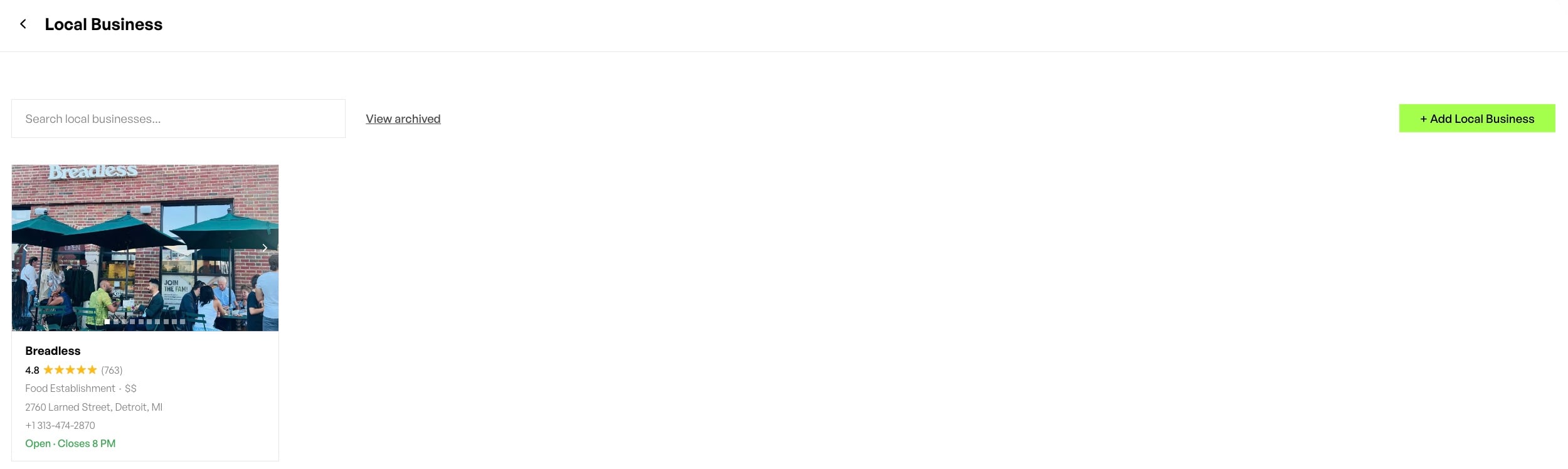
AI Growth Agent provisions the full schema suite automatically: Article, FAQ, LocalBusiness, Organization, Review, Product, Author, and SoftwareApplication schema, kept current across every published page. Internal linking compounds authority across the universe. External links are sanitized and marked noindex and nofollow to protect authority flow.

For agentic sites, state synchronization follows the pattern described in multi-agent architecture. Durable shared state stores handle task state and workflow progress while short-lived session context is managed separately, with schema-validated outputs at every handoff to prevent non-determinism from propagating across agent boundaries.
Validation: Run Google’s Rich Results Test on a sample of published URLs. Confirm Article and FAQ schema render without errors. Confirm Markdown is served to agent crawlers via the appropriate Accept header.
Step 6: Launch the Owned Site via Reverse Proxy in Week One
Goal: Get a fully optimized, brand-owned property live on the domain within the first week of kickoff, with no website agency and no engineering dependency beyond the reverse proxy rewrite.
By this point, the technical stack is provisioned and ready for deployment. AI Growth Agent stands up a top-of-funnel blog styled to match the client’s existing site and connects it through a reverse proxy rewrite, typically under a subdirectory or through a subdomain. The existing main site remains untouched. The WordPress plugin ships with bot tracking, Blog MCP, advanced robots.txt, a proper sitemap.xml, a dedicated web-stories sitemap, automatic web stories, instant indexing, autoredirects, and 404 tracking, all out of the box.
Inputs: Reverse proxy configuration documentation generated for the client’s host, such as Cloudflare, Vercel, or an equivalent provider, and brand style guidelines for visual matching.
Roles: AI Growth Agent handles all site setup and plugin configuration. The client or their host administrator applies the reverse proxy rewrite, which is the only required integration step.
Validation: Confirm the subdirectory or subdomain resolves correctly. Confirm the sitemap.xml and robots.txt are accessible. Confirm the first published article is live and indexed within ten days.
Step 7: Enable Self-Healing Living Content with Memory Systems
Goal: Prevent content decay by running a system that updates articles automatically in response to world changes, Search Console signals, and bot-traffic data.
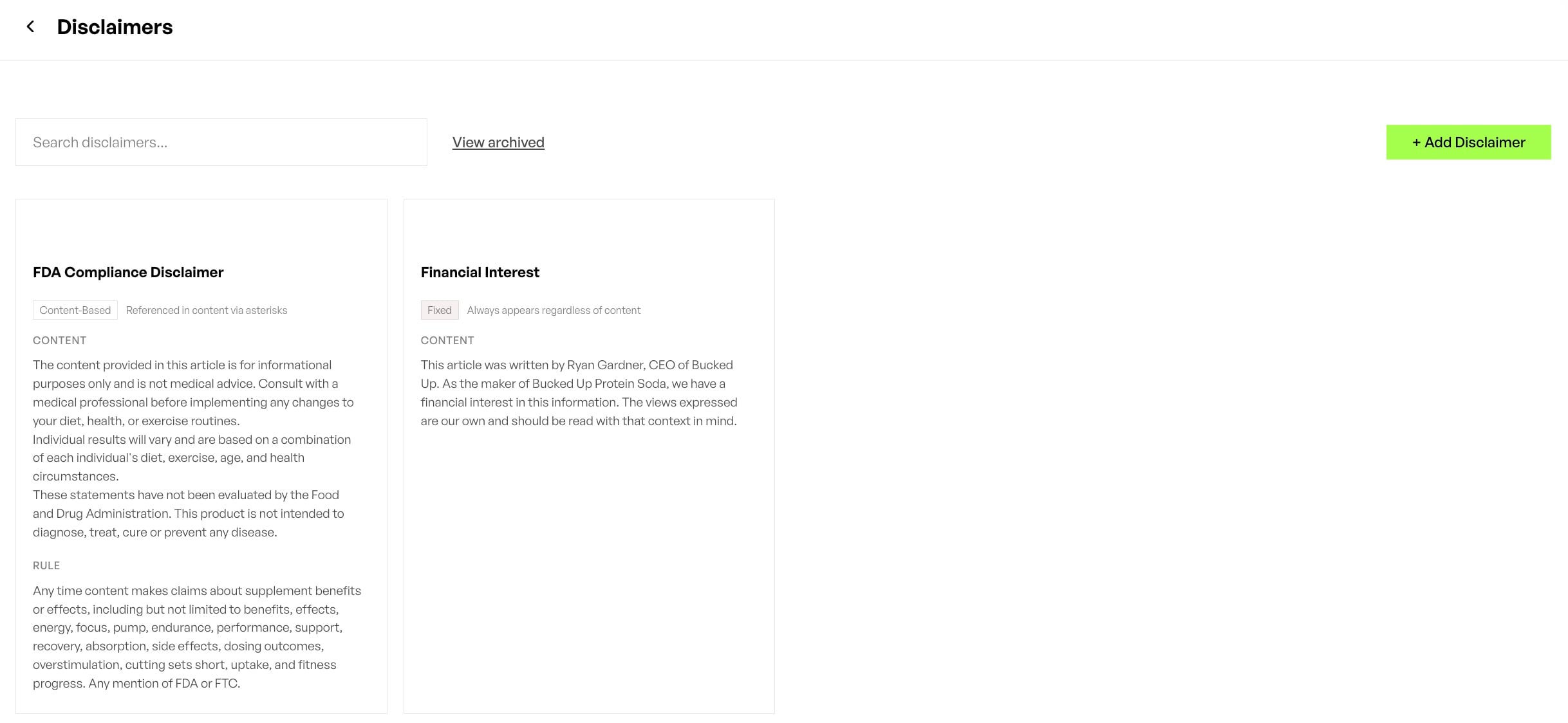
Living content does not ship once and sit unchanged. When the year turns, every article in a sector refreshes automatically. Every article’s relationships, performance, and bot and Search Console data are centralized so authority compounds instead of decaying. Memory systems enforce brand voice, block unwanted language, and apply legal disclaimers consistently across every future generation without re-briefing.
Inputs: Google Search Console integration, per-article bot tracking data, manifesto memories, and style and factual memory configurations.
Validation: Confirm that articles flagged by Search Console for declining impressions trigger a refresh cycle. Confirm that memory rules apply consistently across newly generated articles without manual re-entry.
Step 8: Activate Incremental Visibility Reporting
Goal: Prove that the visibility generated by the agentic technical SEO stack is new, not a restatement of visibility the brand already had.
AI Growth Agent publishes into a separate environment so it can report only the visibility it actually generates. Reporting covers week-over-week indexing progress, bot traffic by bot type, including the bot ChatGPT uses to cite sources, Google Search Console impressions as an independent audit, and citation context showing where the brand appears in AI answers and what claims it is cited for.
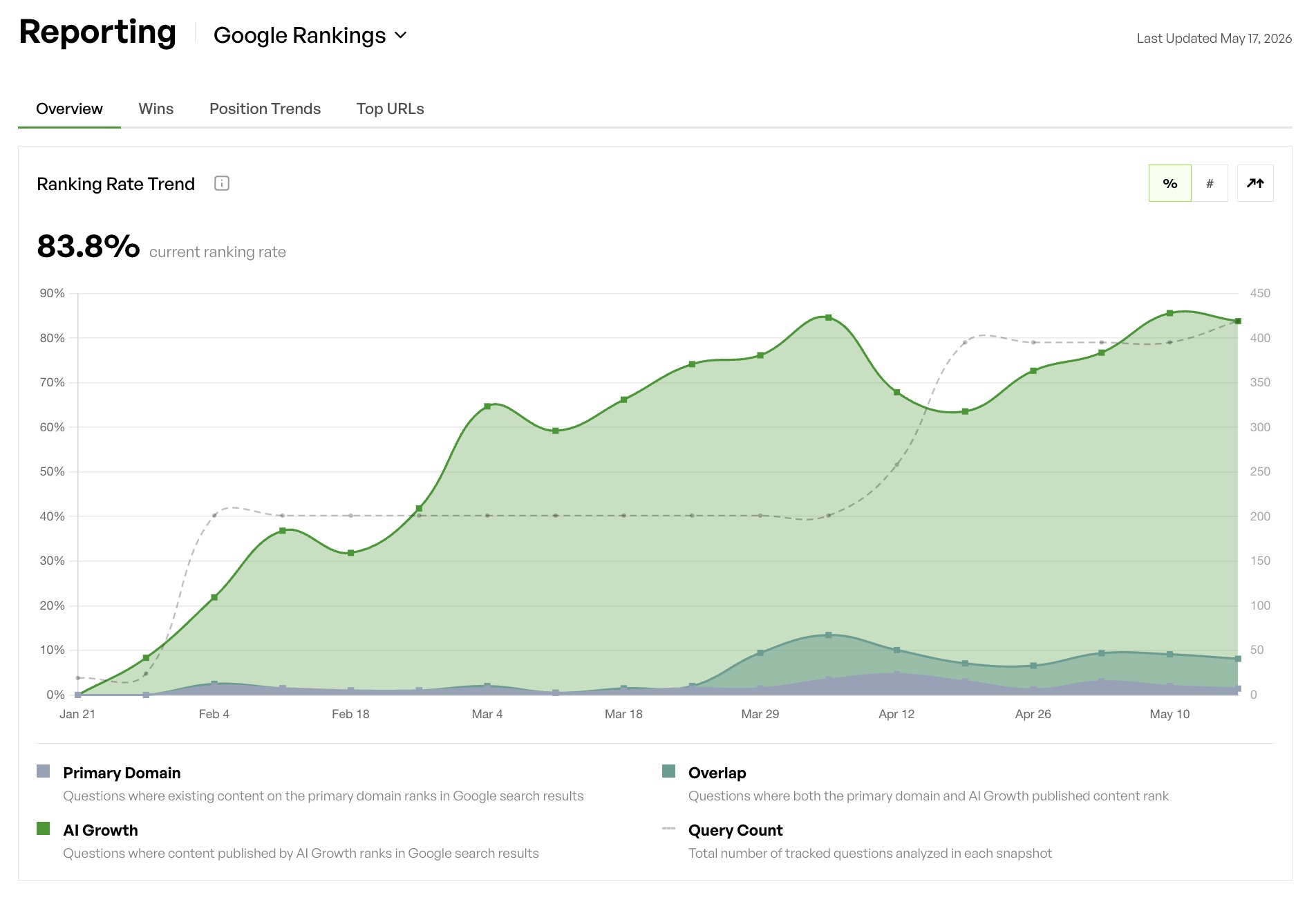
Validation: Confirm the reporting view distinguishes AI Growth Agent-generated impressions from baseline brand impressions. Confirm bot analytics log ChatGPT, Perplexity, and Google-Extended crawls separately. Cross-reference with Google Search Console weekly.
Common Mistakes and Troubleshooting
Missing agent discovery files. Sites that publish content without /.well-known/ endpoints, llms.txt, or Blog MCP stay invisible to the agent layer even if their traditional SEO is strong. Agents increasingly support MCP for tool integration, so MCP-compatible endpoints matter for the agent ecosystem. A site without them does not enter the conversation.
Stale content. Stale llms.txt files can cause AI tools to generate broken or outdated outputs, and the same risk applies to article content. Living content systems that self-heal in response to Search Console signals now form the baseline for maintaining citation authority in 2026.
Incomplete schema. Partial schema implementations, such as Article schema without Author or FAQ schema without structured answers, reduce the richness of rich results and lower the probability of citation. Every schema type in the suite must be provisioned and validated, not just the most visible ones.
Lack of incremental attribution. Brands that measure total impressions without isolating what their new content investment generated cannot defend the investment or double down on what works. Publishing into a separate environment and reporting incrementally provides the only reliable way to distinguish signal from baseline noise.
Over-reliance on head terms. Robots search the long tail. Brands that focus only on head terms stay blind to most of their own market. The query universe must come from real-time AI Overview and ChatGPT data, not from a pre-decided list of brand-preferred keywords.
Verifying Outcomes
Objective signals show when the agentic technical SEO stack is working. Bot traffic logs should show crawls from GPTBot, ClaudeBot, PerplexityBot, OAI-SearchBot, and Google-Extended within the first two weeks of publishing. Citation context in AI answers should show the brand appearing in responses to target queries, with the citation tied to specific claims from published articles. Google Search Console impressions for AI Growth Agent-generated URLs should show first indexing within ten days and a measurable week-over-week impression lift within the first month. CDN log hits to /llms.txt and /llms-full.txt filtered by AI user agents confirm that agent crawlers are consuming the discovery files. MCP endpoint health checks confirm that Blog MCP and /.well-known/ endpoints return valid responses to agent queries.
Advanced Scenarios for Complex Brands
Multi-brand universes. Enterprise portfolios with multiple distinct brands require separate manifesto instances, separate query universes, and separate incremental visibility reports. Each brand’s topology is built independently so seed terms and long-tail queries do not bleed across brand narratives. The reverse proxy configuration routes each brand’s blog to its own subdirectory or subdomain without interference.
Subdomains and subdirectory strategies. The choice between a subdirectory, such as domain.com/blog, and a subdomain, such as blog.domain.com, affects how domain authority consolidates. Subdirectories pass authority more directly to the root domain. Subdomains fit when the blog serves a distinct audience or when the main site’s CMS cannot support a subdirectory rewrite. AI Growth Agent generates setup documentation for both configurations across Cloudflare, Vercel, and other common providers.
Agency white-label deployments. PR agency owners running AI Growth Agent on behalf of clients operate separate engine instances per client, each with its own manifesto, topology, and reporting environment. The Search Intelligence layer lets the agency view any client’s universe from any competitor’s point of view, surfacing which domains and URLs win each result and where the white space sits, refreshed weekly. This turns AI search from a threat to the agency’s earned-media model into a new, high-margin service line that competitors cannot replicate without the same engine.
Frequently Asked Questions
What is the difference between an agentic site and an agent-friendly site?
An agentic site embeds an agent runtime directly into its infrastructure. It exposes MCP endpoints, WebMCP discovery, agent cards, and OAuth-authorized tool interfaces that let external AI systems query, reason over, and transact with the site autonomously. An agent-friendly site is tuned so that external agents and AI surfaces can read, trust, and cite its content without any embedded agent runtime. It achieves this through semantic HTML, rich schema, llms.txt, llms-full.txt, and /.well-known/ discovery files. Most brands benefit from building agent-friendly architecture first because it directly controls what AI surfaces say about the brand, and then layering agentic capabilities as transactional use cases emerge. AI Growth Agent provisions both layers, and the architecture decision determines sequencing, not scope.
How long does it take to ship an agent-enabled site?
AI Growth Agent goes from kickoff to the first published article in about one week. Content indexes in as little as ten days and often within two weeks. The full agentic technical SEO stack, including Blog MCP, WebMCP endpoints, /.well-known/ discovery files, llms.txt and llms-full.txt, full schema markup, and the WordPress plugin, is live on the domain within the first week. The standard engagement is a three-month pilot because indexing takes time and varies by industry, but clients see measurable bot traffic and citation activity early in the first month.
Does implementing llms.txt improve AI search rankings?
llms.txt functions primarily as Business-to-Agent infrastructure for IDE agents such as Cursor, Windsurf, Claude Code, GitHub Copilot, and MCP servers, rather than as a direct ranking factor for AI search engines. Google has stated it does not support llms.txt and has no plans to do so. The file’s primary value is ensuring that agent crawlers and developer tools can navigate the brand’s content efficiently and accurately. AI Growth Agent publishes both llms.txt and llms-full.txt as part of the standard agentic technical SEO stack because the agent ecosystem that does consume these files, including MCP-compatible tools and IDE agents, is growing rapidly and represents a meaningful discovery channel for technical and developer-adjacent audiences.
What is the 2026 MCP release candidate and why does it matter for site architecture?
The MCP 2026-07-28 release candidate, locked May 21, 2026, with the final specification scheduled for July 28, 2026, introduces a stateless protocol core that removes the initialize and initialized handshake. Any MCP request can route to any server instance behind a plain round-robin load balancer without sticky sessions or shared session stores, which significantly simplifies horizontal scaling for agentic sites. The release also adds MCP Apps for server-rendered UIs, the Tasks extension for long-running work, and hardens authorization to align with OAuth 2.0 and OpenID Connect. For site architects, the practical implication is that MCP endpoints built to the 2026 release candidate are production-grade and load-balancer-compatible without custom session management infrastructure.
What is headless marketing and how does it relate to agent-enabled sites?
Headless marketing applies the architecture of headless commerce to brand presence in AI search. The brand keeps its curated main site, the storefront that humans read. AI Growth Agent stands up a separate, fully optimized blog the brand owns, connected through a reverse proxy rewrite under a subdirectory or subdomain. The engine writes, publishes, provisions the full agentic technical SEO stack, monitors, self-heals, and reports. The brand controls what to win, in plain language, and the engine wins it. Agent-enabled sites are the technical output of headless marketing because they are built for the robots that actually read, cite, and act on content, not for a human visitor scrolling through a page. The headless architecture ensures the agentic technical SEO stack, including MCP endpoints, llms.txt, schema, and living content, is maintained autonomously without engineering headcount on the brand’s side.
How does incremental visibility reporting work for agent-enabled sites?
AI Growth Agent publishes into a separate environment so it can take credit only for the visibility it actually generates, never for visibility the brand already had. Reporting covers week-over-week indexing progress for AI Growth Agent-generated URLs, bot traffic by bot type including the specific bot ChatGPT uses to cite sources, Google Search Console impressions as an independent audit, and citation context showing where the brand appears in AI answers and what claims it is cited for. The four data pillars, Search Intelligence, AI Analytics, Bot Tracking, and AI Ranking, feed a single reporting view that turns the market into a diagnosis and the diagnosis into content decisions. Brands that measure total impressions without this incremental isolation cannot distinguish their content investment’s contribution from pre-existing brand visibility.
Do we need an internal engineering team to build and maintain an agent-enabled site?
No. The entire agentic technical SEO stack, including Blog MCP, WebMCP endpoints, /.well-known/ discovery files, llms.txt and llms-full.txt, full schema markup, advanced robots.txt, sitemap.xml, automatic web stories, instant indexing, autoredirects, and 404 tracking, is provisioned automatically by AI Growth Agent and included in every package. The only integration step on the client’s side is the reverse proxy rewrite that connects the blog to a subdirectory under the brand’s domain. AI Growth Agent generates setup documentation for the client’s specific host, whether Cloudflare, Vercel, or another provider. The internal team gives feedback in plain language and the system learns, so no technical skill is required.
Conclusion
Building agent-enabled sites in 2026 functions as a sequenced playbook, not a single technical task. The process begins with mapping the full query universe, makes a deliberate architecture decision between agentic and agent-friendly infrastructure, provisions the complete agentic technical SEO stack including MCP endpoints, WebMCP discovery, /.well-known/ files, llms.txt and llms-full.txt, and rich schema, publishes living content that self-heals over time, and proves incremental visibility through isolated reporting. The brands that control their narrative across AI surfaces this year train the next generation of models with their own story. The brands that wait train those models with whatever happens to be sitting on the open web.
AI Growth Agent replaces the entire stack: the SEO agency, the content tool, the web agency, the GEO monitor, the schema plugin, the analytics stack, and the PR firm. One engine and one flat fee cover the full system. Content indexes in as little as ten days, and clients average more than 12,000 additional AI citations and mentions across the first twelve weeks.