Written by: Mariana Fonseca, Editorial Team, AI Growth Agent
Key Takeaways
- MCP AI citations connect AI agents to live Model Context Protocol servers, so references stay verifiable, current, and traceable.
- Zero-click AI search shifts narrative control from search rankings to the sources AI models cite for answers.
- MCP works with llms.txt, Agent Cards, and natural language query parameters so agents can reliably discover and use brand content.
- Anthropic MCP, Oracle AI Database MCP, Context7, and AI Growth Agent Blog MCP each support citations with different strengths in provenance and adoption.
- AI Growth Agent delivers the complete MCP and discovery stack brands need to earn verifiable AI citations; see how the deployment works in a live walkthrough.
MCP, Zero-Click AI Search, and Brand Narrative Control
AI surfaces now answer queries directly instead of sending users to source pages. Google AI Overviews appear for a significant share of queries, reducing organic click-through rates on average and up to nearly half for informational queries. When an AI Overview appears, only a small percentage of users click through to traditional organic links. At the same time, AI search engine traffic has grown substantially year-over-year as platforms such as ChatGPT and Perplexity absorb query volume that previously went to blue links.
For brands, what an AI says about a company now functions as the answer for most users. Narrative control has moved from managing search rankings to controlling the sources AI models cite. MCP provides the technical layer that keeps those citations verifiable, real-time, and traceable. Without MCP, models fall back on training data that may be stale, contradictory, or drawn from uncontrolled sources. With MCP, brands can serve structured, current, authoritative content directly to the agent that makes the citation decision.
MCP still needs a discovery layer. A server that no agent can find produces no citations. The full stack uses agent-readable declarations such as llms.txt, Blog MCP endpoints, Agent Cards at /.well-known/, and natural language query parameters. Together, the discovery layer and the interaction layer ensure that agents both find and use brand content.
How MCP Works for Citations and How It Compares to RAG and APIs
MCP is an open source framework developed by Anthropic that standardizes how AI systems share data with external tools, services, and data sources. It uses a client-server architecture in which AI systems act as clients and data repositories act as servers, communicating through JSON objects and schemas. The three main components are the MCP host (the LLM or AI application), the MCP client (which sends context or action requests), and the MCP server (the intermediary that relays requests to external systems).
In agentic AI, MCP answers the question of what the model can do right now. RAG answers what the model should know right now. This distinction shapes citation quality. RAG typically relies on indexed, static sources, while MCP provides on-demand access to live APIs, databases, and streams. Responses draw on current authoritative data with traceable provenance metadata. MCP also supports a hybrid approach with RAG by using RAG to index evergreen content for fast retrieval while using MCP for transactional lookups and live data that must stay fresh.
Compared to traditional APIs, MCP enables runtime discovery of tools and resources, bidirectional stateful communication, and streaming semantics for multi-step agentic workflows. Traditional APIs rely on hardcoded endpoints and simple request-response patterns. MCP solves the N×M integration problem by requiring each client and each server to implement the protocol once, which reduces total integrations from N×M to N+M.
Learn how Blog MCP connects your brand content directly to the agents that control citations.
Where MCP Stands in the Market Today
There are now thousands of active public MCP servers, and MCP has been adopted by ChatGPT, Cursor, Gemini, Microsoft Copilot, and Visual Studio Code. Cloudflare offers dedicated deployment support for remote MCP servers. AWS, GCP, and Azure support general hosting of MCP servers but require significant custom DevOps configuration. Official MCP SDKs for Python and TypeScript have millions of monthly downloads.
Anthropic is donating MCP to the Agentic AI Foundation, a directed fund under the Linux Foundation co-founded by Anthropic, Block, and OpenAI with support from Google, Microsoft, AWS, Cloudflare, and Bloomberg. This governance move signals that MCP is shifting from a vendor-specific protocol to a foundational internet standard, similar to the path HTTP or OAuth followed.
For marketing and technical teams, MCP now functions as production infrastructure rather than an experiment. It has become the standard interface through which AI agents query brand content, validate claims, and generate citations at scale. This broad adoption across AI platforms and cloud providers shows that MCP is moving firmly into production-ready territory.
Comparing Leading MCP Implementations for Brand Citations
When teams evaluate MCP implementations for citation use cases, two factors matter most. Provenance support determines how well each implementation tracks and attributes sources. Adoption signals show how widely each implementation runs in real environments. The table below compares leading MCP server implementations on these dimensions using cited data. It highlights that Anthropic’s reference spec has the broadest adoption, while purpose-built options such as Blog MCP add citation-specific capabilities that generic implementations do not provide.
| Implementation | Primary Use Case | Provenance / Citation Support | Adoption Signal |
|---|---|---|---|
| Anthropic MCP (reference spec) | Universal AI-to-tool connectivity, real-time access to files, databases, and APIs via JSON objects and schemas | Returns provenance metadata including source IDs and timestamps | Thousands of active public servers, adopted by ChatGPT, Gemini, Copilot, VS Code |
| Oracle AI Database MCP | Enterprise data access with built-in authentication and role-based access management | Event logging for auditing exchanges, scoped contexts at user, session, and organization levels | Enterprise deployment, Fortune 500 use cases noted in Anthropic's ecosystem overview |
| Context7 (Upstash) | Real-time, version-specific documentation delivery to AI coding assistants | Live documentation retrieval at request time, exposes two tools with no resources or prompts to reduce hallucination from stale training data | Tens of thousands of GitHub stars and hundreds of thousands of weekly npm downloads as of early 2026 |
| AI Growth Agent Blog MCP | Brand content delivery to AI agents for citation in zero-click search, natural language querying of the client's blog | Full agentic technical SEO stack: schema, manifest, discovery, Agent Cards at /.well-known/, llms.txt, and natural language query parameters, plus bot tracking per article | First Blog MCP deployed to clients in summer 2025, compatible with Chrome 146+ and WebMCP-enabled browsers, clients average thousands of AI citations in the first 12 weeks |
What to Evaluate Before Deploying MCP
Integration effort forms the first evaluation dimension. Building an MCP server from scratch requires implementing JSON-RPC 2.0 protocol handlers, setting up hosting infrastructure, writing custom serialization code, handling authentication, implementing error handling, and keeping responses within token limits. For most marketing teams, an internal build at this level is not realistic.
Data quality and governance determine whether citations stay accurate. MCP supports TLS enforcement, rate limiting, JSON Schema validation, audit logging, and least-privilege permissions. Without these controls, an MCP server can surface unvalidated content and recreate the same hallucination risk it was meant to reduce.
Scalability depends on the full discovery stack, not just the server endpoint. A site can run a functioning MCP endpoint and still receive zero agent traffic if no agent-readable declaration points to it. The complete stack includes llms.txt and llms-full.txt so AI surfaces can read the brand's content structure, Agent Cards at /.well-known/ so compliant agents understand what the site offers and how to interact with it, natural language query parameters via /?s={query} so agents can query the blog directly, and Markdown served to agent crawlers for clean LLM parsing. Ongoing maintenance also matters, because API changes require server updates to prevent documentation drift.
Four Stages of MCP Deployment for Brand Citations
A structured MCP deployment for brand citation visibility moves through four stages, and each stage enables the next. First comes assessment. Teams map the full query universe across head terms and long-tail queries, identify which queries already generate AI citations, and establish a baseline for incremental measurement. This baseline shows which queries the infrastructure must target.
The second stage focuses on infrastructure provisioning. Teams stand up the MCP server with proper authentication, schema, and provenance metadata. They also publish the full discovery stack, including llms.txt, Agent Cards, and natural language query parameters. The server provides the technical foundation, but without content it has nothing useful to serve.
The third stage covers content alignment. Teams produce authoritative, structured content for each target query. They validate this content against primary sources rather than model training data and format it for agent parsing with rich schema markup. Once content is live and the infrastructure is stable, the final stage can activate measurement.
The fourth stage handles rollout and measurement. Teams connect the blog to the brand's domain through reverse proxy rewrite under a subdirectory so it inherits domain authority. They activate bot tracking per article and report incremental AI citations week over week.
MCP alone remains insufficient at every stage. MCP allows brands to maintain narrative control by letting AI agents act directly on live content. That control only holds if agents can discover the server. The discovery layer and the interaction layer must launch together.
Running MCP Long Term: Tracking, Measurement, and Content Health
Ongoing management of MCP AI citations relies on three operational capabilities. Bot tracking identifies which agents read which pages and when, including the specific crawler ChatGPT uses to cite sources. Without per-article bot tracking, teams cannot distinguish between pages that earn citations and pages that remain invisible to agents. Incremental visibility measurement isolates citations generated by new content from citations the brand already had, which produces a defensible week-over-week proof of impact. Living content maintenance keeps articles from decaying between training sweeps, because stale content trains the next generation of models with an outdated narrative.
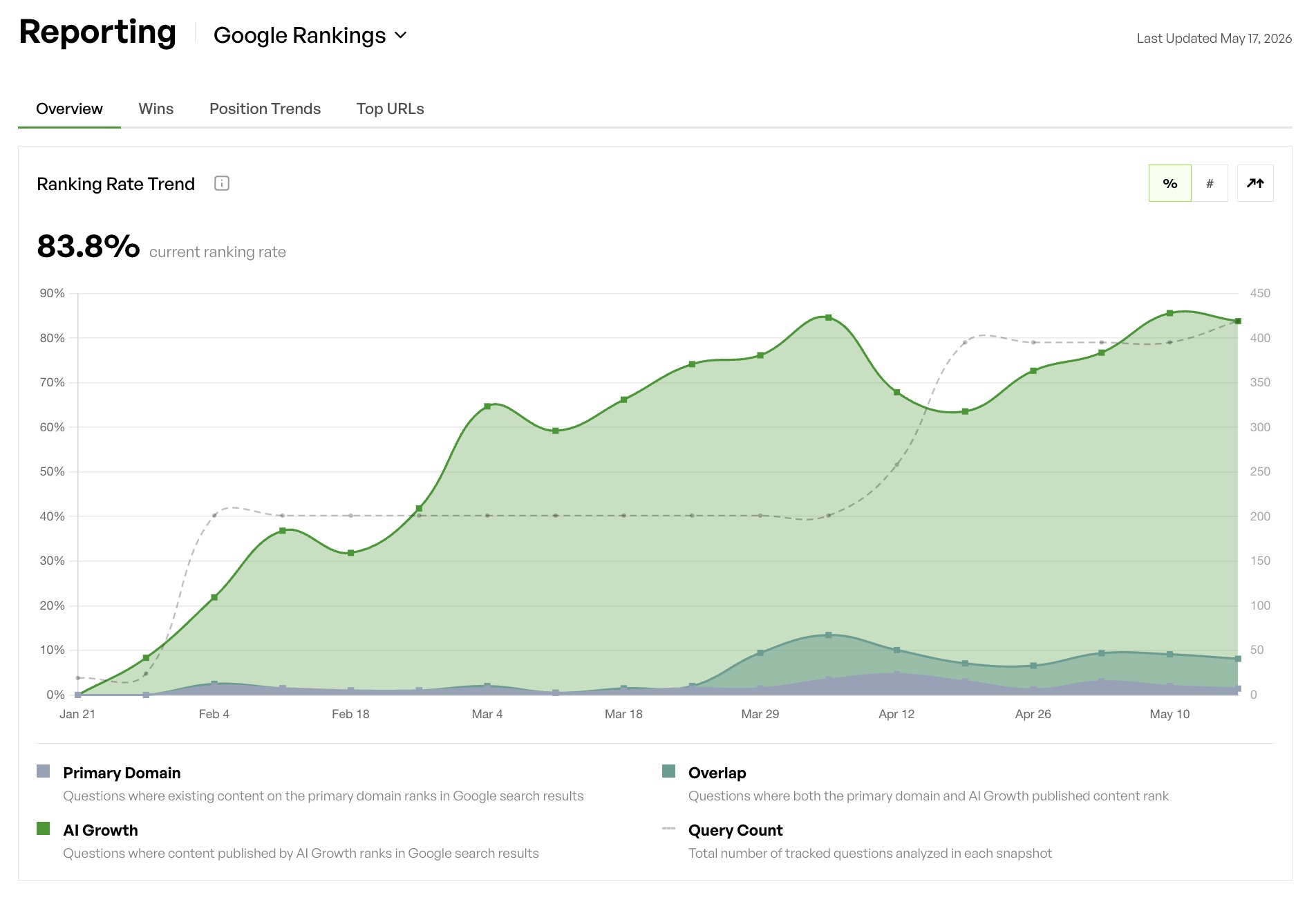
The hallucination risk from unmanaged content is significant. Studies have tested generative search tools across large sets of queries and found they gave incorrect answers on a substantial share of news-citation queries. Surveys on AI usage have found that a notable portion of respondents reported consequences from AI inaccuracy. Brands that do not provision verified, structured content into the citation layer leave the narrative to whatever the model finds on the open web.
Risks, Limitations, and Frequent MCP Deployment Mistakes
The most common mistake treats MCP as a standalone solution. An MCP server with no agent-readable declarations behaves like a service running on an unpublished number. Agents that cannot find the server cannot cite it. The second common mistake deploys MCP without content validation controls. All generative AI models are prone to hallucination as an inherent part of how the models work, and while techniques exist to reduce hallucinations it is impossible to eliminate them entirely. MCP reduces hallucination risk by grounding responses in live, authoritative data, but only when the data served through the MCP endpoint has been validated.
Infrastructure fragmentation creates another structural risk. Deploying a Blog MCP on a subdomain instead of a subdirectory splits domain authority and reduces the citation rate the MCP server can generate. Ongoing maintenance is also required because API changes necessitate updates to the server. Teams that treat MCP as a one-time deployment see citation quality degrade as content drifts from the live spec. Monitoring-only approaches create a final trap. Knowing that a brand is absent from AI answers does not change what the AI says. The action layer, which includes content production, MCP provisioning, and discovery stack deployment, is what shifts results.
Summary and How to Choose an MCP Partner
MCP AI citations form the technical foundation for verifiable, real-time brand narrative control in zero-click AI search. The protocol supplies the interaction layer, which serves live, structured, provenance-tagged data directly to the agents that make citation decisions. The discovery stack supplies the announcement layer, which includes llms.txt, Agent Cards at /.well-known/, natural language query parameters, and Markdown serving that tell agents where to find the MCP server and how to use it. Each layer depends on the other.
Decision criteria for evaluating an MCP deployment solution should cover several points. The solution should provision the full discovery stack alongside the MCP server. It should map the complete query universe rather than a capped set of tracked prompts. It should report incremental AI citations that are isolated from pre-existing brand visibility. It should maintain living, self-healing content so citations do not decay between training sweeps. It should also connect to the brand's domain through subdirectory reverse proxy to inherit domain authority instead of fragmenting it on a subdomain.
AI Growth Agent delivers all of these capabilities in one engine. It was the first to bring Blog MCP to market, with clients running it in summer 2025. Every package includes the full agentic technical SEO stack: Blog MCP compatible with Chrome 146+ and WebMCP-enabled browsers, Agent Cards at /.well-known/, llms.txt and llms-full.txt, natural language query parameters, Markdown serving for agent crawlers, and per-article bot tracking. The reverse proxy rewrite connects the blog to the client's domain under a subdirectory, which inherits domain authority from day one. The query universe is mapped across hundreds of seed terms and their long-tail queries, refreshed weekly, and prompt count never appears as a billed metric. Clients average thousands of additional AI citations and mentions in the first twelve weeks, with the first article live within a week of kickoff.
Traditional search tools show where your brand stands. AI Growth Agent turns your brand into the answer. Get a working plan for your first live article and citation stack in a single consultation.
Frequently Asked Questions
What is the difference between MCP AI citations and standard AI citations?
Standard AI citations are references an AI model generates from its training data, which may be months or years out of date, unverifiable, or drawn from low-quality sources on the open web. MCP AI citations appear when an AI agent queries a live Model Context Protocol server at request time and receives structured data with provenance metadata, including source IDs and timestamps. The citation traces back to a specific, current, authoritative source instead of an inference from static training data. For brands, this difference determines whether AI answers about the company reflect current, controlled messaging or whatever the model absorbed during its last training run.
Why is MCP alone insufficient for brand citation visibility in AI search?
An MCP server handles the interaction layer. It receives queries from agents and returns structured, provenance-tagged data. It does not announce its own existence. An agent that does not know the server exists will never query it. The discovery layer, which includes llms.txt and llms-full.txt, Agent Cards served at /.well-known/, natural language query parameters, and Markdown serving for agent crawlers, tells compliant agents where to find the MCP server and how to interact with it. Deploying MCP without the discovery stack mirrors opening a store with no address. Both layers must launch together for either to generate citations.
How does Blog MCP differ from a standard MCP server implementation?
A standard MCP server implementation connects an AI client to a data source, typically a database, API, or file system, and returns structured results. Blog MCP is a purpose-built MCP implementation for brand content delivery. It exposes a blog's articles as a live, queryable data source that AI agents can query in natural language to retrieve answers directly. AI Growth Agent's Blog MCP ships with schema, manifest, discovery, and capability guidance exposed to agents and is compatible with Chrome 146+ and other WebMCP-enabled browsers. It forms part of a full agentic technical SEO stack that also includes Agent Cards, llms.txt, natural language query parameters via /?s={query}, and per-article bot tracking, so every citation can be traced to a specific page and attributed to the content investment that generated it.
What metrics should CMOs use to measure MCP AI citation performance?
The four metrics that matter most are AI citation rate, bot visit volume, Google Search Console impressions, and incremental visibility. AI citation rate measures how often the brand's MCP-served content is cited in AI answers across the target query universe. Bot visit volume tracks how many AI agent crawlers read the blog, broken down per article. Google Search Console impressions provide an independent audit of indexing reach that cross-references citation data. Incremental visibility captures citations and impressions generated by new content, isolated from visibility the brand already had. Order of mention and citation context replace the traditional ranking number in AI search, so tracking where the brand appears in an AI answer and which claim it is cited for becomes the new leaderboard. Prompt count should never be a billed or capped metric, because brands that only track a handful of head terms stay blind to the long-tail queries where most AI citations occur.
How long does it take to see AI citation results after deploying MCP and the full discovery stack?
Indexing timelines vary by industry, domain authority, and content volume. AI Growth Agent clients typically see content indexed in as little as ten days and often within two weeks of the first article going live. The first article usually publishes within a week of kickoff. The 12-week results mentioned earlier typically break down to more than 12,000 additional AI citations and mentions and more than 100,000 additional bot visits. The reverse proxy rewrite that connects the blog to the client's domain under a subdirectory accelerates indexing by inheriting the parent domain's authority instead of starting from zero on a subdomain. Living, self-healing content ensures that citations compound over time rather than decaying as the world changes.