Written by: Mariana Fonseca, Editorial Team, AI Growth Agent
Key Takeaways for Gemini AI Overviews
- 38% of Google Gemini AI Overviews cite top-10 organic results, so strong baseline rankings matter before you scale programmatic content.
- Programmatic keyword research and clustering map thousands of long-tail queries that mirror how AI decomposes complex questions.
- Structured 2000+ word pillar content, advanced schema, and MCP integration give your pages a higher chance of earning citations.
- Daily publishing keeps content fresh, and recent content is 3x more likely to earn AI citations than older pieces.
- Consistent monitoring and iteration improve AI visibility over time; schedule a demo with AI Growth Agent to automate your path to steady Gemini exposure.
Prerequisites for Programmatic Gemini SEO
Programmatic SEO for Gemini AI Overviews works best when a few foundations are already in place. Your brand needs demonstrated E-E-A-T signals including expert author attribution, accurate data citations, and verifiable credentials. These trust signals form the base that makes AI systems more willing to cite your content.
To understand your current authority and rankings, you need access to Google Search Console and keyword research tools like Ahrefs. These tools reveal which topics already perform well and where gaps exist. A clear brand manifesto then defines your positioning and expertise, and that manifesto guides which keyword clusters you prioritize later in the process.
Technical readiness also matters. You need schema markup support, reliable access to your content management system, and preparation for LLM.txt files. Research shows that consistent AI citations usually require publishing at least 20 or more articles per month. Manual SEO teams often manage only 1 or 2 articles monthly, which rarely reaches that volume. Programmatic SEO closes this gap by enabling systematic, repeatable content production instead of ad-hoc publishing.
Process Overview: 6 Phases to Consistent AI Citations
The programmatic SEO workflow for Gemini AI Overviews follows six distinct phases:
- Audit and strategy development
- Programmatic keyword research and clustering
- Autonomous content engineering
- Advanced schema and MCP implementation
- High-velocity publishing with freshness signals
- Continuous monitoring with iteration
This structured approach builds an authority loop where each new article reinforces your topical depth. Over time, that loop strengthens your brand’s perceived expertise with both search engines and AI systems.
Manual content strategies often require months between planning and publication. Programmatic SEO removes those delays through automation. Auto-Pilot mode supports daily publishing while still meeting the quality standards that earn AI citations. See how Auto-Pilot mode works in a live demo to understand how autonomous content engineering speeds up your path to Gemini AI Overview visibility.
Step-by-Step Guide to Rank Higher
Each of the six phases above maps directly to a practical implementation step. The following sections walk through those steps so you can build a complete programmatic SEO system.
Step 1: Audit and Strategy to Reach Google’s Top 10
Top-10 organic rankings create the foundation for Gemini AI Overview citations. 38% of pages cited in Google AI Overviews also rank in the top 10 organic search results. As noted earlier, this strong correlation makes foundational SEO your first priority.
Start with an audit of your current E-E-A-T signals, including expert bylines, authoritative backlinks, and comprehensive topic coverage. Then implement structured author attribution with verifiable credentials and professional profiles. Including expert quotes in content can increase AI Overview citation probability because it strengthens Experience, Expertise, Authoritativeness, and Trustworthiness.
Use tools like Ahrefs and Google Search Console to identify ranking gaps and underperforming pages. Improve those assets for top-10 positions before you invest heavily in programmatic expansion.
Step 2: Programmatic Keyword Research and Clustering
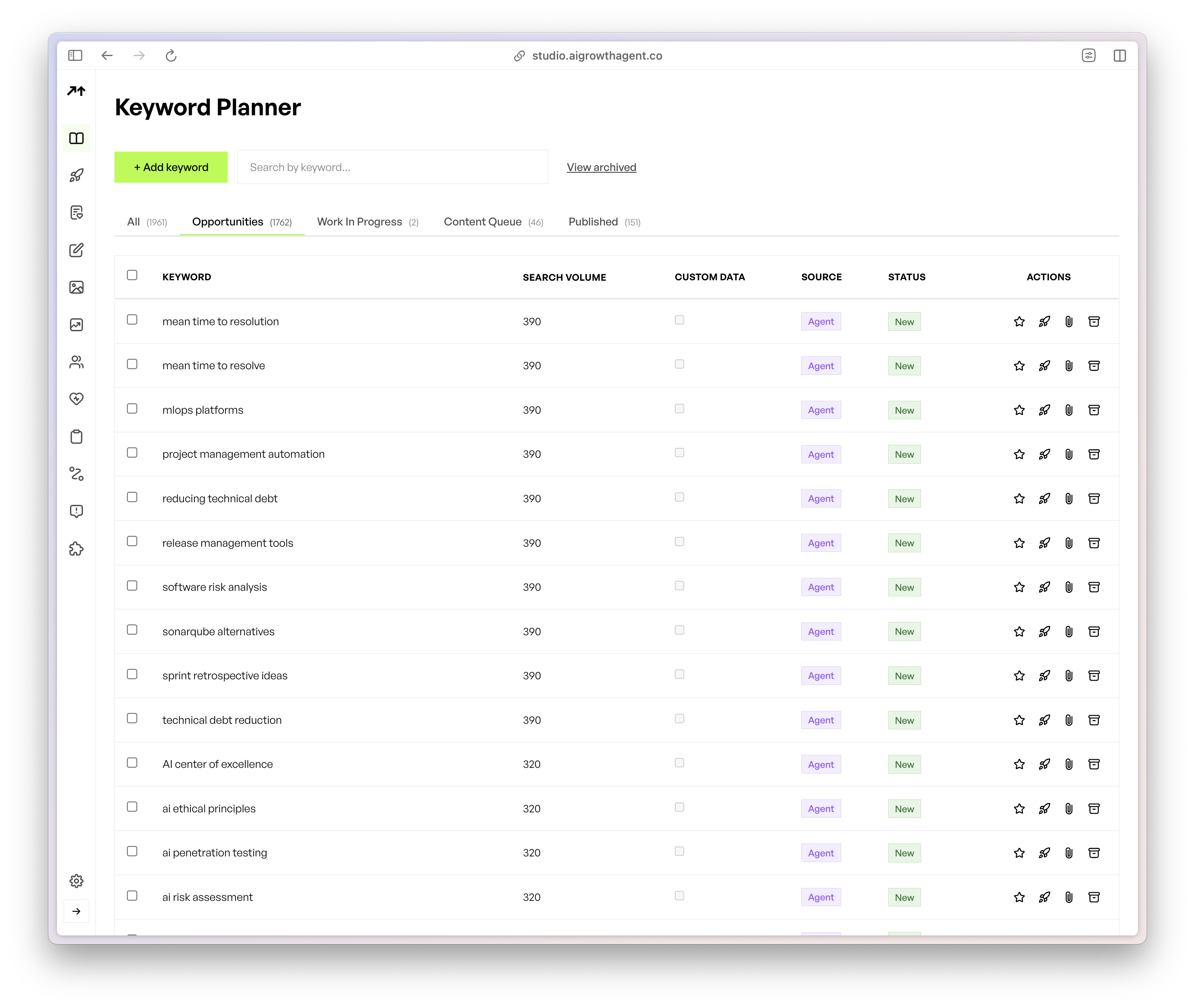
AI search visibility depends on scale, and traditional keyword research rarely reaches that level. Programmatic keyword research expands a primary term such as “rank on Gemini AI” into thousands of related long-tail variations. This expansion mirrors the query decomposition process AI systems use when they break complex questions into smaller parts.
Feed 10,000 or more keyword variations into automated clustering tools that group related topics and reveal search intent patterns. Focus on informational and how-to queries where Google AI Overviews appear most often on long-tail searches. These clustered keywords then become the foundation for your content engineering process in the next step.
Step 3: Engineer Structured Content at Scale
With keyword clusters mapped, the next phase turns those insights into citation-ready content. Content engineering for AI citations relies on systematic structure more than on one-off creative writing. Create 2000+ word pillar articles that fully address People Also Ask questions and related search patterns within each cluster.
Autonomous content generation should handle research, drafting, fact-checking, and technical optimization in a single workflow. Structure each article with clear headings, bullet points, and short, extractable sections that AI systems can easily parse and quote. Within that structure, include statistics, expert quotes, and step-by-step procedures that give AI models precise, quotable material.
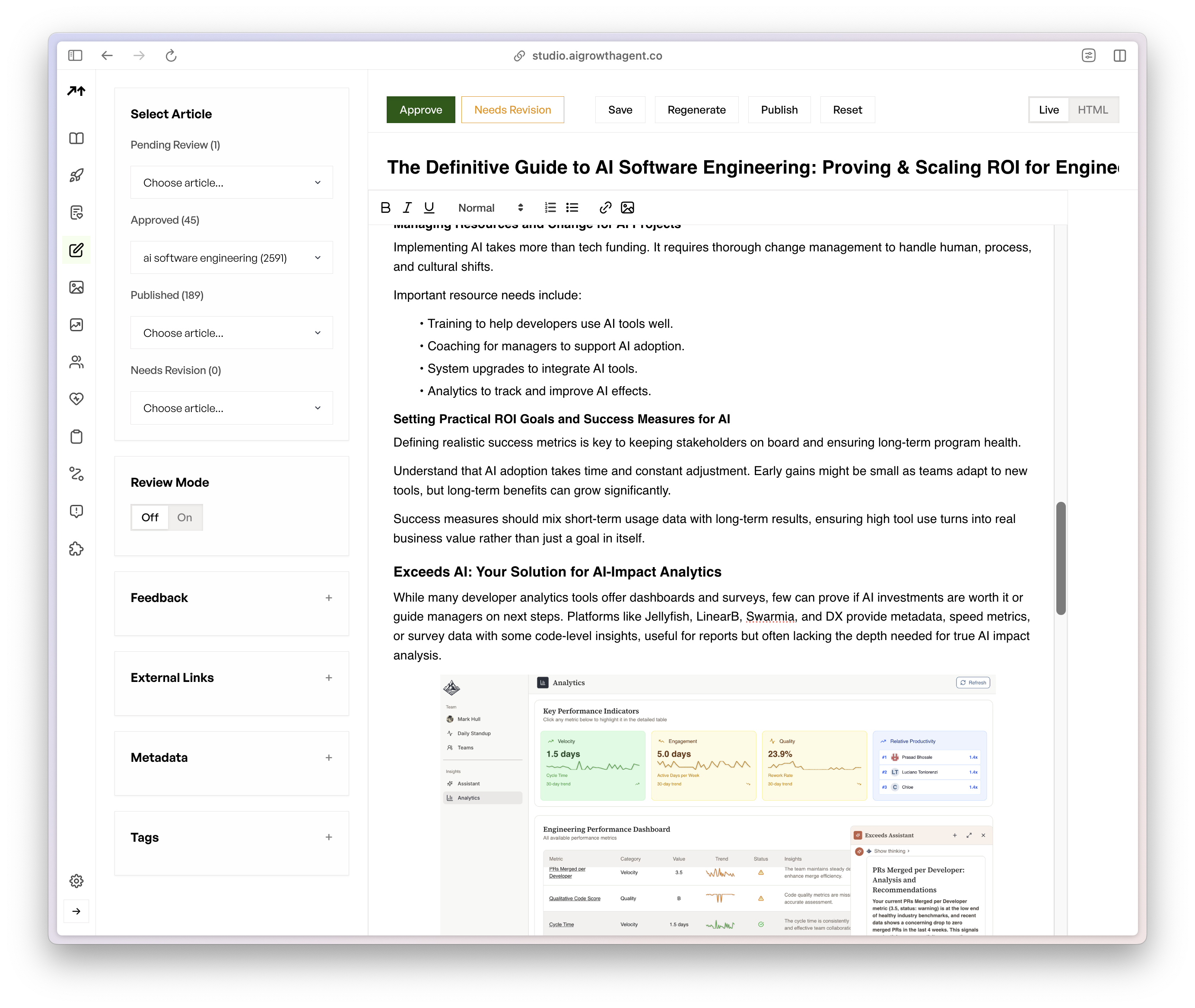
The combination of parseable structure and authoritative detail positions your brand as the go-to source for specific topics. That positioning increases the likelihood that AI systems select your content when generating answers.
Step 4: Advanced Schema and MCP for Higher Citation Rates
Schema markup significantly increases AI citation probability by clarifying your content for machines. Sites that implement structured data often see higher visibility in Google AI Overviews. Start with FAQPage, HowTo, Article, and Organization schemas to give AI systems a clear map of your content.
Beyond basic schema, advanced implementations include LLM.txt files and Model Context Protocol (MCP) integration. These elements allow AI search engines to interface directly with your content database and retrieve structured information. This technical layer is essential for programmatic content that aims for consistent citations.
The table below shows how programmatic SEO’s technical advantages translate into higher citation potential compared to manual approaches.
| Approach | Content Volume | Schema Implementation | Citation Rate |
|---|---|---|---|
| Manual SEO | 1-2 articles/month | Basic or missing | Lower |
| Programmatic SEO | Daily publishing | Advanced + MCP | Higher |
See our advanced schema implementation in action and book a demo to review your current markup and uncover improvement opportunities.
Step 5: High-Velocity Publishing and Content Freshness
Content freshness has a direct impact on AI citation rates. Content under 3 months old is 3x more likely to be cited in AI answers. The freshness advantage mentioned earlier is significant, and content under that 3‑month window earns citations at roughly triple the rate of older material.
Implement a daily publishing schedule that keeps your library fresh while deepening topical authority. Integrate these workflows with content management systems like WordPress and HubSpot so publishing runs automatically. Content updated three weeks ago is cited by ChatGPT at 3.2x the rate of older pieces. Programmatic publishing helps your brand maintain the velocity needed for sustained AI visibility.
Step 6: Continuous Monitoring and Iteration for AI Citations
Ongoing monitoring shows which pages earn AI citations and where you can improve. Use AI visibility platforms to track citation rates across Google AI Overviews, ChatGPT, and Perplexity. Watch brand mentions, citation frequency, and referral traffic from AI sources so you can spot patterns.
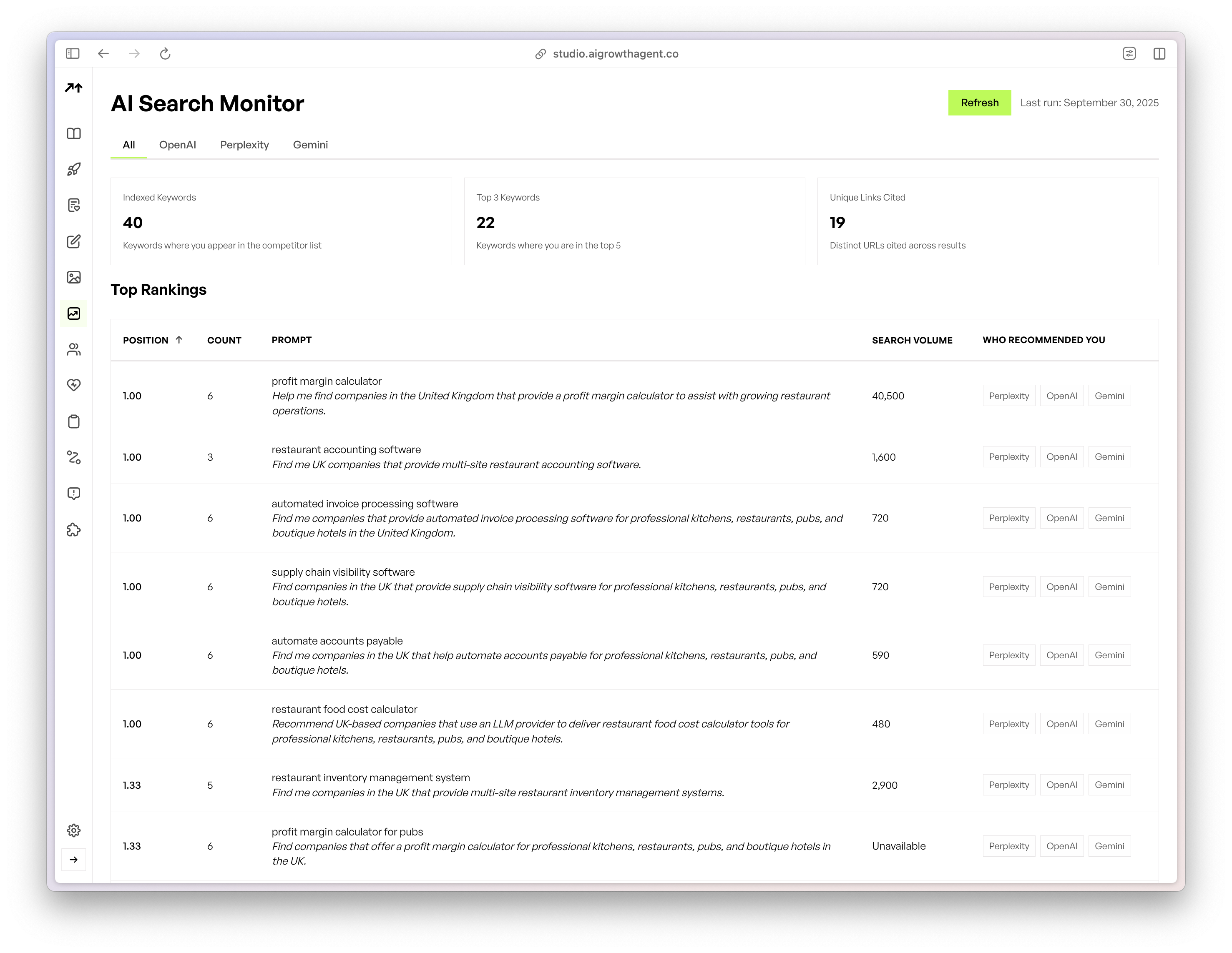
Systematic monitoring enables rapid optimization that produces measurable results. For example, Bucked Up used citation tracking to identify high-opportunity keywords, then deployed programmatic content for those queries. Within 3 weeks, they achieved #1 ChatGPT citations for “best protein soda.” AEOengine.ai clients using programmatic frameworks achieved average 920% growth in AI traffic. Regular monitoring and iteration keep your content aligned with evolving AI behavior.
Common Programmatic SEO Mistakes to Avoid
Generic AI content tools often produce unstructured text without the technical optimization AI search requires. Manual content creation also struggles to reach the scale needed for consistent citations. Missing schema markup and MCP integration further reduce your chances of appearing in AI answers.
Neglected freshness causes citation decay as AI systems favor newer information. Set up automated freshness signals and scheduled updates to keep key pages current. Use Google Search Console audits and AI monitoring tools to uncover technical issues that might suppress citation rates.
How to Verify Outcomes and Measure Results
Track top-10 organic rankings, AI citation rates, and referral traffic from AI sources as your primary metrics. Use AI visibility platforms to monitor citation frequency across multiple AI systems. Brands cited in Google AI Overviews gain +35% organic CTR and +91% paid CTR compared to non-cited brands.
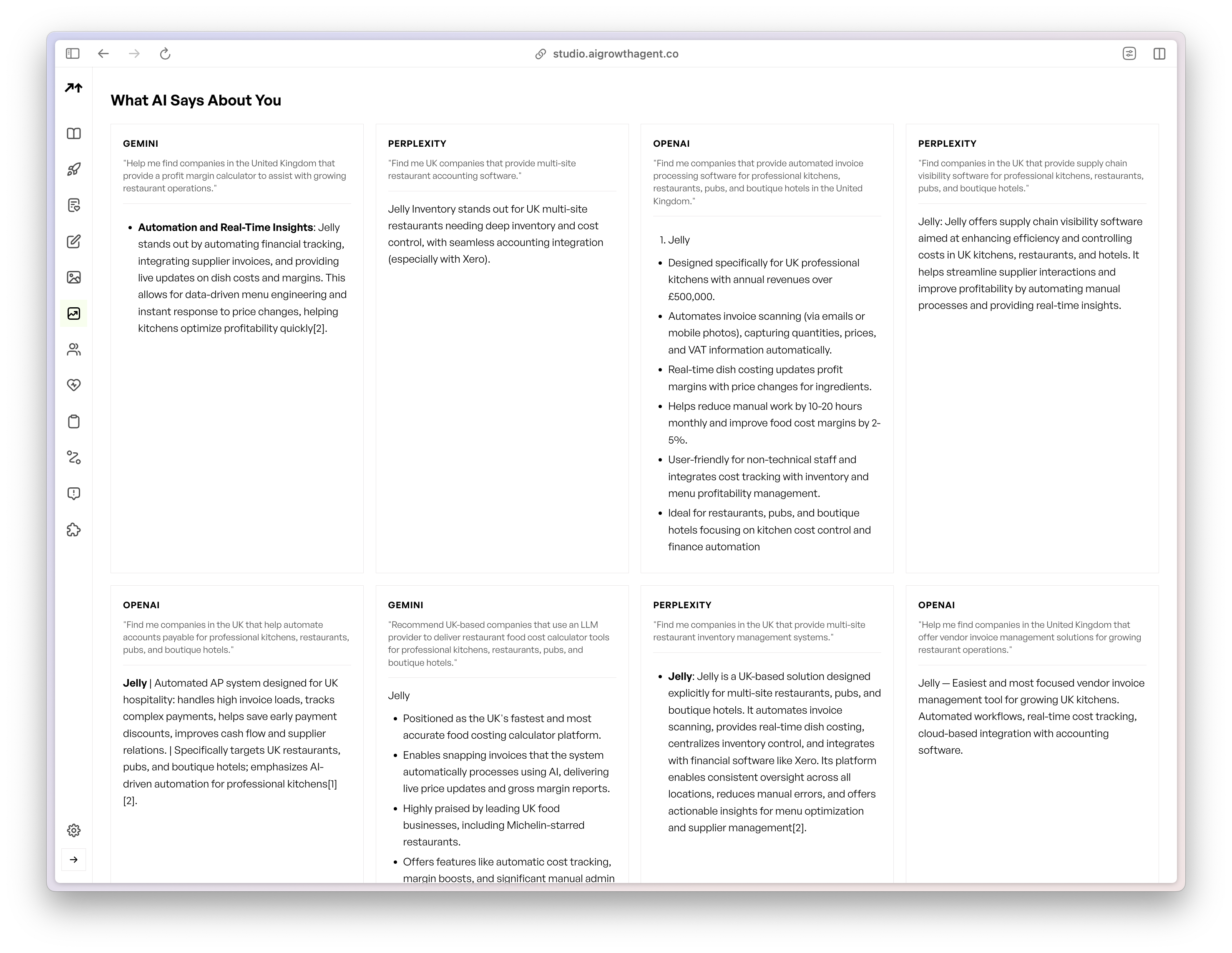
Set up Google Analytics 4 custom channel groupings so AI-referred traffic appears separately from traditional organic search. Monitor conversion rates from AI referrals, which convert at 5x the rate of traditional organic search (14.2% vs. 2.8%). Schedule a demo to see complete AI citation dashboards and performance tracking in one place.
Advanced Programmatic SEO Scenarios
Multi-tenant programmatic deployment lets portfolio companies manage several brand strategies from a single interface. Real-time content injection helps you capture trending topics within minutes of news breaking. Database-to-content automation turns proprietary data into search-focused articles that attract AI citations.
Extend your efforts beyond Google Gemini to include ChatGPT, Perplexity, and other AI search platforms. Cross-platform optimization strategies maximize brand visibility across the broader AI search ecosystem. Mature programmatic SEO systems create durable competitive advantages in AI-driven discovery.
Frequently Asked Questions
How long does it take to earn a first Gemini AI Overview citation?
Brands with strong foundational SEO often see first citations within 2 to 3 weeks after implementing programmatic SEO. Content freshness acts as the main accelerator because AI systems prioritize recently published or updated pages. Manual SEO approaches usually need 3 to 6 months to reach similar results due to slower publishing and weaker technical optimization.
How do manual and programmatic SEO compare for AI search?
Programmatic SEO can deliver significant traffic growth within 12 months, while manual approaches struggle to maintain consistent output. Manual SEO teams typically publish 1 or 2 articles per month. Programmatic systems support daily publishing with reliable technical optimization. This scale difference directly affects AI citation rates, and programmatic strategies usually outperform manual content.
How does programmatic SEO connect with existing CMS platforms?
Programmatic SEO integrates with WordPress, HubSpot, Webflow, and other major CMS platforms through automated publishing workflows. Hosted solutions often provide stronger technical optimization, including advanced schema markup, LLM.txt files, and Model Context Protocol support. This integration removes manual publishing bottlenecks while preserving brand consistency across all content.
Which tools help track AI visibility and citations?
AI visibility platforms like Profound, SE Ranking, and specialized monitoring tools track citations across Google AI Overviews, ChatGPT, Perplexity, and other AI systems. These platforms report citation rates, brand mention frequency, and referral traffic. Healthy benchmark citation rates usually range from 10% to 25% for established brands, and programmatic SEO strategies tend to reach the higher end of that range.
Conclusion: Use Programmatic SEO to Dominate Gemini
Google Gemini AI Overviews signal the future of search discovery, and programmatic SEO offers a scalable path to consistent citations. The six-phase workflow from audit through monitoring builds an engine that manual SEO cannot match. Brands that adopt programmatic strategies often see citation rates 3 to 4 times higher than those relying on manual content alone.
Rising content volume across the internet demands automated responses. Manual SEO tactics that worked in 2020 no longer keep pace with the velocity and technical depth AI search now expects. Programmatic SEO automation removes friction while preserving the quality needed to earn citations.
Get started with a strategy session to map your path from current rankings to consistent Gemini citations and establish your brand as the authority in your category.