Written by: Mariana Fonseca, Editorial Team, AI Growth Agent
Key Takeaways
- Writesonic specializes in SEO-focused long-form content with AI Article Writer 6.0 and SurferSEO integration, so it beats Copy.ai for search-driven articles.
- Copy.ai leads in short-form marketing copy, workflows, and brand voice training with 500+ templates and faster generation for ads and social posts.
- Writesonic delivers stronger value for high-volume content at $12.67/month, while Copy.ai fits marketing teams starting at $29/month.
- Neither platform supports true programmatic SEO with schema markup, automated publishing, or enterprise-scale automation for AI search dominance.
- AI Growth Agent provides autonomous content engineering with full lifecycle management; schedule a demo with AI Growth Agent to build durable AI search authority.
Writesonic vs Copy.ai in 2026: Where Each Platform Wins
Writesonic positions itself as a comprehensive SEO content platform with AI Article Writer 6.0 generating SEO-optimized long-form content up to 1,500 words in 20 seconds. Core strengths include ChatSonic for real-time web access, native SurferSEO integration, and the GEO Action Center for AI search visibility tracking. Copy.ai targets marketing workflow automation with AI-powered templates for ads, social media, and sales copy.
Both platforms use advanced language models equivalent to GPT-4 and Claude 4, but neither delivers schema markup implementation or programmatic publishing required for AI search leadership. The 2026 updates feature Writesonic’s Document-to-Article transformation and Copy.ai’s enhanced workflow automation for GTM teams.
Feature Comparison: Writesonic vs Copy.ai Capabilities
|
Feature |
Writesonic |
Copy.ai |
Winner |
|
Long-form Content |
AI Article Writer 6.0, 2000+ words |
Limited long-form capabilities |
Writesonic |
|
SEO Tools |
Built-in SEO checker, SurferSEO integration |
Basic optimization only |
Writesonic |
|
Workflow Templates |
100+ templates |
500+ specialized templates |
Copy.ai |
|
Real-time Data |
ChatSonic web access |
Limited real-time features |
Writesonic |
|
Integrations |
WordPress, Zapier, Ahrefs |
HubSpot, Zapier, Salesforce |
Tie |
|
Speed (Short Copy) |
Standard generation speed |
45-second generation |
Copy.ai |
|
AI Search Visibility |
GEO Action Center tracking |
No AI search monitoring |
Writesonic |
|
Internal Linking |
Domain-wide automated linking |
Manual linking required |
Writesonic |
|
Fact-checking |
Built-in citation verification |
Limited fact-checking |
Writesonic |
|
Brand Voice |
Adjustable tone controls |
Advanced brand voice training |
Copy.ai |
|
Multilingual |
25+ languages |
29+ languages |
Copy.ai |
|
Schema Implementation |
Basic metadata only |
No schema capabilities |
Neither |
Writesonic dominates SEO-focused content creation with AI Article Writer 6.0 generating structured 1,500-word drafts in under 90 seconds. Its strength comes from a deeper SEO toolkit that includes automated internal linking and competitor keyword analysis. Copy.ai shines in marketing workflow efficiency for teams that need rapid iteration on ad copy, emails, and social content.
Performance benchmarks show clear use case differences. Writesonic Pro users report 10 to 15 hours saved monthly compared to Copy.ai Pro’s 12 to 18 hours. Copy.ai’s savings concentrate on short-form content speed rather than long-form SEO output. Quality tests show Writesonic producing 2,000-word SEO posts in about 2 minutes with 8.7/10 quality ratings. Copy.ai generates 500-word marketing copy in 45 seconds with 7.2/10 quality scores. Schedule a demo to see if you’re a good fit for a solution that combines both speed and complete SEO engineering.
Writesonic vs Copy.ai Pricing in 2026
|
Plan |
Writesonic Price/Features |
Copy.ai Price/Features |
Best Value |
|
Starter |
$12.67/month – 200K words, GPT-3.5 |
$29/month – 40K words, basic features |
Writesonic |
|
Professional |
$49/month – Unlimited words, GEO |
$49/month – Unlimited words, workflows |
Tie |
|
Enterprise |
$249/month – Advanced SEO, API |
$249/month – Team features, SSO |
Use case dependent |
Writesonic starts at $49/month while Copy.ai begins at $29/month, but word limits and feature sets change the value story. Writesonic offers stronger volume economics for content-heavy strategies that publish many articles each month. Copy.ai’s pricing favors teams that prioritize marketing automation workflows over raw word count. Reddit users often say, “Writesonic crushes SEO content volume, but Copy.ai saves hours on campaign creation.” Both platforms hold 4.7 G2 ratings, which reflects strong satisfaction across different primary use cases.
Pros, Cons & Real User Insights by Platform
Writesonic Advantages:
- Comprehensive SEO suite with automated on-page improvements
- GEO Action Center for AI search visibility tracking
- Native integrations with WordPress and SurferSEO
- Stronger long-form content generation capabilities
Writesonic Limitations:
- Steeper learning curve for advanced SEO features
- Higher pricing for enterprise-level SEO capabilities
- More limited workflow automation than Copy.ai
Copy.ai Advantages:
- Very fast short-form marketing copy generation
- Extensive template library with 500+ options
- Advanced workflow automation tailored to GTM teams
- Stronger brand voice consistency and training tools
Copy.ai Limitations:
- Weak long-form content support
- Limited SEO optimization features
- No AI search visibility monitoring
- Higher per-word costs at scale
User feedback highlights distinct strengths for each platform. Copy.ai excels for speed and ideation in short-form marketing copy but lacks SEO insights and governance for large-scale operations. Writesonic supports small teams with broad writing needs, yet still offers only modest guidance on search intent and topic strategy.
Benchmarks and Integrations for Real-World Teams
Direct performance testing confirms clear use case separation. Writesonic generates 1,500-word blog posts in about 90 seconds with built-in SEO checks and internal linking. Copy.ai produces marketing ad copy in roughly 45 seconds while maintaining stronger brand voice consistency. Integration ecosystems also differ. Writesonic integrates with Shopify and Zapier for content workflows, while Copy.ai connects with HubSpot, Salesforce, and marketing automation platforms.
Neither platform offers automated schema markup, direct publishing with technical SEO, or full programmatic deployment. Both still require manual content review, optimization, and publishing, which limits scalability for enterprise content programs. This integration gap becomes clear when teams need programmatic content deployment rather than a writing assistant.
Scaling Limits and Why Programmatic SEO Matters
Both Writesonic and Copy.ai hit scaling limits in the AI search era. They generate unstructured text instead of fully engineered web pages with schema markup, metadata tuning, and automated publishing. Manual prompt engineering breaks down at enterprise volume, and neither platform delivers autonomous content strategy development for true programmatic SEO.
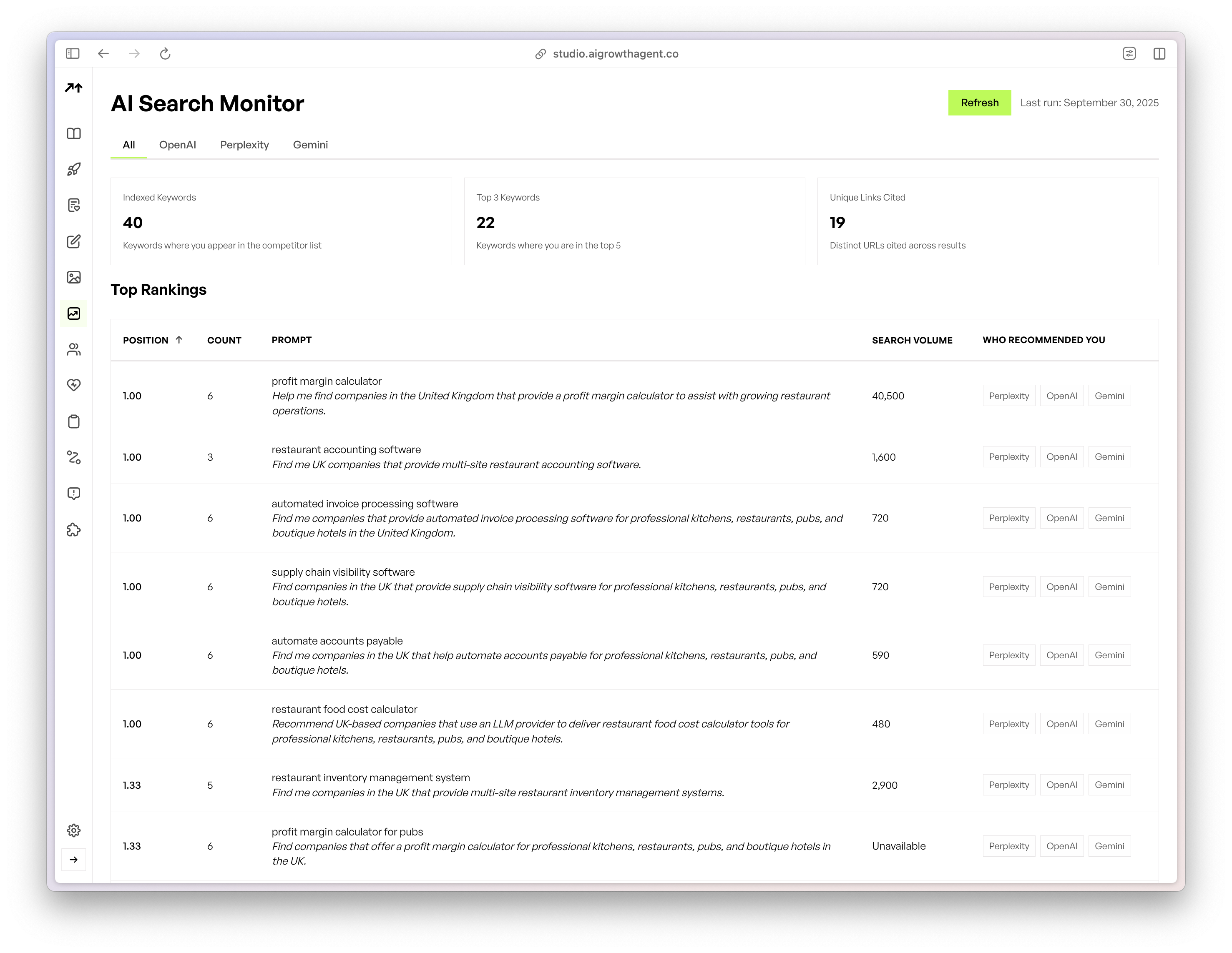
AI Growth Agent closes these gaps with autonomous programmatic SEO engineering. Instead of only outputting text, AI Growth Agent deploys specialized agents that manage the full content lifecycle. These agents handle keyword clustering, schema implementation, technical optimization, and direct publishing. The platform’s Model Context Protocol (MCP) connects directly with AI search engines so content appears in ChatGPT citations and Perplexity recommendations.
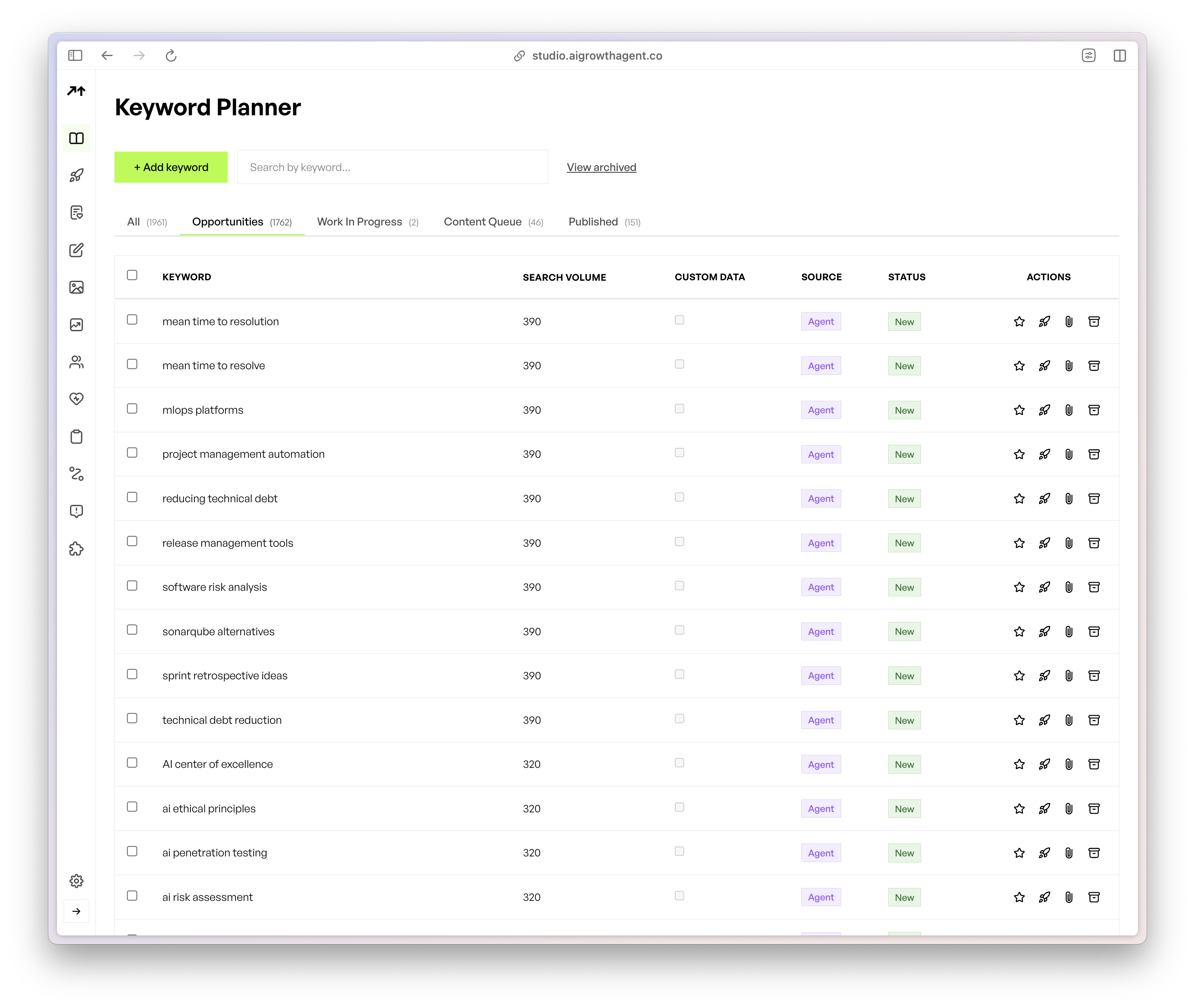
Success stories show the impact of this programmatic approach. Bucked Up gained ChatGPT citations as the top protein soda brand within three weeks. Gitar.ai became the reference authority for AI-powered CI/CD automation across Google AI Overview, ChatGPT, and Perplexity. These outcomes require programmatic content engineering that goes far beyond manual writing tools. Schedule a demo to see if you’re a good fit for autonomous content authority building that secures AI search visibility.
Decision Matrix: Matching Tools to Your Content Strategy
|
Use Case |
Writesonic |
Copy.ai |
Winner |
|
SEO Blog Content |
Excellent – AI Article Writer 6.0 |
Limited capabilities |
Writesonic |
|
Marketing Copy |
Good – 100+ templates |
Excellent – 500+ templates |
Copy.ai |
|
Workflow Automation |
Basic integration support |
Advanced GTM workflows |
Copy.ai |
|
AI Search Visibility |
GEO tracking available |
No monitoring features |
Writesonic |
|
Programmatic Scale |
Manual processes required |
Manual processes required |
AI Growth Agent |
Frequently Asked Questions
Which platform works better for SEO content, Writesonic or Copy.ai?
Writesonic clearly outperforms Copy.ai for SEO content creation. AI Article Writer 6.0, the built-in SEO checker, SurferSEO integration, and automated internal linking make Writesonic the stronger choice for search-focused articles. Copy.ai focuses on marketing copy and does not provide a full SEO toolkit.
What are the 2026 pricing differences between Writesonic and Copy.ai?
Writesonic delivers better value for high-volume content with unlimited words starting at $49/month, while Copy.ai begins at $29/month with tighter word limits. For enterprise plans, both charge $249/month. Writesonic includes advanced SEO capabilities at that tier, while Copy.ai emphasizes team collaboration and workflow features. Writesonic offers stronger economics for content-heavy strategies.
Can either platform support enterprise-scale content automation?
Neither Writesonic nor Copy.ai supports true enterprise-scale automation. Both depend on manual prompts, human review, and separate publishing workflows. They do not include automated schema markup, deep technical SEO, or programmatic publishing that large content operations require. Enterprise teams need programmatic SEO platforms that manage the full content lifecycle autonomously.
How do Writesonic and Copy.ai compare for team collaboration and workflows?
Copy.ai leads in team collaboration with advanced workflow automation, brand voice training, and GTM-focused templates. The platform integrates smoothly with marketing tools like HubSpot and Salesforce. Writesonic offers basic team features but focuses more on individual content creation with SEO support. Copy.ai better fits marketing teams that need collaborative content workflows.
Which platform integrates better with existing marketing tools?
Integration strength depends on your stack. Writesonic connects well with SEO tools such as SurferSEO, Ahrefs, and WordPress for publishing. Copy.ai offers deeper marketing automation integrations with HubSpot, Salesforce, and campaign platforms. Both connect through Zapier for general workflows, but neither delivers the deep technical integrations needed for programmatic content deployment at enterprise scale.
Your choice between Writesonic and Copy.ai should follow your content strategy. Writesonic leads for SEO-focused long-form content, while Copy.ai excels at marketing workflow automation and short-copy generation. Both tools still operate as assisted writing platforms rather than autonomous content engineering systems. Brands that need true programmatic SEO scale and AI search visibility benefit more from specialized agents that handle technical optimization and publishing end to end.
Schedule a demo to see if you’re a good fit for programmatic content authority that positions your brand as the definitive source in AI search results.