Written by: Mariana Fonseca, Editorial Team, AI Growth Agent
Key Takeaways
- Traditional SEO agencies deliver deep B2B expertise but move slowly, often producing only 1–2 posts per month at $5,000+.
- Automated SEO platforms ship 50+ posts per month at lower cost but generate generic content with weak E-E-A-T and poor AI citation potential.
- AI search engines like ChatGPT and Perplexity now drive most B2B research, so teams need hybrid strategies that earn citations and authority in synthesized answers.
- Hybrid programmatic SEO blends agency-level strategy with platform-scale production, using schema-rich content and MCP/LLM.txt to reach ROI faster.
- AI Growth Agent has delivered outcomes such as #1 Perplexity rankings in weeks; schedule a demo to upgrade your SEO stack.
Why B2B Marketers Must Compare SEO Agencies and AI SEO Platforms in 2026
The relationship between businesses and search engines has shifted permanently. B2B teams cannot rely on manual content alone when only 40.3% of U.S. Google searches ended in organic clicks in March 2025, down from 44.2% the year before.
AI search engines now shape how buyers research solutions. 68% of B2B decision-makers start research with AI tools instead of Google search. B2B content now must earn citations in ChatGPT, appear in Google AI Overviews, and build authority across generative engines.
Traditional SEO agencies bring strong strategy but limited speed. Companies publishing 9 or more blog posts monthly increased organic traffic by 35.8% year-over-year, compared to just 16.5% for those publishing 1–4 times monthly. Most agencies still deliver only 1–2 posts per month. Automated platforms move faster but often miss the technical depth B2B requires, especially structured schema and E-E-A-T signals that AI engines use to select sources.
Strengths and Gaps of B2B SEO Agencies
Pros:
- Deep strategic expertise tailored to complex B2B sales cycles.
- Strong E-E-A-T implementation supported by human oversight and industry knowledge.
- Custom content aligned with multiple stakeholder concerns, which matters when enterprise deals involve about 11 stakeholders.
- Proven performance in competitive B2B verticals.
- Comprehensive technical SEO audits and remediation.
Cons:
- Starting prices from $5,000 to $15,000 per month strain many B2B marketing budgets.
- Content velocity of 1–2 posts per month cannot support AI search dominance.
- Manual workflows cannot reach the programmatic scale needed for broad keyword coverage.
- Long turnaround times clash with rapid AI search and SERP changes.
- Scaling across multiple product lines or regions often requires costly headcount expansion.
Strengths and Gaps of Automated SEO Content Platforms for B2B
Pros:
- High-volume content production, often 50+ posts per month, at pricing around $500–$2,000 per month.
- Fast rollout and easy scaling across many topics and product lines.
- Predictable publishing cadence that keeps search engine crawlers returning.
- Data-driven keyword targeting and content gap analysis.
- Integrations with common CMS platforms and marketing stacks.
Cons:
- Generic brand voice that blends into crowded B2B categories.
- Limited schema markup and inconsistent technical SEO execution.
- Weak AI citation rates because authority signals remain underdeveloped.
- Shallow content that fails to support long, complex B2B buyer journeys.
- 91.4% of AI content cited but low E-E-A-T reduces long-term ranking durability.
Agency vs Platform: B2B Decision Matrix for 2026
These trade-offs between agency expertise and platform speed create a difficult choice for B2B marketers. Teams need a clear way to compare options across the factors that drive AI search visibility and revenue.
The 2026 B2B SEO landscape requires evaluation across four critical dimensions that determine AI search visibility and revenue impact: cost efficiency, content velocity, AI citation capability, and time-to-ROI. The table below compares how traditional agencies, automated platforms, and hybrid approaches perform across each dimension.
|
Aspect |
SEO Agency |
Automated Platform |
AI Growth Agent (Hybrid) |
|
Cost/Month |
$5K+ (20% YoY growth) |
$500 (generic scale) |
Custom pricing (schedule demo for details) |
|
Output Speed |
1–2 posts/month |
50+/month (unstructured) |
High-volume (schema-rich) |
|
AI Citations |
Slow (manual) |
Low (no MCP) |
2–3 weeks (MCP/LLM.txt) |
|
ROI Timeline |
12–23 month payback |
7 months (shallow) |
Fast ROI through organic growth (demo results) |
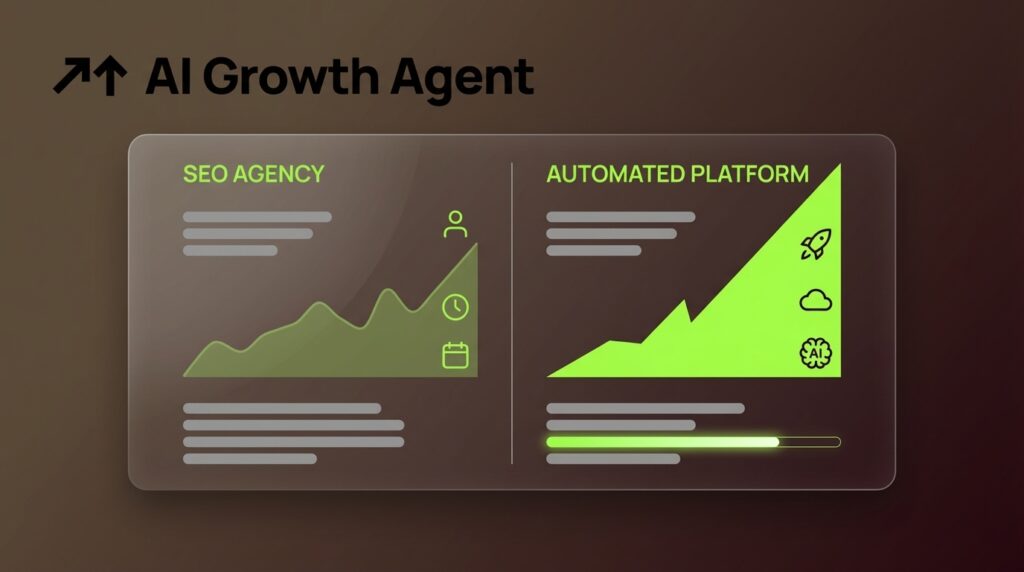
The comparison highlights a core gap. Agencies deliver authority but lack the volume needed for AI search, while platforms deliver volume but lack the authority AI engines trust. Neither approach alone satisfies the combined requirements of 2026 B2B search.
Why Hybrid B2B SEO Wins: Introducing AI Growth Agent
The most effective path combines agency-level strategic depth with automated platform velocity through programmatic SEO agents. AI Growth Agent embodies this hybrid model by deploying autonomous content engineering that preserves human expertise while scaling output far beyond manual teams.
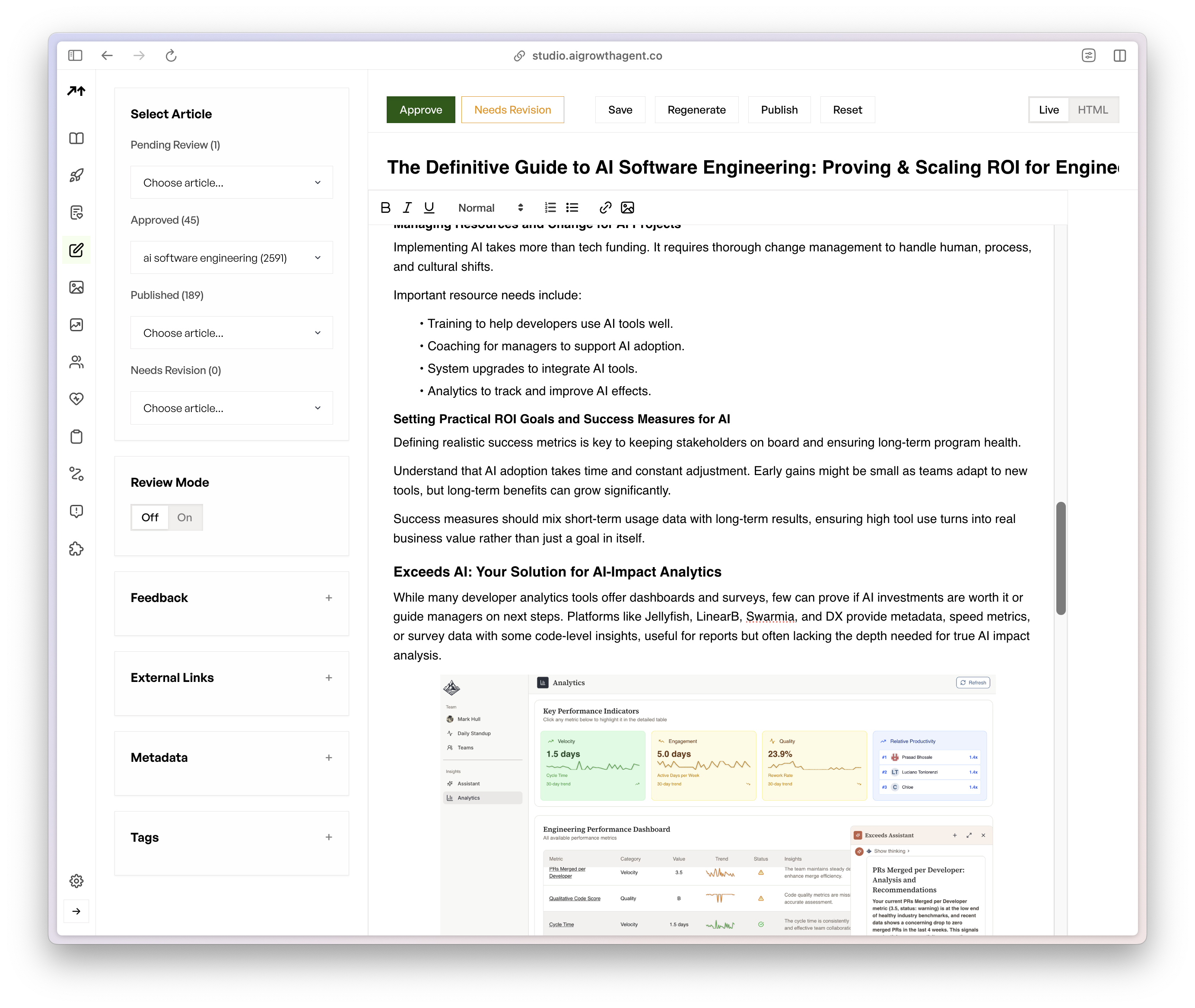
The system starts with a Company Manifesto created with support from professional journalists, which locks in a consistent brand voice across every programmatic asset. The agent then runs comprehensive keyword research to surface high-value opportunities, builds content strategies mapped to buyer journey stages, and implements the technical infrastructure that AI engines rely on. This infrastructure includes advanced schema markup, LLM.txt files, and Model Context Protocol (MCP) integration that help AI systems discover, understand, and cite your content.
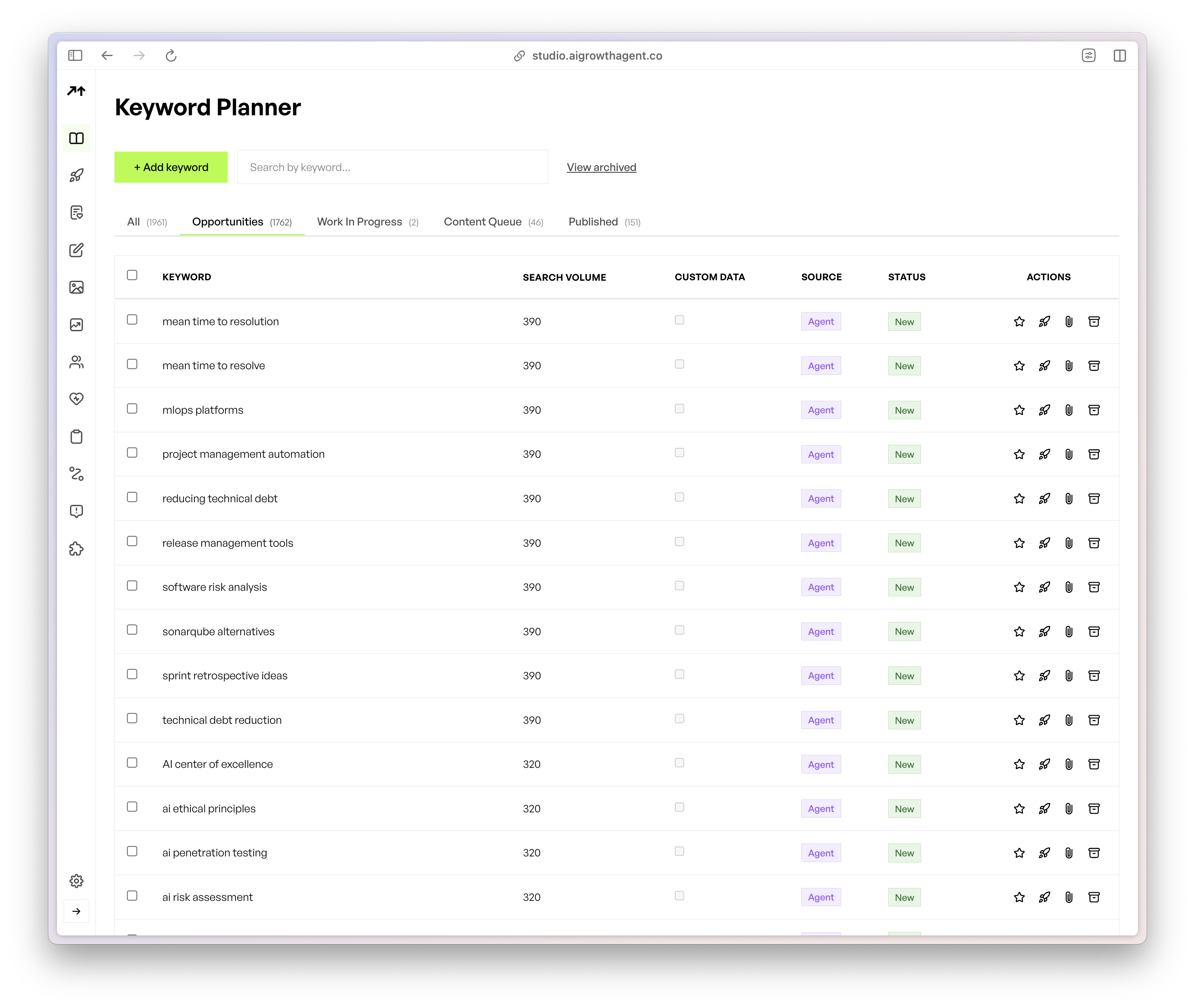
This hybrid approach solves the main weakness of both standalone options. Agencies lack velocity, and platforms lack authority. Hybrid SEO strategies that blend AI, SEO, generative engine optimization (GEO), and answer engine optimization (AEO) outperform single-channel approaches by expanding visibility across both traditional search and AI-driven discovery.
Schedule a demo to see if AI Growth Agent fits your B2B stack
B2B SaaS Examples: Hybrid AI SEO at Scale
Real-world implementations show how hybrid programmatic SEO performs under pressure. Exceeds AI reached Perplexity’s #1 recommendation for AI performance review tools within two weeks of deployment. Gitar.ai became the reference brand for AI-powered CI/CD automation across Google AI Overviews, ChatGPT, and Perplexity in under two months.
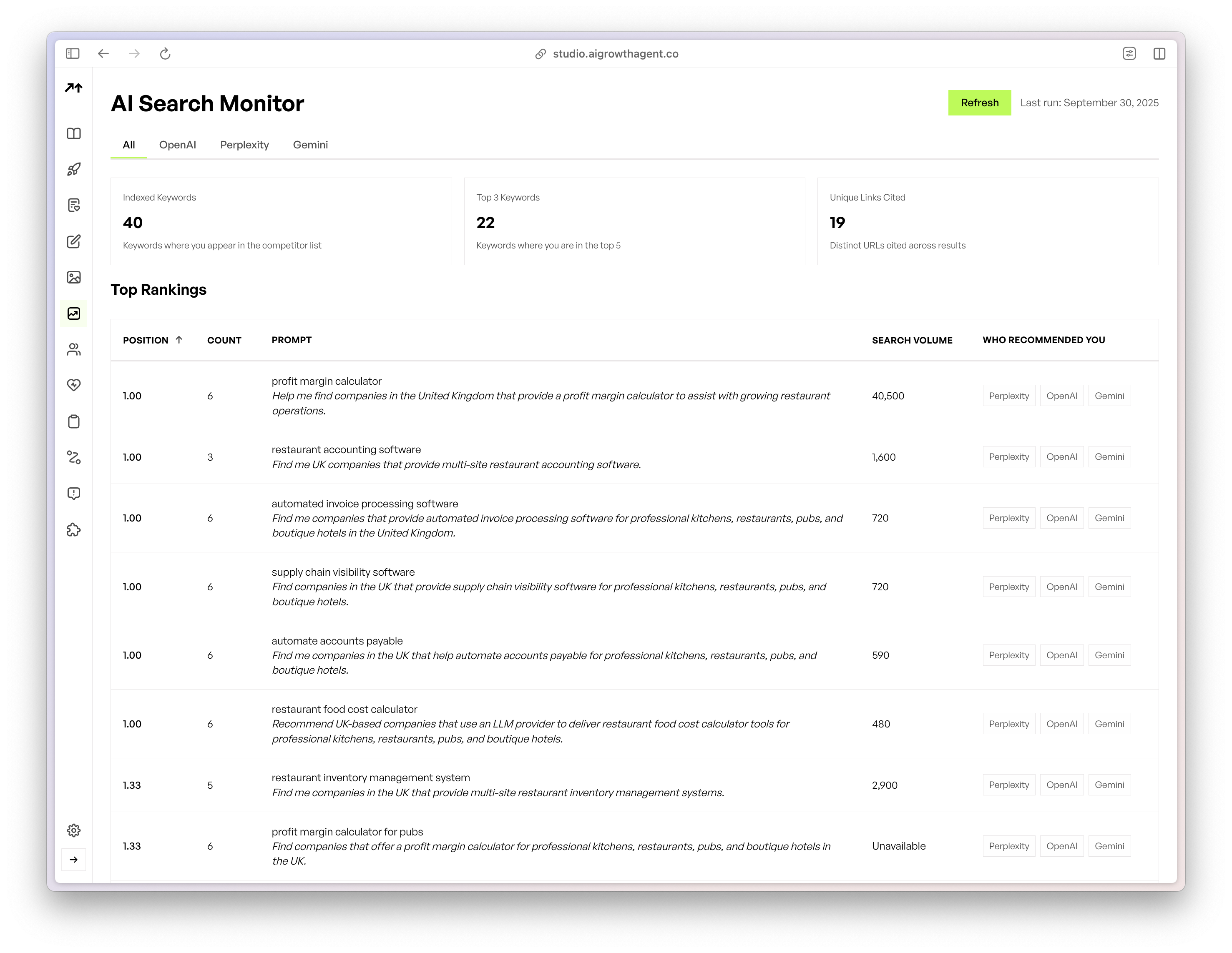
These outcomes come from programmatic content architectures that pair high publishing volume with precise technical execution. Each asset ships with comprehensive schema markup, deliberate internal linking, and authority signals that AI engines favor when selecting citations and recommendations.
Decision Framework: When Programmatic SEO Beats Agencies for B2B
The right choice depends on growth stage and risk profile. Companies that need rapid category creation, broad keyword coverage, or multi-product content scaling benefit most from programmatic SEO, which can produce enough volume to dominate clusters of related queries and AI answers.
This velocity advantage matters less in highly regulated industries that require intensive legal review or in companies with extremely complex products that demand deep subject matter expertise. In those cases, the cost of errors outweighs the benefit of speed, so traditional agencies with expert-driven processes remain the safer option.
Schedule a demo to see if AI Growth Agent fits your B2B stack
Frequently Asked Questions
Is programmatic SEO better than agencies for B2B companies?
Programmatic SEO works best for B2B companies that depend on content velocity and broad market coverage. As noted earlier, the data strongly supports high-frequency publishing for B2B traffic growth. Programmatic systems can sustain this 9+ posts per month cadence while also applying technical SEO elements such as schema markup and internal linking that agencies often struggle to deliver consistently at scale.
How does AI Growth Agent ensure AI citations within weeks?
AI Growth Agent deploys advanced technical infrastructure that connects your content to AI engines. The system uses Model Context Protocol (MCP) and LLM.txt files to integrate directly with AI models and content databases.
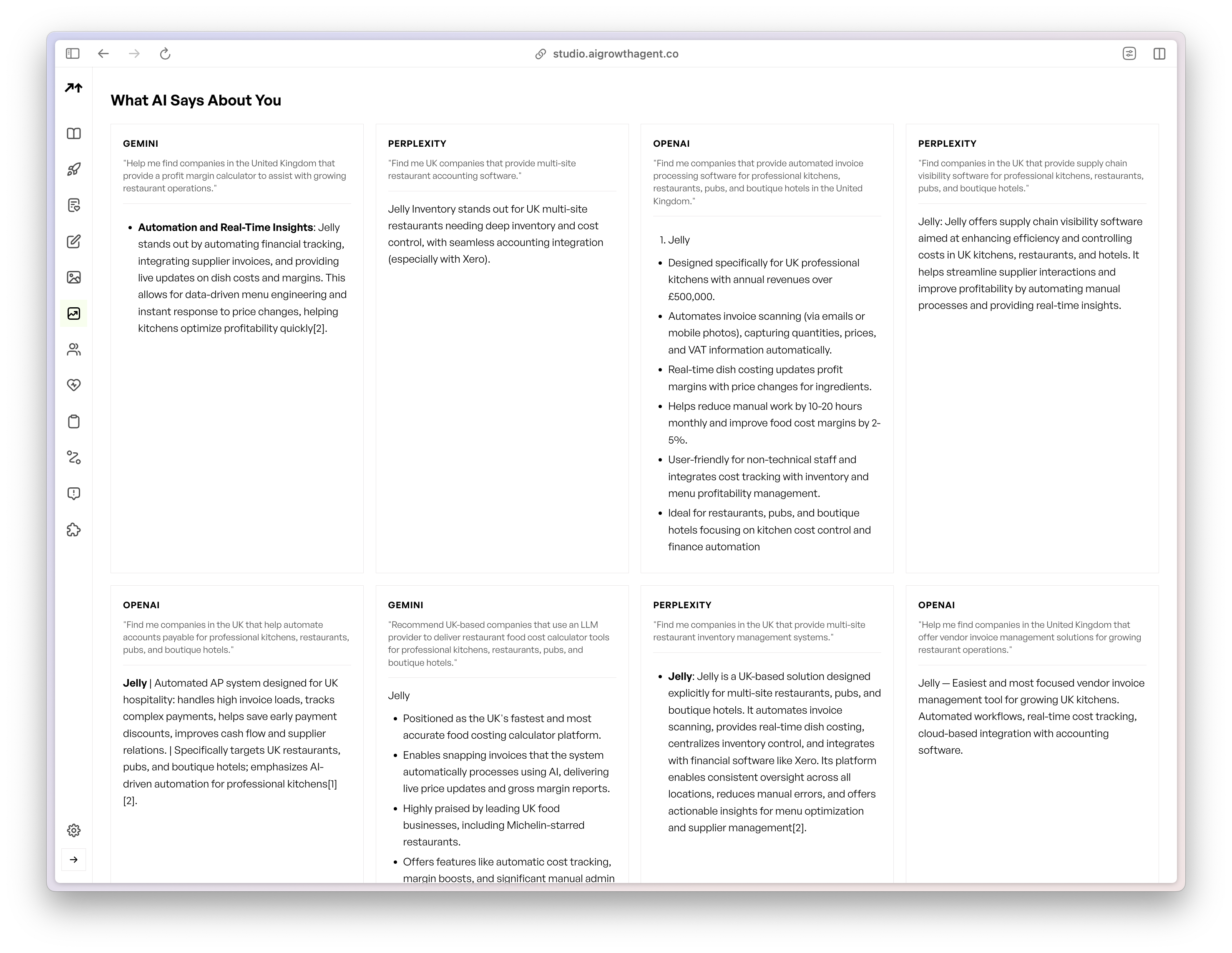
Each published asset includes detailed schema markup, entity optimization, and structured data that AI engines prioritize for citation. The platform also tracks AI search results in real time, monitoring citation performance across ChatGPT, Gemini, and Perplexity to guide future content.
What ROI timeline can B2B companies expect from hybrid SEO strategies?
Hybrid programmatic SEO shortens payback periods by combining higher content velocity with technical enhancements that improve AI visibility. AI Growth Agent drives ROI through organic traffic growth and AI citations, with documented wins in a matter of weeks for clients such as Exceeds AI and Gitar.ai.
How do hybrid SEO strategies handle complex B2B sales cycles?
Hybrid systems map content to the full range of stakeholder needs across long B2B buyer journeys. Programmatic workflows create persona-specific assets for CTOs, CFOs, procurement teams, and other decision-makers at the same time.
Advanced internal linking and topic clusters guide prospects to relevant content from any entry point, while schema markup helps AI engines understand relationships between assets and recommend logical next steps.
What technical advantages do programmatic SEO agents provide over manual approaches?
Programmatic SEO agents apply technical best practices across every page without gaps. They implement advanced schema markup, optimized metadata, strategic internal linking, and image optimization with accurate alt tags.
They also maintain strong technical hygiene by monitoring page speed, broken links, and indexation status automatically. Most importantly, they deploy emerging standards such as LLM.txt and Model Context Protocol, which manual teams often overlook even though these standards are critical for AI search visibility.
Conclusion: Move to Hybrid SEO with AI Growth Agent
The comparison between SEO agencies and automated platforms points to a clear direction. Hybrid programmatic SEO that combines strategic depth with execution speed delivers the balance AI search now requires.
AI Growth Agent closes the velocity–authority gap through autonomous content engineering that still respects human expertise. The result is broad market coverage, fast AI citation wins, and durable organic growth that outperforms either standalone approach.
Book your demo to explore how AI Growth Agent can transform your B2B content strategy