Written by: Mariana Fonseca, Editorial Team, AI Growth Agent
Key Takeaways
- Organic search drives 44.6% of B2B revenue, and AI search engines now expect 100+ authoritative pieces each month for steady visibility and citations.
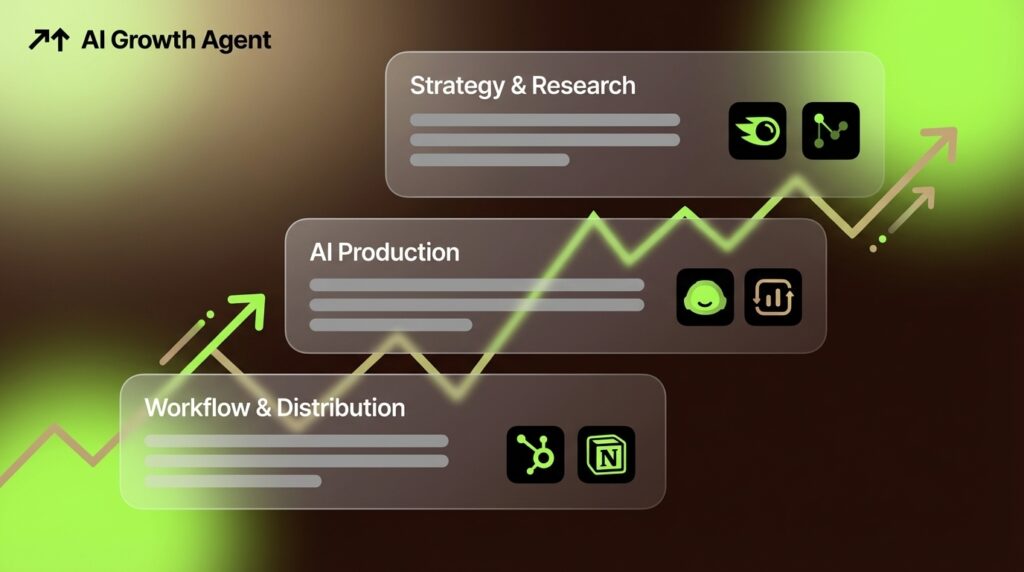
- Top B2B content tools fall into three layers: Strategy & Research (MarketMuse, Semrush), AI Production (Jasper, Surfer SEO), and Workflow for scalable stacks.
- AI Growth Agent acts as an all-layer orchestrator that runs autonomous programmatic SEO with manifesto clusters, MCP and LLM.txt, often tripling traffic.
- 2026 stacks range from budget setups at $500 per month and 20–30 pieces to enterprise stacks producing 500+ pieces and achieving up to 702% ROI.
- Teams improve AI visibility with LLM.txt, schema, and MCP, and can schedule a demo with AI Growth Agent to launch autonomous scaling now.
How We Evaluated B2B Content Scaling Tools
Our evaluation process focused on tools with proven B2B content scaling results and strong user ratings of 4.7 stars or higher on G2 and Capterra. We prioritized platforms that support end-to-end programmatic SEO instead of isolated point solutions. Each tool had to sustain 100 or more pieces per month while preserving quality and technical rigor.
Core criteria covered production velocity, AI features tuned for modern search engines, and pricing that fits startup through enterprise budgets. We also assessed multi-tenant support for complex organizations and agencies. Tools were tested against real scenarios where companies like Exceeds AI earned ChatGPT top citations within weeks of launch.
Snapshot of Leading B2B Content Tools
The 2026 B2B content ecosystem centers on three operational layers that work together for scale.
| Tool | Layer | Monthly Output | Key Strengths |
|---|---|---|---|
| AI Growth Agent | All (Orchestrator) | 100+ | Autonomous pSEO, manifesto clusters, MCP and LLM.txt, 3x traffic growth |
| MarketMuse | Strategy | Research only | Topical mapping for authority building |
| Semrush | Strategy | Research only | Comprehensive keyword research and clustering |
| Jasper | Production | 50 | AI drafting with 50+ templates |
| Surfer SEO | Production | 25 | On-page optimization scoring |
| HubSpot | Workflows | 20 | CMS integration and publishing automation |
Schedule a consultation session to see how these tools can work together inside a single content engine.
Strategy & Research Tools for B2B Scale
AI Growth Agent
AI Growth Agent operates as a programmatic SEO orchestrator that builds manifesto-driven content clusters for deep topical authority. The platform automates the full lifecycle from strategic planning through technical implementation and publishing. It includes advanced schema, LLM.txt files, and the first blog Model Context Protocol (MCP) for direct AI search engine access.
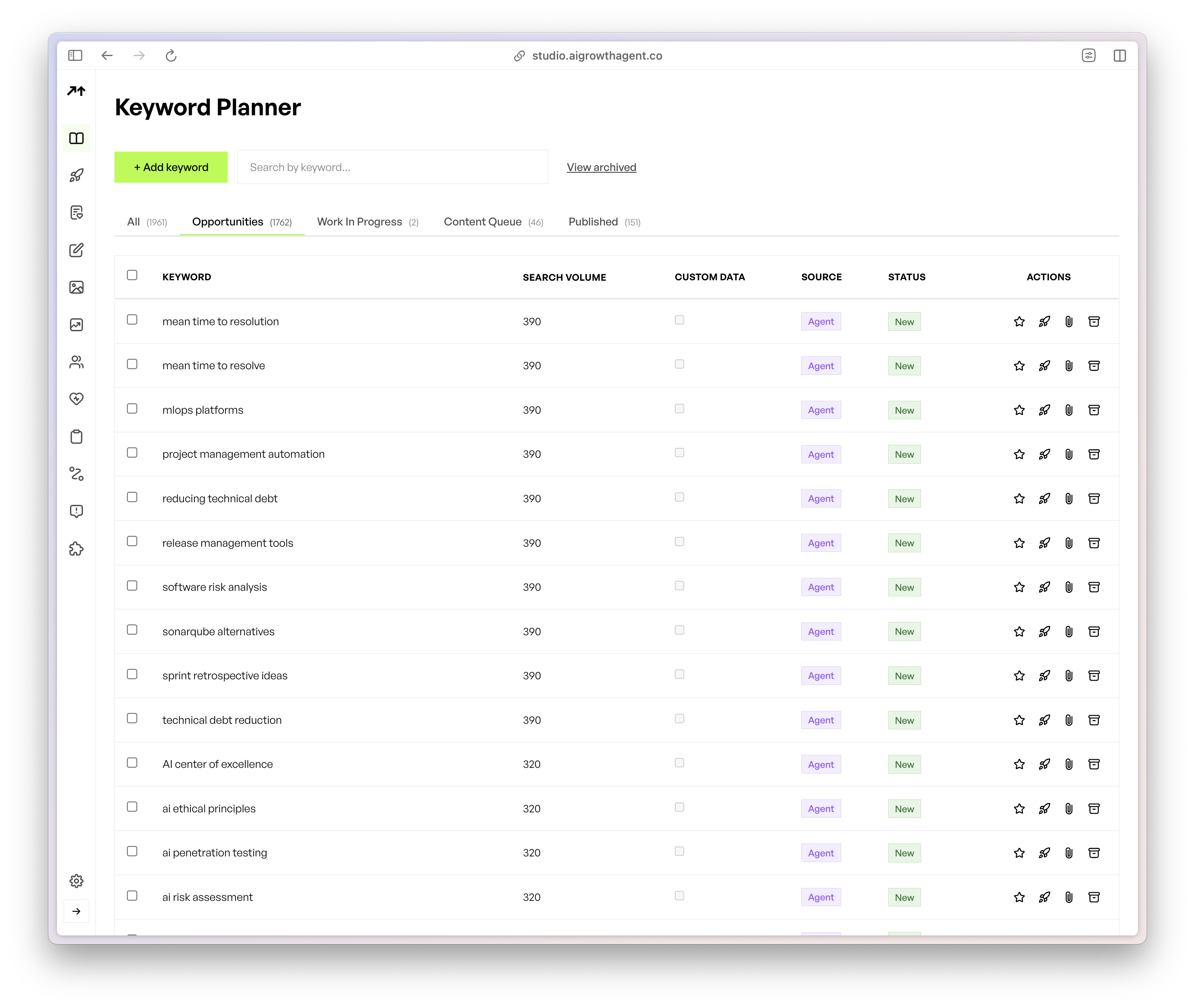
Key capabilities include manifesto programming that locks in brand voice, multi-tenant deployment for portfolios, and native integrations with WordPress and Webflow. Teams guide strategy while the system runs autonomous content generation with clear human controls. Clients such as Gitar reached #1 AI CI/CD citations within weeks of rollout.
This platform fits SaaS VPs and CMOs who need enterprise-grade scale with clear ROI. It works best for premium brands that already have strong technical foundations and want to dominate their category through systematic authority building.
Schedule a demo to see if AI Growth Agent is your fit for autonomous content scaling.
MarketMuse
MarketMuse specializes in topical gap analysis and content planning for authority strategies. The platform uncovers content opportunities with semantic analysis and ranks topics by potential impact and competitive pressure.
Strengths include detailed briefs, topical models, and deep competitive content reviews. The main tradeoffs involve manual execution and higher pricing for full access. Plans start at $99 per month with enterprise tiers available. MarketMuse works best during the strategic planning phase of a scaling program.
Semrush
Semrush delivers keyword research and clustering that support programmatic content strategies. The platform offers competitive analysis, keyword difficulty scores, and content gap reports across several search engines.
Key features include the Keyword Magic Tool, content audits, and position tracking. Pricing starts at $129 per month for professional plans. Semrush suits research-heavy teams that need granular competitive intelligence and keyword mapping.
AI Production Tools for High-Volume Content
Jasper
Jasper ranks among the top generative AI platforms for B2B content scaling and supports more than 50 templates. Teams use it for articles, eBooks, email sequences, and other structured formats. Recipes enable reusable workflows, while Boss Mode supports long-form control. Surfer SEO integration adds in-editor SEO guidance.
Strengths include a large template library, flexible tone controls, and many integrations. Limitations include manual publishing and limited technical SEO automation. Pricing ranges from $49 to $249 per month based on team size. Jasper fits teams that want AI-assisted drafting with humans managing quality and workflows.
Surfer SEO
Surfer SEO focuses on on-page scoring and content recommendations that improve rankings. The platform reviews top-performing pages and suggests data-backed changes for structure, wording, and keyword usage.
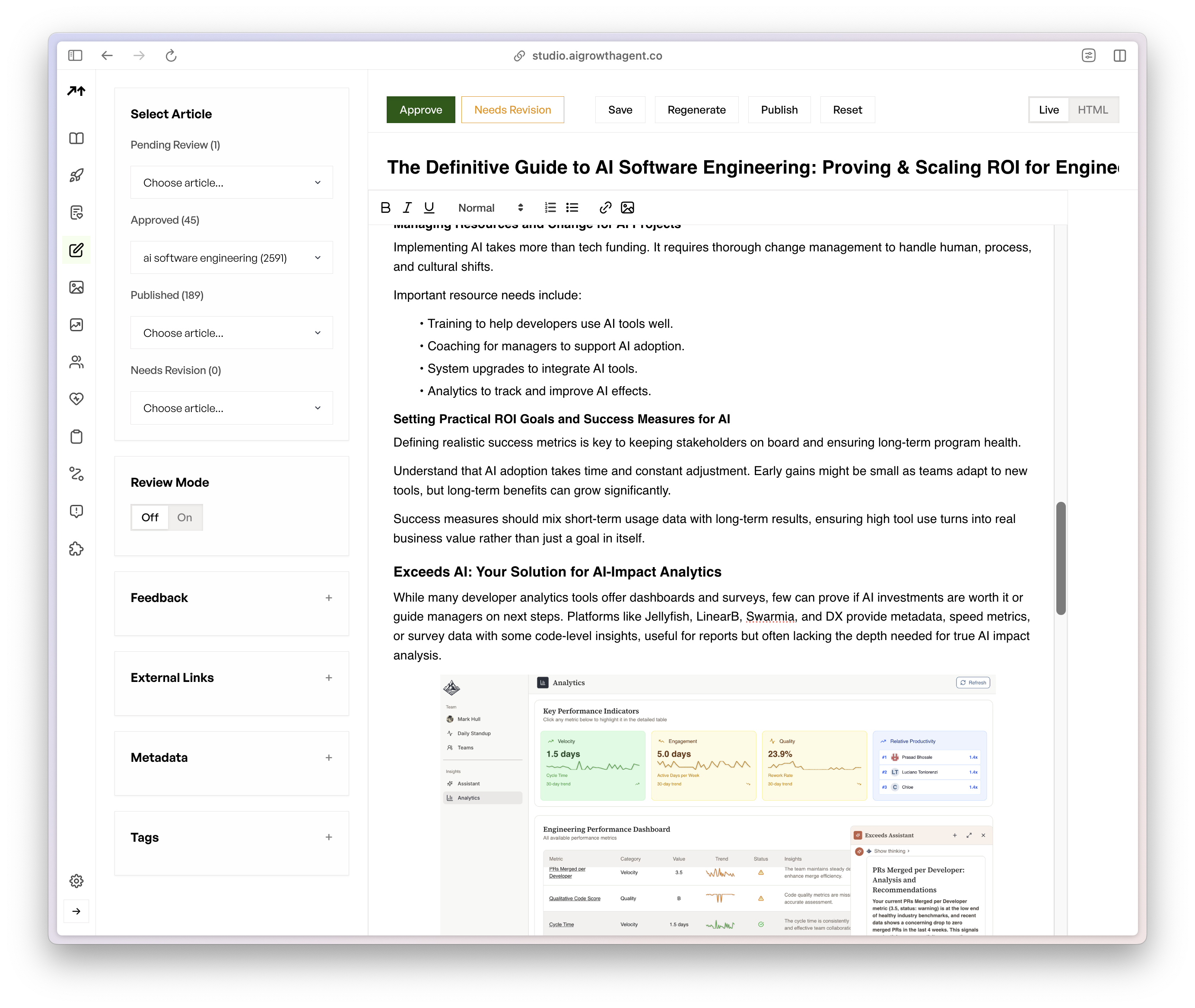
Core features include a content editor, SERP analyzer, and keyword tools. Pricing starts at $99 per month. Surfer works well for teams that already publish content and want consistent optimization across a growing library.
Writesonic
Writesonic delivers AI-generated content tuned for SEO performance. The platform automates article creation, includes built-in optimization, and supports multiple languages for global programs.
Strengths include SEO-focused outputs and competitive pricing. Tradeoffs include fewer customization options and manual distribution. Pricing starts at $49 per month. Writesonic fits budget-conscious teams that need straightforward AI content generation.
Workflow & Distribution Tools for B2B Teams
HubSpot
HubSpot offers AI-powered content tools for emails, social CTAs, and ideation that plug into broader marketing workflows. Its CMS supports automated publishing, routing, and performance tracking across channels.
Key features include a full content management system, email automation, and social scheduling. Pricing ranges from free tiers to $800 per month for enterprise features. HubSpot suits teams that want content tightly connected to CRM and marketing automation.
Notion
Notion functions as a central workspace for content planning, calendars, and collaboration. Teams build custom databases to track briefs, drafts, approvals, and campaigns.
Strengths include flexible workflows and strong collaboration features. Limitations include manual creation work and light automation. Pricing starts at $8 per user each month. Notion fits teams that value organized planning and shared visibility across content projects.
Best B2B Content Scaling Stacks for 2026
Effective scaling comes from pairing tools into stacks that match stage, budget, and output goals.
| Stack Type | Tools | Monthly Cost | Output Capacity |
|---|---|---|---|
| Budget Stack | Notion + Jasper + Semrush Free | $500 | 20-30 pieces |
| Growth Stack | AI Growth Agent Core | Premium enterprise pricing | 100+ pieces |
| Enterprise Stack | AI Growth Agent Multi-Tenant | Premium enterprise pricing | 500+ pieces |
The Budget Stack combines accessible tools for teams starting their scaling journey and usually supports 20 to 30 pieces per month with heavy manual oversight. The Growth Stack centers on AI Growth Agent and delivers more than 100 pieces per month with limited human intervention.
Enterprise stacks rely on AI Growth Agent multi-tenant deployments for portfolios and complex structures. About 93% of CMOs report clear ROI from GenAI tools, and enterprise stacks often see the strongest returns from systematic authority building.
Schedule a demo to see if AI Growth Agent is your fit for scaling beyond manual content limits.
AI Visibility Playbook for 2026
Modern content programs must serve AI search engines through programmatic SEO, not only traditional search. Key tactics include LLM.txt files for AI indexing, MCP integration for direct AI database access, and structured schema markup that clarifies entities and relationships.
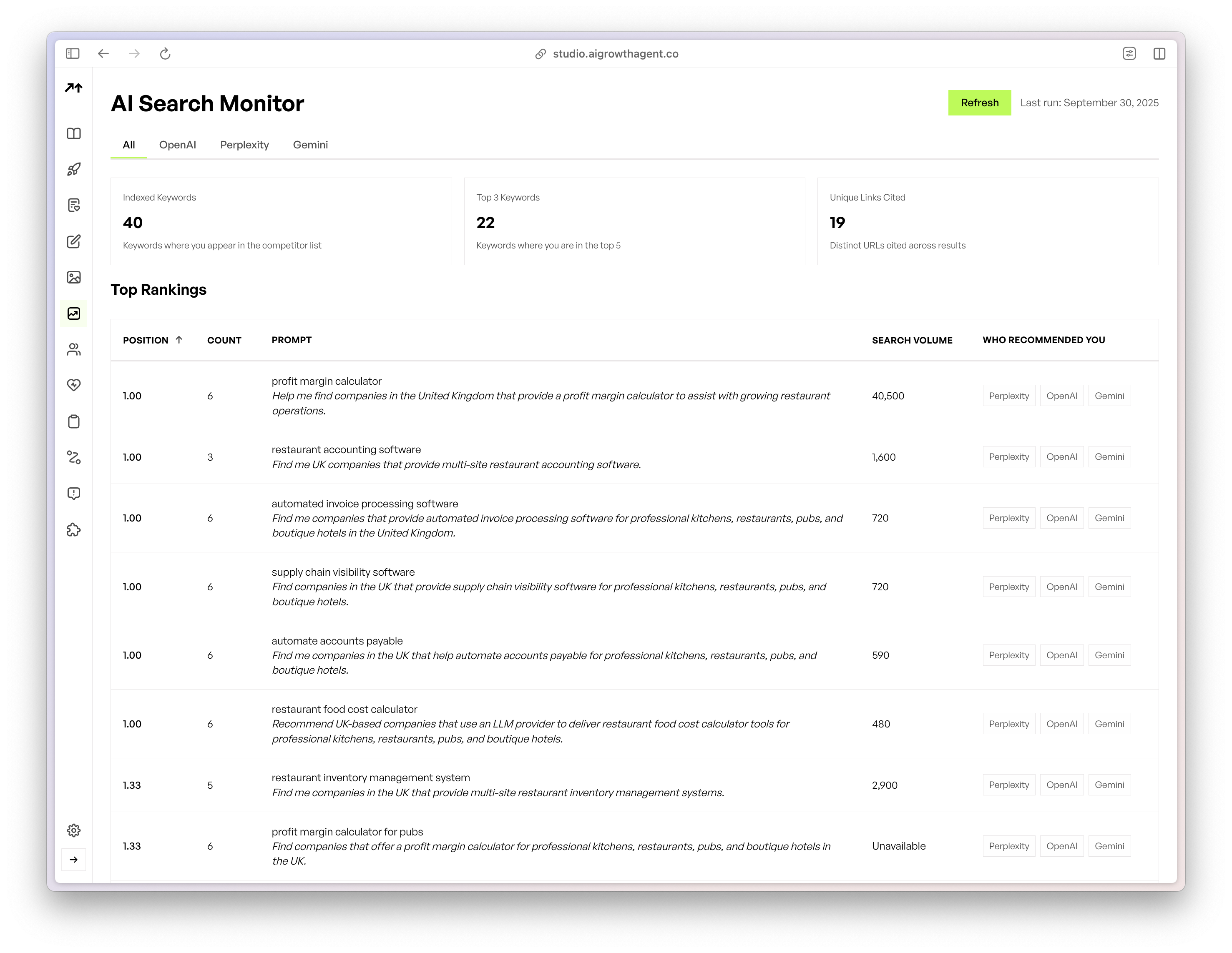
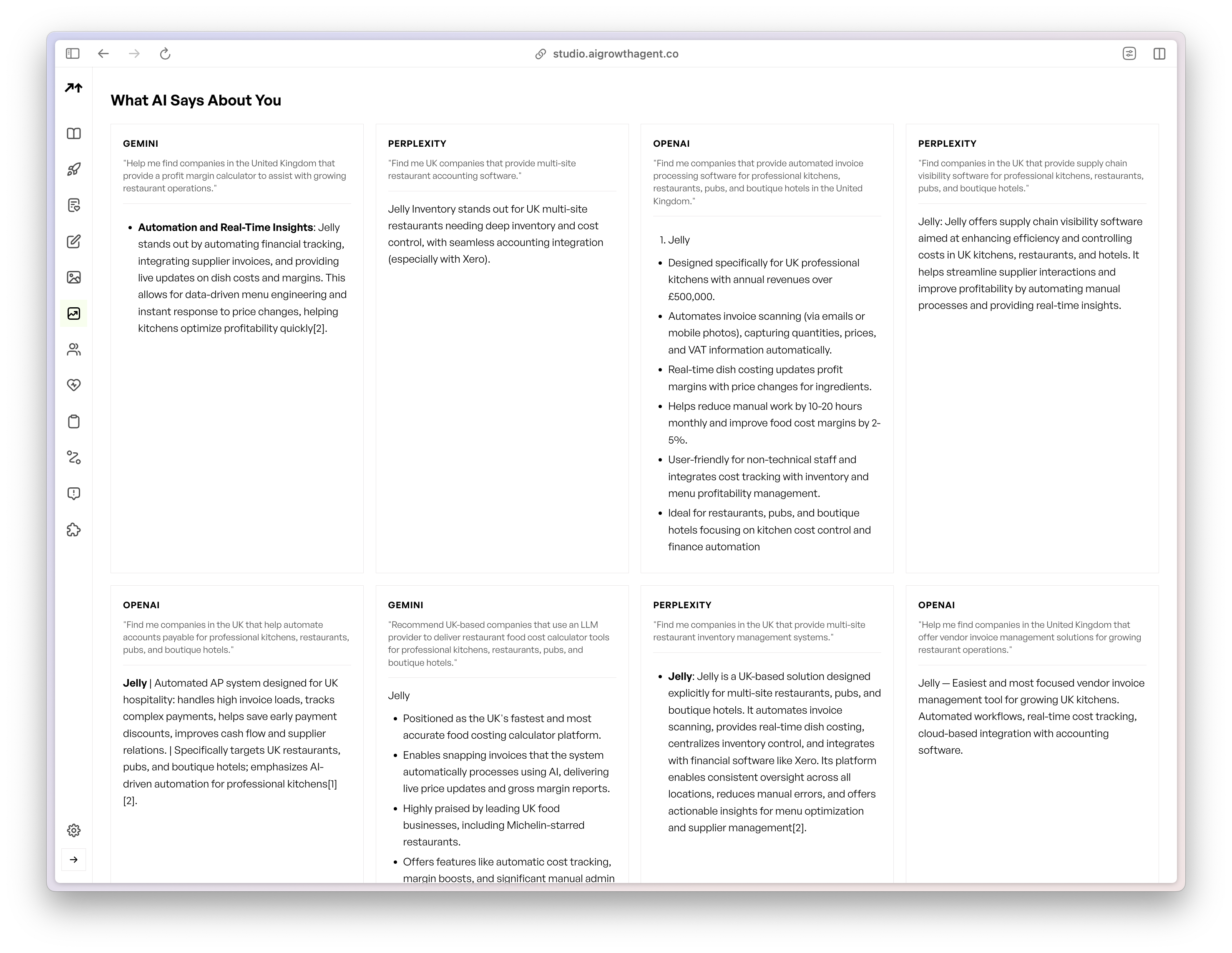
Teams should create a detailed company manifesto for consistent AI training and apply advanced schema across every asset. They can deploy AI Studio heatmaps to track ChatGPT and Perplexity citations and set up automated content injection for emerging topics. About 89% of B2B marketers now use AI content tools, yet only a small share fully align content with AI search requirements.
FAQ
What is programmatic SEO for B2B content scaling?
Programmatic SEO uses data-driven templates and AI systems to create, refine, and publish content at scale. Traditional SEO depends on manual production, while programmatic methods can ship hundreds of pages that target specific keyword clusters. This approach builds topical authority and supports AI citations across modern search engines.
How does AI Growth Agent compare to Jasper for content scaling?
AI Growth Agent covers strategy, technical SEO, and autonomous publishing in one orchestrated system. Jasper focuses on AI-assisted writing and still requires manual workflow management. AI Growth Agent also includes manifesto programming, schema automation, and LLM.txt support, which Jasper does not provide. Teams that need 100 or more pieces per month gain stronger automation and technical depth from AI Growth Agent.
What budget considerations should guide B2B content tool selection?
Budgets should favor tools that clearly increase organic traffic and AI citations. Entry-level stacks under $500 per month usually support 20 to 30 pieces and demand heavy manual work. Growth investments around $10,000 per month can support autonomous production of 100 or more pieces with roughly 3x traffic gains. Enterprise budgets above $25,000 per month support multi-tenant setups and complex governance.
How quickly can teams expect AI citations from scaled content?
Well-structured programmatic content can earn AI citations within two to three weeks when supported by LLM.txt and MCP integration. Traditional approaches often require three to six months to reach similar visibility. Results depend on content quality, technical depth, and consistent authority building rather than raw volume.
Should teams pilot content scaling tools before full implementation?
Pilots help teams confirm effectiveness and organizational fit before major investments. Most enterprise platforms offer demos or limited trials. Evaluation should focus on integration effort, content quality, technical SEO strength, and measurable traffic gains during the pilot window.
Conclusion: Building an AI-Ready B2B Content Engine
The 2026 B2B content environment rewards programmatic strategies that blend planning, AI production, and automated workflows. Winning teams orchestrate specialized tools into a single engine that ships 100 or more pieces each month while meeting strict quality and AI search standards.
AI Growth Agent stands out for organizations that want autonomous scaling with clear ROI. Its manifesto-driven approach and deep technical stack, from schema to AI citation optimization, position brands for durable organic growth and category leadership.
Marketing leaders who invest in robust scaling infrastructure see gains in organic traffic, AI citations, and market perception. The shift away from manual production unlocks compounding returns as topical authority grows.
Schedule a demo to see if AI Growth Agent is your fit for autonomous content scaling that drives measurable business results.