Written by: Mariana Fonseca, Editorial Team, AI Growth Agent
Key Takeaways for Programmatic SEO in 2026
- AI-generated content has increased traffic from large language models by 527%, so traditional manual SEO alone cannot keep you competitive in 2026.
- Programmatic SEO lets companies publish thousands of high-authority pages and achieve 300-500% organic traffic growth, similar to Zapier’s 70,000+ pages model.
- Audit your footprint with the 80/20 rule, build long-tail keyword clusters, and use schema markup plus LLM.txt to earn AI citations.
- Run daily content engines, expand with local SEO, scale authority with automated links, and track AI visibility alongside traditional metrics.
- Implement these 10 steps with AI Growth Agent to automate programmatic SEO and win more AI search exposure.
10 Steps to Expand Your Digital Footprint with SEO in 2026
Step 1: Audit Your Current Footprint with the 80/20 Rule
Start by finding the 20% of your content that drives 80% of your organic traffic using Google Analytics and Search Console. Most companies discover that a small group of pages carries nearly all performance while hundreds of weak assets dilute overall authority.
Track which pages receive AI citations by watching mentions in ChatGPT, Perplexity, and Google AI Overviews. 68.94% of websites receive AI traffic, yet only strong, authoritative content earns consistent citations. Focus expansion on topics where you already show expertise instead of chasing scattered, unrelated keywords.
Step 2: Master Programmatic Keyword Research for Long-Tails
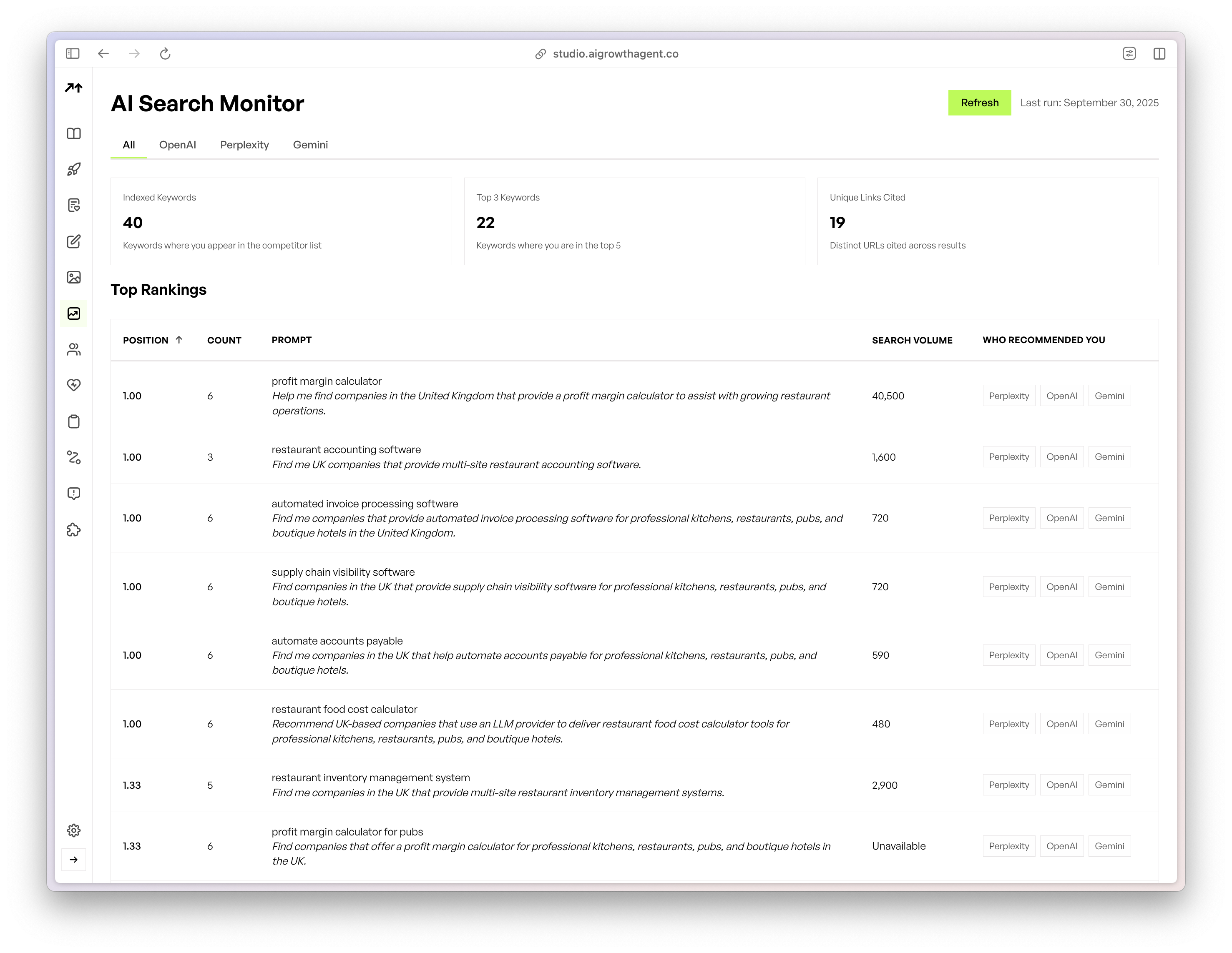
Once you identify your strongest content areas, move to scalable keyword research inside those topics. Traditional keyword research targets individual terms, while programmatic SEO groups thousands of related queries into reusable templates.
15% of Google searches are entirely new every day, which creates endless long-tail demand that manual content cannot cover. Use tools like Ahrefs to uncover patterns around comparisons, integrations, and use cases.
Effective programmatic strategies target queries such as “[Your Product] vs [Competitor]” and “[Your Solution] for [Industry]” across hundreds of variations. These clusters build deep topical coverage that signals authority to both search engines and AI systems.
Step 3: Optimize On-Page for AI with Schema and LLM.txt
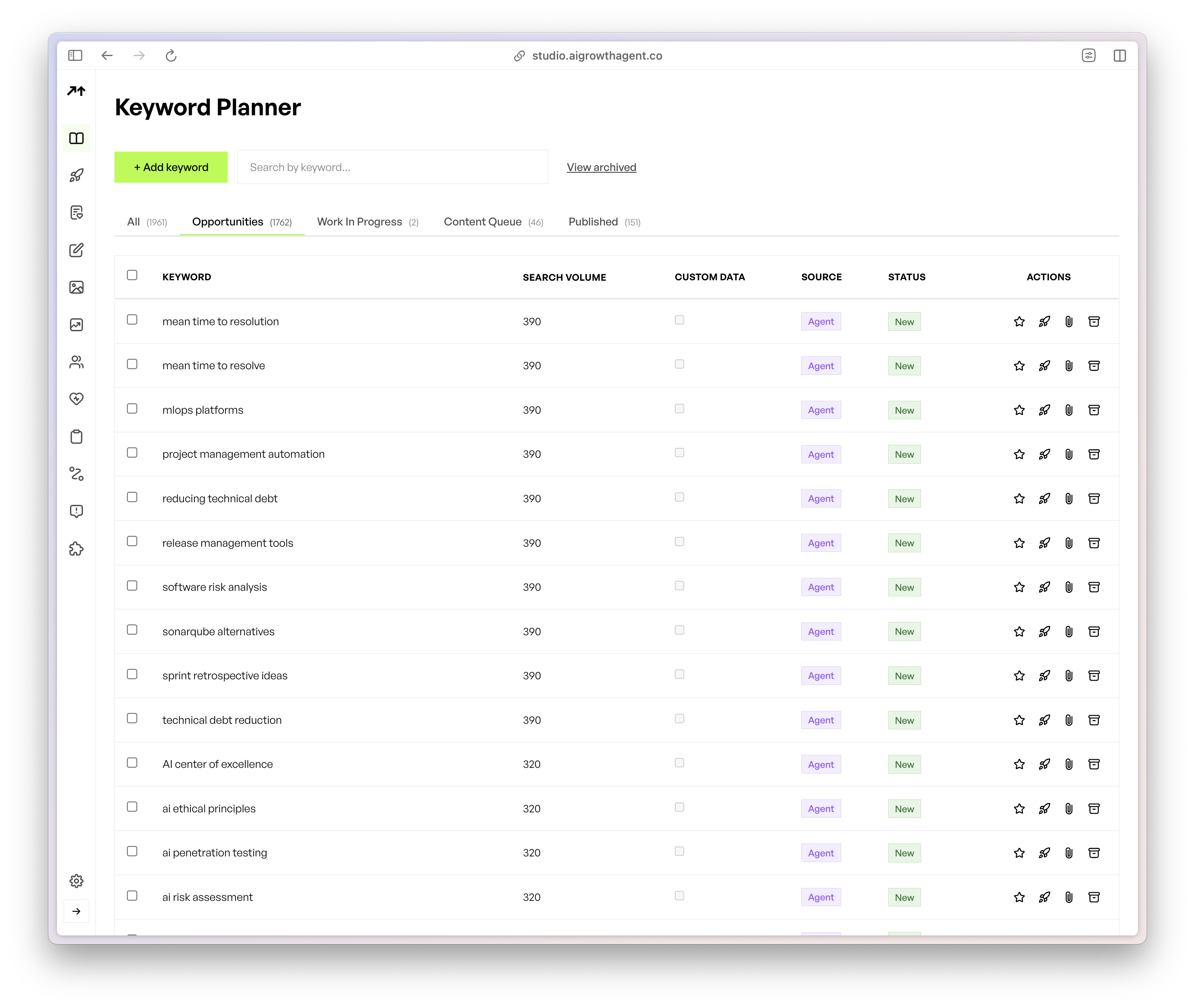
AI search engines favor structured data that clarifies what your content covers. Implement FAQPage, HowTo, and Article schema markup to increase your chances of appearing in AI-generated answers. Structured data improves entity clarity and page interpretation to help generative systems cite content more reliably.
Deploy LLM.txt files and Model Context Protocol (MCP) integration to give AI crawlers direct access to your database or key content sources. This structured access reduces interpretation errors that cause crawlers to misread or skip your pages. With this technical base in place, your content becomes machine-readable for AI citations instead of losing visibility to competitors with stronger setups.
Implement advanced schema and AI optimization with expert guidance and turn your site into a reliable source for AI responses.
Step 4: Build a Programmatic Content Engine for Daily Velocity
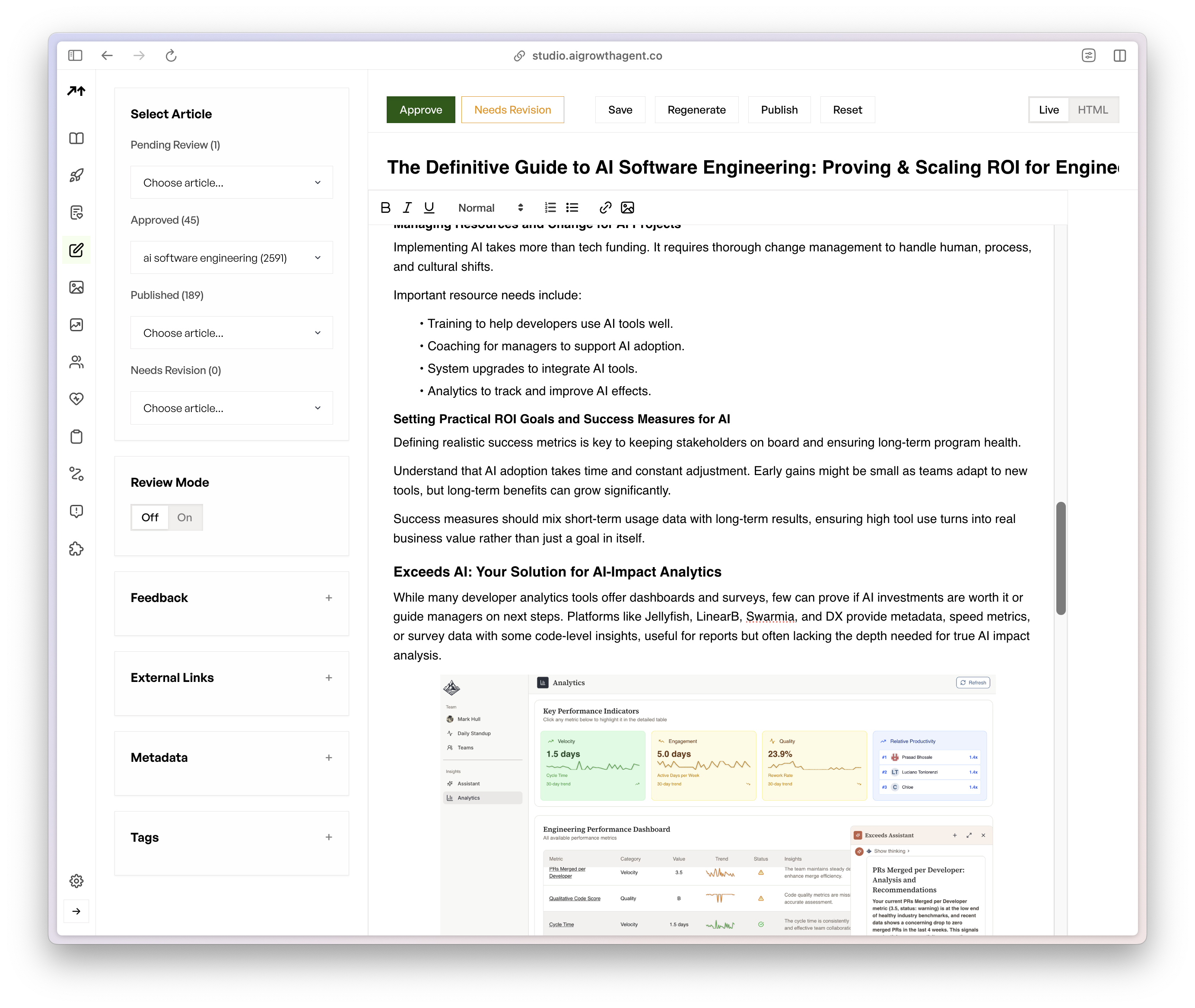
Programmatic content engines give you publishing speed that manual workflows cannot match. Manual content teams often ship only one or two articles each month, while AI-driven systems can release dozens of unique, high-quality pages every day.
Strong programmatic content uses structured templates plus unique data, expert commentary, and thorough coverage of each topic. Companies that adopt this approach often publish 50 to 200 or more targeted pages that capture long-tail traffic individual posts miss.
The table below highlights how programmatic SEO outperforms manual efforts across speed, AI visibility, and cost at scale.
| Attribute | Manual SEO | Programmatic SEO |
|---|---|---|
| Output Speed | 1-2 pages/month | 50+ pages/month |
| AI Citation Rate | Low consistency | Moderate |
| Cost/Scalability | High cost per page | Decreasing cost at scale |
Step 5: Use Local SEO to Expand in Geographic Markets
Local SEO quickly expands your footprint if you serve specific regions or cities. Businesses with complete Google Business Profiles are 70% more likely to attract visitors, and nearly half of local searchers click through to visit or contact a business.
Strengthen your Google Business Profile with accurate details, frequent updates, customer reviews, and location-focused posts. Local SEO delivers leads at $0.50-$2.00 per lead compared to $15-$50 for Google Ads, which makes it one of the most cost-effective growth channels for local companies.
Step 6: Scale Off-Page Authority with Automated Link Assets
Programmatic SEO lets you earn links by publishing resources people want to reference instead of relying on manual outreach. Traditional link building depends on one-to-one pitches and relationship management, which limits scale and slows results.
Create programmatic resource hubs that answer common HARO queries and support guest posting opportunities. These pages attract journalists and bloggers because they offer fresh data, clear visuals, and expert analysis in one place. As your library of comprehensive resources grows across many topics, other sites link to you naturally and reduce the need for time-consuming outreach campaigns.
Deploy programmatic authority-building strategies that scale and turn your content into consistent link magnets.
Step 7: Connect SEO Efforts to Revenue and ROI
SEO drives compounding returns that continue long after you publish, while paid ads stop working as soon as you pause spend. B2B SaaS companies generate a 702% ROI from SEO, and many businesses earn twice as much revenue from organic search as from other channels.
Track revenue attribution from organic and AI-driven traffic so stakeholders see SEO as a growth engine, not a cost center. Visitors from AI search platforms are worth 4.4x more than traditional organic search visitors, which makes AI-focused optimization critical for maximizing ROI in 2026.
Step 8: Monitor and Adapt to 2026 SEO and AI Shifts
SEO now changes alongside AI search behavior, personalization, and rising zero-click results. Traditional search rankings become obsolete as personalization becomes the operating system, so static strategies no longer work.
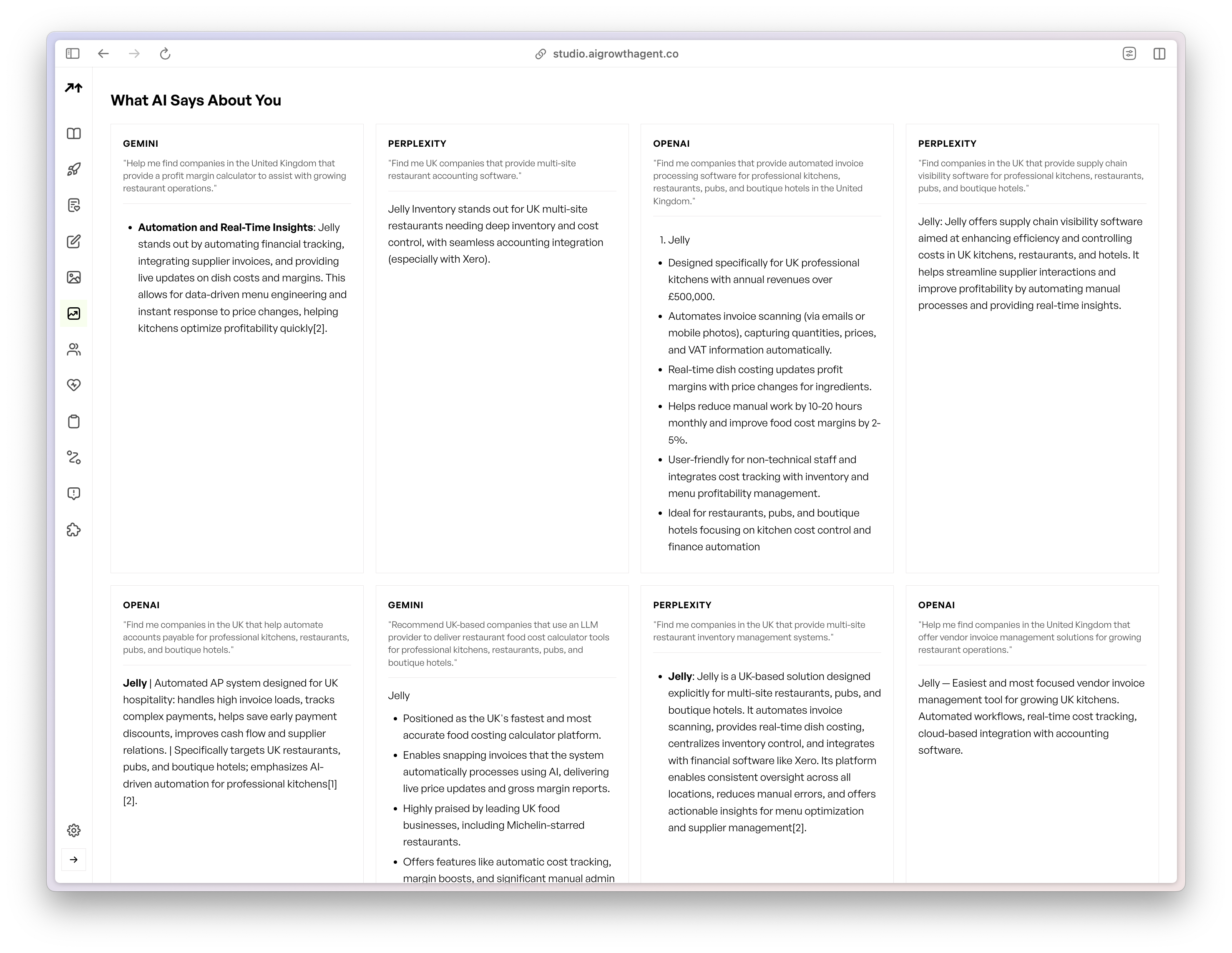
Monitor AI citations across ChatGPT, Perplexity, and Google AI Overviews to see how often your brand appears. Use visualization tools to build citation heatmaps, then spot content gaps where competitors dominate AI answers for your target topics and adjust your roadmap accordingly.
Step 9: Publish Real-Time Content Around Emerging Trends
Real-time content helps you capture short-lived spikes in interest that appear around news, product launches, and industry shifts. Manual workflows usually react too slowly, which leaves trending traffic on the table.
Programmatic SEO agents can generate optimized articles within minutes of detecting a trend. Automated news hijacking that includes your brand’s perspective on relevant topics builds thought leadership and expands your footprint into new conversations.
Launch your real-time content engine today and start capturing trend-driven demand before competitors respond.
Step 10: Measure Success with AI Visibility and Quality Metrics
AI-era SEO success depends less on static keyword rankings and more on visibility inside generative answers. Focus on AI citation frequency, share of voice in AI responses, and the engagement quality of traffic that arrives from AI referrals.
Combine Google Search Console data with AI visibility tools to understand your full footprint. As mentioned earlier, the 527% year-over-year growth in LLM traffic shows why AI visibility tracking now plays a central role in measuring digital expansion.
People Also Ask and Common Questions
How to increase your digital footprint?
Increase your digital footprint with programmatic SEO that produces hundreds of authoritative pages around long-tail keywords and AI search behavior. Prioritize structured content with schema markup, deep topical coverage, and technical setups that help AI systems cite your pages across multiple platforms.
What is the 80/20 rule for SEO?
The 80/20 rule for SEO means that about 20% of your pages usually drive 80% of your organic traffic. Identify those high-performing assets, then expand with programmatic content around the same themes instead of publishing random articles on unrelated topics.
Is SEO evolving in 2026?
SEO in 2026 functions as Search Everywhere Optimization and Generative Engine Optimization. Simple keyword targeting loses impact as AI search engines reward semantic depth, proven expertise, and structured data over basic on-page tweaks.
What are the best SEO tips for small businesses?
Small businesses should focus on local SEO, complete and active Google Business Profiles, long-tail content that answers specific questions, and AI search optimization. Building authority in a narrow niche works better than chasing broad, highly competitive keywords.
How does local SEO benefit small businesses?
Local SEO provides cost-effective lead generation that often runs 10-30 times cheaper than paid advertising. Strong Google Business Profiles increase visit likelihood while capturing a large share of clicks from local search and map results.
Manual SEO alone cannot match the speed and scale required for digital footprint growth in 2026. Programmatic SEO automation lets you build authority across thousands of relevant topics while competitors still rely on one-off content.
Deploy your programmatic SEO agent and expand your digital footprint beyond the limits of manual production.