Written by: Mariana Fonseca, Editorial Team, AI Growth Agent | Last updated: January 10, 2026
Key Takeaways
- AI search engines in 2026 favor fast, efficient pages that are inexpensive for models to crawl, process, and summarize.
- Core technical metrics such as Time to First Byte, DOM size, and Core Web Vitals now act as trust and quality signals for AI systems.
- Heavy client-side JavaScript and complex layouts raise processing costs and can limit how often AI tools ingest, refresh, and cite your content.
- New AI-ready standards such as llms.txt and Model Context Protocol give you more control over how AI agents access, interpret, and reference your content.
- AI Growth Agent provides programmatic SEO, technical infrastructure, and AI-specific protocols to help your content get discovered and cited in AI search, and you can schedule a demo here.
Why Slow Website Loading Speed Limits AI Search Discoverability in 2026
How AI crawlers use a token economy to judge your site
AI search engines in 2026 rely on an ingest, embed, and synthesize workflow, and every step consumes processing budget. Server response time, asset size, and JavaScript complexity all add cost to that budget.
Slow responses, large images, and heavy scripts increase the token cost of your pages. AI crawlers often work within strict limits, so expensive pages can trigger timeouts, partial ingestion, or less frequent crawls. Human visitors may eventually see the page, but AI systems may capture only fragments or skip the page entirely.
Sites that demand too many tokens to process tend to appear less often in AI answers and citations, which reduces brand visibility in AI-driven discovery journeys.
How speed influences E-E-A-T and AI trust
AI systems treat low Time to First Byte and compact DOMs as signals that a page is efficient, stable, and reliable. These signals now sit alongside content quality and source reputation when AI models decide which pages to surface.
Slow, fragile sites can weaken E-E-A-T signals. Repeated delays, layout issues, and resource errors imply weak technical competence and create risk for AI systems that aim to recommend dependable sources. Over time, this can reduce citation frequency even if the underlying content is strong.
Why AI search prefers fast, user-friendly pages
User behavior reinforces these technical signals. High bounce rates, slow perception of loading, and layout shifts all reduce user satisfaction and trust. AI search systems use these engagement patterns to decide which sources deserve prominent placement in answers and summaries.
Mobile performance carries particular weight, because most search activity now happens on phones and tablets. Pages that feel slow or unstable on mobile devices are less likely to be favored by AI engines during key decision moments.
Brands that invest in fast, stable, mobile-first experiences improve both human satisfaction and AI trust, increasing the odds that their content appears in high-intent AI search journeys. Schedule a consultation session to review how your current performance profile affects AI visibility.
Strategic Solutions: Engineering For AI-Speed And Discoverability
Strengthening technical foundations for AI crawlers
Clear, lightweight HTML helps AI models extract facts and structure more accurately. Reducing deeply nested elements, fixing broken tags, and removing unused code improves the signal to noise ratio and lowers processing cost.
Structured data through schema markup gives AI crawlers a direct map of entities, relationships, and key attributes. Rich, accurate schema reduces the effort needed to interpret your pages and increases the likelihood of full ingestion and inclusion in knowledge graphs.
Optimized crawl budgets focus AI bots on lightweight, high value pages. Teams benefit from audits that remove redundant scripts, trim oversized assets, and surface the content types that matter most for discovery and revenue.
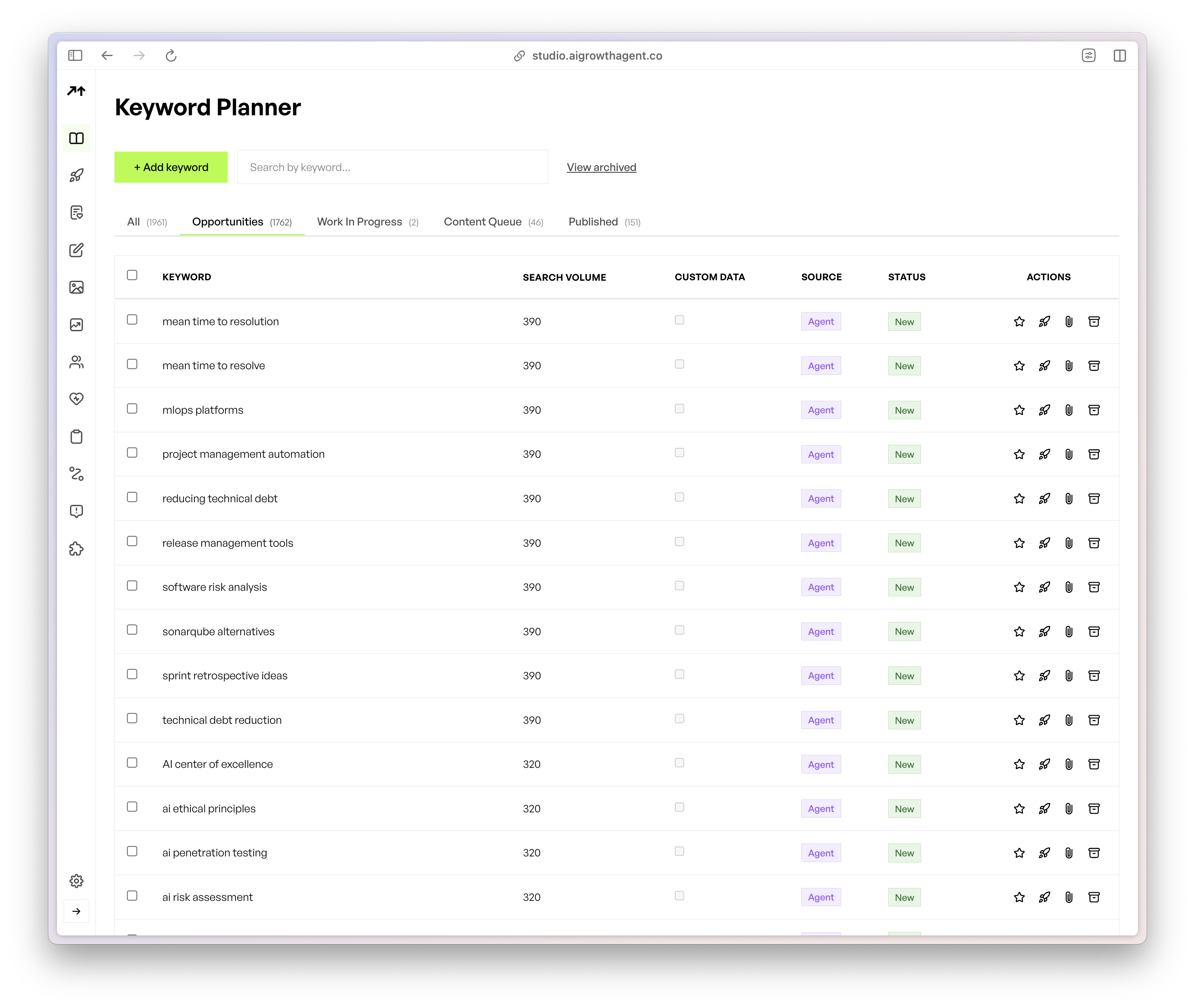
Improving page experience beyond Core Web Vitals
Core Web Vitals remain a practical benchmark for both human experience and AI efficiency. Pages with strong scores for Largest Contentful Paint, Interaction to Next Paint, and Cumulative Layout Shift tend to be easier and cheaper for crawlers to process.
Sub-second perceived load times create a competitive advantage in AI search, because models often need to request and process multiple pages during a single answer. Pages that respond and render quickly are more likely to be fully evaluated in that short window.
Reliable uptime near 99 percent or higher protects your visibility. If crawlers frequently encounter errors or downtime, they may index your content less often and consider your site less stable than faster, more available competitors.
Reducing JavaScript barriers for AI bots
Modern frameworks such as React, Angular, and Vue often depend on client-side JavaScript to render core content. Many AI crawlers do not execute this JavaScript reliably, which can leave important sections of your pages invisible to models.
Teams can address this by introducing server-side rendering or pre-rendering for critical routes. These techniques deliver fully formed HTML to crawlers while preserving interactive experiences for users.
This hybrid approach improves crawlability, reduces token cost, and increases the chance that AI tools like ChatGPT, Gemini, and Perplexity will ingest complete, accurate versions of your pages.
Using AI-ready protocols to guide crawlers
New AI-aware standards give you more explicit control over how AI tools consume your content. Llms.txt files describe which paths matter most and define usage expectations for models that access your site.
Model Context Protocol servers create a structured interface between your content and AI agents. These servers let AI tools query a dedicated endpoint that returns precise, well formatted answers drawn from your own data.
Sites that adopt these protocols often gain an advantage as AI search ecosystems mature, because their content is easier to find, interpret, and attribute correctly. Schedule a demo to see if you are a good fit for implementing these advanced AI-ready standards with AI Growth Agent.
AI Growth Agent: Programmatic Authority For AI Search
Automated technical infrastructure that aligns with AI expectations
AI Growth Agent builds an optimized blog subdomain that matches your existing brand but runs on a cleaner, faster architecture. This structure gives you a technically sound environment that aligns with AI crawler needs without disrupting your current site.
The Programmatic SEO Agent deploys this stack quickly, often moving from kickoff to first live article within days. Integrations with platforms such as WordPress, Webflow, Framer, Sanity, and HubSpot remain available, yet many teams select the hosted option to avoid ongoing maintenance and internal engineering work.
This hosted environment minimizes friction, centralizes performance control, and keeps your AI-facing content on a platform tuned for speed, schema, and AI protocols.
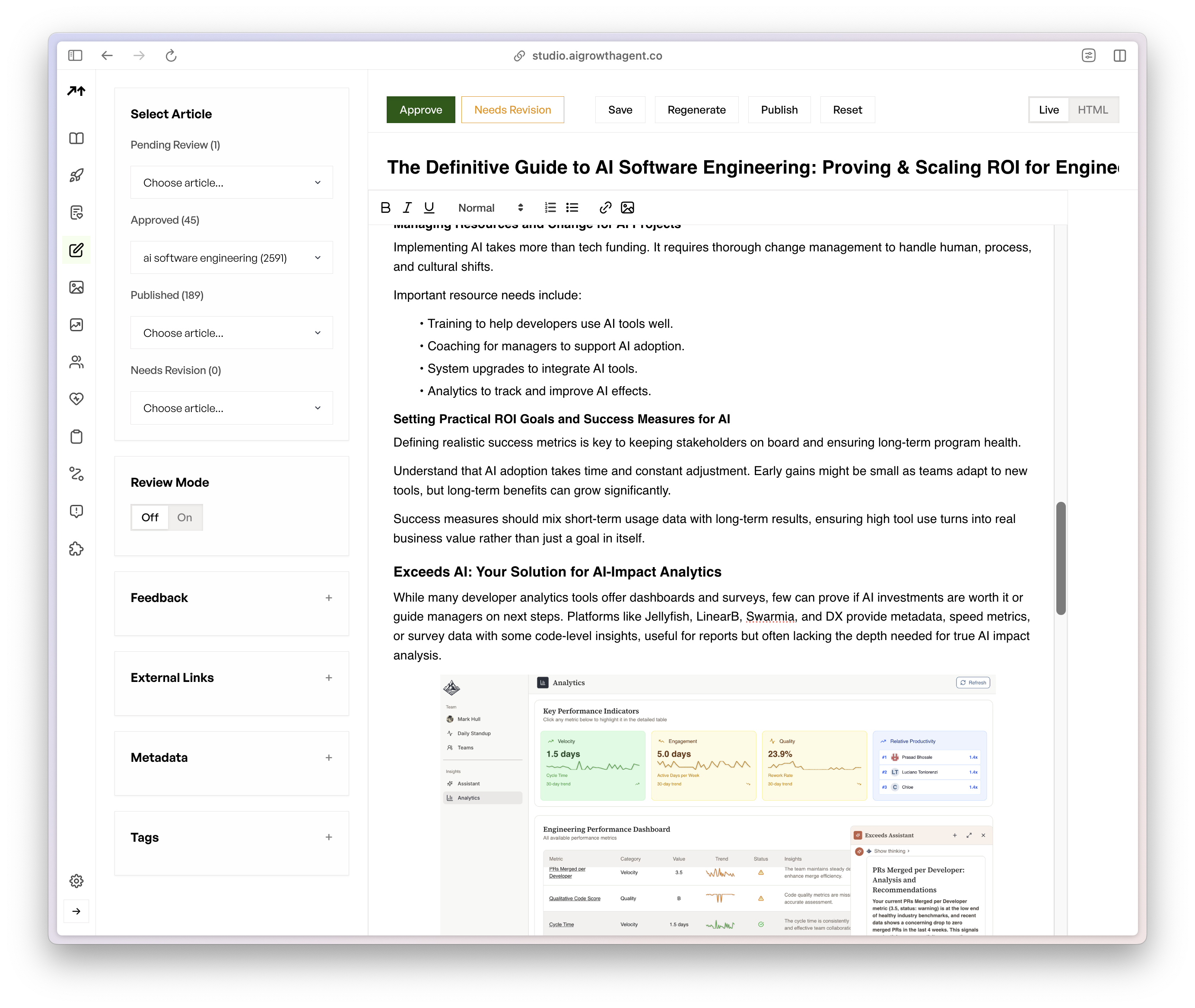
AI-driven technical engineering for discoverability
Every article produced through AI Growth Agent includes advanced technical SEO elements by default. These elements include detailed schema markup, precise metadata, and a well structured llms.txt file that describes how AI tools should index and reference the content.
AI Growth Agent also operates the first blog specific Model Context Protocol integration, which lets AI agents pull structured answers directly from your content library. This setup increases clarity for models and supports more accurate citations.
Automation keeps these patterns consistent at scale, so even large publishing programs maintain a reliable technical baseline without extra manual effort from your team.
Programmatic publishing velocity that compounds authority
Authority in AI search often correlates with both depth and freshness of content. Brands that publish high quality, technically sound articles at a steady cadence create more opportunities for crawlers to see and trust their sites.
AI Growth Agent focuses on this compounding effect. The Programmatic SEO Agent can publish content at a pace that manual processes rarely match, while maintaining structured data, AI-ready formatting, and performance standards.
|
Capability |
AI Growth Agent |
Traditional SEO Agencies |
Internal Marketing Teams |
|
Implementation Speed |
Fast and automated |
Slow and manual |
Variable, resource dependent |
|
Schema and AI Protocols |
Built in and AI specific |
Basic and limited |
Often ad hoc |
|
Core Web Vitals |
Optimized by design |
Project based |
Inconsistent fixes |
|
Content Volume |
High scale |
Low monthly output |
Constrained by bandwidth |
Schedule a consultation session to explore how this programmatic approach can support your brand in AI search results.
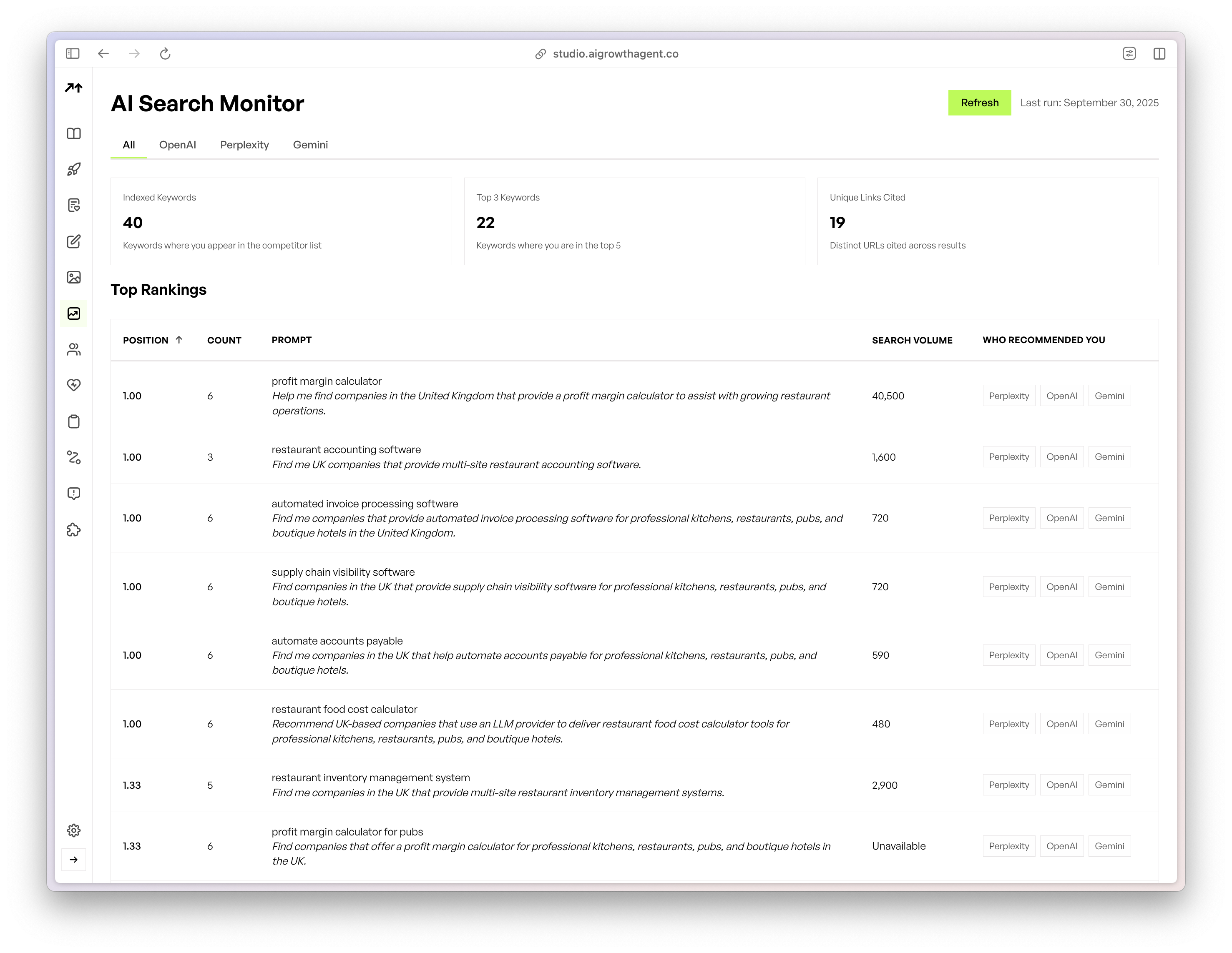
Conclusion: Use Speed To Strengthen Authority In AI Search
Fast website loading speed now sits at the center of AI search visibility. Technical decisions around hosting, code structure, JavaScript, and AI protocols all influence how efficiently crawlers can ingest and reuse your content.
Manual fixes and one off projects rarely keep pace with the volume and consistency that AI ecosystems reward. A systematic, engineering driven approach gives marketing leaders a clearer path to durable visibility.
AI Growth Agent focuses on this requirement by combining optimized infrastructure, programmatic publishing, and AI-ready standards such as schema, llms.txt, and Model Context Protocol. The result is a content layer designed for both human readers and AI agents.
Schedule a consultation session today with AI Growth Agent to align your site with AI search expectations and build authority through speed, structure, and scale.
FAQs: Fast Website Loading Speed and AI Search Discovery
How fast should my website load to stay competitive in AI search in 2026?
As a practical benchmark, aim for a Time to First Byte under 200 ms and a Largest Contentful Paint under 2 seconds on mobile. Pages that respond and render within this range tend to be cheaper for AI crawlers to process and more likely to be fully ingested and cited during AI answer generation.
Do Core Web Vitals still matter for AI search visibility?
Yes. Core Web Vitals act as proxy signals for both user experience and technical efficiency. Strong scores for Largest Contentful Paint, Interaction to Next Paint, and Cumulative Layout Shift make your pages easier and less resource-intensive for AI systems to crawl, interpret, and reuse.
How can I tell if JavaScript is blocking AI crawlers from seeing my content?
Start by testing key pages with a text-only or no-JavaScript rendering tool and comparing the output to what a typical user sees in the browser. If important copy, headings, or links disappear without JavaScript, AI crawlers that do not execute scripts reliably may be missing those sections. Implementing server-side rendering or pre-rendering for critical routes reduces this risk.
Do I need to rebuild my entire website to improve AI search discoverability?
You do not always need a full rebuild. Many brands benefit from standing up a dedicated, optimized content subdomain that is engineered for speed, schema, and AI protocols, while the legacy site is improved incrementally. AI Growth Agent follows this pattern by deploying a high-performance blog architecture that can start compounding authority quickly without disrupting your core site.
How quickly can changes to speed and technical SEO impact AI citations?
Timelines vary by domain authority and crawl frequency, but many brands see early signals—faster indexing, improved crawl statistics, and initial AI citations—within a few weeks of deploying faster infrastructure and AI-aware standards like llms.txt and Model Context Protocol. Programmatic publishing at a steady cadence helps these gains compound over the following months. To assess what this could look like for your site, you can schedule a demo with AI Growth Agent.