Written by: Mariana Fonseca, Editorial Team, AI Growth Agent
Key Takeaways for Choosing a GenAI Platform in 2026
- OpenAI GPT-5, Anthropic Claude 4.5, and Google Gemini 3 Pro lead 2026 text generation, coding support, and multimodal analysis for enterprise teams.
- Effective evaluation focuses on concrete factors like features, pricing, benchmark scores, scalability, use cases, limitations, usability, and AI citation visibility.
- Open-source leaders such as Meta Llama 4 Scout provide 10M-token context windows and high speed for bulk workloads, while enterprise platforms emphasize security and integrations.
- Hallucinations, vendor lock-in, and rising costs create real risk, so success depends on programmatic SEO that builds citation authority in AI search engines like ChatGPT and Perplexity.
- Any platform can become a scalable content engine when paired with AI Growth Agent’s autonomous pSEO technology, which turns output into citation-ready assets.
How We Evaluate Generative AI Platforms
This comparison framework uses eight specific factors that matter for real-world deployment.
- Features: Multimodal inputs and outputs, context window size, and specialized capabilities such as coding or agents
- Pricing: Free tiers, subscription plans, and enterprise API rates that affect total cost of ownership
- Performance: 2026 benchmarks including GPQA Diamond accuracy, SWE-bench coding scores, and LMSYS Arena rankings
- Scalability: API throughput limits, enterprise integrations, and infrastructure capacity for high-volume workloads
- Use Cases: Content creation, research automation, software development, and internal knowledge workflows
- Limitations: Hallucination behavior, cost ceilings, and technical complexity during implementation
- Ease of Use: Interface quality, onboarding time, and learning curve for non-technical teams
- AI Visibility: Likelihood of earning citations in AI search engines such as ChatGPT and Perplexity
Schedule a demo to see how AI Growth Agent turns these platform capabilities into GenAI-powered content at scale.
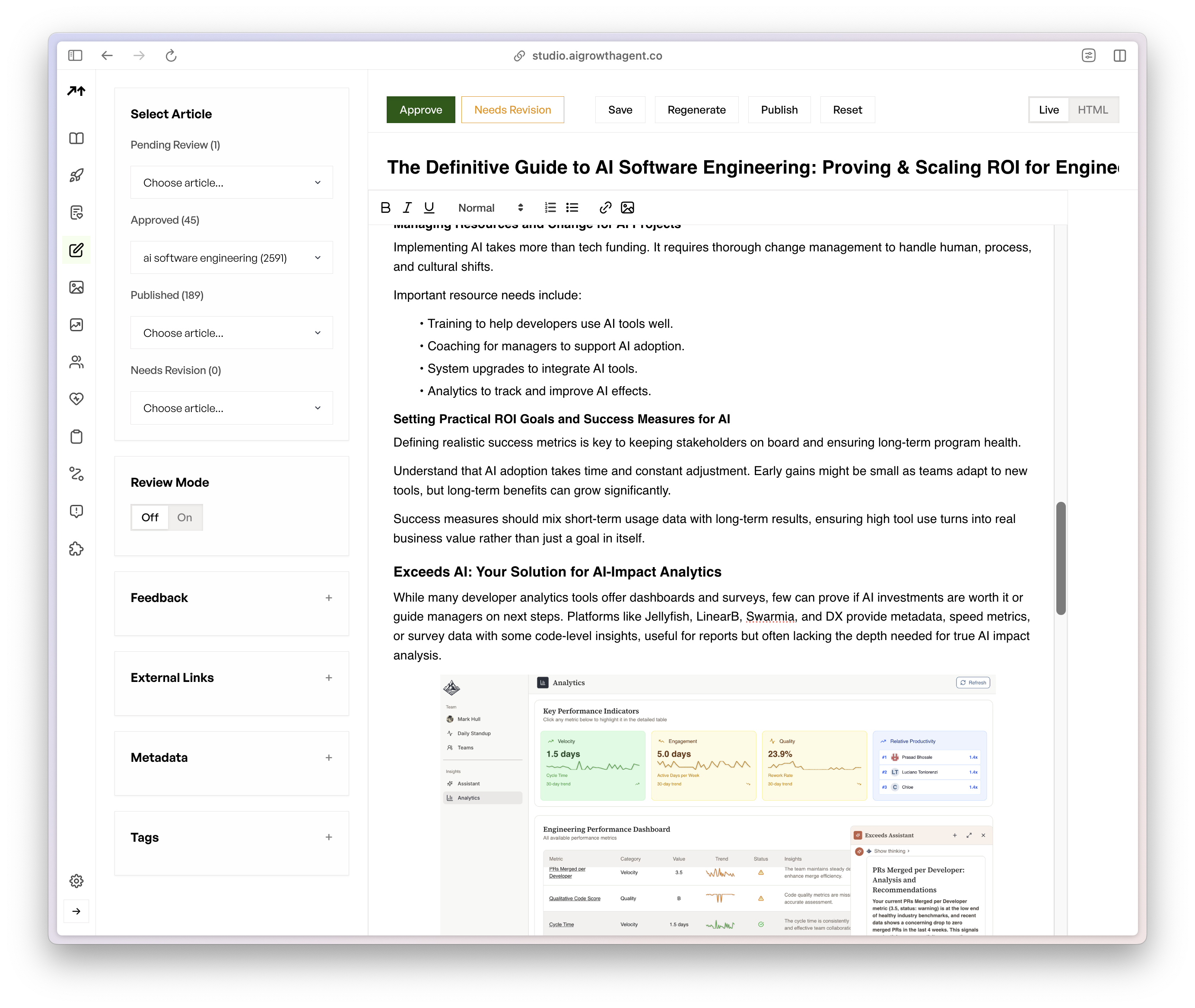
Generative AI Platforms Comparison Chart 2026
This comparison table highlights a clear tradeoff between performance, cost, and deployment effort across the top 5 generative AI platforms. Higher-scoring systems such as GPT-5 and Claude 4.5 deliver stronger benchmarks and richer features, while options like Llama 4 Scout reduce licensing costs but require more infrastructure work. Use the “Best For” column as your primary filter, then weigh pricing and limitations against your volume and compliance needs.
| Platform | Starting Price | Key Features | Best For | Score (1-10) | Limitations |
|---|---|---|---|---|---|
| OpenAI GPT-5 | GPT-5 API pricing: $1.25 per 1M input tokens, $10 per 1M output tokens | Multimodal, 400k context, 92 tok/s | Research/coding | 9.2 | High output cost ($20/M tokens) |
| Anthropic Claude 4.5 | Claude Pro subscription | Anthropic Claude Opus 4.5: 200,000 tokens context window, 80.9% SWE-bench Verified | Agentic coding | 9.1 | Anthropic Claude Sonnet 4.5 costs $3 per million input tokens and $15 per million output tokens |
| Google Gemini 3 Pro | Free tier with generous limits, paid tier at $2.00 per 1M input tokens and $12.00 per 1M output tokens (for prompts ≤ 200k tokens) | 1M context, 91.9% GPQA Diamond | Multimodal analysis | 9.0 | Variable latency |
| Meta Llama 4 Scout | Free/open-source | 10M context, 2600 tok/s | High-volume tasks | 8.5 | Requires infrastructure setup |
| xAI Grok 4 | xAI Grok 4 models are available via API, with grok-4.20-0309-reasoning priced at $2.00 per 1M input tokens ($0.20 cached) and $6.00 per 1M output tokens | 2M context window | Real-time data | 8.3 | Limited enterprise features |
Best Text Generative AI Platforms for 2026
Google Gemini 2.5 Pro currently tops LMArena Elo rankings at 1470, which reflects strong human preference and communication quality for customer-facing content. Anthropic’s Claude family delivers leading SWE-bench results, so it stands out for autonomous coding and complex software workflows. OpenAI’s GPT-5 scores highly on GPQA Diamond, which signals deep expert-level knowledge across scientific and technical domains.
These technical strengths translate into practical workflow gains for enterprise content teams. Claude 4.5’s extended thinking mode supports multi-hour autonomous work sessions and reduces the need for constant human supervision. GPT-5’s internal routing system balances speed and depth automatically, so teams avoid juggling multiple models for different tasks. Gemini 3 Pro’s sparse Mixture-of-Experts architecture processes entire code repositories efficiently, which enables whole-project analysis instead of file-by-file review.
Leading Image and Video GenAI Platforms
Qwen-Image ranks competitively on T2I-CoReBench for text-to-image compositionality, with strong spatial reasoning and attribute accuracy that benefit design and product teams. Google’s Veo 3 dominates cinematic video generation by using joint latent diffusion to keep audio and video synchronized for marketing and training content.
Stability AI’s Stable Diffusion 3.5 remains the open-source choice for organizations that want deep customization without licensing fees, thanks to its Multimodal Diffusion Transformer architecture. Midjourney v7 continues to lead commercial image generation for marketers who need consistent brand aesthetics and fast creative iteration.
Schedule a consultation to explore how these visual platforms can plug into a programmatic SEO strategy that builds durable authority.
Best Free and Open-Source Generative AI Platforms
Meta’s Llama 4 Scout offers a 10M token context window and industry-leading speed, which suits high-volume content processing and log analysis. Alibaba’s Qwen3-Max nearly matches commercial leaders in Epoch AI’s benchmarks, giving engineering teams a strong open-source baseline.
Hugging Face supplies hosting and fine-tuning infrastructure so enterprises can adapt these models to proprietary data. Mistral’s open-source models support European data sovereignty requirements, which helps regulated organizations keep data within specific jurisdictions. These platforms become especially powerful when paired with AI Growth Agent’s programmatic SEO framework, which turns raw model output into scalable content authority.
Best Generative AI Platforms for Research and Enterprise
Enterprise buyers prioritize scalability, security, and vendor maturity when they commit to GenAI platforms. OpenAI’s ChatGPT holds 60.2% US chatbot market share as of April 2026, which reflects strong adoption and ecosystem depth. Anthropic captures 73% of first-time enterprise AI spend because its safety-focused design aligns with risk-sensitive industries.
Google Gemini integrates natively with Workspace, which simplifies rollout across documents, email, and collaboration tools. Claude’s large context windows support comprehensive document analysis for legal, compliance, and policy teams that work with long records. Citation authority remains the key differentiator, since platforms that surface in AI search results create measurable pipeline and revenue impact.
Best-Fit Use Cases and Strategic Tradeoffs
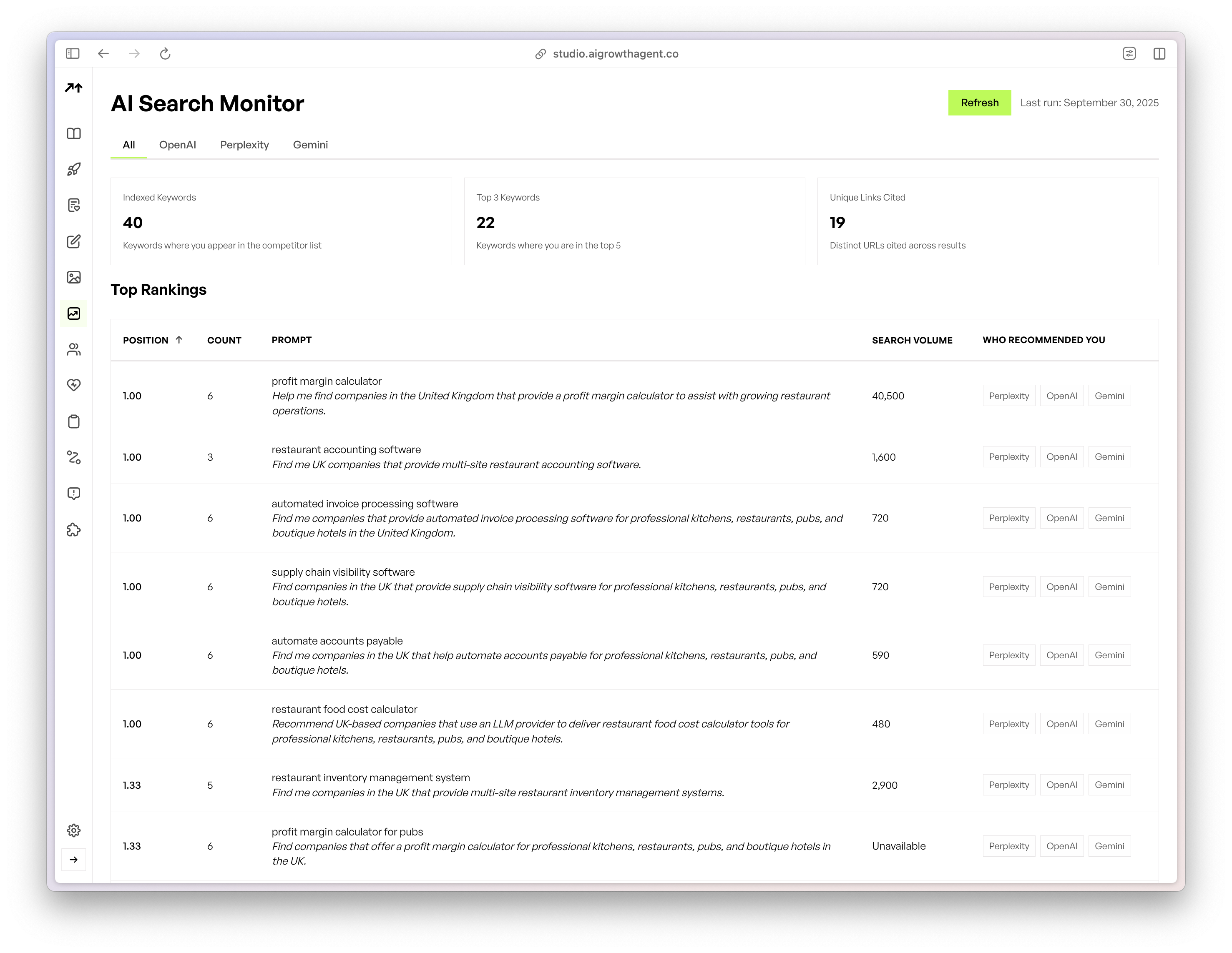
Marketing teams prioritize content velocity and brand consistency, and GPT-5 plus Claude 4.5 deliver both when connected to programmatic SEO systems, although they carry premium API costs. Developers care most about coding accuracy and repository understanding, where Claude’s SWE-bench leadership proves decisive but its extended thinking mode can introduce latency. Executives focus on ROI measurement and competitive visibility in AI search engines, which often means trading some raw performance for platforms and workflows that reliably earn citations.
Manual GenAI usage breaks down at enterprise scale because adoption does not equal implementation. Ninety-two percent of Fortune 500 firms have adopted generative AI, yet only 7% report full-scale deployment, leaving most organizations stuck in pilot projects. AI Growth Agent closes this gap by automating the technical infrastructure required for programmatic content authority and turning experiments into production systems.
Risks, Limitations, and 2026 GenAI Trends
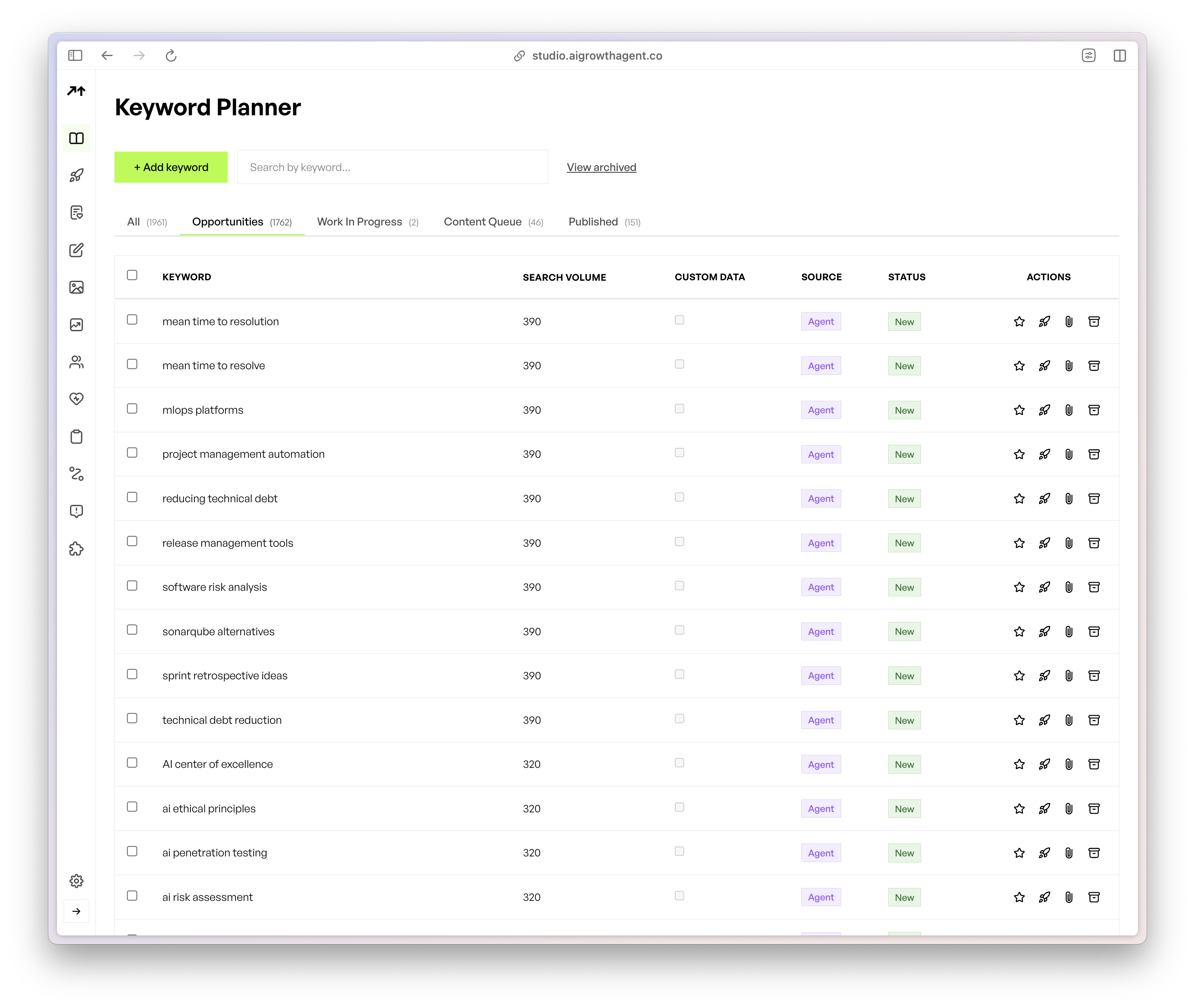
Hallucination risk persists across all major platforms, and only 15% of companies track GenAI ROI with clear metrics, which makes governance difficult. Vendor lock-in and rising usage costs threaten long-term sustainability for teams that scale without a clear content and distribution strategy. Programmatic SEO-focused approaches address these issues by emphasizing measurable citation authority and business outcomes instead of raw output volume.
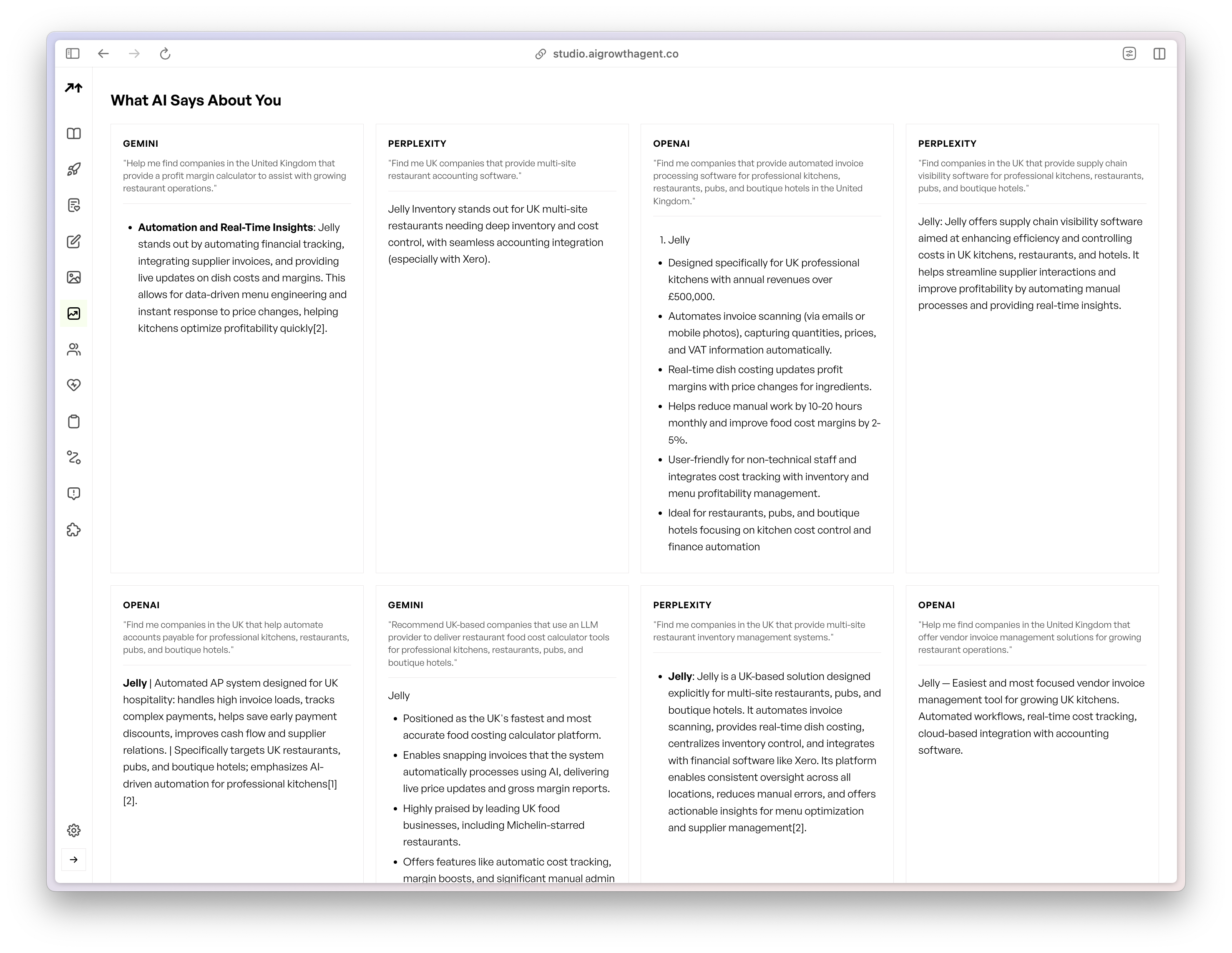
Domain-specific models now outperform general-purpose systems in many enterprise scenarios, especially in healthcare, finance, and law. Multimodal capabilities have become a baseline expectation rather than a differentiator, so competitive advantage increasingly comes from integration quality, governance, and distribution.
Decision Framework for Platform Selection
Platform selection should start with your primary use case: GPT-5 for research and knowledge work, Claude 4.5 for autonomous coding, Gemini 3 Pro for multimodal analysis, and Llama 4 for high-volume processing. These choices determine what you can create, but they represent only half of the success equation. The other half involves programmatic SEO integration, which governs whether anyone discovers and trusts what you publish.
AI Growth Agent turns any generative AI platform into a citation-worthy content engine so your company appears as the definitive authority in ChatGPT, Perplexity, and Google AI Overview results.
Book a strategy session to deploy your pSEO agent and start building durable citation authority.
Frequently Asked Questions
What’s the best generative AI platform for 2026?
Google Gemini 3 Pro leads several comprehensive benchmarks with 91.9% GPQA Diamond accuracy and a 1501 LMArena Elo ranking, which makes it a strong default choice. The right platform still depends on your use case, with Claude 4.5 favored for coding, GPT-5 for research, and Llama 4 for high-volume workloads. Long-term success also depends on programmatic SEO that converts model output into content with citation authority in AI search engines.
Where can I find a generative AI platforms comparison chart?
The comparison table above ranks the top 5 platforms using 2026 benchmarks, pricing, and enterprise features from sources such as Epoch AI, LMSYS Arena, and Vellum.ai. Use it to shortlist options, then connect your chosen platform to AI Growth Agent’s programmatic SEO framework to automate content authority at scale.
What are the best free generative AI platforms?
Meta’s Llama 4 Scout offers a powerful free option with a 10M token context window and 2600 tokens per second throughput. Qwen3-Max delivers near-commercial performance as an open-source alternative for teams with strong engineering support. Google Gemini and OpenAI GPT-5 also provide robust free tiers with usage limits, although enterprises still need significant infrastructure and governance to reach large-scale content production.
How do I choose between OpenAI, Anthropic, and Google for enterprise use?
OpenAI GPT-5 excels at research and knowledge synthesis, supported by strong GPQA Diamond performance. Anthropic Claude 4.5 leads autonomous coding with the SWE-bench results mentioned earlier, which appeals to engineering teams building agents. Google Gemini 3 Pro dominates multimodal analysis and human preference rankings, which benefits customer-facing and creative workflows. Final decisions should weigh your primary use case, budget, security posture, and integration requirements with existing systems.
What enterprise features should I prioritize in generative AI platforms?
Enterprises should prioritize SOC 2 compliance, SSO or SAML integration, role-based access controls, API scalability, and zero data retention options. Advanced capabilities such as custom fine-tuning, retrieval-augmented generation, and agentic workflows create additional competitive advantage. Most importantly, confirm that your platform and stack support programmatic SEO integration so you can measure and grow citation authority in AI search results.