Written by: Mariana Fonseca, Editorial Team, AI Growth Agent
Key Takeaways
- Traditional keyword tools like Ahrefs and SEMrush fall short in 2026’s AI search era with zero-click results and shrinking search volumes.
- Modern alternatives focus on automation, semantic intent clustering, and AI citation potential while keeping pricing under $100 per month.
- Standout tools include AI Growth Agent for programmatic SEO, Surfer SEO for content refinement, and free options like Google Trends and Keyword Surfer.
- Programmatic platforms such as AI Growth Agent scale across thousands of queries and build topical authority faster than manual workflows.
- Explore AI Growth Agent in a live working session to see autonomous SEO that wins AI search engines.
How We Evaluated Modern Keyword Research Tools
This review compares 10 modern keyword research tools against 2026 benchmarks. Evaluation criteria included G2 ratings above 4.5, automation depth, intent clustering quality, pricing accessibility, and AI citation tracking potential. Product documentation, user reviews, and industry analysis from Onrec highlight future-proof programmatic solutions that deliver measurable authority building, with AI Growth Agent as a leading example.
Snapshot of Leading 2026 Keyword Alternatives
This snapshot gives a quick view of where each tool fits before diving into details. Use it to match tools to your current needs, from full programmatic SEO to lightweight research support.
• AI Growth Agent – Autonomous programmatic SEO agent for keyword clustering and AI-optimized content
• LowFruits – Low-competition long-tail discovery via autocomplete analysis
• Surfer SEO – AI-powered content optimization with answer engine readiness scoring
• Frase – Intent clustering and SERP gap analysis for comprehensive content briefs
• SE Ranking – Affordable all-in-one suite with AI clustering and forecasting
• AnswerThePublic – Question visualization for intent-driven content planning
• Keyword Surfer – Chrome extension providing real-time SERP data
• Google Trends – Breakout trend detection for velocity-based SEO
• Serpstat – Budget-friendly alternative with semantic keyword grouping
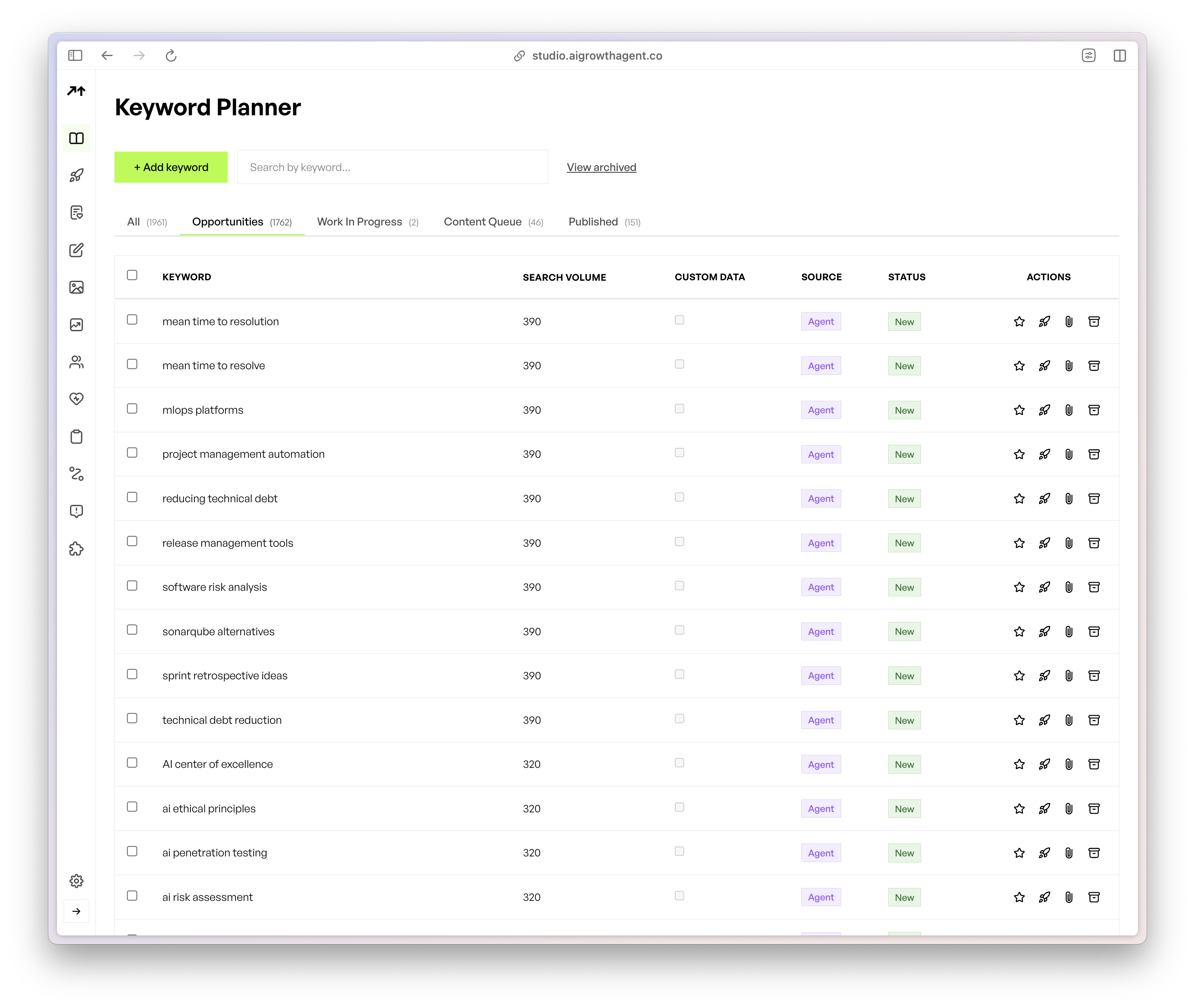
Review programmatic SEO automation with the AI Growth Agent team and see how it extends beyond manual keyword research.
AI-Powered Keyword Research and Programmatic Platforms
AI Growth Agent
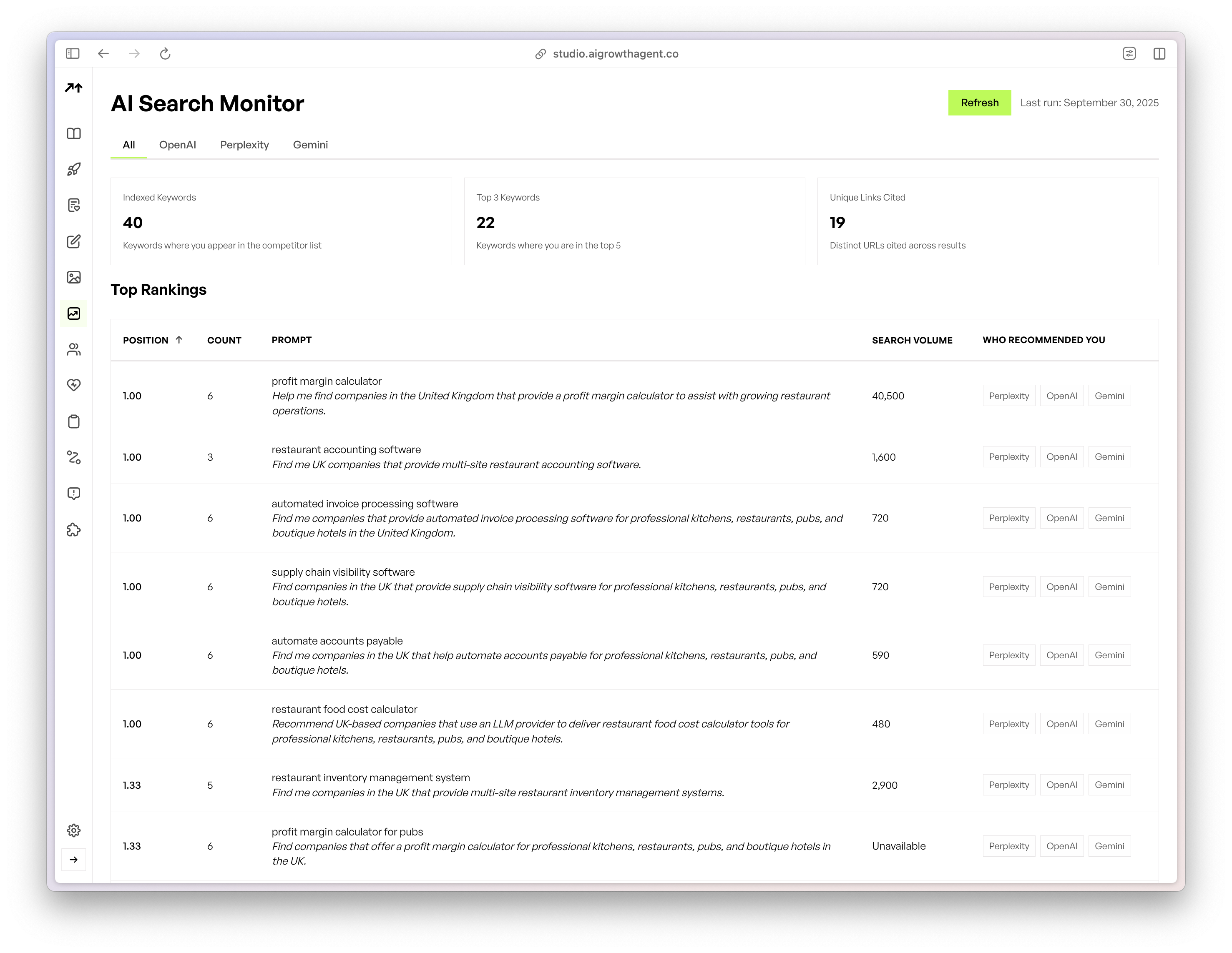
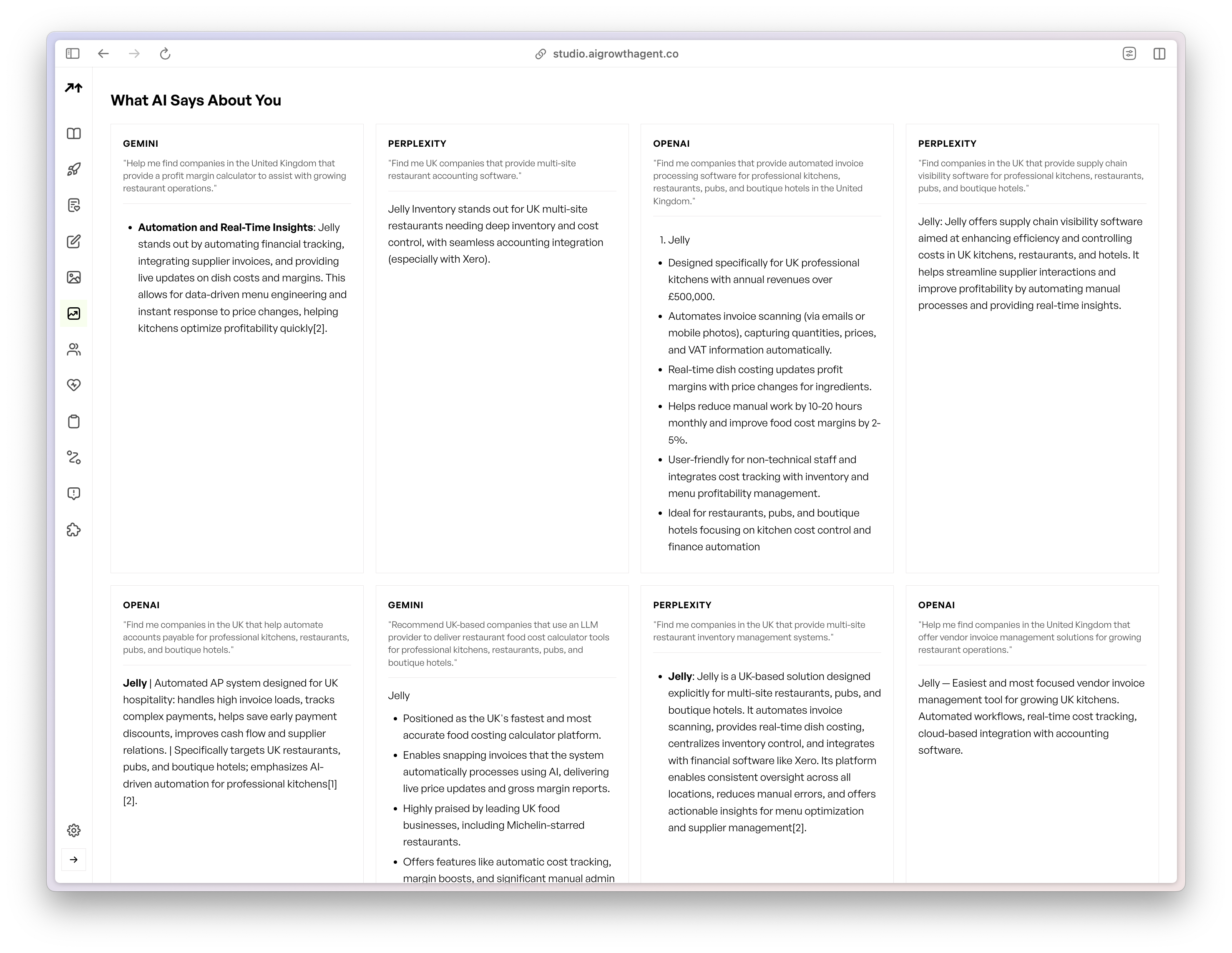
AI Growth Agent turns keyword research into an autonomous programmatic SEO system. The platform builds comprehensive content architectures through deep research across 10,000+ queries, automatic clustering by semantic intent, and direct publishing to optimized blog infrastructures. Exceeds AI reached Perplexity’s #1 recommendation in 2 weeks, and Gitar.ai dominated AI CI/CD search results, which shows how this architecture translates into visibility.
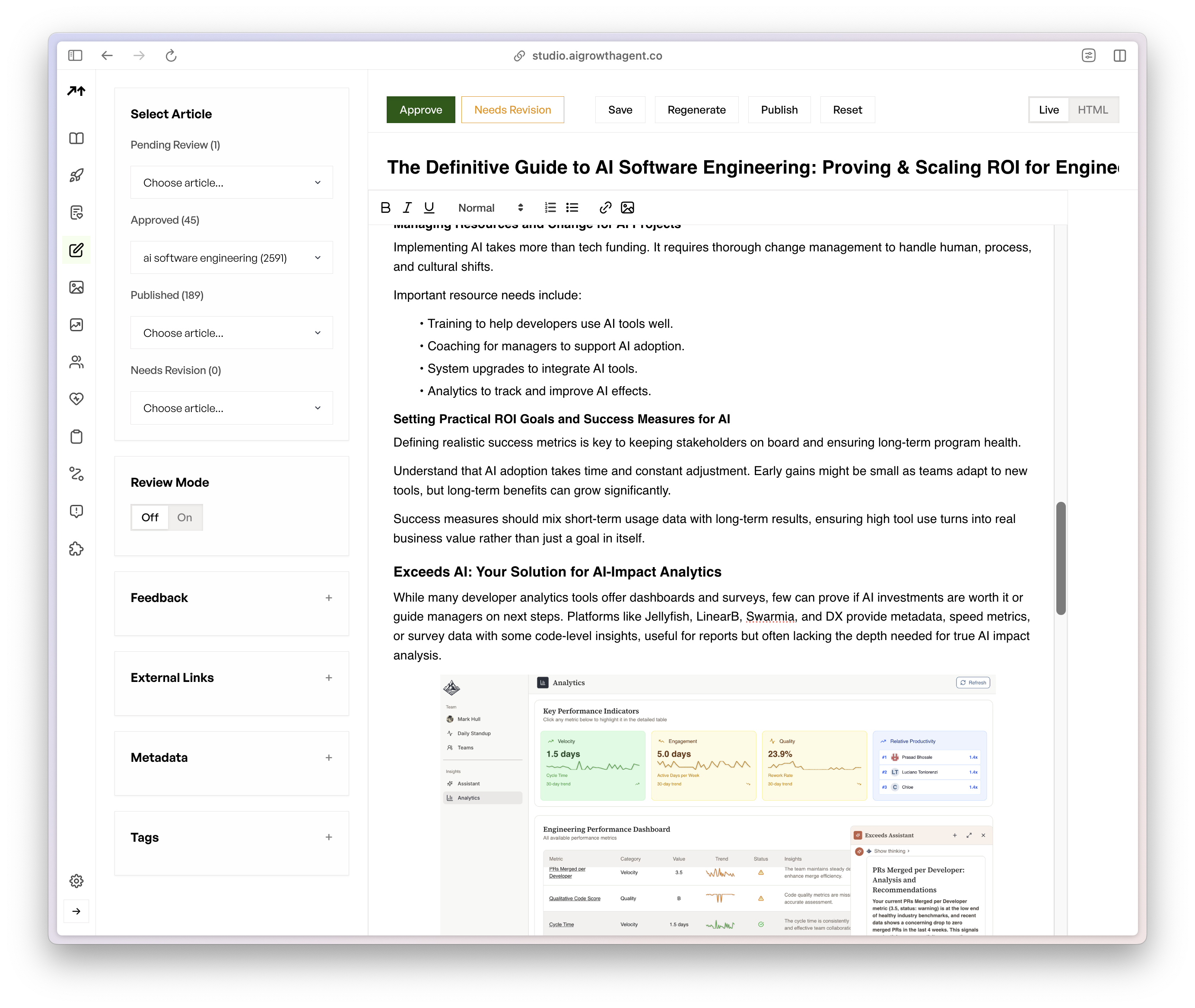
These outcomes come from a three-part framework that includes Company Manifesto programming, autonomous content generation, and AI Search Monitor feedback loops that refine content for citation potential. Pricing follows a custom model with a 1-week onboarding, making the platform a strong fit for agencies that manage authority growth across multiple brands.
LowFruits
LowFruits uncovers low-competition keywords for low domain authority sites through Google Autocomplete analysis. The platform’s SERP Analyzer highlights weaker competitors, while Domain Explorer taps into over 150,000 low-authority sites for niche research.
Users describe it as a “blue ocean keyword digging artifact” because it surfaces untapped long-tail opportunities. Strengths include a simple interface and major time savings compared with manual research. The main limitation is a narrow focus on low-competition terms, which restricts broader authority strategies.
All-in-One Affordable SEO Suites
Some teams need broader SEO coverage at accessible prices rather than specialized tools for a single task. These all-in-one platforms combine keyword research, content guidance, and technical features without enterprise-level costs.
Surfer SEO
Surfer SEO delivers AI-powered content optimization with real-time scoring and SERP analysis at $79 per month. Its 2026 “Answer Engine Readiness Score” evaluates NLP patterns to gauge how prepared content is for AI search platforms. Core features include keyword clustering, content scoring against top competitors, and Google Docs integration for in-workflow editing.
These capabilities support detailed content refinement and are backed by responsive customer service. New users may find the interface overwhelming, and base plans include limited Natural Language Processing features, which can restrict advanced analysis.
Frase
Frase automatically generates detailed content briefs for target keywords, including suggested structure and key talking points. Its SERP analysis converts search results into comprehensive briefs by extracting exact user questions for scalable “Answer-First” content. Pricing starts at $45 per month, which suits small teams and solo strategists. Strengths include deep SERP analysis, WordPress integration, multilingual support, and AI search tracking. Users often refine AI-generated drafts to match brand voice, and the interface can feel complex during early use.
SE Ranking
SE Ranking uses AI keyword clustering to group terms by intent and pairs this with predictive audits and ranking forecasts. Its functionality mirrors Ahrefs and SEMrush at lower price points, which supports small and medium teams. The platform offers a full SEO suite with AI-enhanced clustering and content optimization guidance, creating a balanced option between cost and capability.
Compare AI Growth Agent’s programmatic engine with these all-in-one platforms in a guided walkthrough and see where automation depth differs.
Free Keyword Research Tools for Everyday SEO
AnswerThePublic
AnswerThePublic visualizes questions, prepositions, and comparisons in diagrams grouped into subcategories like “which”, “what”, “why”, “how”, “who”, “are”, and “can”. It’s 2026, and AI integration adds predictive trend mapping that forecasts future user questions for voice search. The free tier allows three searches per day, with paid plans starting at $11 per month. Marketers gain direct insight into real user language and accelerate content ideation, although the free version feels limited, and some outputs miss the mark for niche topics.
Keyword Surfer
Keyword Surfer offers unlimited free use as a Chrome extension that displays search volume directly in Google SERPs, related keywords in a sidebar, and traffic estimates for ranking domains. This setup keeps research inside normal browsing workflows and avoids switching to a separate platform. The tool works well for quick competitive checks and volume validation during everyday searches.
Google Trends
Google Trends now supports velocity-based strategies using “Breakout” trends that grow over 5,000%, which helps capture real-time relevance in AI-first search results. The forecasting engine refreshes every 10 minutes and enables “Intraday SEO” for fast-moving topics. Free access includes historical data back to 2004 and API support for programmatic trend analysis.
See how AI Growth Agent weaves trending topics into programmatic content plans for sustained authority growth.
Side-by-Side Comparison of Key Tools
The comparison table below summarizes how each platform performs on automation, semantic intent handling, pricing, scalability, AI citation tracking, and programmatic depth. Use it to spot which tools support manual workflows and which unlock autonomous scaling.
|
Tool |
Automation |
Intent/Semantics |
Pricing |
Scalability |
AI Citation Tracking |
Programmatic Depth |
|
AI Growth Agent |
High |
High |
Custom |
High |
High |
High |
|
Surfer SEO |
Medium |
High |
$79/mo |
Medium |
Medium |
Low |
|
Frase |
Medium |
High |
$45/mo |
Medium |
Medium |
Low |
|
LowFruits |
Medium |
Medium |
$29.90/mo |
Medium |
None |
None |
|
SE Ranking |
Medium |
Medium |
$65/mo |
Medium |
Low |
Low |
|
AnswerThePublic |
Low |
Medium |
Free/$11 |
Low |
None |
None |
|
Ahrefs |
Low |
Low |
$129/mo |
High |
None |
None |
|
SEMrush |
Low |
Medium |
$139.95/mo |
High |
Medium |
None |
Programmatic leaders such as AI Growth Agent provide autonomous scaling that manual-first tools cannot achieve. Watch programmatic SEO automation in a live environment to understand the practical impact.
How to Choose and Roll Out These Tools
Modern keyword research works best when tools are judged on automation strength, semantic clustering accuracy, and AI search optimization potential. These factors decide whether a platform can build authority at scale or only refine single pages. When applying this lens, prioritize systems that offer intent analysis over raw volume, programmatic content generation, and citation tracking across ChatGPT, Perplexity, and Google AI Overviews.
To see these capabilities in action before making a long-term commitment, consider starting with AI Growth Agent’s quick onboarding process, which demonstrates autonomous programmatic SEO within days instead of months of manual tool setup.
FAQ
What are modern keyword research tools, and how do they differ from traditional options?
Modern keyword research tools prioritize semantic intent analysis, AI citation potential, and programmatic automation instead of pure volume metrics. Legacy tools such as Ahrefs focus on search volume and difficulty scores, while newer platforms cluster keywords by user intent, tune content for AI search engines, and automate large parts of content production. These tools align with AI search engines that reward authority and relevance over raw volume, which demands updated optimization strategies.
Which free keyword research tools provide the best value in 2026?
High-value free options include Google Trends for breakout trend detection, AnswerThePublic for question-based keyword discovery, and Keyword Surfer for real-time SERP data. ChatGPT’s free tier supports keyword brainstorming and intent analysis within usage limits, and Ubersuggest offers limited daily searches with volume estimates. These tools help with ideas and validation, yet they lack the automation and programmatic depth required for a durable edge in AI search.
How does AI Growth Agent compare to tools like Surfer SEO for modern SEO needs?
AI Growth Agent functions as an autonomous programmatic SEO system that designs entire content architectures, while Surfer SEO operates as a content optimization assistant that depends on manual input. AI Growth Agent manages keyword research, clustering, content creation, technical optimization, and publishing automatically, which scales to thousands of articles. Surfer SEO shines when optimizing individual pieces, but cannot match the systematic authority building that programmatic systems deliver.
What is programmatic keyword research, and why does it matter in 2026?
Programmatic keyword research uses automated systems to discover, cluster, and target thousands of related keywords at once, which creates deep topical authority. This approach matters because AI search engines favor sites with broad, interconnected coverage instead of isolated high-volume pages. Programmatic systems uncover semantic relationships, content gaps, and optimization opportunities at a scale that manual research cannot reach, which is crucial in AI-dominated search landscapes.
How quickly can modern keyword research tools impact search visibility?
Impact timelines depend on tool type and implementation quality. Traditional optimization tools like Surfer SEO can lift rankings for individual pages within weeks. Programmatic platforms such as AI Growth Agent often build authority faster, with case studies showing Perplexity citations within 2 weeks and Google AI Overview appearances within 3 weeks. The main advantage comes from systematic content creation that compounds authority instead of improving isolated URLs.
Conclusion
Programmatic SEO automation now sits at the center of winning strategies for 2026 AI search. Legacy keyword tools remain tied to volume-based methods, while modern platforms like AI Growth Agent focus on autonomous authority building that scales beyond manual limits. Explore how programmatic SEO with AI Growth Agent can position your brand as the definitive authority in your category across the leading AI search engine.