Written by: Mariana Fonseca, Editorial Team, AI Growth Agent
Key Takeaways
- Traditional brand defense cannot handle 2026 AI-amplified threats, so adopt an 8-step programmatic roadmap for automated protection.
- Audit your full digital footprint, including AI citation gaps in ChatGPT and Perplexity, to uncover hidden vulnerabilities.
- Build AI-proof content authority with programmatic SEO, schema markup, and LLM.txt so your brand dominates AI search citations.
- Deploy automated monitoring stacks for real-time threat detection across AI platforms to reduce impersonation and hallucinations.
- Measure success with AI visibility heatmaps and share of voice, then book a consultation with AI Growth Agent to roll out enterprise-grade protection.
8-Step Programmatic Guide to Securing Your 2026 Digital Footprint
Step 1: Run a Full Audit of Your Current Footprint
Start with clear visibility into your brand’s existing digital presence. Use monitoring tools like Google Alerts and Brand24 to establish baseline coverage. Create a systematic checklist:
- Domain and subdomain inventory: Catalog all owned properties and flag unauthorized variations.
- Social media verification: Secure verified badges across platforms and document impersonation attempts.
- AI indexing assessment: Test brand queries in ChatGPT, Perplexity, and Google AI Overview to find citation gaps.
- Competitor analysis: Map how competitors appear in AI responses for your target keywords.
The audit exposes critical vulnerabilities. Many premium brands discover competitors dominate AI citations because those rivals publish structured, programmatically engineered content that AI engines trust and reference.
Step 2: Lock Down Core Digital Assets
Apply foundational security controls across every digital property. Enable two-factor authentication on all administrative accounts, deploy HTTPS with Web Application Firewalls (WAF), and configure domain privacy protection. These controls protect against direct attacks, yet modern AI-amplified threats demand an additional layer of defense.
Integrate automated monitoring through specialized platforms that track AI search visibility in real time. Programmatic monitoring detects threats as they appear across AI platforms and supports immediate responses to impersonation attempts or citation hijacking.
Step 3: Stop AI-Driven Brand Impersonation
73% of business leaders report someone in their network was personally affected by cyber-enabled fraud in 2025. Impersonation attacks now use AI to create hyper-realistic deepfakes and personalized phishing campaigns.
Essential protection checklist:
- Register trademark variations and common misspellings.
- Implement social media verification across all platforms.
- Deploy anti-deepfake detection tools for executive communications.
- Establish clear brand voice guidelines that AI systems can reference.
- Create official brand statements that counter common impersonation tactics.
Critical mistakes to avoid: Relying only on reactive takedown requests, ignoring AI-generated impersonation content, and failing to create authoritative brand signals that AI systems rank above fake alternatives.
Step 4: Deploy an Automated AI Monitoring Stack
Modern monitoring must track how AI systems talk about your brand, not just what appears on social feeds. Perplexity Sonar Pro demonstrates a 37% hallucination rate on citation accuracy, which makes manual monitoring unreliable for catching AI-generated misinformation about your brand.
The following comparison highlights which tools provide the automated AI citation tracking and pSEO capabilities needed to counter this risk:
|
Tool |
Real-time AI Monitor |
pSEO Automation |
AI Citations |
|
Brand24 |
Yes |
No |
No |
|
Talkwalker |
Basic |
No |
Manual |
|
Ahrefs |
Yes |
Yes |
Automated |
|
AI Growth Agent |
Yes |
Yes |
Automated |
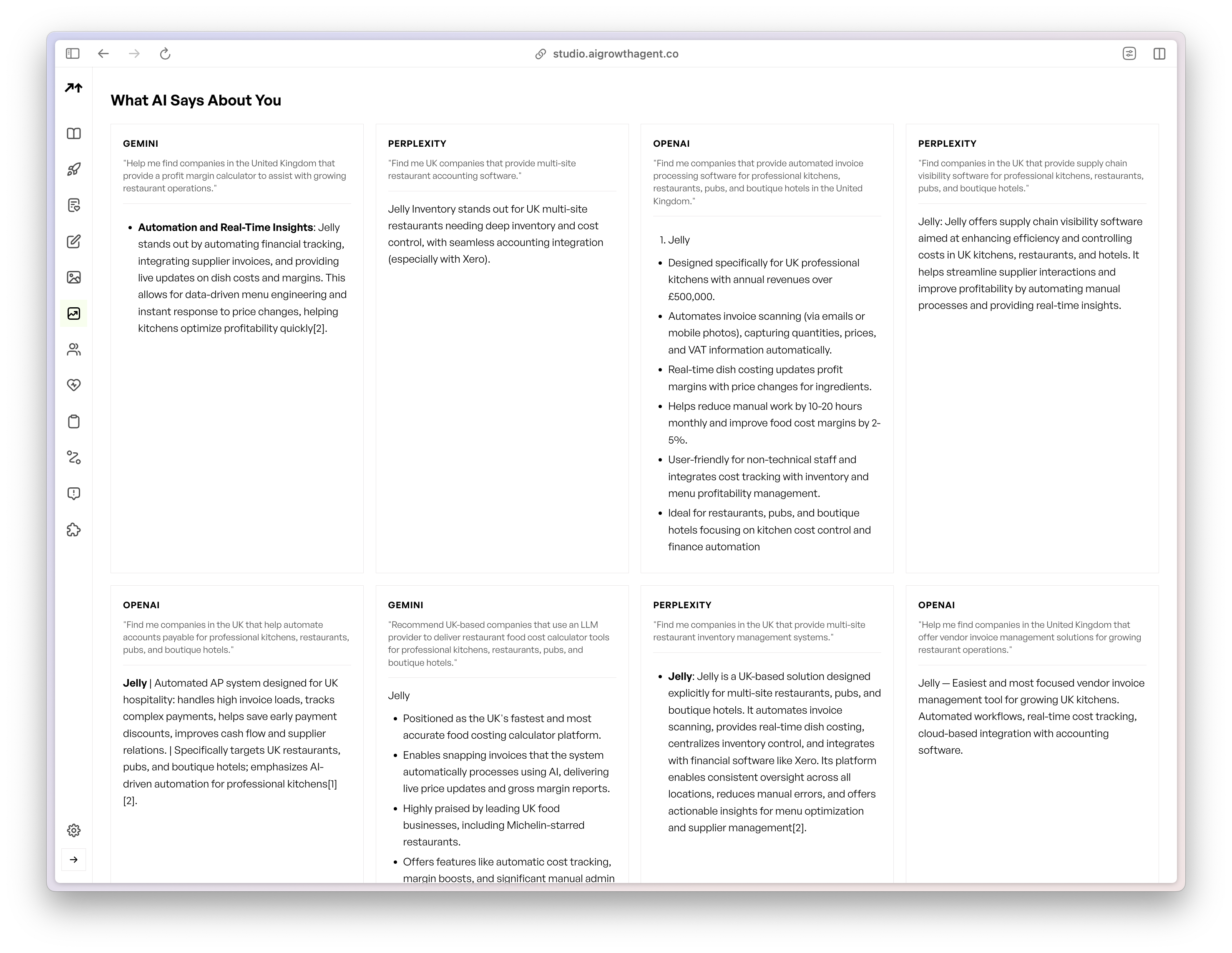
AI Growth Agent’s monitoring system tracks citations across ChatGPT, Perplexity, and Google AI Overview in real time. It provides heatmaps of brand visibility and instant alerts when competitors gain citation advantages or when hallucinations appear.
Step 5: Build AI-Proof Content Authority at Scale
Content operations must match AI speed and volume to stay ahead of threats. LLMs operate on a “Consensus Model,” prioritizing brands with consistent cross-web narratives. Fragmented brand messaging lowers AI confidence scores and pushes your brand out of AI-generated responses.
Deploy programmatic SEO (pSEO) to create content fortresses that establish durable authority. Start by building automated pillar content clusters that target your core brand topics, because these clusters form the foundation that AI systems recognize as authoritative.
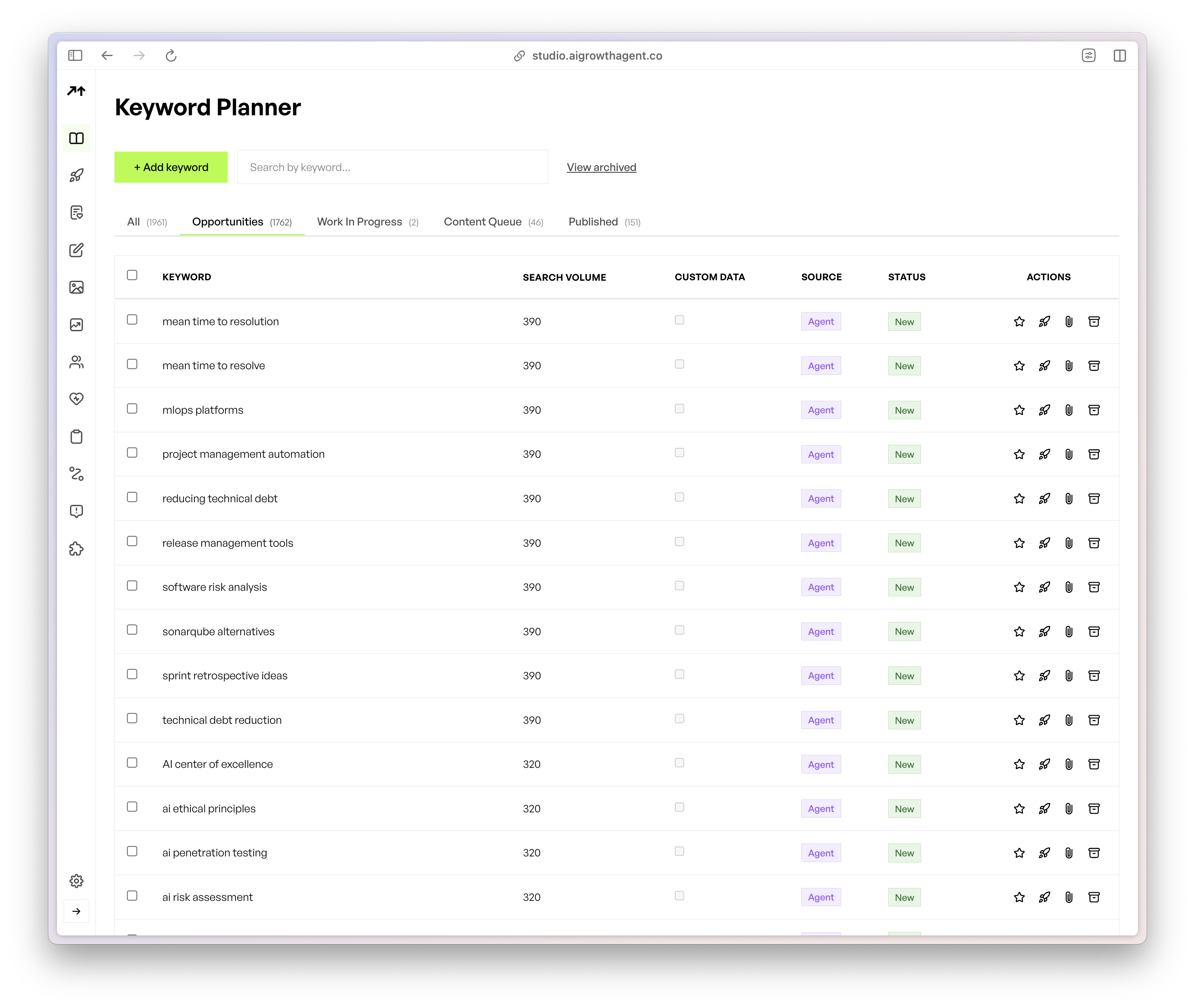
Reinforce this foundation by weaving your Company Manifesto through all content assets so messaging stays consistent and AI confidence increases. Then add advanced schema markup and Model Context Protocol (MCP) implementation to make your content machine-readable at a granular level. Finish with LLM.txt files tuned for AI discovery, so you explicitly guide AI systems toward your most authoritative resources.
Traditional agencies cannot deliver this scale and speed. AI Growth Agent autonomously engineers high-authority content architectures that block competitor takeover and position your brand as the definitive source for AI citations.
Step 6: Train Employees and Activate a Crisis Playbook
98% of cyberattacks incorporate social engineering aspects, so employee education becomes a frontline defense. Build comprehensive training programs that cover:
- AI threat recognition: Spotting deepfake communications and AI-generated phishing.
- Brand voice consistency: Maintaining messaging that supports programmatic content strategies.
- Crisis response protocols: Clear escalation procedures for brand impersonation incidents.
- Content approval workflows: Ensuring all external communications align with AI-optimized brand positioning.
Include pSEO considerations in every crisis communication plan. When threats appear, programmatic content systems can quickly publish counter-narratives that AI systems rank above malicious content.
Step 7: Run Ongoing Schema and Technical AI Audits
LLM.txt adoption surged to 844,473 sites by October 2025, yet most setups lack the technical depth needed for AI citation success. Effective technical audits must address:
- LLM.txt optimization with strategic content curation.
- Robots.txt configuration for AI crawler management.
- Advanced schema markup for precise entity recognition.
- Model Context Protocol (MCP) implementation for direct AI database access.
Manual audits cannot keep pace with shifting AI indexing standards. AI Growth Agent continuously refines technical infrastructure, applies emerging protocols automatically, and maintains alignment with evolving AI platform requirements.
Step 8: Measure and Scale with Programmatic Velocity
Measurement must reflect AI-era realities, not just legacy web metrics. Build a comprehensive framework that includes:
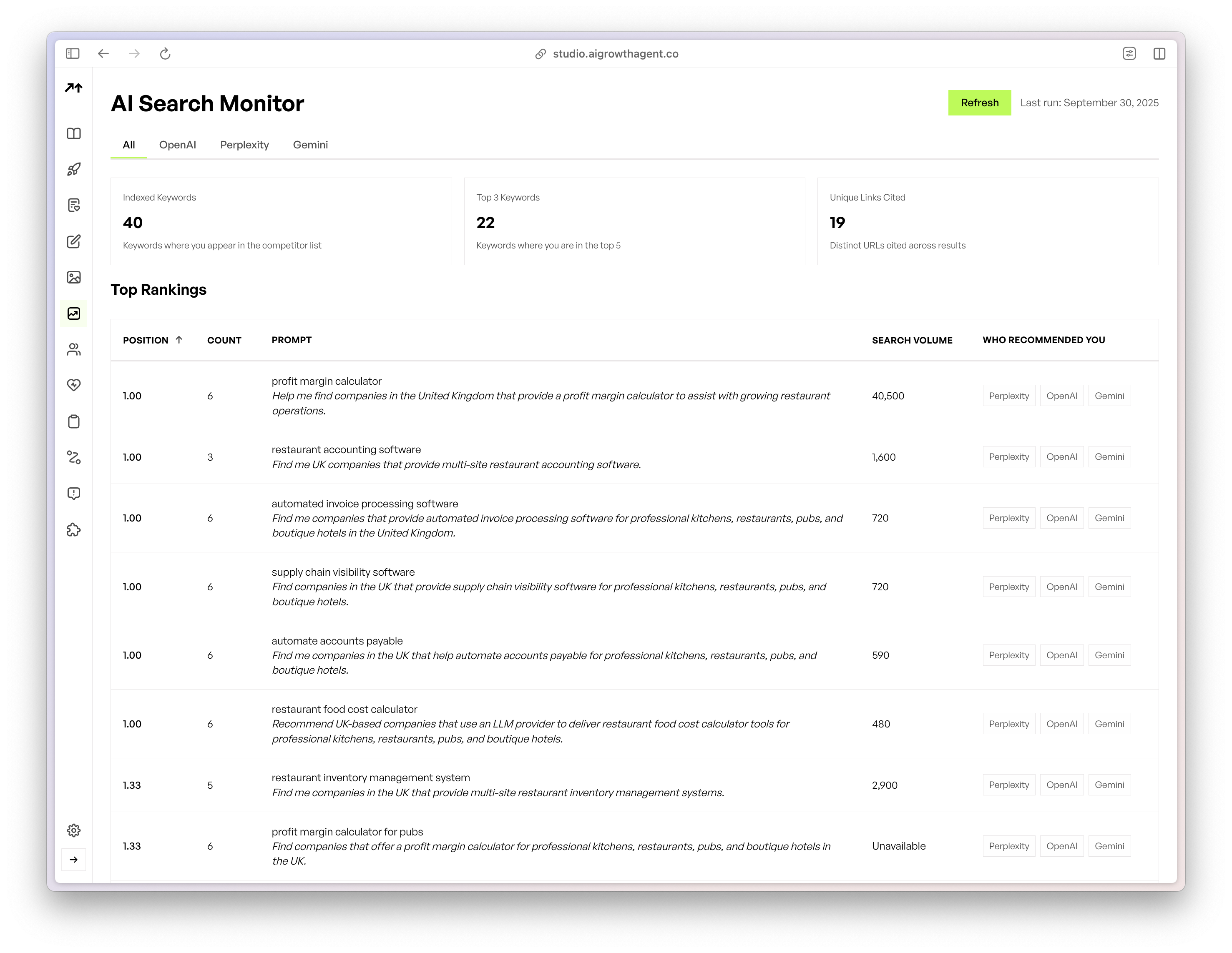
- AI visibility heatmaps: Track citation frequency across ChatGPT, Perplexity, and Gemini.
- Share of AI voice: Monitor competitive positioning in AI responses.
- Hallucination detection: Identify and counter AI-generated misinformation.
- Programmatic content velocity: Measure automated content deployment speed and quality.
Programmatic scale drives meaningful results. Bucked Up reached the top ChatGPT citations for “best protein soda” within three weeks of adopting programmatic content strategies, which shows how automated systems outperform manual approaches on speed and impact.
Common Pitfalls in 2026 Digital Footprint Defense
The most dangerous mistake is ignoring programmatic SEO while competitors build AI citation dominance. Given the high hallucination rates in AI search results discussed earlier, brands without a strong programmatic presence risk AI systems fabricating information or defaulting to competitor citations.
The limitations of manual approaches become even more obvious when facing $74 billion in annual ransomware damages and AI-amplified threats. Organizations that depend on traditional agencies or basic AI tools cannot reach the technical depth and deployment velocity required for the 2026 threat landscape.
Key Considerations for Enterprise Brands
Enterprise organizations need multi-tenant programmatic deployment capabilities that most traditional solutions cannot deliver. AI Growth Agent supports multi-tenant programmatic deployment so private equity firms and enterprises with multiple product lines can run parallel Programmatic SEO Content Agents from a single interface, each with its own Manifesto, keyword strategy, and brand voice.
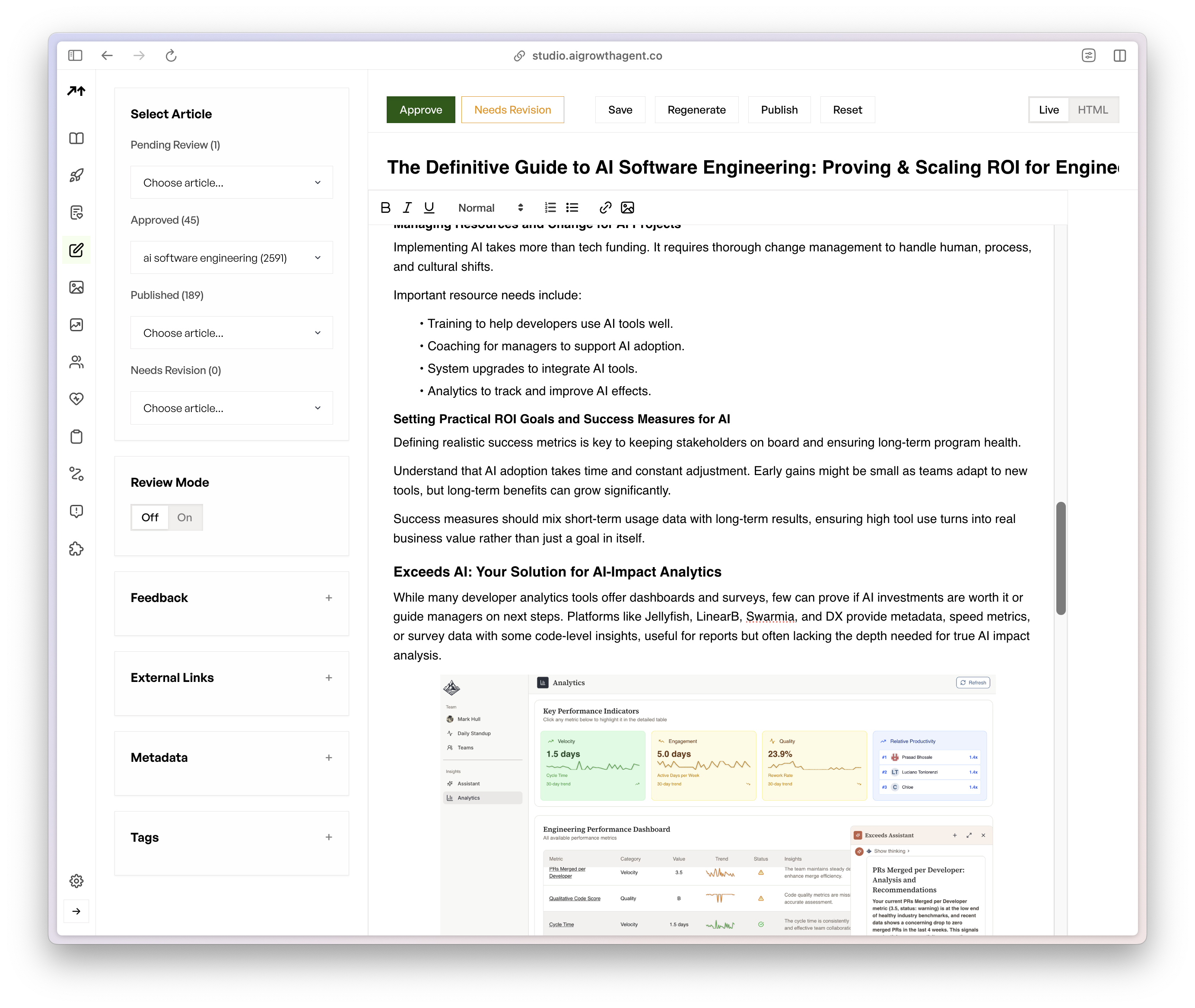
Gitar.ai offers a clear example. Within two months, they established definitive authority for “AI self-healing pipelines” across major AI platforms. This outcome shows the competitive edge of programmatic approaches over manual content strategies.
Explore whether multi-tenant deployment fits your organization in a personalized demo.
Frequently Asked Questions
What are 5 ways to protect your brand online?
Five essential protection strategies for 2026 include comprehensive digital footprint auditing with AI visibility assessment, core asset security with programmatic monitoring, automated impersonation detection and response, AI-proof content authority through programmatic SEO, and continuous measurement with AI citation tracking. Together, these strategies address both traditional cyber threats and emerging AI-specific risks that manual approaches cannot manage effectively.
How does a digital footprint affect brand reputation?
Digital footprint shapes brand reputation through AI citation accuracy and visibility. When AI systems lack authoritative brand content, they either exclude brands from responses or generate hallucinations that misrepresent key information. Fragmented digital presence reduces AI confidence scores and encourages competitor citation preference. Strong programmatic content strategies ensure AI systems consistently reference accurate brand information, which protects reputation and builds authority.
How to protect your digital footprint online?
Protecting a digital footprint requires the 8-step programmatic approach described above. Audit current presence, including AI visibility, secure core assets with automated monitoring, combat impersonation through trademark protection and verification, deploy real-time AI monitoring stacks, build content authority through programmatic SEO, train employees on AI threats, conduct continuous technical audits, and measure success through AI citation metrics. This framework covers both defensive security and proactive authority building.
Conclusion: Reclaim Your Brand Dominance
The 8-step programmatic roadmap gives enterprise brands a practical framework to secure digital footprints against 2026’s AI-amplified threats. Real progress depends on moving beyond manual tactics and embracing programmatic SEO automation that matches the scale and sophistication of modern cyber risks.
Brands that adopt these strategies gain durable advantages such as increased AI citations, automated threat detection, and programmatic content velocity that competitors struggle to match. The choice is clear: evolve to programmatic defense or risk losing brand control to competitors and AI hallucinations.
Connect with the AI Growth Agent team to assess your specific requirements and see how premium brands use programmatic systems to dominate AI search and build unbreakable digital authority.